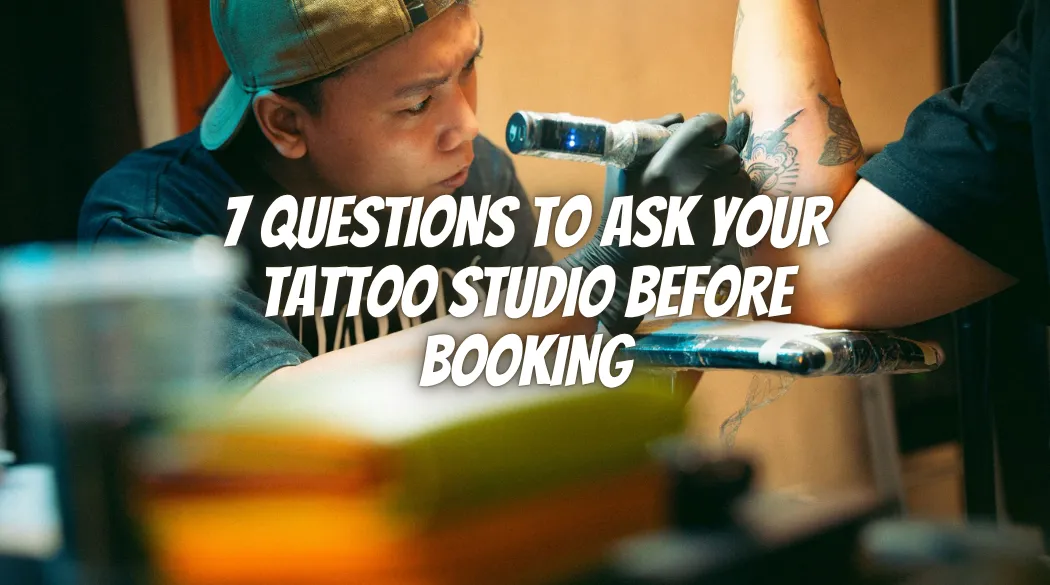
7 Questions to Ask Your Tattoo Studio Before Booking
Tattoo license requirements change from state to state. There is no single national law. Some states license individual Tattoo Artists directly. Others regulate only the shop. Many leave the rules to counties or cities entirely.
That's why it's worth asking your Tattoo Studio a few key questions before you book. These questions protect your health and your investment in permanent art.
Here are the seven questions to ask, based on how states actually regulate tattooing:
Key Takeaways
No national law: tattoo license requirements by state range from centralized state licenses to shop-only rules to county-run permits.
BBP is nearly universal: almost every state in the data requires bloodborne pathogen training for Tattoo Artists or shops.
Facility ties matter: states like Florida and North Carolina tie a Tattoo Artist's license to one inspected studio.
Local rules stack up: Arizona, Maryland, Idaho, and others push licensing to counties or leave it minimal.
Transfer varies: Vermont's Fast Track welcomes licensed Tattoo Artists, while some states offer no reciprocity path at all.
Does your state require a Tattoo Artist license or only a shop permit?
Some states issue individual Tattoo Artist licenses. Others regulate only the studio. Ask whether your Tattoo Artist is personally licensed or just working under a permitted shop.
States with a clear individual state license include: Connecticut, Florida, Georgia, Hawaii, Iowa, Maine, Minnesota, Mississippi, Missouri, Nebraska, New Hampshire, New Mexico, Oklahoma, Oregon, Rhode Island, South Carolina, Tennessee, Texas, Virginia, Washington, and Wisconsin. Wisconsin, for example, requires a "Practitioner's License" for all Tattoo Artists, with a $60 fee and proof of BBP training.
Other states use a shop-only model, where the establishment carries the burden: Illinois, Indiana, Louisiana, Michigan, North Dakota, and Ohio register Tattoo Artists through a licensed facility rather than issuing personal licenses. In Illinois, the Illinois Department of Public Health regulates the establishment, not the individual. Your Tattoo Artist may be fully legitimate even without a personal license card.
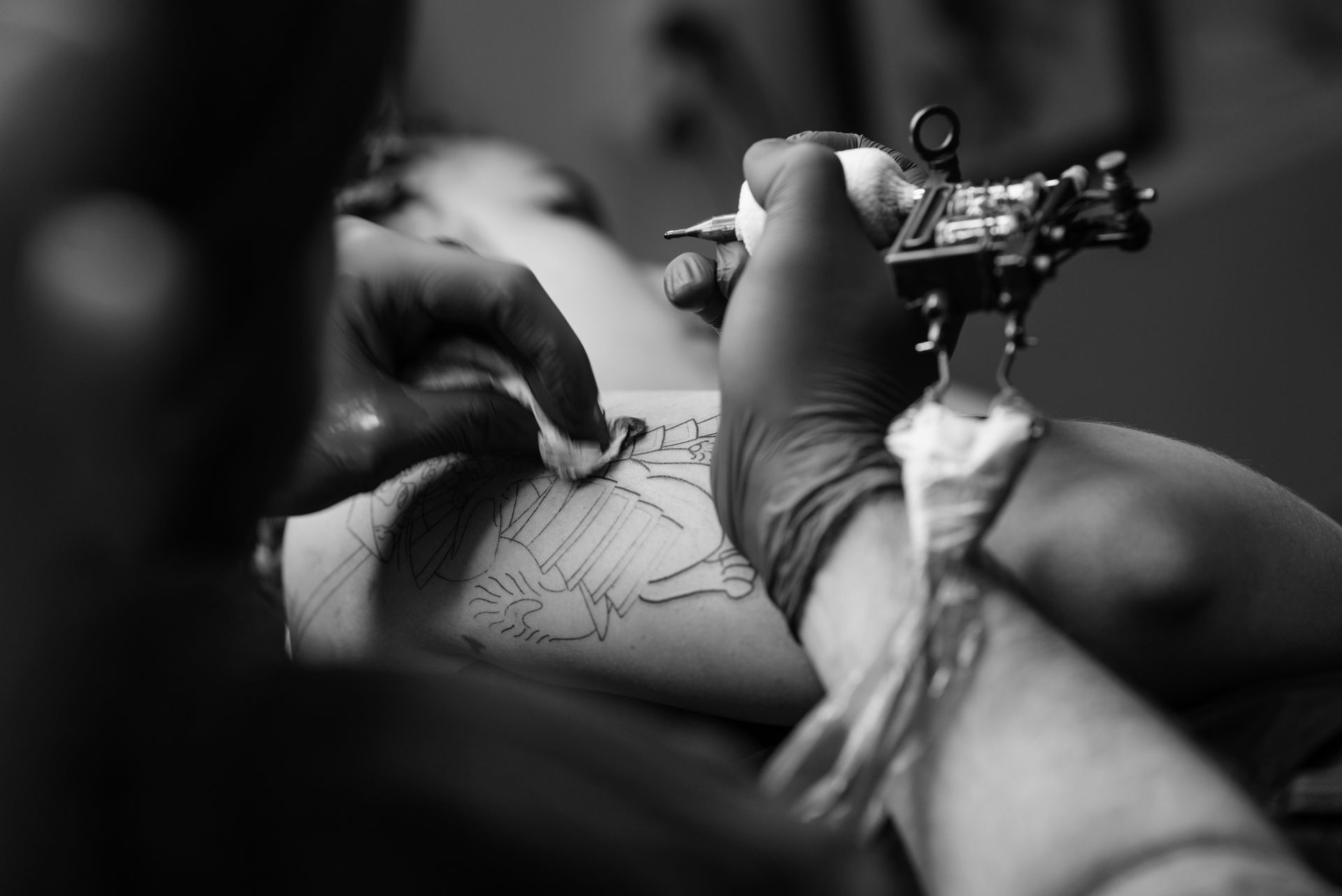
Does your Tattoo Artist hold current bloodborne pathogen training?
Bloodborne pathogen (BBP) training is the most common credential in tattoo license requirements by state. It shows up in nearly every state's rules, whether or not a formal license exists.
Alabama requires an approved BBP course completed within the prior 36 months. Alaska requires a current bloodborne pathogens card. Indiana requires operators to ensure every Tattoo Artist completes annual OSHA-compliant BBP training, with records maintained. Even Arizona, which has no state board, recommends private BBP certification for insurance and shop standards.
Ask to see the certificate and check the date. Iowa requires a valid BBP certificate. Illinois, Indiana, Louisiana, and Michigan all emphasize annual BBP training. In Georgia, BBP, First Aid, and CPR certifications must not expire within six months of renewal, which shows how seriously the state treats current credentials.
Tip:A studio that hesitates to show current BBP documentation is a red flag. Reputable Tattoo Artists keep these credentials visible and up to date.
Where are CPR and First Aid actually required?
A smaller group of states explicitly requires CPR, First Aid, or both. Ask whether your state adds these life-safety credentials on top of BBP training.
Tennessee is one of about eleven states that explicitly require both CPR and First Aid for licensure. Alaska requires a current CPR card as a certified true copy. Oregon requires CPR/First Aid certification alongside its academic model. Maine and Iowa require First Aid training. Iowa is strict about the scope: a standalone CPR or AED-only certificate is rejected, so you need genuine Standard First Aid training.
Connecticut requires current Basic First Aid from the American Red Cross or AHA, in addition to a written exam. If you're in one of these states, confirming these certifications tells you the Tattoo Artist is prepared for the rare but actual emergency.
Is your Tattoo Artist legally tied to this specific studio?
In several states, the license or permit is bound to one inspected facility. A Tattoo Artist can't simply carry credentials to any location. Confirm the studio itself is the permitted one.
Florida requires the establishment name to appear on the license, tying Tattoo Artists to an inspected facility. North Carolina issues a "Tattoo Permit" from the county health department. It's tied to a specific Tattoo Artist and a specific shop. The permit is non-portable, so moving shops or counties requires a fresh permit.
Texas places most of the licensing burden on the studio. The studio license fee is $927, and Tattoo Artists register for that studio through the DSHS online system. Arkansas requires apprentices to train in an ADH-permitted establishment. If the studio's own permit has expired or is missing, your Tattoo Artist's registration may not be valid there at all.
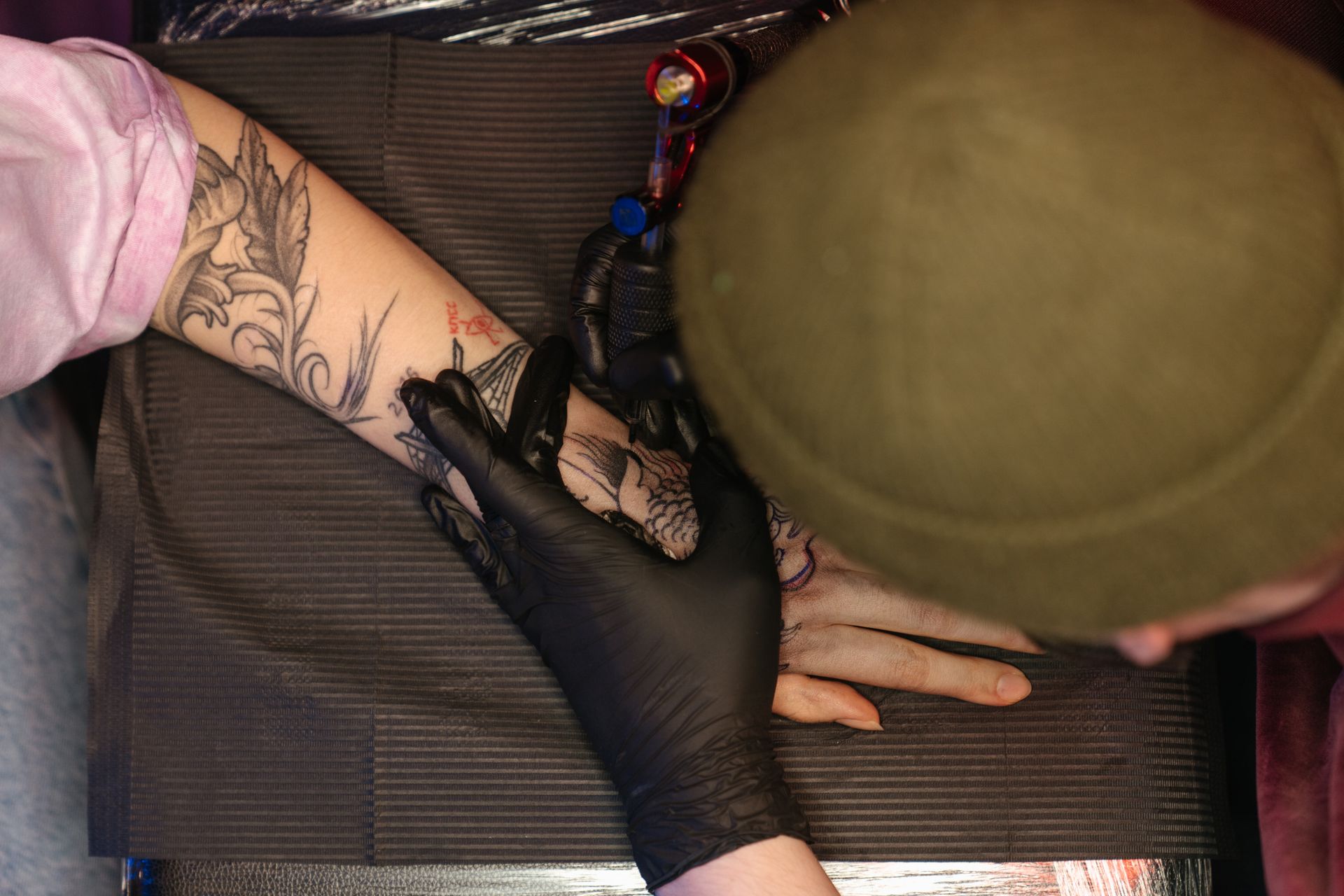
What is the studio's minor policy under state law?
Minor protection is one of the most consistent themes in tattoo law. Several states ban tattooing anyone under 18 outright, even with parental consent.
Arkansas prohibits tattooing anyone under 18, regardless of parental consent. Illinois bans tattoos, branding, and piercing under 18, even with parental consent, allowing only a medical exception. Idaho's law focuses on prohibiting tattoos for minors, and the state issues no Tattoo Artist license at all.
Other states allow limited minor procedures, only with strict documentation. Arizona requires a physically present parent or guardian. Alaska requires a parent or guardian to be present with written consent for any minor procedure. Delaware requires notarized written consent for specific minor procedures. Kentucky and Colorado also bar procedures on noticeably impaired individuals. A studio that follows its state's minor rules is likely following every other rule too.
Are there county or city permits on top of state rules?
Many states delegate tattoo regulation to counties or cities. Even in a "regulated" state, confirm any local permit that applies to your studio's exact location.
California uses a hybrid model. State law sets the floor, but the Local Enforcement Agency in each county handles registration and inspection. Los Angeles County lists a $54 initial fee with annual renewal. Nevada runs regional health districts rather than a state board. A "Body Art Card" is required in Clark County (Las Vegas), with a similar permit in Washoe County (Reno).
New York has no statewide license. New York City's Department of Consumer and Worker Protection runs one of the country's most detailed systems through the NYC Health Academy Infection Control Course and exam. Counties like Suffolk are strict, while others have no rules at all.
Pennsylvania varies widely. Philadelphia requires a tattoo apprenticeship letter from a certified Tattoo Artist and a $40 fee. Other counties may impose no health oversight at all. Massachusetts, Colorado, Kentucky, Montana, New Jersey, North Carolina, South Dakota, Utah, West Virginia, and Wyoming all lean on local boards. Always confirm the rules where your studio is actually located.
Can an out-of-state Tattoo Artist legally tattoo you here?
If your Tattoo Artist trained or was licensed elsewhere, ask how your state treats transfers. Reciprocity ranges from welcoming guest paths to no eligibility at all.
Vermont is one of the friendliest states for incoming licensed Tattoo Artists, thanks to a "Fast Track Endorsement" for those licensed in equivalent states. Virginia publishes an explicit licensure-by-endorsement path, with endorsement available for qualified out-of-state Tattoo Artists. Florida publishes the most detailed reciprocity matrix in the country.
Many state-license states use a guest or documentation approach, meaning a visiting Tattoo Artist may work with the right paperwork. Shop-only and minimal-model states, such as Illinois, Louisiana, Maryland, and Idaho, offer no individual transfer path, since there's no individual license to transfer. Oregon accepts out-of-state education only if it's "substantially equivalent" to its 360-hour school curriculum. When in doubt, contact the state authority directly rather than assuming a credential carries over.
Learning to tattoo with Ink Different Tattoos
The clearest way to understand tattoo license requirements is to train under someone who works inside those rules every day. Ink Different Tattoos offers a hands-on college alternative to a traditional art degree.
A professional Tattoo Artist can earn over $106,000 a year, according to ZipRecruiter. Getting there takes serious training, not shortcuts. Our Traditional Tattoo Apprenticeship pairs you with an experienced Mentor. You'll learn sterile technique aligned with OSHA bloodborne pathogen standards, and how to navigate the licensing steps for wherever you plan to work.
Whether your state issues an individual license, regulates only the shop, or leaves it to the county, we help you understand the exact steps and documentation you'll need.
Ready to become a Tattoo Artist? Apply now to Ink Different's Traditional Tattoo Apprenticeship and start building an AI-proof career, with licensing support along the way.
Frequently Asked Questions
Do all states require a tattoo license?
No. Tattoo license requirements vary widely by state. Some states issue individual licenses. Others regulate only the studio, or delegate to counties. States like Arizona have no state board beyond minor-protection statutes.
What is bloodborne pathogen training, and why does it matter?
Bloodborne pathogen (BBP) training teaches Tattoo Artists to prevent disease transmission through blood and bodily fluids. It is the most common tattoo credential in the data, required in nearly every state, and often renewed annually.
Which states tie a tattoo license to a specific studio?
Florida requires the establishment name on the license. North Carolina's county Tattoo Permit ties one Tattoo Artist to one shop and is non-portable. Texas registers Tattoo Artists to a specific licensed studio.
Can a licensed Tattoo Artist work in any state?
Not automatically. Vermont offers a Fast Track Endorsement, and Virginia offers endorsement with a $120 fee. Shop-only and minimal states offer no individual transfer, since they issue no personal license.
Can minors get tattoos with parental consent?
It depends on the state. Arkansas and Illinois prohibit tattooing under 18, even with consent. Delaware allows specific minor procedures only with notarized written consent. Always confirm the exact rule with your state authority.
How do I verify my Tattoo Studio is properly licensed?
Ask to see the current BBP certification, any required state license or county permit, and the facility's inspection status. For definitive answers, contact the state or county health authority for your location.