A Guide to Tattoo Styles: How to Tell Them Apart and Choose Yours
Ever wondered why some tattoos look bold and graphic while others look like watercolor paintings? A tattoo style is a recognizable visual language defined by line work, shading, color, and composition that gives a tattoo its distinct look and cultural roots. Knowing the difference matters whether you're choosing a design for yourself or learning to tattoo one well.
At Ink Different Tattoos, we've spent 15 years teaching aspiring tattoo artists how to see, name, and master these styles. In this article, we'll break down the most common tattoo styles, how to tell them apart, and how to choose the one that's actually right for you.
Key Takeaways
Definition: A tattoo style is a recognizable visual language defined by line work, shading, color, and composition.
Core styles: Traditional, Realism, Blackwork, Fine Line, Japanese, Watercolor, and Neo-Traditional lead the field.
How to tell them apart: Study line weight, color use, shading technique, and cultural origins to identify any style.
Choosing yours: Pick a style that matches your artistic instincts, then train under expert Mentors to refine it.
Career path: Ink Different's Traditional Tattoo Apprenticeship teaches multiple styles with hands-on mentorship and licensing support.
What Is a Tattoo Style?
A tattoo style is a distinct approach to tattooing, defined by consistent visual elements such as line thickness, color palette, shading method, and subject matter. Think of it as a dialect within the larger language of tattooing.
Just like a painter can work in oils or watercolors, a Tattoo Artist works within styles that carry their own rules and history. Some styles trace back centuries, rooted in cultures across Japan, Polynesia, and the American sailor tradition. Others were born from modern tools and fresh imaginations.
When you learn to recognize a style, you stop seeing tattoos as random pictures and start seeing the craft behind them. That shift in vision is where every great Tattoo Artist begins.
Why Does Knowing Tattoo Styles Matter?
Knowing tattoo styles matters because it shapes how you communicate with clients, build your brand, and grow into a recognizable Tattoo Artist. Style fluency is professional literacy.
If you are stuck in a job that ignores your creativity, imagine walking into a Tattoo Studio and speaking the language fluently. Clients trust artists who can explain why a design should be done in Japanese versus Fine Line. That trust is what turns first-time visitors into loyal followers.
Style knowledge also protects you from beginner missteps. For more on that, read our guide on mistakes aspiring tattoo apprentices should avoid. Understanding your lane early saves years of wasted effort.

What Are the Most Common Tattoo Styles?
The most common tattoo styles include Traditional, Realism, Blackwork, Fine Line, Japanese (Irezumi), Watercolor, and Neo-Traditional. Each one carries its own visual signature and technical demands.
Here is a quick breakdown to help you start recognizing them:
Traditional (American Old School): Bold black outlines, limited color palette, iconic imagery like roses, anchors, and swallows.
Realism: Photographic detail, smooth shading, and no hard outlines. Portraits and nature scenes thrive here.
Blackwork: Heavy solid black, geometric patterns, and high contrast. Rooted in tribal and modern graphic traditions.
Fine Line: Delicate, thin single-needle lines used for minimalist and script designs.
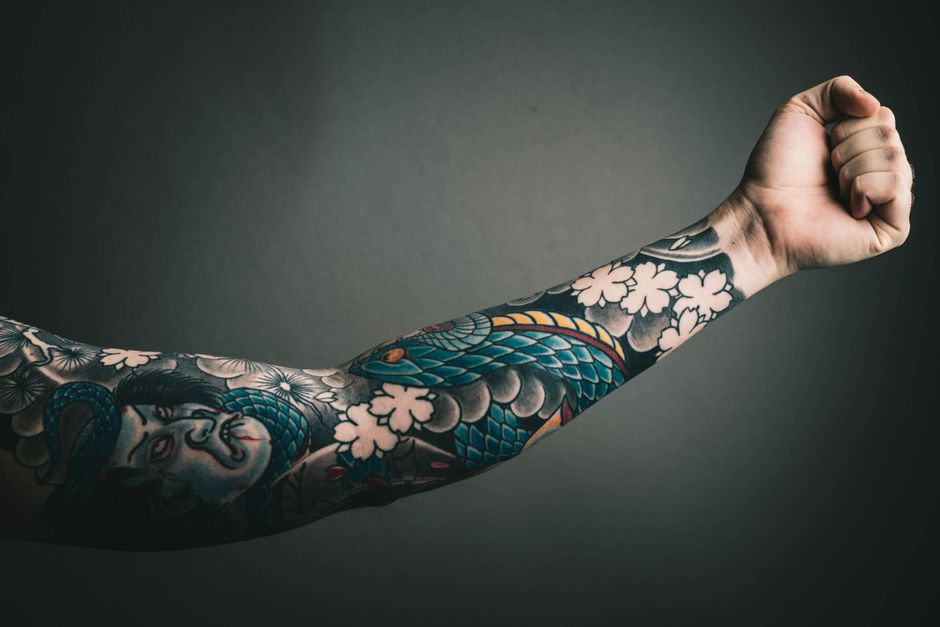
Japanese (Irezumi): Large flowing compositions with dragons, koi, and waves, guided by centuries of tradition.
Watercolor: Soft color washes that mimic paint on canvas, often without outlines.
Neo-Traditional: An evolution of Traditional with richer color, more depth, and detailed illustration.
These are the foundation. Master a few, and you build a career with range.
How Can You Tell Tattoo Styles Apart?
You can tell tattoo styles apart by studying four elements: line weight, use of color, shading technique, and cultural origin. Read those clues, and any tattoo reveals its style.
Step 1: Look at the line work
Bold, uniform outlines point toward Traditional or Neo-Traditional. Thin, single-needle lines signal Fine Line. No visible outlines at all often mean Realism or Watercolor.
Step 2: Study the color
A limited palette of red, green, and yellow suggests Old School. Soft, bleeding tones point to Watercolor. Rich, layered color usually means Neo-Traditional or Japanese.
Step 3: Examine the shading
Smooth, gradient shading is a hallmark of Realism. Solid black fields indicate Blackwork. Whip shading and dot work reveal specific technical schools.
Step 4: Consider the subject and culture
Dragons and koi in flowing arrangements are Japanese. Geometric symmetry leans Blackwork. Nautical icons trace back to sailor tradition. History lives in the imagery.
Pro Tip:Start a swipe file. Save examples of every style you can find and label them. Training your eye is training your hand.
How Do You Choose Your Own Tattoo Style?
You choose your own tattoo style by identifying which visual language excites you most, then testing your instincts through consistent practice and honest feedback. Your natural pull is a clue worth following.
Ask yourself what you loved drawing as a kid. Precise portraits? Bold cartoons? Delicate patterns? Those early instincts often reveal the style where you will grow fastest. According to the Bureau of Labor Statistics, craft and fine artists build careers on developing a distinct personal voice, and tattooing is no different.
Do not rush to lock in forever. Many Tattoo Artists blend styles or shift over time. What matters is planting the first seed and letting a Mentor help it grow. If you are weighing timing, our post on why spring is the best time to become a tattoo artist can help you decide when to begin.
Why Should Aspiring Artists Learn Multiple Styles?
Aspiring Tattoo Artists should learn multiple styles because versatility builds a higher income, a wider client base, and an AI-proof career. Range makes you irreplaceable.
A client rarely wants only one thing. One day it is a Fine Line script, the next a full Japanese sleeve. The more styles you command, the more work stays in your chair. And because tattooing is human touch, trust, and live craftsmanship, it is a career machines cannot replace. Read more in our piece on why tattoo artists are still essential.
Learning many styles also means learning strict safety and hygiene across every technique. OSHA bloodborne pathogen standards apply to all of it, and a proper Tattoo Apprenticeship Program teaches these habits from day one.
Learn Tattoo Styles With Become A Tattoo Artist
Ink Different Tattoos' Traditional Tattoo Apprenticeship teaches you to recognize, execute, and master multiple tattoo styles through live, in-person mentorship. This is the college alternative built for people who want a real creative career.
Our Traditional Tattoo Apprenticeship runs 18 to 24 months across a proven 4-Phase structure. Here is what you can expect:
Beginner-friendly: No prior art experience required. We teach the fundamentals from scratch.
Start remote, finish in studios: Begin your Tattoo Artist Training online, then transition into working in tattoo studios.
Personalized hands-on training: Learn line work, shading, color theory, and style identification with a Mentor at your side.
Job-ready skills and licensing support: Finish prepared to work professionally, with guidance through your state licensing requirements.
We have trained professional Tattoo Artists since 2011, and our Good Humans culture means you join a supportive, family-like community, not a cold classroom. If you want to see how this path stacks up against a four-year degree, read about tattoo apprenticeships as a college alternative.
A Career That Comes With Confidence:Job-ready training and licensing support mean you walk out able to build an income doing work that fulfills you.
Master Mentorship: Push Your Brand and Skills Further
Ink Different's Master Mentorship is a one-year in-person program for beginner and experienced artists who want to master a specific style and build a brand. It is intensive skill development at the highest level.
You train directly with Celebrity and award-winning mentors, including Al Fliction, Liz Cook, Kyle Dunbar, Boneface, and Jordi Pla. If your goal is a career explosion, style mastery, or owning your own Tattoo Studio, this is the accelerated route. To grow your presence once you have your style dialed in, check out our list of platforms to help tattoo artists build their brand.
Making Tattoo Training Accessible for Everyone
Ink Different Tattoos offers Spanish-speaking locations so language never blocks your path to becoming a Tattoo Artist. Excellence should be available to everyone.
You can find Spanish-speaking Tattoo Artist Training in Denver, in Orange County, in NYC, in Miami, in San Antonio, and in San Diego. Wherever you are starting from, there is a seat with your name on it, though seats are limited.
Ready to Become a Tattoo Artist?
You have felt the pull. You have imagined the styles. Now stop letting your creative potential collect dust in a job that does not deserve it. Every day you wait is a day that could have been spent planting seeds and building a life on your own terms.
Ready to become a Tattoo Artist? Apply now to Ink Different's Traditional Tattoo Apprenticeship and start building an AI-proof career with licensing support along the way. Not sure yet? Fill out our quick questionnaire to get personalized support and find out if our Tattoo Apprenticeship Program is right for you.
Frequently Asked Questions
What are the main tattoo styles I should know?
The main tattoo styles are Traditional, Realism, Blackwork, Fine Line, Japanese (Irezumi), Watercolor, and Neo-Traditional. Each has distinct line work, color use, and cultural roots that make it recognizable.
Do I need art experience to learn tattoo styles?
No. Ink Different's Traditional Tattoo Apprenticeship is built for beginners and teaches drawing, line work, and style fundamentals from scratch, so no prior art background is required.
How long does it take to become a Tattoo Artist?
Ink Different's Traditional Tattoo Apprenticeship takes 18 to 24 months across four phases. You start remote and finish in working Tattoo Studios with hands-on mentorship.
Should I master one tattoo style or several?
Learning several styles builds a wider client base and a higher income. Versatility keeps more work in your chair and makes you a more valuable, adaptable Tattoo Artist.
What makes Ink Different different from other training?
Ink Different offers live, in-person mentorship, award-winning Mentors, a Good Humans community, licensing support, and 15 years of experience training professional Tattoo Artists since 2011.
Is there tattoo training available in Spanish?
Yes. Ink Different offers Spanish-speaking Tattoo Artist Training in Denver, Orange County, NYC, Miami, San Antonio, and San Diego, making the path accessible to more aspiring artists.