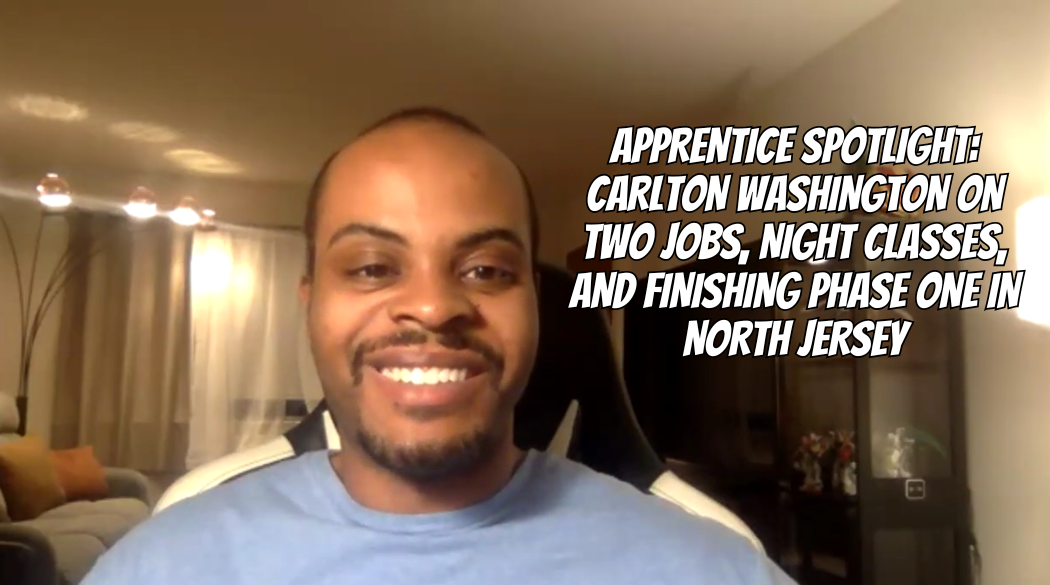
Apprentice Spotlight: Carlton Washington on Two Jobs, Night Classes, and Finishing Phase One in North Jersey
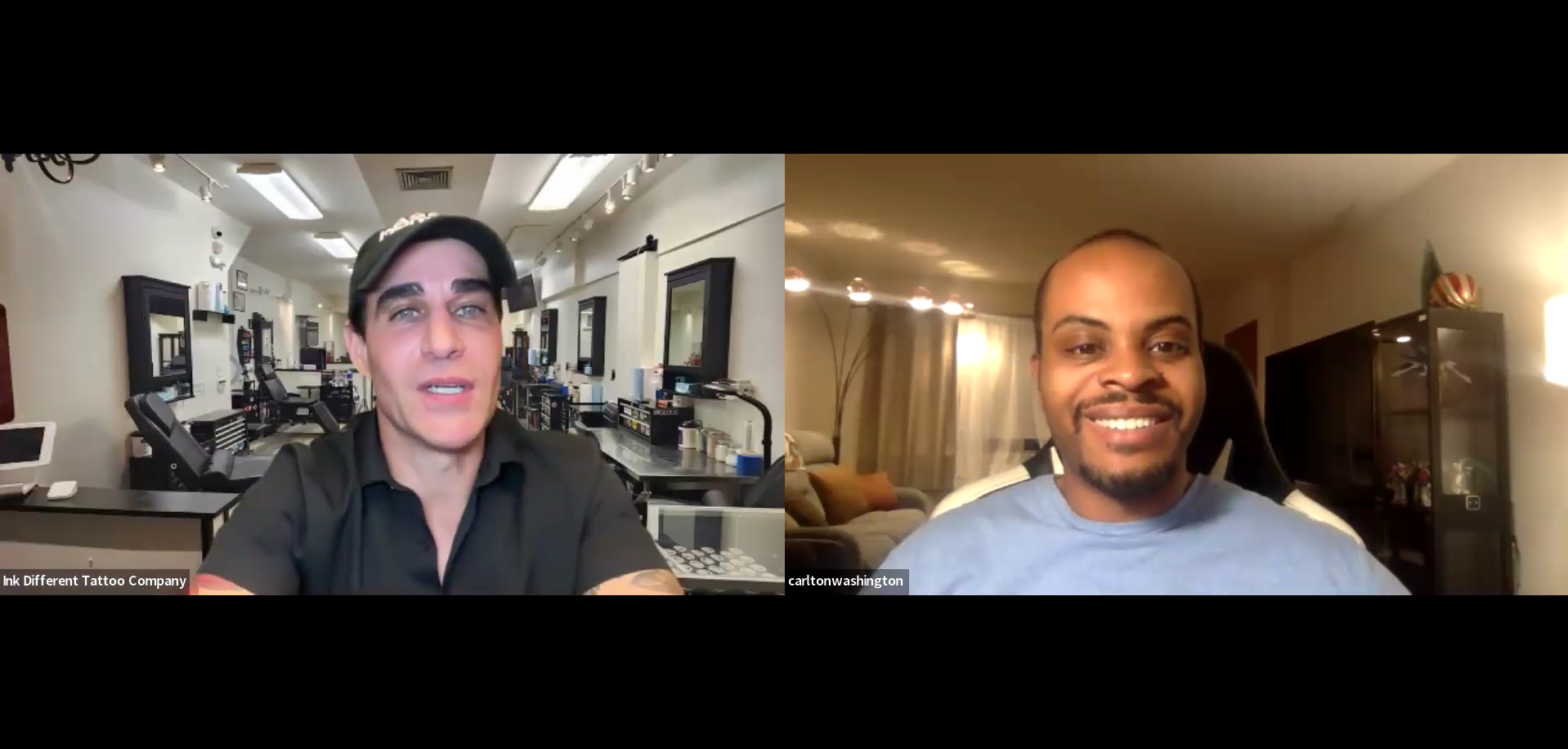
Carlton Washington works two jobs. Twice a week, he signs into evening classes, usually between 6 and 8 p.m. When that doesn't work, he takes a 10 p.m. class. "When you're dedicated and you really want something, at least it's available," he says. "There's no saying there wasn't enough time." Carlton is from Essex County, North Jersey, and he's nearly finished with Phase One of Ink Different's Traditional Tattoo Apprenticeship. He's working on his Japanese assignment, with one final assignment left. In his Apprentice Spotlight interview, he shared how he got here.
Key Takeaways
His inspiration: Watching Black Ink Crew in 2011 showed him what a needle on skin could do.
His choice: He wanted training that felt like a class, with real instruction and encouragement.
His schedule: Two jobs, plus evening classes twice a week, sometimes at 10 p.m.
His biggest lesson: Julian taught him how precise tattoo design has to be. "It's almost like being a surgeon," he says.
His Mentor: He'll train with Master Mentor Joey Tattoo in North Jersey.
Who is Carlton Washington?
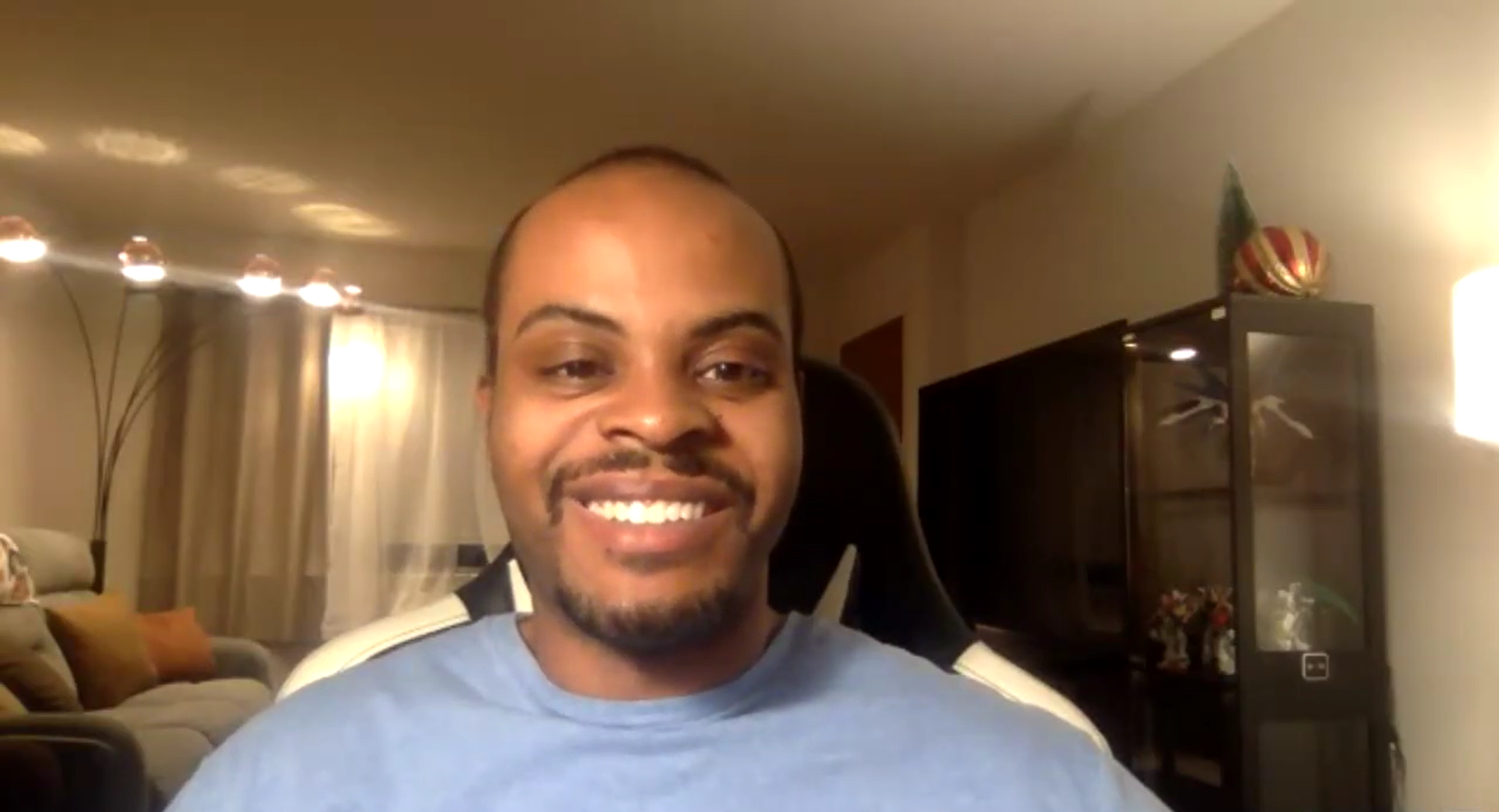
Carlton Washington is an Ink Different apprentice in Essex County, North Jersey.
He has drawn his whole life. He started out copying cartoons, then moved into realism, color, and ink, with some watercolor and acrylics along the way. He took art in high school and never went to formal art school, but he studied fine arts in college, focusing on animation and illustration. He hopes to pursue animation full-time while also tattooing.
He started with traditional art, on paper and canvas, and made sure he could make the switch to digital before committing to tattooing. "It was the right time for me," he says.
What Inspired Him to Become a Tattoo Artist?
It started in 2011, when he watched Black Ink Crew, the Chicago and New York versions.
"I was just blown away by how you can take a moving needle on skin and make something so real, like you do on paper," he says. "I've always had a huge respect for the craft."
From there, he kept developing as an artist until he was ready to make the plunge.
Why Did He Choose Ink Different?
Carlton researched tattoo shops around his area first. He learned that most tattoo apprenticeships happen in-shop, and that training isn't always consistent. "I just really wanted something that felt more like a class," he says, "with real instruction, real positivity, and real encouragement."
When Ink Different came up in his search, the interview videos sealed it. "I was hearing straight from the apprentices, and everybody just seemed at ease," he says. "They were excited to be here and enthusiastic about their success. Something sat right with me, and I said, 'I think this is the place.'"
Applying made him nervous. He had never tattooed before, and he knew acceptance was competitive. "Once my work got accepted," he says, "the excitement went up from there."
Like many people who change careers through a tattoo apprenticeship, he had to step outside his comfort zone first. "It's rewarding," he says. "I'm glad I made the move."
How Does He Fit Training Around Two Jobs?
Carlton works two jobs, including a part-time job on weekends. Here's how he makes it work:
Evening classes twice a week: He tries to schedule them between 6 and 8 p.m.
A 10 p.m. option: When his schedule changes, he takes a later class.
Saturday classes: They fill up, but he's been able to take a few.
Planning ahead: He signs up for classes in advance and maps out his week around his next assignment.
Training online: "Working remotely has been fantastic," he says. "It saves on commuting as well."
Plenty of apprentices train around demanding schedules, like Joe Kendall, who balanced two jobs and kids during his tattoo apprenticeship.
Mentor Tip: Carlton likes knowing his next assignment before he books a class. It lets him plan his week and show up prepared.
What Did He Create in Phase One?
Phase One is art and design. It happens online, before apprentices use a tattoo machine. Apprentices design in four foundational styles: American traditional, neo-traditional, new school, and Japanese.
Some of Carlton's pieces:
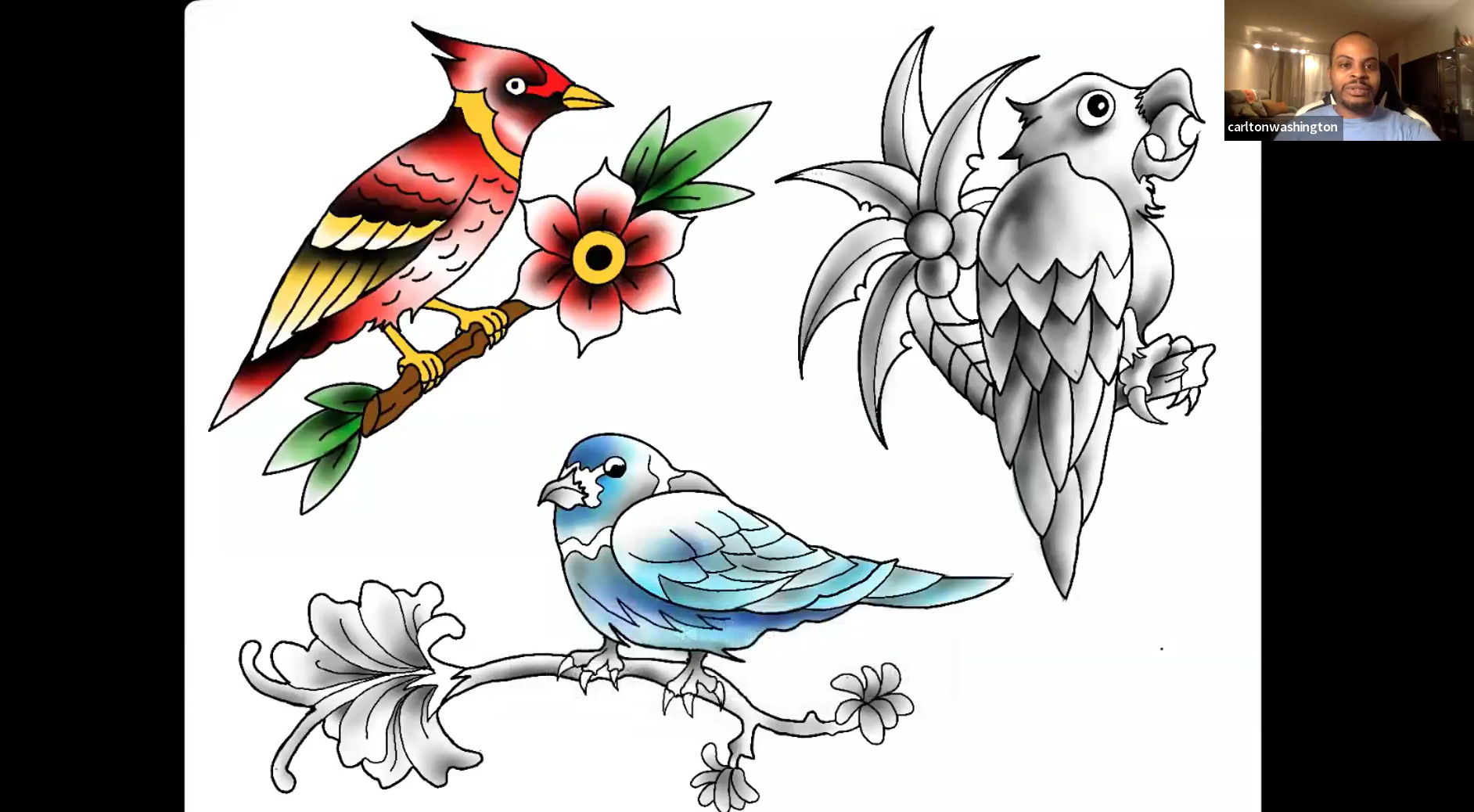
Three styles, one subject: He drew parrots, inspired by birds he had as pets growing up. His American traditional version uses vibrant reds, golds, and browns. His neo-traditional keeps a gradient style with brighter blues. His new school is more playful, with darker shadows, darker oranges, and caricature-style expressions.
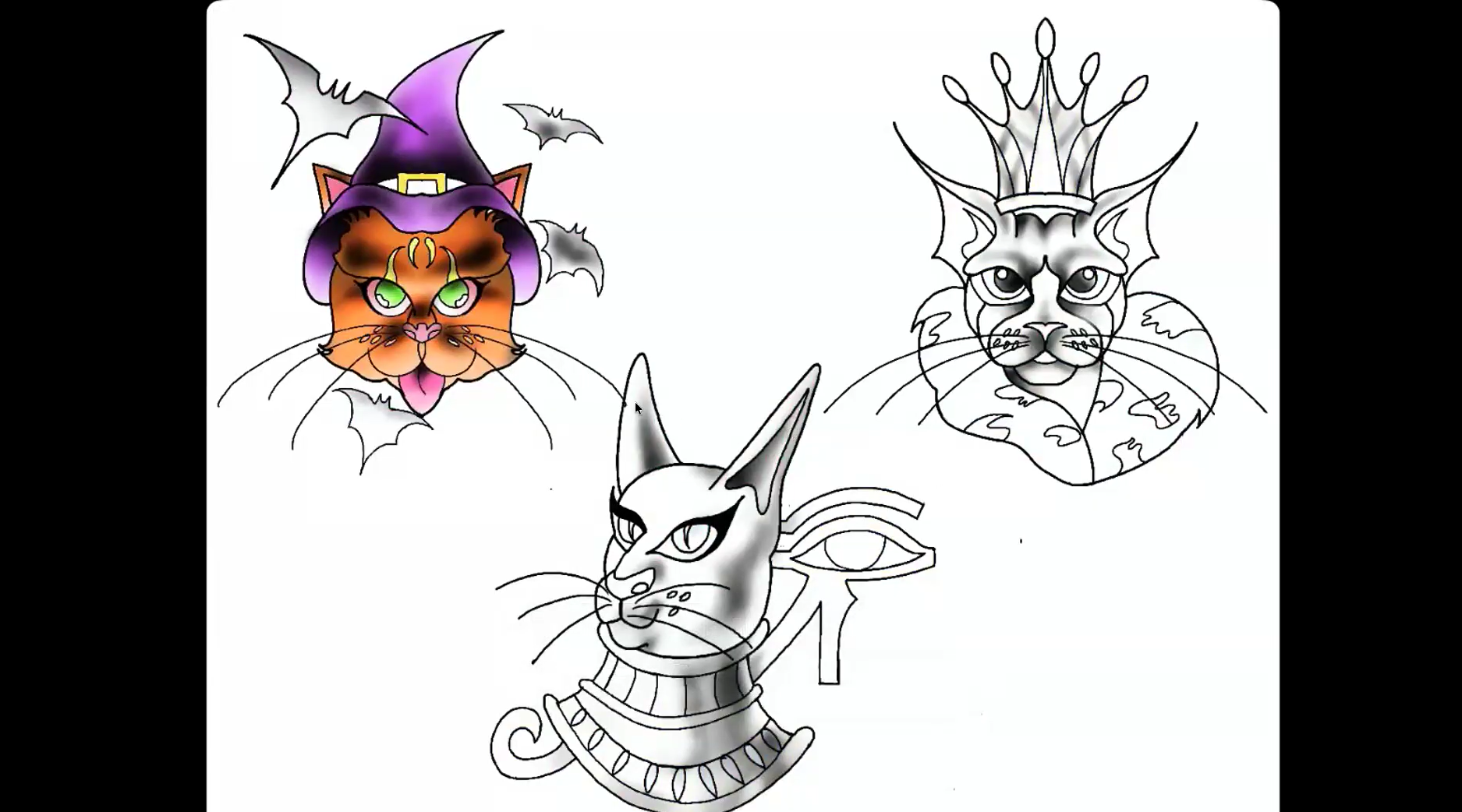
New school cats: He has two cats, so he chose something fun and familiar. One cat has a Halloween theme with bats, since he drew it around Halloween. Another is an Egyptian-inspired hairless cat. The third looks like his own brown cat, with a king theme. "That's kind of his attitude," he says, "how he walks over the place."
He describes the differences between the styles simply. American traditional uses simpler, bolder, consistent lines and a smaller color palette. Neo-traditional has more color choices and smooth, slightly more realistic gradients. New school plays with caricature and facial expressions.
What Has He Learned From His Instructors?
Carlton has worked mainly with Julian and Martin, and each brings something different.
Julian: precision
Carlton thought his drawing foundation and line work were solid. Then he took class with Julian. "I slowly found out how precise you have to be," he says. Julian taught him to zoom in a thousand percent and check what he had overlooked.
"I take my time now," Carlton says. "It's almost like being a surgeon. Julian has definitely changed me for the better."
Martin: the bigger picture
"Martin brings great energy and great insight," Carlton says. "He'll take his time, bring up different examples, and actually draw it himself." He likes that Martin is more relaxed, while still helping him look at the bigger picture.
Taking the feedback
Carlton knows that redoing work is part of the process. "You're human, so it comes with it," he says. "But at the same time, you have to know that's going to make you better. That's where the growth comes from, through the mistakes and through the redos."
Getting defensive about feedback is one of the most common habits that hold new apprentices back. Carlton sees each critique as a chance to improve.
What Did the Tattoo History Workshop Teach Him?
Carlton took Ink Different's Ink Americana history workshop. What surprised him most was how underground tattooing used to be.
"I didn't know tattooing was so underground and forbidden to start out with," he says. He learned how it spread through the Marines and the military, and how it was illegal in New York for a long time before slowly breaking into film. "It was a whole movement, so it was really interesting," he says. "I like history."
What's Next as He Finishes Phase One?
Carlton is almost ready for Phase Two, machine practice on synthetic skin. His plan is to go easy on himself.
"I'm giving myself a break and leaving room for mistakes," he says. "It's going to be a learning curve, but it's going to be rewarding once you understand it."
His bigger mindset is to enjoy the process. "I believe every successful Tattoo Artist has gone through their own process, the exact thing I'm going through, with their own steps," he says. "So I'm keeping that perspective: one assignment at a time."
After he masters the four foundational styles, he'd like to try black and gray realism. He plans to start wherever his instructors tell him and build from there.
Advice from Paul
After the interview, Carlton asked Ink Different's Paul-Anthony Surdi for advice going into Phase Two. Paul told him it would take longer than he thought, and that many Tattoo Artists he knows did their spider web assignments 30 or 40 times. "Just don't quit," Paul said. "Just keep showing up."
Who Will He Train With in North Jersey?
Carlton will train with Master Mentor Joey Tattoo, whose Ink Different apprentices train at his Main Street Tattoo and Park Ave Tattoo studios in North Jersey. Joey starred in Spike TV's Tattoo Rescue.
According to Paul, nearly every Tattoo Artist at Joey's tattoo shops trained under him, which Joey has found to be a key to his success. "I can't wait," Carlton says.
If you're in the area, here's more on becoming a Tattoo Artist in Newark and nearby. New Jersey regulates tattooing through the state Department of Health's Body Art Project, so it's worth learning the state's standards early.
What does the Traditional Tattoo Apprenticeship offer?
Ink Different's Traditional Tattoo Apprenticeship is an 18 to 24 month, four-phase tattoo apprenticeship built for beginners. Ink Different has trained Tattoo Artists for 15 years. No prior art experience is required.
Phase One: Art and design, online.
Phase Two: Machine practice on synthetic skin, online.
Phase Three: Supervised tattoos on real clients in a tattoo studio.
Phase Four: Building independence and preparing for licensing.
Safety is part of the training, including the OSHA bloodborne pathogens standard.
Carlton says he has no real complaints. "This has actually been some of the best instruction I've had, period," he says. "I like the way everything's structured. It's consistent, and I like how the reviews go in order and give you time to prepare."
You'll finish with job-ready skills, licensing support, and a guaranteed job offer at one of Ink Different's own tattoo studios. The Traditional Tattoo Apprenticeship is available at 60+ tattoo studios nationwide. For many people, it's also one of the careers that pay well without a degree.
Mentorship that pushes your brand and skills further
Once you've built your foundation, Ink Different's Master Mentorship offers advanced training with Master Mentors like Joey Tattoo, Carlton's Mentor in North Jersey.
Making tattoo training accessible for everyone
Ink Different offers Spanish-speaking locations in Denver, Orange County, NYC, Miami, San Antonio, and San Diego. Seats are limited, with only two apprentices per tattoo studio per Mentor.
Ready to start your own story?
Ready to become a Tattoo Artist? Apply to Ink Different's Traditional Tattoo Apprenticeship.
Frequently Asked Questions
Can I do a tattoo apprenticeship while working two jobs?
Yes. Carlton works two jobs and takes evening classes twice a week, sometimes at 10 p.m.
What inspired Carlton to become a Tattoo Artist?
Watching Black Ink Crew in 2011. He was amazed that a needle on skin could create art as real as anything on paper.
Who is Carlton's Mentor?
Master Mentor Joey Tattoo, whose apprentices train at his Main Street Tattoo and Park Ave Tattoo studios in North Jersey.
Do I need art experience to start?
No. Carlton studied animation and illustration, but the Traditional Tattoo Apprenticeship is built for beginners.
How long does the Traditional Tattoo Apprenticeship take?
Ink Different's Traditional Tattoo Apprenticeship takes 18 to 24 months across four phases, with licensing support and a guaranteed job offer at one of Ink Different's own tattoo studios.
Do apprentices use a tattoo machine in Phase One?
No. Phase One is art and design. Machine practice starts in Phase Two.