Apprentice Spotlight: From Firefighter to Tattoo Apprentice, Stephen Salasek’s Career Change
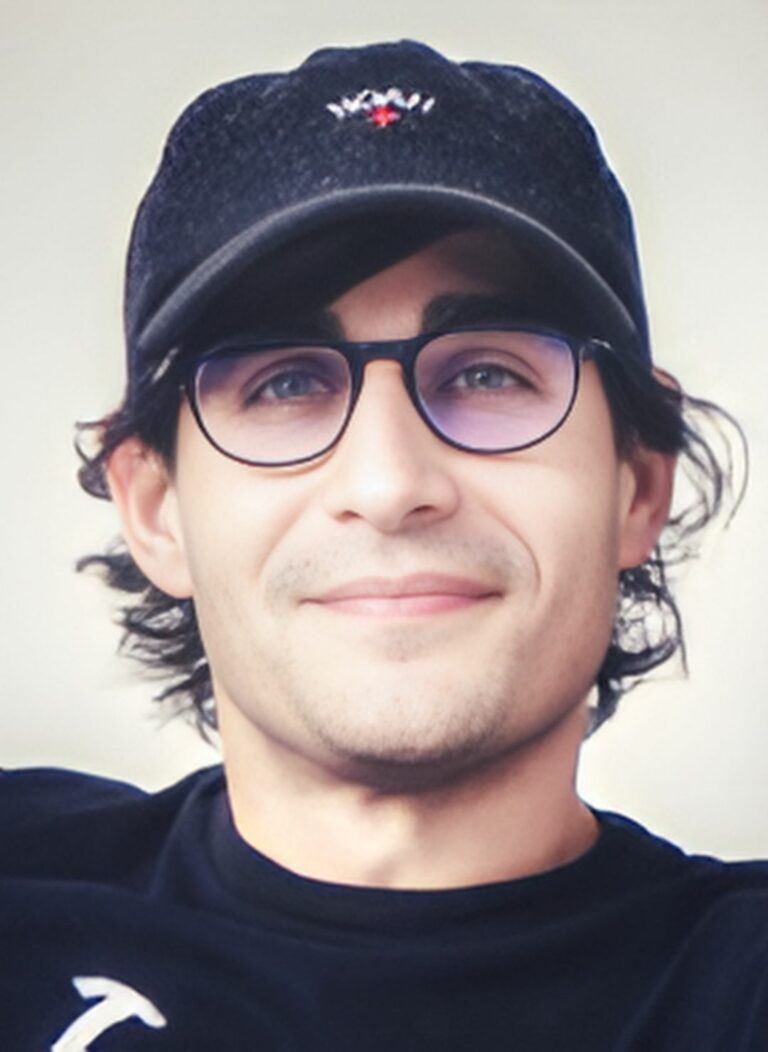
Stephen Salasek has been a firefighter in Phoenix for 20 years. He’s also a husband, a dad of three, and a tattoo apprentice with Ink Different Tattoos. Stephen has been drawing since he was about five years old. For him, art has always been a form of therapy. After joining the fire department, he set it aside for about a decade. When he picked it back up, he realized he needed it, and tattooing started calling again.
We sat down with Stephen as he began Phase Two of the Traditional Tattoo Apprenticeship. He shared how he fits training around 24-hour shifts, why he almost ignored our first text, and why tattooing feels like his true calling.
Key Takeaways
Who: Stephen Salasek is a Phoenix firefighter of 20 years training with Ink Different while still working full time.
Why tattooing: Art has always been his therapy. Tattooing lets him turn that outlet into a career.
How he fits it in: He works on assignments on his iPad between calls and joins online classes on his days off.
What he’s learned: Phase One taught him American traditional, neo-traditional, new school, and Japanese traditional.
The path: The Traditional Tattoo Apprenticeship takes 18 to 24 months, and no prior art experience is required.
Who is Stephen Salasek?
Stephen Salasek is a Phoenix firefighter and Ink Different tattoo apprentice who’s turning a lifelong love of drawing into a second career.
As a kid, he’d lose himself in pen and ink and markers for hours. He was drawn to the art on old Santa Cruz skateboards, plus punk rock, metal, and all kinds of monsters and creatures.
College wasn’t a fit for him. He took community college classes and spent a few months at Northern Arizona University, bouncing between majors. While he was there, he learned the fire department was hiring. He moved back to Phoenix, prepared for the academy, and was hired in 2006.
He’s grateful for the career. It gave him and his family a great life. But he says he stumbled into firefighting. Tattooing, on the other hand, feels like a calling.

Why would a firefighter leave to become a Tattoo Artist?
Stephen hasn’t left firefighting. He’s training alongside it, because art became something he couldn’t go without.
After he joined the fire department, his art went on the back burner. Between the academy, his career, his marriage, and three kids, life got busy. He didn’t touch a pen or pencil for about 10 years.
Then he was assigned to a busy station in a tough part of Phoenix. He says mental health takes a hit in public safety, and you don’t realize how much until it hits you. People say not to take your work home, but he says you do.
He had no hobbies at that point. Something told him to get a pad of paper and start drawing again. So he did.
On his days off, he’d get so absorbed that eight hours would pass. He started setting alarms so he wouldn’t forget to pick up his kids from school. That’s when he knew he needed that outlet.
Tattooing now lets him turn his therapy into his work. As we explain in why tattoo artists are still essential, it’s also a deeply human craft that technology can’t replace.
Pain point: The scariest thing isn't changing careers. It's waking up ten years from now still wondering what you could have created.
What does a mid-life career change into tattooing really look like?
For Stephen, it means starting over as a beginner while keeping his full-time job, and learning to embrace feedback.
He’d been interested in tattooing long before he joined the fire department. But finding a tattoo apprenticeship meant going shop to shop, and it never worked out. He also learned that not every Tattoo Artist makes a good Mentor. You need someone who’s passionate about teaching.
He’d followed Ink Different on social media for a while. But the closest location was in Los Angeles. Phases Three and Four would have meant a leave of absence from work, which wasn’t possible with young kids at home.
Then, a few months ago, he got a text. Ink Different had opened a location in Phoenix and invited him to send in designs. He thought it was a scam and ignored it for a couple of days. When a second text came, he decided to respond.
He sent in his portfolio and heard back quickly. Then he had a call to go over the details and get to know the team. From there, he says, everything felt right.
How do you make the switch from your current job to tattooing?
You make the switch by building your training into the schedule you already have. Here’s how Stephen does it.
Step 1: Use the time you have. Stephen works 24-hour shifts, from 8 a.m. to 8 a.m., followed by two days off. He’s now at a slower station, so he works on assignments on his iPad between calls.
Step 2: Schedule classes like appointments. On his days off, he gets home, cleans up, handles things around the house, and joins online classes in the afternoon. He skips the early morning classes after a shift.
Step 3: Work around your family. He plans classes around driving his daughter to school or picking her up.
Step 4: Protect your focus. Stephen admits he can lose an hour scrolling through tattoo websites. He’s learned to prioritize the task in front of him, because a call or a family need can come up at any moment.
Step 5: Learn the fundamentals. Phase One covers four styles: American traditional, neo-traditional, new school, and Japanese traditional.
Step 6: Move into hands-on practice. In Phase Two, you’ll start tattooing synthetic skin. Phases Three and Four happen in a tattoo studio under a Mentor’s supervision.
Why is a tattoo apprenticeship the smartest path?
A tattoo apprenticeship gives you real feedback from Tattoo Artists who want you to succeed. Stephen says that’s where the learning actually happens.
Before Ink Different, he tried another online tattoo course. It had good instruction, but when he asked for help, he sometimes never heard back.
At Ink Different, the feedback is direct. Mentors review his assignments over Zoom and mark up his work on screen. They’ll tell him something looks great, then show him how it could look even better. He can submit a revision during class and get feedback in the same session.
Phases One and Two are online. Ink Different built that format during COVID, when its Los Angeles location was shut down for about 13 months. Today, it lets Ink Different work with tattoo studios across the country.
He also compares it to college. In large college classes, he says, there isn’t much time for any one student. Ink Different’s small classes let Mentors break things down right there. That works for him, because he learns by doing.
He’s also seen the other side of tattoo apprenticeships. When you go shop to shop, you risk ending up somewhere with no intention of teaching you. At Ink Different, he says, every Mentor has his best interests in mind. More people are discovering tattoo apprenticeships as a college alternative.
What does the Traditional Tattoo Apprenticeship include?
The Traditional Tattoo Apprenticeship is an 18 to 24 month, four-phase tattoo apprenticeship that takes beginners to job-ready Tattoo Artists with licensing support.
Here’s what Stephen has experienced so far:
Phase One design training: He learned four styles. American traditional was the hardest at first, because it requires simple designs with fewer lines. Japanese traditional pulled him in with its symbolism and rules.
Real techniques on paper: Classes use colored pencils, so he practices pressure, small circles, and gradients the way he’ll tattoo.
Procreate skills: He learned new functions in class, and he uses layers to clean up his messy sketches.
Time-lapse submissions: Ink Different asks for time-lapse videos of designs to confirm apprentices create their own work.
A Phase Two kit: His box included a Mast Archer machine, needles, inks, and practice skin. He says the skin is better than anything he’s found elsewhere.
Licensing support and a guaranteed job offer: You’ll finish with job-ready skills and a guaranteed job offer at one of Ink Different’s tattoo studios.
This is a career that comes with confidence. You’ll finish with job-ready skills, licensing support, and a guaranteed job offer at one of Ink Different’s 60+ tattoo studios nationwide.
You’ll also join Ink Different’s “Good Humans” culture. Ink Different has trained Tattoo Artists for 15 years.
What is the Master Mentorship program?
Master Mentorship is a way to keep growing once you’ve built your foundation, by learning from some of the most respected names in tattooing.
Ink Different’s Master Mentors include Al Fliction, Liz Cook, Kyle Dunbar, Boneface, and Jordi Pla.
Stephen already knows where he wants to grow. He’s drawn to Japanese traditional for its timeless designs. He’s also surprised by how much he enjoys new school, a style he once thought was silly.
How does Ink Different make training accessible?
Ink Different makes training accessible with online early phases, 60+ locations nationwide, and Spanish-speaking locations.
Stephen’s story shows why location matters. When the closest option was in Los Angeles, the tattoo apprenticeship wasn’t realistic for him. Once Ink Different opened in Phoenix, it was.
Ink Different also offers Spanish-speaking locations in Denver, Orange County, New York City, Miami, San Antonio, and San Diego, so language is never a barrier to your tattoo career.
Ready to Become a Tattoo Artist?
Stephen didn’t have to give up his career, his family time, or his paycheck to start. He found a tattoo apprenticeship that fit his life and made it a priority.
He also brings something many new Tattoo Artists don’t have yet. After 20 years in public safety, he knows how to recognize when someone is celebrating and when someone is hurting. That matters in the tattoo chair.
Seats are limited, with only two apprentices per tattoo studio per Mentor.
Ready to become a tattoo artist? Apply now to Ink Different's Traditional Tattoo Apprenticeship and start building an AI-proof career with licensing support and a guaranteed job offer. Not sure yet? Fill out our quick questionnaire to see if the Traditional Tattoo Apprenticeship is right for you.
Frequently Asked Questions
Is it too late to become a Tattoo Artist after another career?
No. Stephen started his tattoo apprenticeship after 20 years as a firefighter. Life experience and discipline can help you stay committed.
Can I keep my job during the Traditional Tattoo Apprenticeship?
Yes. Stephen works 24-hour fire shifts and fits online classes and assignments around them in Phases One and Two.
Do I need art experience to join a tattoo apprenticeship?
No. Ink Different’s Traditional Tattoo Apprenticeship is built for beginners and teaches drawing, line work, and machine handling.
How long does the Traditional Tattoo Apprenticeship take?
The Traditional Tattoo Apprenticeship takes 18 to 24 months across four phases, with licensing support included.
Does Ink Different offer training in Spanish?
Yes. Ink Different offers Spanish-speaking locations in Denver, Orange County, New York City, Miami, San Antonio, and San Diego.
Will I be able to work as a Tattoo Artist after completing the Traditional Tattoo Apprenticeship?
Yes. You’ll finish with job-ready skills, licensing support, and a guaranteed job offer at one of Ink Different’s tattoo studios.