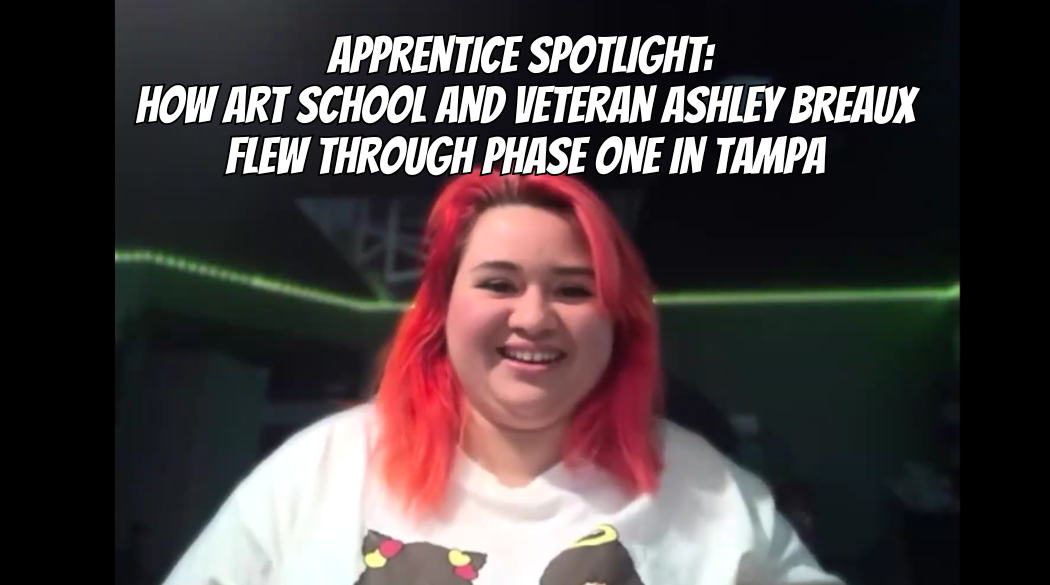
Apprentice Spotlight: How Art School and Veteran Ashley Breaux Flew Through Phase One in Tampa
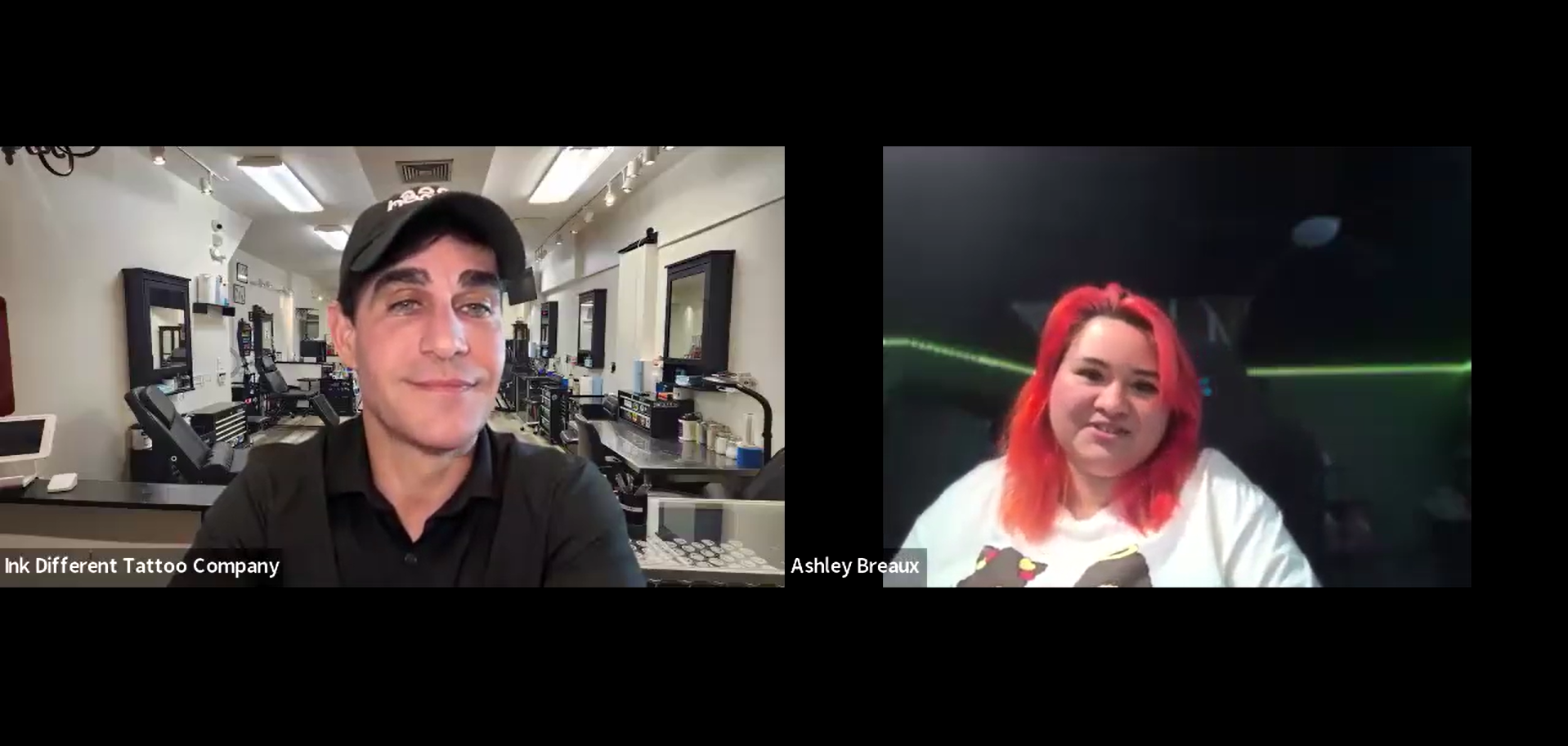
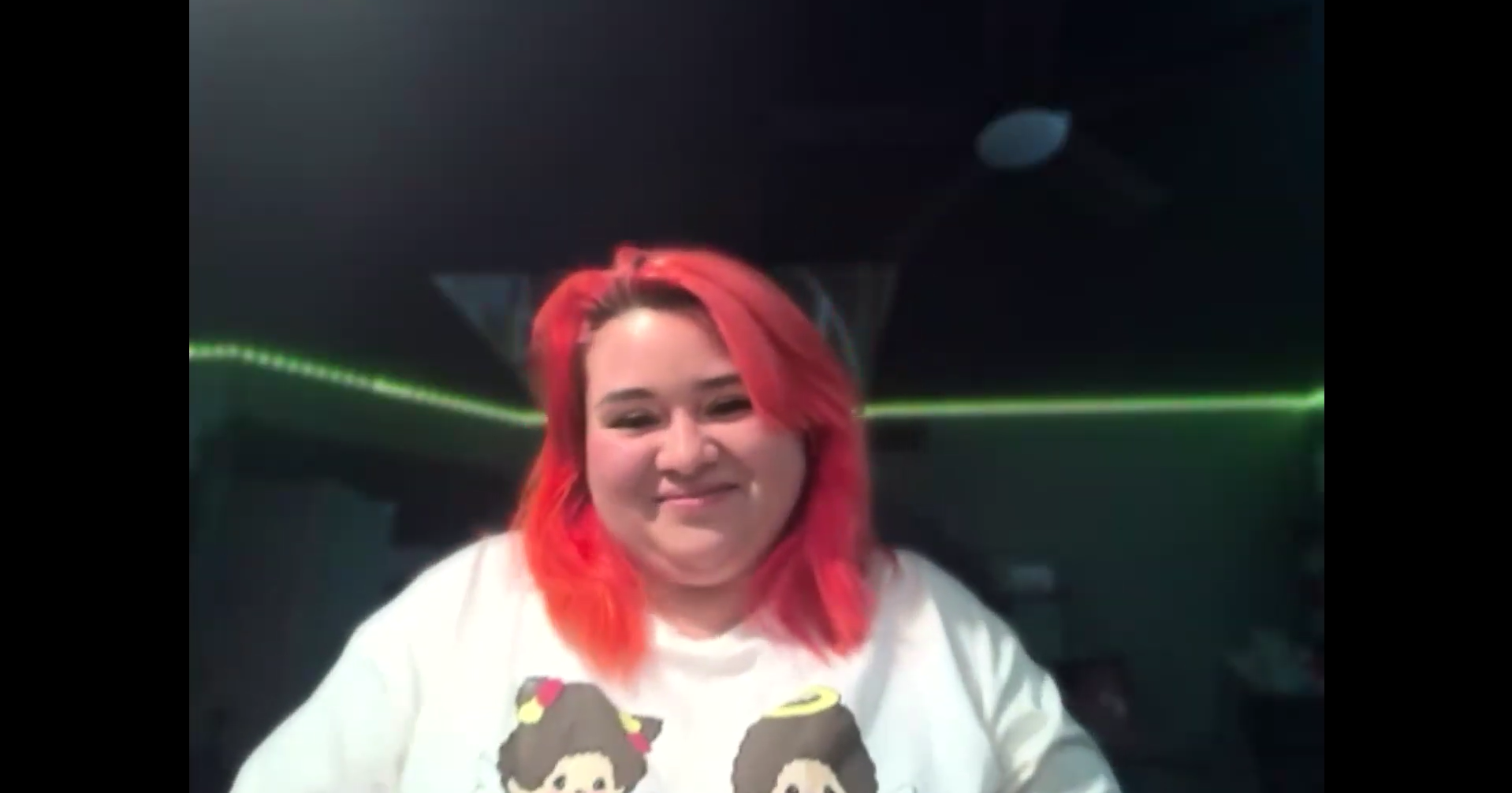
Ashley Breaux started Phase One of Ink Different’s Traditional Tattoo Apprenticeship on October 6. About five or six weeks later, she was done. She joined online classes almost every day, sitting in to listen even when she had nothing to submit. “I didn’t rush,” she says. Her instructors made sure of that. Ashley brought three years of art school and a love of designing tattoos, which she discovered in the military. She’s training toward Ink Different’s location in Tampa, Florida, and in her Apprentice Spotlight interview, she shared how her first phase went.
Key Takeaways
Her background: Three years of art school in biomedical illustration, then the military, where she designed tattoos for fellow service members.
Her choice: She could have taught herself, but she wanted to learn tattooing “the right way.”
Her pace: About five or six weeks for Phase One, attending classes almost every day.
Her biggest challenge: Simplifying her detailed illustration style so designs could actually be tattooed.
Her surprise: She loved neo-traditional, a style she didn’t even know before.
Who Is Ashley Breaux?
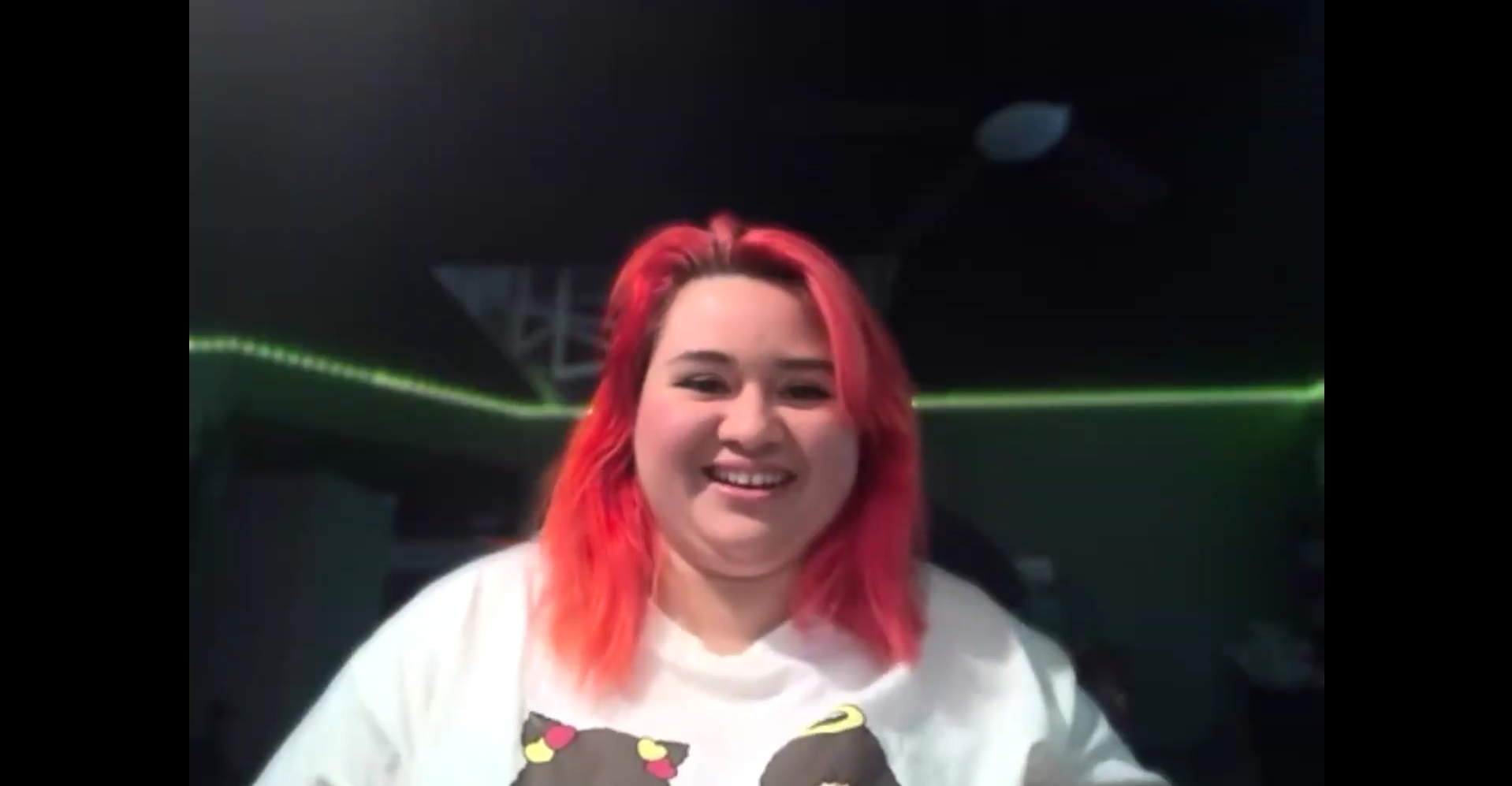
Ashley Breaux is an Ink Different apprentice in Tampa, Florida. She’ll train with her Mentor, Destiny, whom she’s already met at the tattoo studio.
She’s loved art since she was young. She joined her high school’s art program, then went to art school to study biomedical illustration, the detailed scientific artwork found in textbooks. She finished three years. “It’s a lot of money,” she says. So she joined the military.
There, she found her way to tattooing. “Every military person wants tattoos, and they wanted me to design it,” she says. “So I did, and I kind of fell in love with tattooing.”
Why Did Ashley Want to Learn Tattooing “the Right Way”?
Ashley knew she could try to teach herself. She chose not to.
Art school taught her that once you learn a technique one way, it’s hard to break that habit. “You’ve got to learn the rules to break the rules,” she says. If she taught herself to tattoo, she worried she’d get used to the wrong way.
“If I want to do this the right way,” she says, “I’ve got to be taught in a prestige place.”
She spent about a month researching schools. Ink Different was her top choice. One reason was the support after training. “Some schools will just give you something and then let you go,” she says, with no experience advertising yourself. Promoting herself isn’t her strength, so it mattered that Ink Different helps with that, too.
She’d leaned toward tattooing for years. Finally, she decided: “It was time to do it now or never, because if I didn’t do it now, I was going to keep stalling.”
Like many people who find their way to tattooing after another career, she also had to quiet her own doubts. Her husband, friends, and family reminded her that tattooing is like any other medium: you practice, and you get better.
What Is Phase One of the Traditional Tattoo Apprenticeship?
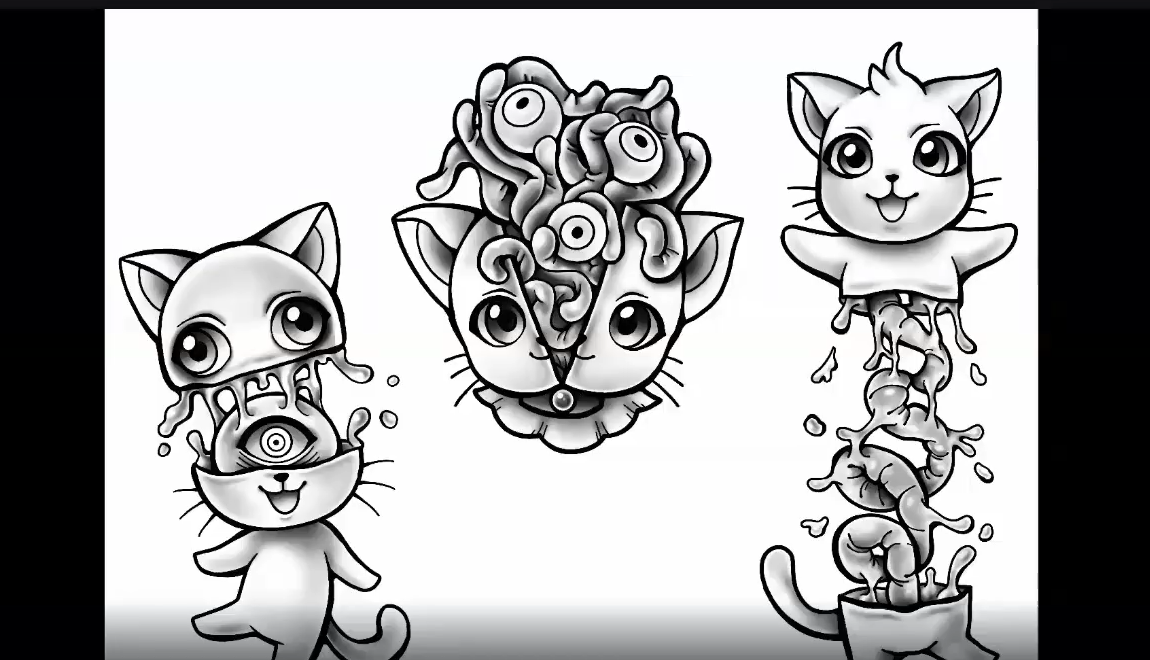
Phase One is art and design. It happens online, through live classes with working Tattoo Artists. Apprentices learn four foundational styles, then create a piece of their own choice.
For Ashley, that meant:
New school: It was October, so she combined two things she loves: cute art and a little bit of horror. The result was a Halloween piece.
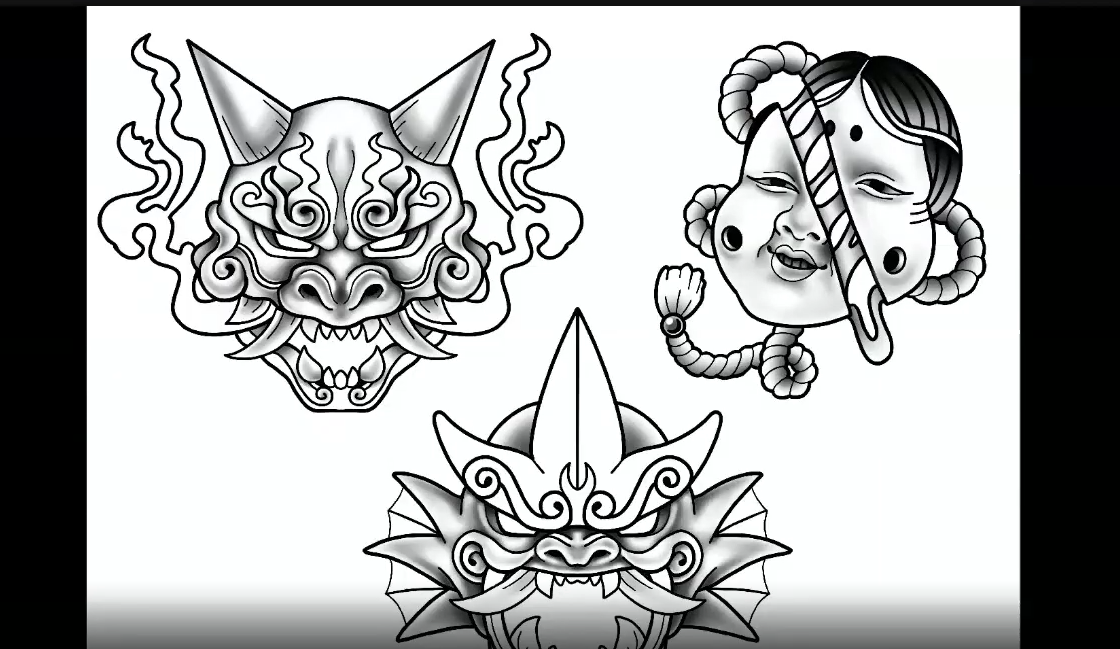
Japanese: A color Japanese piece, a style she’d never tried before.
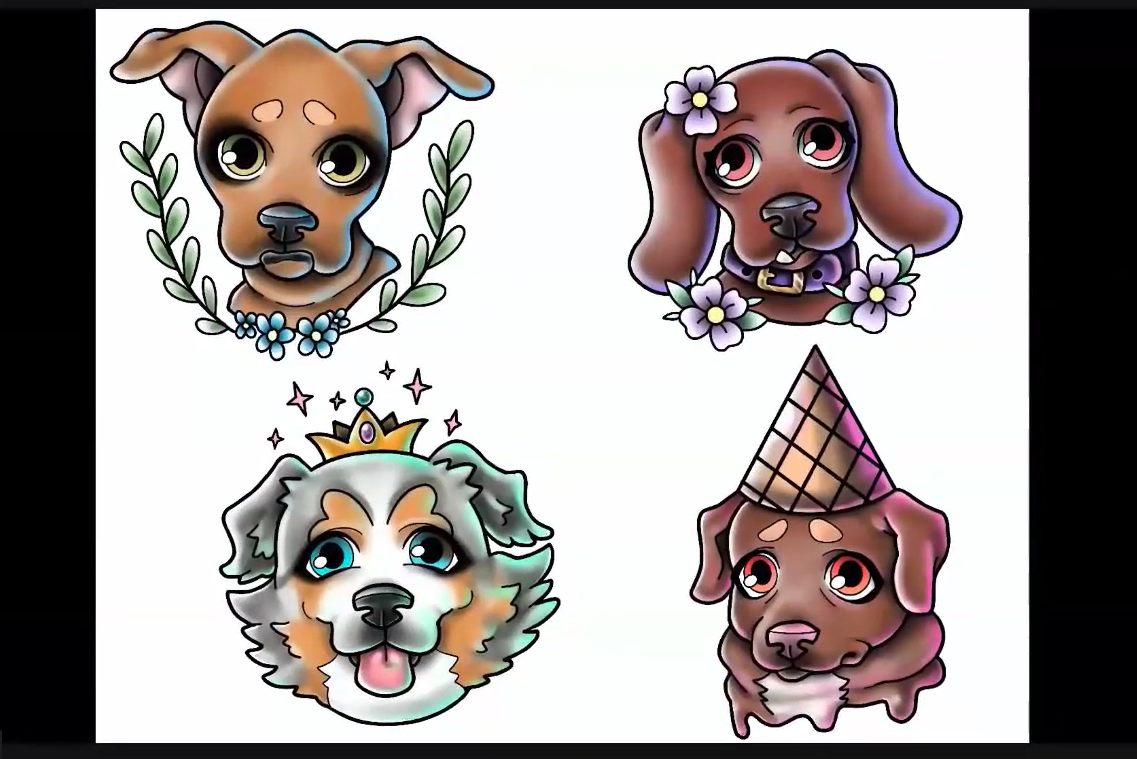
Personal choice: A friend suggested pet portraits. Ashley drew four dogs in a whimsical new school style. Two are her own dogs, and two belong to her friend.
Every design started with red pencil sketches. “That’s like my main prerogative,” she says, “to make sure everything the eye is flowing through it nicely, instead of one major thing.”
Every design also has to work as a tattoo. That’s where she learned a lot about the tools Tattoo Artists rely on, from Procreate to paper, as her instructors showed her different techniques.
How Did Ashley Fly Through Phase One So Fast?
She showed up almost every day.
“I don’t have a job,” Ashley says. “I get paid to stay at home. So I was like, well, I have all this free time. Might as well just join a class.”
She joined classes even when she had nothing to submit for review. “I like to sit in class and just listen,” she says, “because even though it may not apply to me now, it may apply to me later.” Hearing instructors critique other apprentices’ work gave her ideas for her own.
Still, it wasn’t about speed. “It seemed like I was rushing, but Julian and Matt made sure I wasn’t rushing,” she says. Her instructors sometimes even told her she’d been to too many classes and needed a break.
Pro Tip: Ashley’s habit of listening to other apprentices’ critiques helped her learn from everyone’s work, not just her own.
What Was Her Biggest Phase One Challenge?
Simplifying.
Ashley is used to detailed illustration work. Her instructors kept giving her the same feedback: “Your stuff is great, just a little more simple, so it’s easier for you to actually execute it in less time.”
That was harder than it sounds. “You would think it would be easier because you have an art background,” she says, “but it’s not as easy as people think. Simple is actually better at times.”
She credits her instructors, Martin and Julian, for helping her get there. She especially likes that Julian is “to the book.” “They gave me really good critiques, and it made my artwork actually better,” she says. “Having a second eye is so helpful, especially someone who’s already experienced.”
Trying to make designs too detailed is one of the most common early mistakes new apprentices make, and Ashley learned to work past it.
Which Styles Surprised Her?
Neo-traditional. Before Phase One, Ashley didn’t even know what it was.
“I was surprised that I actually liked neo-traditional,” she says. “It was out of my comfort zone, and I actually did enjoy it.” American traditional felt very simple at first. Neo-traditional was “a step up,” letting her do a little more.
She was also surprised by how similar Japanese is to American traditional. She hadn’t worked in any of these styles before, and learning the background behind each one made it more interesting.
What Did She Learn About Tattoo History?
Ashley took part in Ink Different’s Ink Americana history workshop. She already knew that American traditional tattooing started with sailors. The workshop went much deeper.
She learned why those early tattoos were designed the way they were, and how the style evolved. She also learned about women Tattoo Artists who weren’t respected in the industry at first, and who eventually opened their own tattoo shops.
“It was just so interesting to learn things I didn’t know about tattooing,” she says. “I even talked to my husband about it, and he was like, ‘I didn’t know that.’”
Why Does Tattooing Appeal to Her?
Ashley has worked in many mediums. Tattooing stands out for two reasons.
It lasts. She knows AI has made it harder for many artists, since people “can just AI it.” Tattooing is different. “A tattoo is something permanent, but it’s also a story to tell,” she says, “and it’s always going to stick with them no matter what.” That human element is a big part of why Tattoo Artists are still essential as technology changes other creative fields.
It connects people. Ashley draws for others, not herself. She does a lot of pet portraits for people. “Seeing the happiness come from them because something they can’t do, I can, it feels so nice,” she says. With tattooing, “you’re actually interacting with people,” and sometimes you make friends along the way.
What's Next for Ashley?
At the time of her interview, Ashley’s tattoo kit was arriving the next day. She’ll start Phase Two, machine practice on synthetic skin, with the same instructors plus Ruby and Destiny.
“I’m not really nervous about Phase Two,” she says. “Everything made me really confident and feel like I can do this. I’m more excited to learn a new way of expressing art.”
Long term, she wants to do a bit of everything. Her husband only gets black and gray tattoos, while others love color, and she wants to make each person happy. That range will also help her as she starts building her name as a Tattoo Artist.
Her family is already lining up. Her husband has said he’ll be her first client. Some relatives she didn’t even know wanted tattoos have asked too.
What Does the Traditional Tattoo Apprenticeship Include?
Ink Different’s Traditional Tattoo Apprenticeship is an 18 to 24 month, four-phase tattoo apprenticeship built for beginners. Ink Different has trained Tattoo Artists for 15 years. No prior art experience is required.
Phase One: Art and design, online.
Phase Two: Machine practice on synthetic skin, online.
Phase Three: Supervised tattoos on real clients in a tattoo studio.
Phase Four: Building independence and preparing for licensing.
Safety is part of the training, including the OSHA bloodborne pathogens standard.
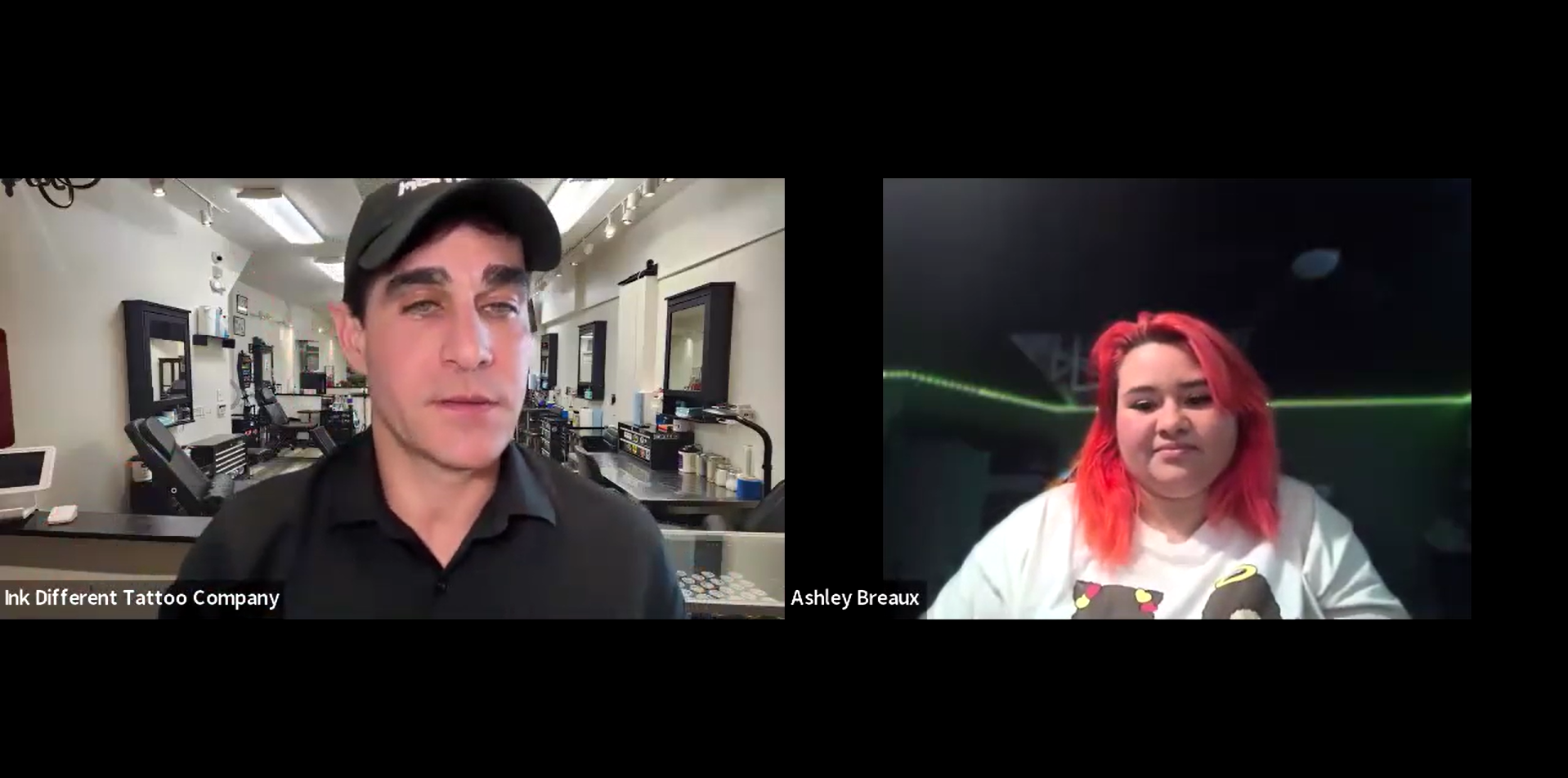
Ashley found it very different from art school, where deadlines were packed and criticism was harsh. “Here with Ink Different, you get to pick your time frame,” she says. “You don’t feel pressured.” She also appreciated how quickly Anna, from the admissions team, always responded. “Other places take weeks,” she says. “Here, it’s instant most of the time.” It’s a big part of why many people see a tattoo apprenticeship as a real alternative to college.
This is a career that comes with confidence. You’ll finish with job-ready skills, licensing support, and a guaranteed job offer at one of Ink Different’s own tattoo studios. The Traditional Tattoo Apprenticeship is available at 60+ tattoo studios nationwide.
Mentorship That Goes Further
Once you’ve built your foundation, Ink Different’s Master Mentorship connects you with Master Mentors, including Liz Cook, Kara Gutierrez, Joey Tattoo, Boneface, Jordi Pla, Kyle Dunbar, James Vaughn, Big Jaz, Marcel Oliveira, Big Ceeze, Al Fliction, BillyJack Gunter, Javi Antunez, and Sebastian Murphy.
Making Tattoo Training Accessible for Everyone
Ink Different offers Spanish-speaking locations in Denver, Orange County, New York City, Miami, San Antonio, and San Diego. Its “Good Humans” culture means you join a supportive community from day one.
Heads up: Seats are limited, with only two apprentices per tattoo studio per Mentor.
Ready to Start Your Own Phase One?
Ready to become a Tattoo Artist? Apply now to Ink Different’s Traditional Tattoo Apprenticeship and start building an AI-proof career with licensing support and a guaranteed job offer at one of Ink Different’s own tattoo studios.
Frequently Asked Questions
How long did it take Ashley to finish Phase One?
About five or six weeks. She started October 6 and attended classes almost every day, and her instructors made sure she wasn’t rushing.
What was Ashley’s biggest challenge?
Simplifying her detailed illustration style so her designs could be tattooed more easily and quickly.
Do I need art school experience to start?
No. Ashley has three years of art school, but the Traditional Tattoo Apprenticeship is built for beginners.
How long does the Traditional Tattoo Apprenticeship take?
Ink Different’s Traditional Tattoo Apprenticeship takes 18 to 24 months across four phases, with licensing support and a guaranteed job offer at one of Ink Different’s own tattoo studios.
Can veterans succeed in a tattoo apprenticeship?
Yes. Ashley served in the military and moved through Phase One in about five or six weeks.
Where can I find a tattoo apprenticeship near me?
The Traditional Tattoo Apprenticeship is available at 60+ tattoo studios nationwide, including Spanish-speaking locations in Denver, Orange County, New York City, Miami, San Antonio, and San Diego.