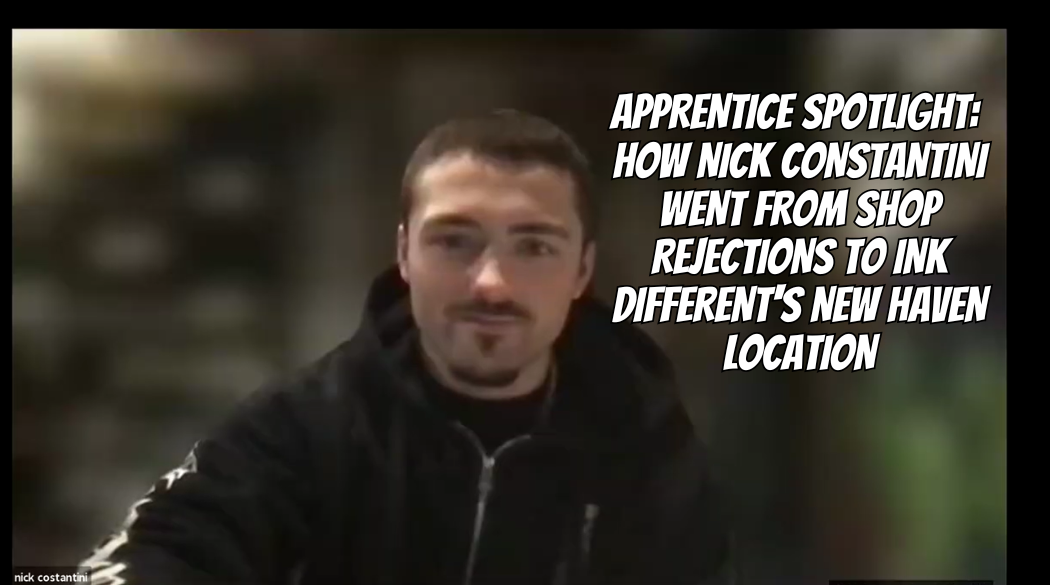
Apprentice Spotlight: How Nick Constantini Went From Shop Rejections to Ink Different's New Haven Location
The day Nick Constantini sat down for his Apprentice Spotlight interview, his Phase Two kit had just arrived. It was a long way from where he started. For a while, Nick couldn't find a single tattoo shop near him willing to take on an apprentice. "There was nowhere around me that was open to taking anybody," he says. Now he's finishing Phase One of Ink Different's Traditional Tattoo Apprenticeship, with his Connecticut permit signed and a spot waiting at Ink Different's New Haven location. Here's how he got there.
Key Takeaways
His start: Self-taught, with no art school background.
His struggle: Hard rejections from local tattoo shops, and one shop owner who never gave him a clear answer.
His move: He gave himself a deadline, applied to Ink Different, and heard back immediately.
His Phase One: Japanese, new school, and neo-traditional pieces, plus a lesson in "realistic, but not realism."
His next step: Phase Two, with his kit in hand and in-studio training ahead with Charmaine in New Haven.
Who Is Nick Constantini?
Nick Constantini is an Ink Different apprentice in Connecticut. He'll train at Ink Different's New Haven location, in the East Rock neighborhood, with Charmaine.
He doesn't have an art school background. "I was never a big artist back in the day," he says. He started getting tattooed as soon as he was legally old enough, and his interest grew from there. Over the years, he taught himself and worked on his drawing.
What draws him to tattooing is the people. "I like working with people and helping create something," he says. "That's my main reason for why I want to be a Tattoo Artist."
Why Was It So Hard to Find a Tattoo Apprenticeship?
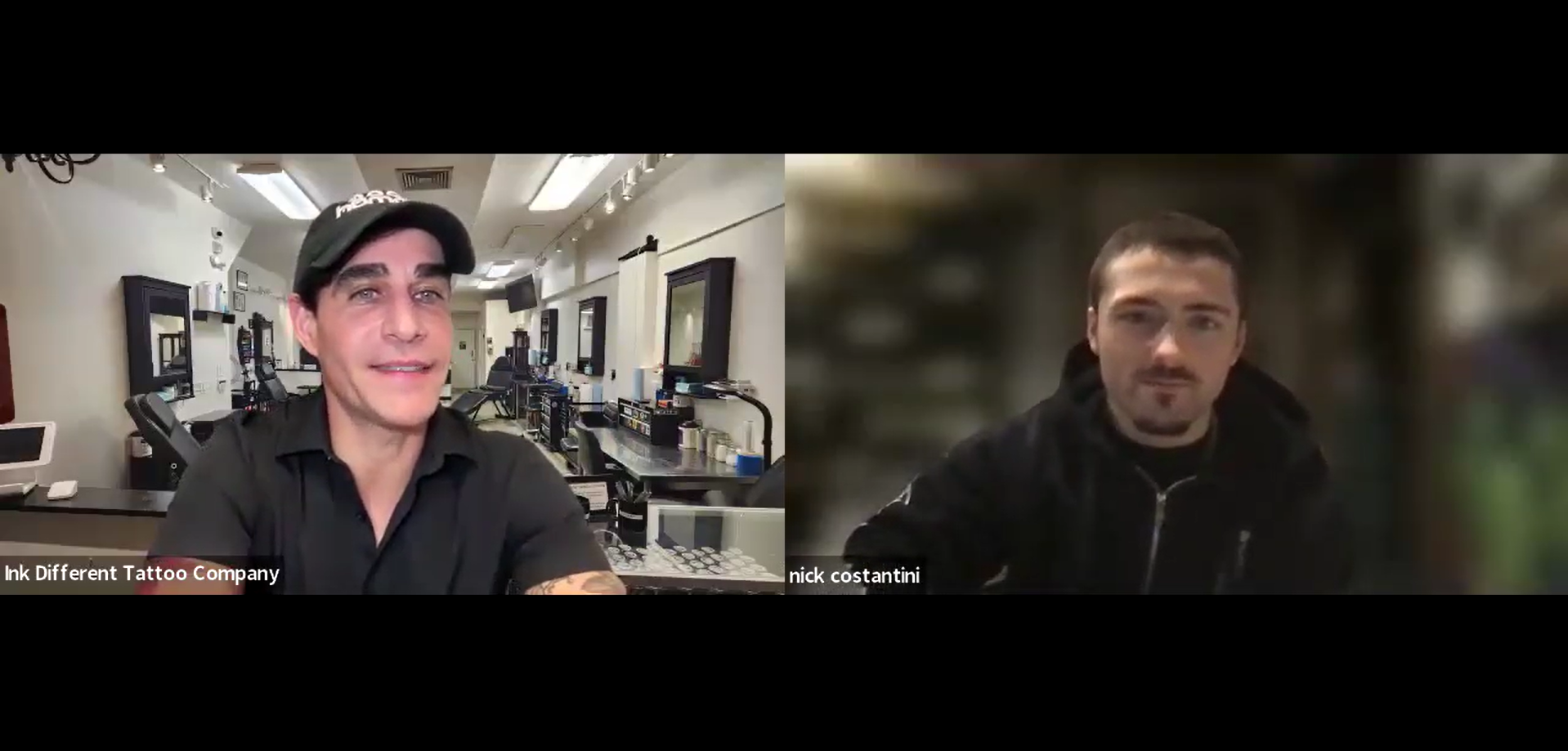
Nick ran into two problems. Most local tattoo shops weren't taking apprentices at all. "I definitely heard a lot of hard nos," he says. Then there was the shop owner he'd been talking with about apprenticing. "I was never getting a definitive answer," he says.
Ink Different's Paul-Anthony Surdi, who has spent 15 years in tattooing, explains that many longtime Tattoo Artists hesitate to take on apprentices. Some have trained someone for months, only to watch that person move away.
Nick came to see it the same way. "It wasn't anything personal," he says, "but it definitely was discouraging."
If you're facing the same wall, you're not alone. Here's a look at how hard it can be to land a tattoo apprenticeship, and why.
What Made Him Choose Ink Different?
Nick had seen Ink Different's ads on social media. When the waiting with the shop owner dragged on, he gave himself a deadline. "I just got tired of it, so I applied to Ink Different instead, and I was answered immediately," he says.
The structure appealed to him. "When I saw a program that took a school approach to doing an apprenticeship, I was like, 'This seems like the best option to get my career started,'" he says.
Applying was a mix of nerves and relief. "You get a little nervous because people are going to be looking at your art and judging it," he says. "But I was more just happy. It felt like, 'All right, this is my start.'"
Other New Haven apprentices have taken similar paths, like Edward Cuff, who nearly walked away before coming back to his tattoo apprenticeship.
What Did He Create in Phase One?
Phase One is art and design. It happens online, before apprentices use a tattoo machine. Nick started with pencil flash sheets on paper, then moved to Procreate on an iPad.
Japanese
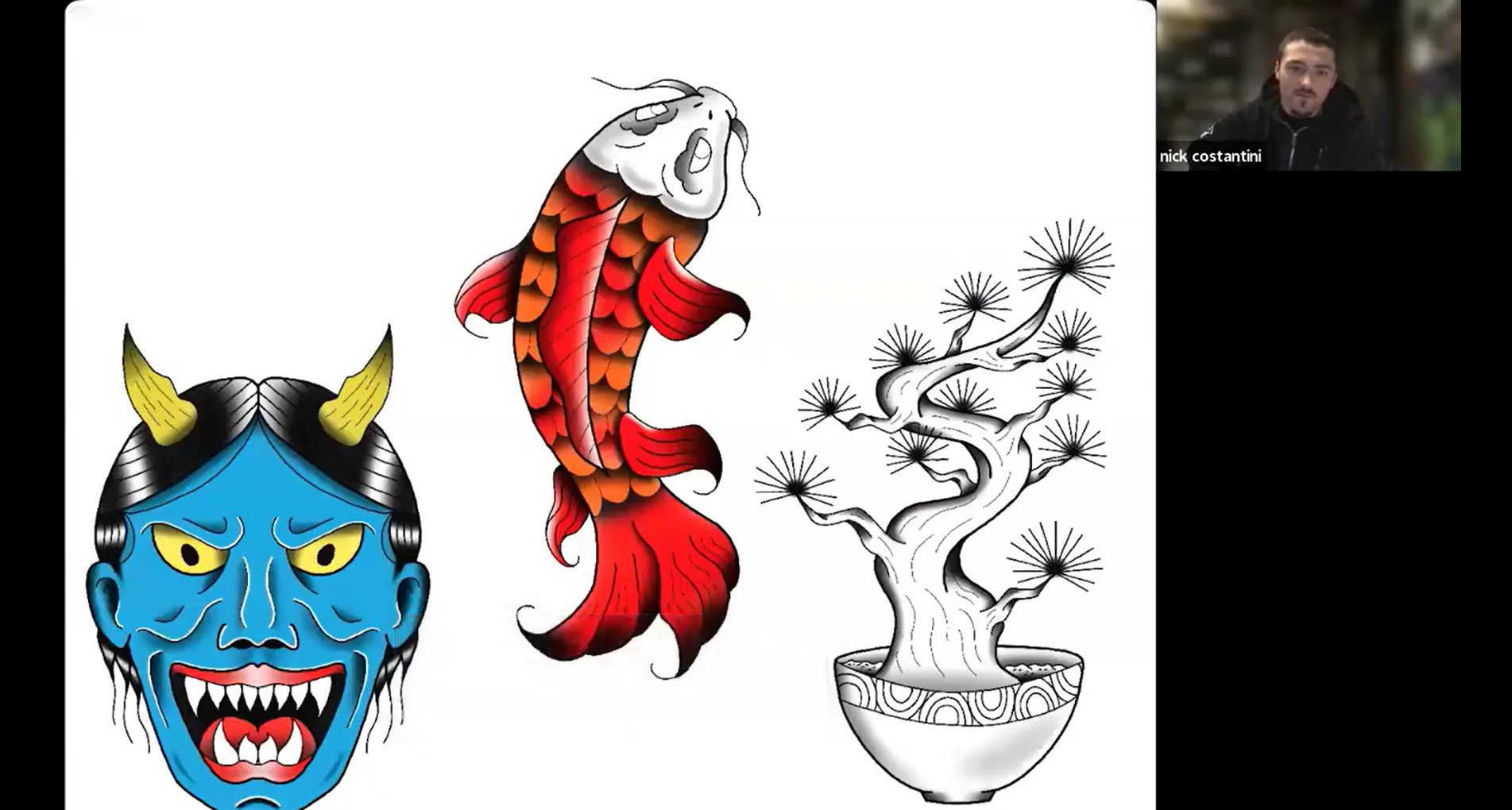
Nick was already drawn to Japanese tattooing and had studied the style. His sheet included a demon mask, a koi fish, and a bonsai tree in a bowl, all with bold colors. "I try to bring color into all of my flash sheets," he says.
New school
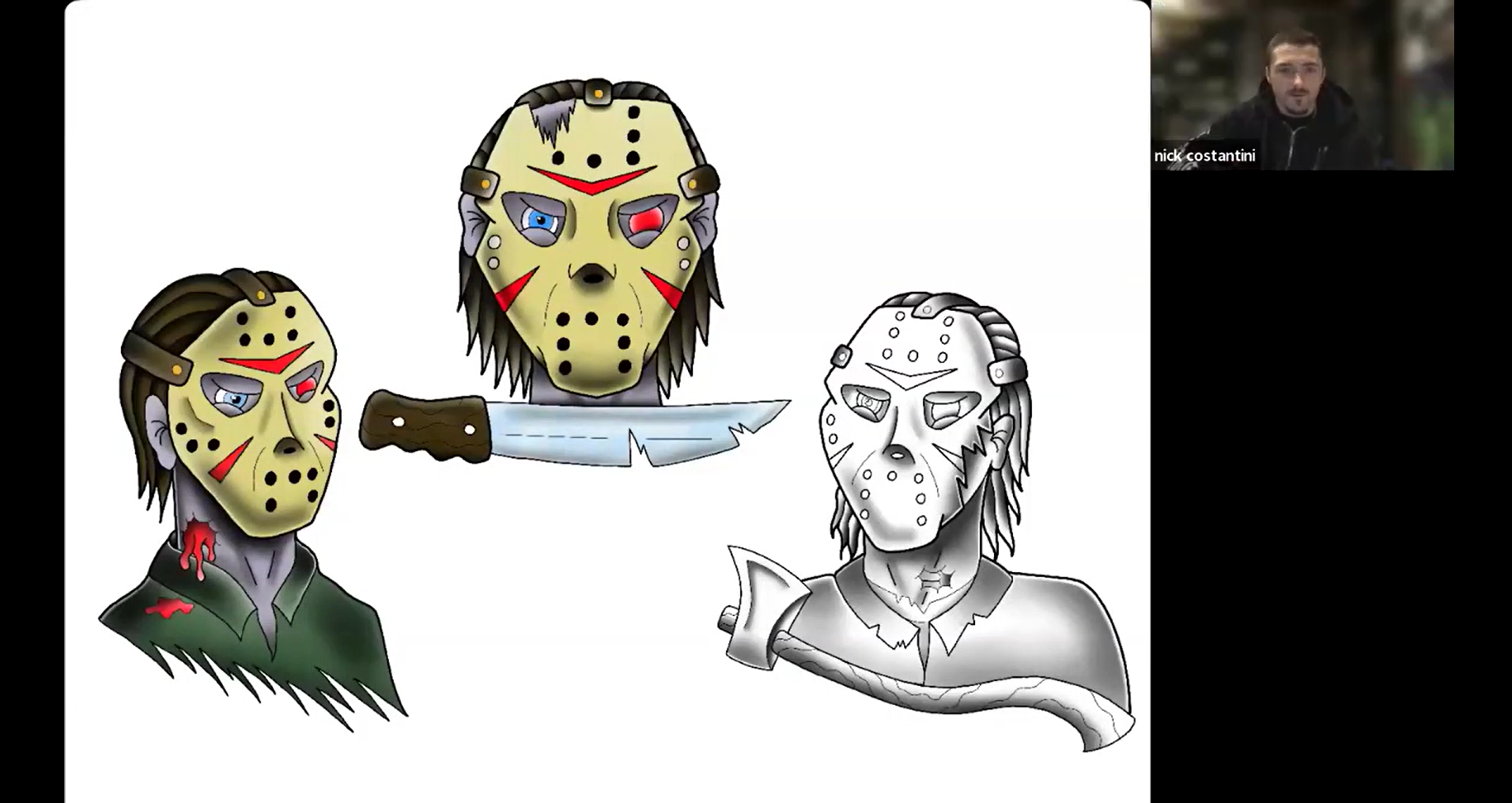
New school, with its bright colors and exaggerated cartoon style, took him out of his comfort zone. He chose a horror theme. "I was a little nervous to do it because it was so different and out of my realm," he says. "But it was cool to experiment and try something new. I was happy with the results."
Neo-traditional
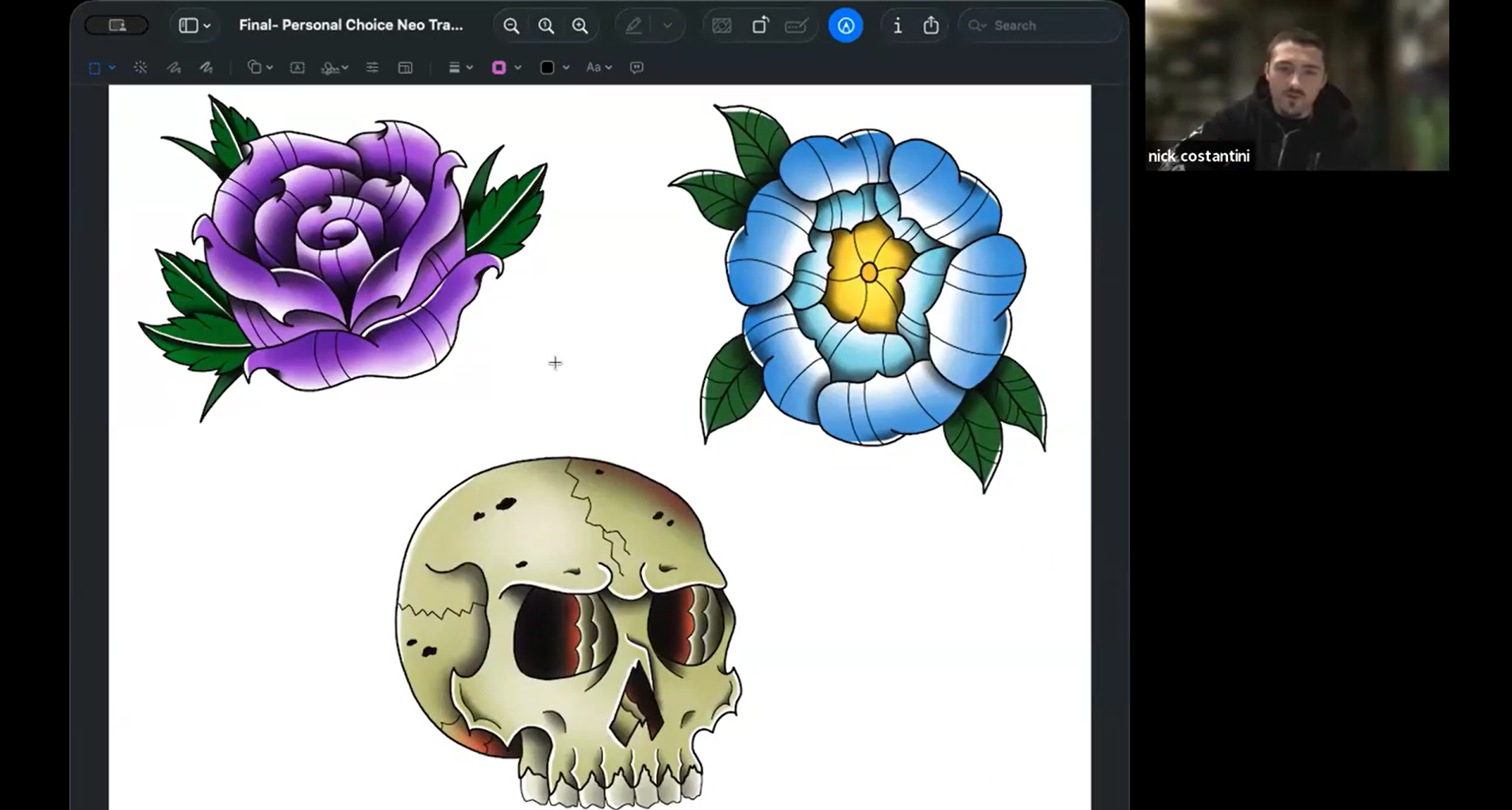
For his personal choice piece, he chose neo-traditional. The biggest challenge was simplifying. "I like doing a lot of detail, so that was the hardest thing: thinking of a design but making it simple," he says.
His instructors taught him to work with just two line weights. Martin summed up the style with a phrase Nick took to heart: "realistic, but not realism."
Tattoo history
Nick enjoyed Ink Different's Ink Americana history workshop with Martin. "It was very interesting," he says. "Martin's great to talk to. He's very entertaining, so it makes it easy to learn."
How Does He Work With His Instructors?
Nick has worked with Julian, Martin, and Matt, and he likes switching between them. "Say I get my red pencils passed by Martin, and then Julian checks my blues," he says. "I would try to switch it up between instructors just to get different eyes on it."
His approach to feedback is simple. "You can't get frustrated with feedback," he says. "You're here to learn, and that's your teacher. Just take it, move forward and do what they asked you to fix."
Taking feedback well keeps you clear of one of the biggest mistakes aspiring tattoo apprentices make.
How Does He Fit Classes Around His Job?
Nick works a job, so he checks the class schedule whenever he's off. "Anytime you have spare time, even just two hours, you've got to lock yourself into a class," he says.
His routine:
Multiple classes a week: On top of the minimum weekly attendance.
Late-night options: "There are times when I'm not around until 7 p.m., and I'm able to do a night class until midnight," he says.
Coming prepared: He finishes his work beforehand so he's ready when class starts.
Moving at his own pace: "I'm not trying to rush, but I want to get this started. Any spare time I have, it's going right into this."
For many people, training around a job is part of what makes a tattoo apprenticeship a workable career change.
What Is Ink Different's New Haven Location Like?
Ink Different owns and operates its New Haven tattoo studio in East Rock. According to Paul, the building was a tattoo shop for about 20 years before Ink Different took it over.
Nick has already been there. He met with Charmaine to get his state permit signed. In Connecticut, the Department of Public Health requires student tattoo technicians to train under the personal supervision of a licensed tattoo technician, for up to two years, with a notarized statement from their supervisor (CT DPH Training Permits). The department lists 2,000 hours of supervised practical training among the paths to a full license (CT DPH Licensing Requirements).
Here's more on becoming a Tattoo Artist in New Haven, and Connecticut residents can also look into vocational rehab funding options.
What's Next for Nick?
Nick is ready for machines. "I'm honestly not really nervous about machines at all," he says. "I'm really excited and eager to get going."
Long term, he wants to work in illustrative, semi-realistic black and gray, plus neo-traditional. Black and gray is also what he wears himself; every tattoo he has is black and gray.
People in his life are already asking him for tattoos. And he's honored to be featured. "It's cool to be picked for something like that," he says, "because I have been trying to work hard at it."
When he's ready to share his work, these platforms can help him reach future clients. Some Tattoo Artists eventually go further still, from tattoo apprentice to tattoo studio owner.
What Does the Traditional Tattoo Apprenticeship Include?
Ink Different's Traditional Tattoo Apprenticeship is an 18 to 24 month, four-phase tattoo apprenticeship built for beginners. Ink Different has trained Tattoo Artists for 15 years. No prior art experience is required.
Phase One: Art and design, online. Nick is finishing up.
Phase Two: Machine practice on synthetic skin, online.
Phase Three: Supervised tattoos on real clients in a tattoo studio.
Phase Four: Building independence and preparing for licensing.
Safety is part of the training, including the OSHA bloodborne pathogens standard.
You'll finish with job-ready skills, licensing support, and a guaranteed job offer at one of Ink Different's own tattoo studios. The Traditional Tattoo Apprenticeship is available at 60+ tattoo studios nationwide.
Mentorship That Goes Further
Once you've built your foundation, Ink Different's Master Mentorship offers advanced training with Master Mentors like Jordi Pla.
Making Tattoo Training Accessible for Everyone
Ink Different offers Spanish-speaking locations in Denver, Orange County, NYC, Miami, San Antonio, and San Diego. Seats are limited, with only two apprentices per tattoo studio per Mentor.
Ready to Take Your First Step?
Ready to become a Tattoo Artist? Apply now to Ink Different's Traditional Tattoo Apprenticeship.
Frequently Asked Questions
Why couldn't Nick find a tattoo apprenticeship locally?
Most nearby tattoo shops weren't taking apprentices, and the one shop owner he talked with never gave him a definitive answer.
How did Nick find Ink Different?
Through social media ads. He applied after giving himself a deadline and heard back right away.
Do I need art experience to apply?
No. Nick is self-taught, and the Traditional Tattoo Apprenticeship is built for beginners.
Where will Nick train in person?
At Ink Different's own tattoo studio in New Haven's East Rock neighborhood, with Charmaine.
How long does the Traditional Tattoo Apprenticeship take?
Ink Different's Traditional Tattoo Apprenticeship takes 18 to 24 months across four phases, with licensing support and a guaranteed job offer at one of Ink Different's own tattoo studios.
Is there a Spanish-speaking option available?
Yes. Ink Different offers Spanish-speaking locations in Denver, Orange County, NYC, Miami, San Antonio, and San Diego.