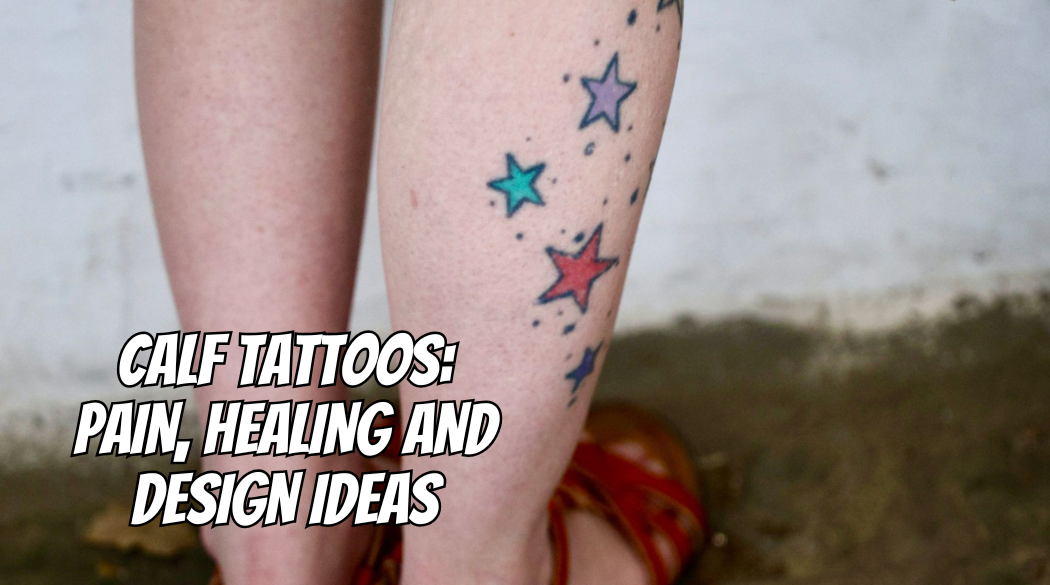
Calf Tattoos: Pain, Healing and Design Ideas
Calf tattoos are one of the more comfortable and versatile placements. The back of the calf has a thicker layer of muscle, so it usually hurts less than bony areas like the shin or ankle. Its broad, curved surface also suits larger, detailed designs. Most calf tattoos heal on the surface in about two weeks, with deeper healing taking longer.
This guide is part of our tattoo placement series. It covers what to expect from a calf tattoo, including pain, healing, aftercare, how it ages and design ideas.
Key Takeaways
Pain: Usually low to moderate on the back of the calf, and higher near the shin, ankle and back of the knee.
Healing: About two weeks on the surface, with deeper healing taking up to several months.
Aging: The calf holds detail well, but sun exposure in shorts can fade ink over time.
Design options: The space suits florals, portraits, Japanese-inspired work, script and leg sleeves.
Aftercare: Keep it clean and moisturized, and avoid friction, soaking and sun while it heals.
Why Do People Choose Calf Tattoos?
People choose calf tattoos for the generous space, relatively manageable pain and how easy they are to show or cover.
The calf offers a smooth, rounded surface that’s big enough for detailed work and reads well from a distance. It’s easy to show off in shorts and easy to cover with pants for work. Many people also start a calf piece with plans to expand it into a larger leg design later.

How Much Do Calf Tattoos Hurt?
Calf tattoos usually fall in the low to moderate range, especially on the fleshy back of the calf. Pain tends to increase near bonier, thinner-skinned areas.
Pain is personal, but these factors make a difference:
Exact placement: The muscular back of the calf is usually more comfortable than the shin, inner ankle or back of the knee.
Session length: Longer sessions can feel more intense as your body tires.
Rest and hydration: Getting good sleep and staying hydrated can help you feel more comfortable.
Type of work: Heavy shading and color packing can feel more intense than linework.
If you’re planning a larger calf piece, ask your Tattoo Artist whether it makes sense to split it into multiple sessions.
How Long Do Calf Tattoos Take to Heal?
Most tattoos take about two weeks to heal on the surface, according to Mayo Clinic. Calf tattoos follow a similar timeline, though bigger pieces may take a bit longer.
Deeper healing takes longer. According to Healthline, the skin below a tattoo can take as long as six months to fully heal.
The calf moves every time you walk, and pants, socks and sheets can rub against it. Keeping friction to a minimum helps your tattoo heal smoothly.
How Do You Care for a Healing Calf Tattoo?
Keep it clean and lightly moisturized, and protect it from friction, water and sun while it heals. Always follow your Tattoo Artist’s instructions first.
Follow your bandage instructions. Keep the initial wrap or second-skin bandage on for as long as your Tattoo Artist recommends.
Wash gently. Use lukewarm water and a mild, fragrance-free soap, then pat dry with a clean paper towel.
Moisturize lightly. Apply a thin layer of the product your Tattoo Artist recommends. The American Academy of Dermatology suggests a water-based lotion when tattooed skin feels dry.
Avoid friction. Wear loose pants or shorts, and skip tight leggings or tall socks that rub the tattoo.
Avoid soaking. Skip baths, pools, hot tubs and open water until it’s healed. The CDC advises people with new tattoos to stay out of saltwater and brackish water if possible.
Keep it out of the sun. Cover it or stay in the shade while it heals.
Don’t pick or scratch. Let flakes fall off naturally.
If you notice spreading redness, increasing pain or swelling, pus or fever, contact a healthcare provider. Mayo Clinic notes that skin infections are possible after tattooing.
How Do Calf Tattoos Age Over Time?
Calf tattoos generally hold up well, thanks to the area’s size and padding. The biggest factor in long-term fading is sun exposure.
If you wear shorts a lot, your calf tattoo gets plenty of sun. The AAD notes that UV light can fade some tattoo inks, so once your tattoo is healed, sunscreen on sunny days helps keep it bold.
Design choices matter too. Bold lines and well-saturated color usually age better than very fine detail packed into a small area. The calf’s size gives your Tattoo Artist room to keep details readable.
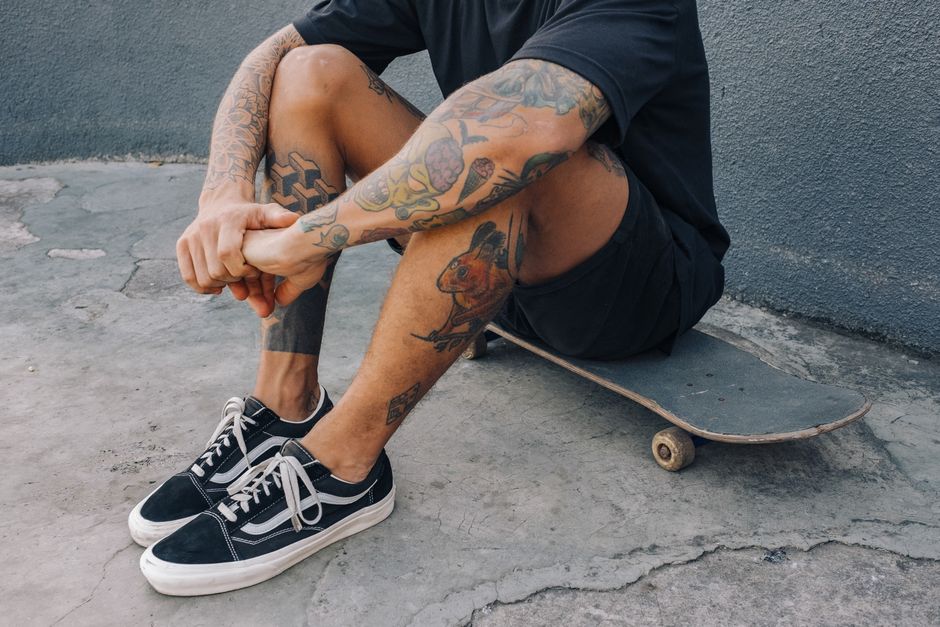
What Are the Best Calf Tattoo Design Ideas?
The calf suits designs that make the most of its size and curve.
Florals and botanicals: Roses, peonies and vines can wrap naturally around the calf.
Portraits and realism: Faces, animals and black and gray work show up well on the smooth surface.
Japanese-inspired work: Koi, dragons and waves flow with the shape of the leg.
Script and lettering: Quotes and names can run vertically along the calf.
Geometric and mandala designs: Symmetrical patterns play off the calf’s rounded form.
Memorial pieces: Meaningful tributes that are easy to show or keep private.
Leg sleeves: Many people start with a calf piece and build it into a larger design over time.
Tattoos are common, and the variety of designs keeps growing. According to Pew Research Center, 32% of Americans have a tattoo, and 22% have more than one. That’s a lot of people who come back for more.
Why Does Your Tattoo Artist’s Skill Matter?
The calf curves and flexes, so keeping lines crisp and color even takes real technical skill.
An experienced Tattoo Artist knows how to stretch the skin properly, size the design to the calf’s shape and pack color so it heals evenly. They’ll also follow strict hygiene practices, like the OSHA Bloodborne Pathogens Standard.
When you’re choosing a Tattoo Artist, look through their healed work, especially on legs. Healed photos show how their tattoos hold up after the skin settles.
Curious About Tattooing as a Career?
If learning about placements has you thinking about creating tattoos yourself, Ink Different’s Traditional Tattoo Apprenticeship teaches the skills behind work like this, from linework to wrapping a design around a curved, moving surface.
For 15 years, Ink Different has trained aspiring Tattoo Artists as a college alternative. The Traditional Tattoo Apprenticeship runs 18 to 24 months across four phases, with in-person training at one of 60+ tattoo studios nationwide. No prior art experience is needed.
Phase 1, Art and Design Principles: Drawing, shading, digital design and building a portfolio.
Phase 2, Machine Mastery and Practice Tattooing: Hand-control exercises, machine operation, lining, shading and color packing.
Phase 3, Supervised Tattoos: Tattooing real skin under a Mentor’s direct supervision.
Phase 4, Junior Artist Externship: Building client relationships and refining your skills while you start earning.
You’ll finish with job-ready skills, licensing support and a guaranteed job offer at one of Ink Different’s own tattoo studios. Interest-free payment plans help make training more accessible.
For Tattoo Artists who want to go further, the one-year, in-person Master Mentorship offers training with celebrity and award-winning Master Mentors, including Al Fliction, Liz Cook, Kyle Dunbar, Boneface, Jordi Pla and Marcel Oliveira.
We also offer Spanish-speaking locations in Denver, Orange County, NYC, Miami, San Antonio and San Diego, and our “Good Humans” culture means you join a supportive, family-like community. Each Mentor takes just two tattoo apprentices per tattoo studio, so seats fill up quickly.
Ready to learn? Apply now to Ink Different’s Traditional Tattoo Apprenticeship, or fill out our quick questionnaire to see if it’s right for you.

Frequently Asked Questions
Do calf tattoos hurt a lot?
Usually not as much as many placements. The back of the calf is cushioned by muscle, though pain tends to increase near the shin, ankle and back of the knee.
How long does a calf tattoo take to heal?
About two weeks on the surface for most people. Deeper healing can take up to several months.
Can I wear pants after getting a calf tattoo?
Loose pants are fine. Avoid tight leggings, tall socks or rough fabrics that rub the tattoo while it heals.
Do calf tattoos fade?
All tattoos soften over time, and sun exposure is a big factor for calves. Once healed, sunscreen helps keep your calf tattoo bold.
What size is best for a calf tattoo?
The calf can handle anything from small pieces to large, detailed work. Medium to large designs often make the best use of the space.
Can a calf tattoo become part of a leg sleeve?
Yes. Many people start with a calf piece and expand it into a larger leg design. Let your Tattoo Artist know if that’s your plan.