Can You Get a Tattoo If You Have Eczema or Psoriasis
You have been staring at that design for months. Maybe it is a tribute, maybe it is a symbol of who you are becoming. But every time you get close to booking the appointment, a quiet fear stops you: what if your eczema or psoriasis ruins it? At Ink Different Tattoos, we hear this worry all the time, from clients and from aspiring artists who want to serve people with sensitive skin.
Getting a tattoo with eczema or psoriasis is possible when your skin is calm and flare-free, and requires careful timing, dermatologist approval, and a skilled Tattoo Artist who understands sensitive skin conditions. The good news is that a skin condition does not automatically close the door on your tattoo dreams.
Key Takeaways
Yes, usually: Most people with eczema or psoriasis can get tattooed when the skin is calm, clear, and flare-free at the intended site.
Timing is everything: Never tattoo during active flare-ups; wait for the area to be fully healed and stable for months.
Placement matters: Choose skin that rarely flares, and always consult your dermatologist before booking your appointment.
Koebner risk: Psoriasis can spread to newly injured skin; tattooing carries real risk of triggering new plaques on your design.
Skilled artists matter: A trained Tattoo Artist reads skin, adjusts technique, and knows when to decline—protecting both you and your tattoo.
Can you get a tattoo if you have eczema or psoriasis?
Yes, most people with eczema or psoriasis can safely get a tattoo, provided the skin at the chosen location is clear, calm, and free of active flare-ups at the time of your session.
A chronic skin condition is not a permanent "no." It is more like a caution sign that tells you to slow down, plan carefully, and work with the right people. Millions of people living with eczema and psoriasis carry beautiful tattoos that healed cleanly and hold their color.
The key is understanding your own skin. When your condition is well managed and the area you want tattooed is healthy, the odds are strongly in your favor. When your skin is inflamed, cracked, or flaring, that is your body asking you to wait.
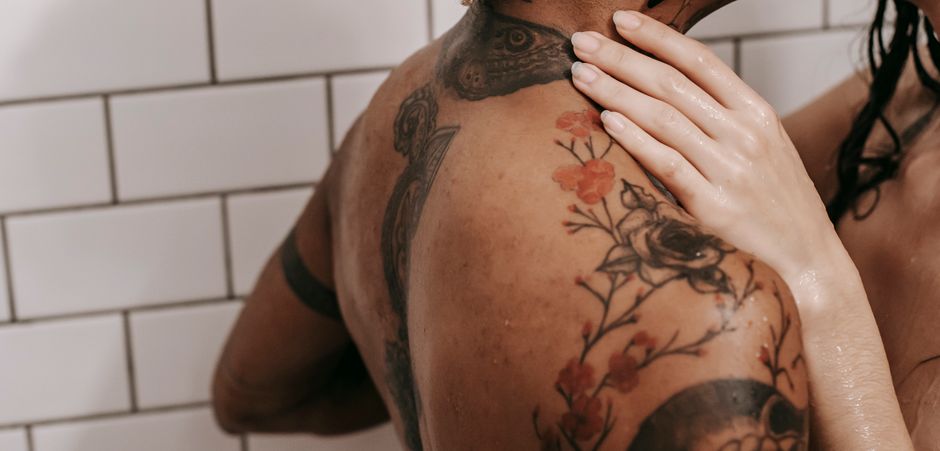
What happens to your skin when you tattoo over eczema or psoriasis?
Tattooing punctures the skin thousands of times, which can trigger inflammation, delayed healing, or a flare-up in people who have eczema or psoriasis.
Think of your skin as soil. Healthy soil accepts a seed and lets it take root. Damaged, dry, or inflamed soil struggles to hold anything. Tattooing on compromised skin can lead to patchy ink, slow healing, and irritation that extends your recovery window.
For people with eczema, the skin barrier is already weaker and more reactive. That can mean itching, redness, and a higher chance of infection during the healing window. Following trusted aftercare, like the guidelines from the American Academy of Dermatology, becomes even more critical for your results.
Tip: Never let anyone tattoo over an active eczema patch or a psoriasis plaque. Wait until the area is completely healed and the skin looks and feels normal to the touch.
Why does the Koebner phenomenon matter for people with psoriasis?
The Koebner phenomenon is when psoriasis develops on newly injured skin, meaning a tattoo can trigger a new plaque right in the middle of your design.
This is the single biggest reason people with psoriasis need to plan carefully. Because a tattoo is a controlled skin injury, it can provoke the condition to appear where the needle worked. That new plaque can distort the tattoo you invested time and money into.
Not everyone with psoriasis experiences Koebnerization, but there is no reliable way to know in advance whether you will. This is exactly why a conversation with your dermatologist should come before your consultation with a Tattoo Artist. Knowledge is your best defense.
When is it safe to get tattooed with a skin condition?
It is safe to get tattooed when your skin condition is stable, the target area has been flare-free for several months, and your dermatologist has confirmed the site is healthy.
Timing separates a smooth experience from a painful mistake. If you get tattooed during a flare, you are stacking one skin injury on top of another. If you wait for a calm stretch, you give your body the best chance to accept the ink and heal cleanly.
Season and lifestyle play a role too. Many people find their eczema or psoriasis calms during certain times of year, which can be a smart window to book. If you are also weighing a bigger life move, our post on why spring is the best time to become a Tattoo Artist speaks to the power of good timing and aligned decisions.
How do you prepare your skin for a tattoo if you have eczema or psoriasis?
Prepare by consulting your dermatologist, choosing a flare-free location, keeping skin moisturized, and booking only during a stable stretch when the area is fully healed.
Preparation is where you take back control. Follow these steps and you transform uncertainty into a solid plan:
Step 1: Talk to your dermatologist. Get a professional read on your condition and ask which areas of your body are safest to tattoo.
Step 2: Choose your placement wisely. Pick skin that rarely, if ever, flares. Avoid elbows, knees, and other classic psoriasis and eczema hot spots.
Step 3: Time it during a calm period. Book only when the target area has been clear and flare-free for at least three to six months.
Step 4: Hydrate and nourish your skin. Keep the area moisturized in the weeks leading up to your session to strengthen your skin barrier.
Step 5: Choose a trained, licensed Tattoo Artist. Work with someone who follows OSHA bloodborne pathogen standards and understands sensitive skin challenges.
Step 6: Commit to careful aftercare. Follow both your artist's and your dermatologist's healing instructions precisely for best results.
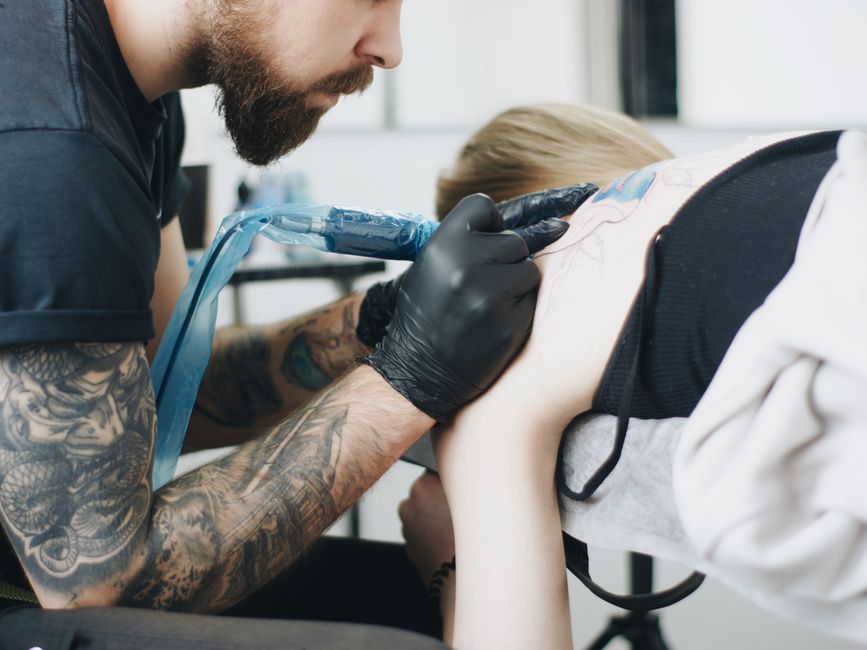
What should a tattoo artist know about working on sensitive skin?
A skilled Tattoo Artist should know how to read skin, ask the right health questions, adjust technique and pressure, and refuse to tattoo an active flare, even when the client is eager.
This is where craftsmanship truly separates the professionals from the amateurs. Reading skin is a learned skill, not a lucky guess. A well-trained artist recognizes warning signs, understands healing patterns specific to conditions like eczema and psoriasis, and knows when to say "not today."
That judgment protects clients and reputations. It is also the kind of expertise you cannot download or fake, which is exactly why hands-on, live mentorship matters so much. If you want to see what beginners often get wrong, read our guide on mistakes aspiring Tattoo Apprentices should avoid.
This is also a reminder of why human artists remain irreplaceable. A machine cannot feel skin, adapt to a flare, or make an ethical call. Our post on why Tattoo Artists are still essential digs into that AI-proof reality and the human touch that matters.
How do you become a Tattoo Artist who understands sensitive skin?
You become that kind of Tattoo Artist through structured, hands-on training under experienced Mentors who teach skin science, safety, and technique, not through guesswork or online shortcuts.
Maybe you are reading this because you are the client. Or maybe something deeper is stirring, a feeling that you are stuck in a job that drains you while your creative potential sits untapped. If handling delicate, complex skin excites you instead of scaring you, that is a seed worth planting right now.
The people who serve clients with eczema, psoriasis, scarring, and other challenges are the artists who trained seriously. They chose real education over trial and error. That path is open to you, and it does not require a college degree. Learn why so many are choosing this route in our piece on tattoo apprenticeships as a college alternative.
What does the Traditional Tattoo Apprenticeship include?
Our Traditional Tattoo Apprenticeship is an 18 to 24 month, four-phase training program that takes you from complete beginner to a job-ready, licensed professional, with no prior art experience required.
For 15 years, Ink Different Tattoos has trained aspiring artists to build a real, sustainable career in tattooing. You train hands-on in working tattoo studios, learning on real skin under real Mentors. This is where you learn to read complex skin conditions the way the pros do.
A career that comes with confidence
You graduate with job-ready skills, licensing support, and a guaranteed job offer at one of our tattoo studios, so you can step into your career knowing your craft holds up. The Bureau of Labor Statistics tracks craft and fine artists as a real, growing field with solid career potential.
Mentorship that pushes your brand and skills further
If you want to go deeper, our one-year, in-person Master Mentorship connects you with celebrity and award-winning Mentors like Al Fliction, Liz Cook, Kyle Dunbar, Boneface, and Jordi Pla. It is built for mastering a specific style, growing your career, and even owning your own studio one day.
Making tattoo training accessible for everyone
We offer Spanish-speaking locations in Denver, Orange County, NYC, Miami, San Antonio, and San Diego, so language never becomes the barrier between you and your future. Our "Good Humans" culture means you join a supportive, family-like community that has your back from day one through graduation and beyond.
Remember: Seats in our hands-on tattoo apprenticeship are limited by design, because live mentorship cannot be mass-produced.
Ready to become a Tattoo Artist?
The clients who need artists who truly understand sensitive skin are out there right now, waiting for someone like you.
Ready to become a Tattoo Artist? Apply now to Ink Different's Traditional Tattoo Apprenticeship and start building an AI-proof career with licensing support along the way. Not sure yet? Fill out our quick questionnaire to get personalized guidance and find out if our Traditional Tattoo Apprenticeship is the right fit for your goals and timeline.
Frequently Asked Questions
Can you get a tattoo if you have eczema?
Yes, most people with eczema can get tattooed if the target area is clear and flare-free. Avoid tattooing over active eczema and always consult your dermatologist first.
Can you get a tattoo if you have psoriasis?
Yes, but psoriasis carries a risk called the Koebner phenomenon, where new plaques form on injured skin. Choose flare-free areas and consult your dermatologist before booking.
Should I tell my tattoo artist about my skin condition?
Absolutely. Always disclose eczema or psoriasis. A professional Tattoo Artist uses that information to assess your skin, adjust technique, and decide whether it is safe to proceed.
Do I need art experience to become a Tattoo Artist?
No. Ink Different Tattoos' Traditional Tattoo Apprenticeship is built for beginners and teaches drawing, machine handling, safety, and skin science from phase one.
How long does the Traditional Tattoo Apprenticeship take?
The Traditional Tattoo Apprenticeship takes 18 to 24 months across four phases. You start remotely to build foundations, then finish in working studios with hands-on mentorship.
What makes Ink Different different from a tattoo school?
Ink Different offers live, in-person mentorship with award-winning Mentors, a "Good Humans" community, and 15 years of proven track record. It is a college alternative, not a typical tattoo school.