Convention Connection: How Lana Lines Went From Tattoo Apprentice to Convention Tattoo Artist in Two Years
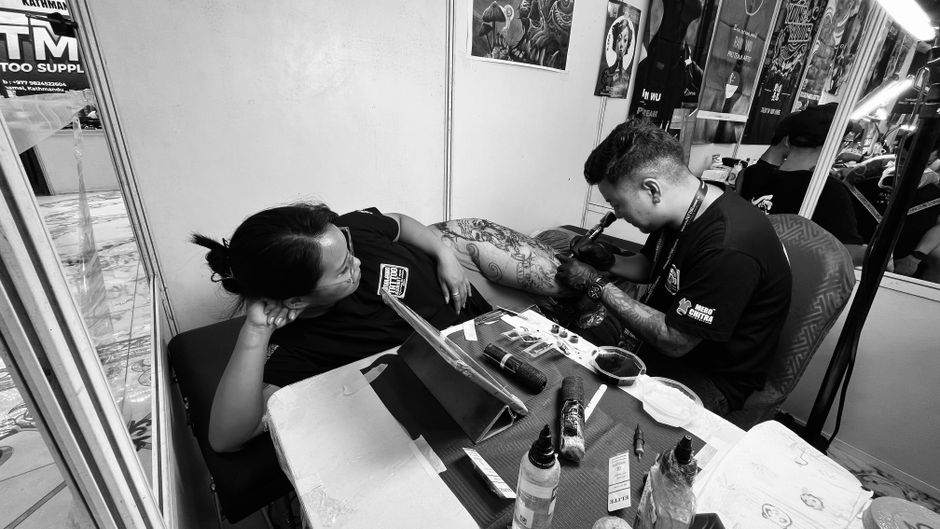
Two years ago, Lana Lines was a tattoo apprentice in Tennessee, learning under a Mentor who had her tattooing paying clients almost right away. This year, she drove 10 hours to the Texas Tattoo Show in San Antonio and tattooed walk-ups from her own flash book. A convention Tattoo Artist tattoos live clients at industry events, often on the spot, while building a following beyond their home tattoo shop.
We caught up with Lana on Convention Connection, hosted by Paul Anthony and Chico Cortez. Her path wasn't fast or easy, and that's exactly why it's worth a closer look.
Key Takeaways
Persistence pays: Lana spent years visiting tattoo shops and asking Tattoo Artists if she could watch them work before landing a tattoo apprenticeship.
State rules matter: Tennessee required an anatomy test, bloodborne pathogens training, and a contract with a state-licensed tattoo shop.
Real clients, early: Her Mentor had her earning quickly, so most of her two years of experience came during her tattoo apprenticeship.
Conventions take a team: Her cousin Kiara worked the floor, pulled in walk-ups, and managed bookings so Lana could focus on tattooing.
Your move: Ink Different's Traditional Tattoo Apprenticeship gives beginners a structured path, with only two apprentices per tattoo studio per Mentor.
Who is Lana Lines and why does her story matter?
Lana Lines is a Tennessee Tattoo Artist who went from tattoo apprentice to working a convention floor in about two years.
She's done art her entire life. But talent alone didn't open the door. Persistence did, along with a willingness to learn on real clients and the nerve to show her work in a new city.
Her story matters because it's honest. She didn't find a shortcut. She searched for a Mentor, met strict state requirements, and built her skills one tattoo at a time.
She also brings something many clients are looking for. Lana noted she was likely the only Black female Tattoo Artist at the show. As she explained, people want to get tattooed by someone who understands them.
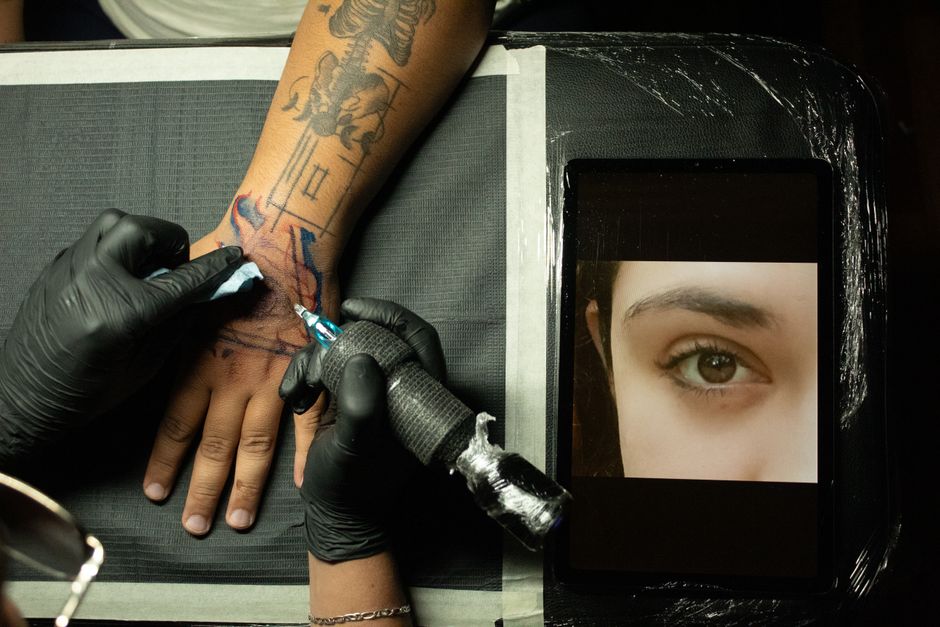
From a cramped cubicle to a convention booth: the journey is real and repeatable.
What is a tattoo convention and why do they matter?
A tattoo convention is a multi-day event where Tattoo Artists tattoo live clients, sell flash, and connect with collectors, vendors, and other Tattoo Artists.
For a newer Tattoo Artist, conventions do three things. They put your work in front of new clients. They let you study how other Tattoo Artists work. And they open doors you won't find at home.
Lana saw that firsthand. During the show, co-host Chico Cortez offered her a spot on his pro team. She also treated the weekend as a classroom. Even if she made no money, she said, watching other Tattoo Artists would make her better for the next one.
Conventions also take more work than most attendees realize. Lana packed everything, covered her own costs, and drove 10 hours just to tattoo for three days.
That's where her cousin Kiara came in. Kiara runs Quetzal Crystals, a business that started after she won a $5,000 crystal giveaway on Instagram. At the show, she sold crystals and worked the floor for Lana. She took numbers from interested walk-ups and called them back when Lana was ready.
Moments like these show why tattoo artists are still essential. Skin, safety, and trust between two people can't be automated.
How did Lana go from stuck to apprentice?
Lana didn't wait for a tattoo apprenticeship to find her. She walked into tattoo shops, talked to Tattoo Artists, and asked if she could watch them work.
She started looking long before she actually began. After about two years of searching, she found a Mentor. The catch was that he was very expensive to learn under.
Then timing worked in her favor. A year later, he opened his own tattoo shop and asked her to be one of his first apprentices.
Her search shows two things. The right Mentor matters more than the fastest offer. And informal searches can drag on for years with no guarantee.
Mentor Tip: Don't wait until you feel ready to show up. Lana built her network by asking Tattoo Artists if she could watch them work. Every conversation brought her closer to the right Mentor.
What did Lana's two-year roadmap look like?
Lana's two years broke into three stages: meeting state requirements, learning on real clients, and taking her work on the road.
Meeting Tennessee's requirements: Tennessee is one of the stricter states. Beyond bloodborne pathogens training, Lana had to pass an anatomy test. She also needed a contract with a tattoo shop already licensed by the state. The health department inspects their work areas once a month.
Learning on real clients: Once Lana could tattoo, her Mentor wanted her earning right away. Most of her two years of experience happened during her tattoo apprenticeship.
Hitting the road: Two years in, she drove 10 hours to San Antonio with her flash book, her supplies, and her cousin.
Your state's rules may look very different. Some are lighter than Tennessee's, and some are just as strict. Check yours before you commit to a path.
How can you follow the same path step by step?
You can follow Lana's path by securing a structured tattoo apprenticeship, building your skills on real clients, and then taking your flash on the road.
Step 1: Decide and apply. Treat tattooing as a career, not a hobby. Apply to Ink Different's Traditional Tattoo Apprenticeship instead of waiting years for an informal offer.
Step 2: Learn your state's rules. Some states require contracts and anatomy exams. Others don't. Know your requirements before you start.
Step 3: Build your foundation. Learn drawing, machine control, and safety basics, including bloodborne pathogens training, with your Mentor's guidance.
Step 4: Get hands-on in the tattoo studio. Practice on synthetic skin, then tattoo live clients under your Mentor's direct supervision.
Step 5: Build your brand and your flash. Lana's flash book brought in walk-ups all weekend, mostly small custom pieces and linework.
Step 6: Book your first convention. Bring flash, business cards, and a partner to work the floor. Budget for travel, booth space, and supplies before you go.
Want the right gear from day one? Start with our list of tools every beginner tattoo artist should know.
Why did live mentorship make the difference?
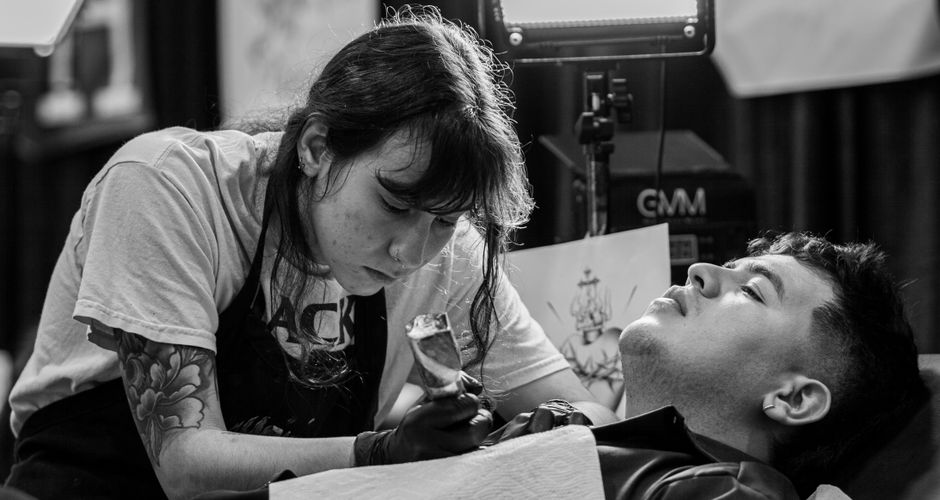
Lana's Mentor didn't teach her from a screen. He taught her in a working tattoo shop, with real clients in the chair.
Tattooing is a physical craft. Hand angle, needle depth, and pressure all depend on muscle memory. A Mentor beside you catches a mistake before it ends up on someone's skin.
Her Mentor also pushed her to earn early. That pressure built speed and confidence, the same skills she needed for walk-ups at a busy convention.
And Lana isn't done learning. She plans to travel and keep watching other Tattoo Artists work. That mindset is why a tattoo apprenticeship as a college alternative keeps gaining ground. You build real skills and a portfolio instead of college debt.
What can you expect from the Traditional Tattoo Apprenticeship?
Lana spent years searching before she found her Mentor. Ink Different's Traditional Tattoo Apprenticeship gives you a clear route in, so you're not left knocking on doors.
It's a four-phase tattoo apprenticeship built for beginners. You train in person with an experienced Mentor inside a working tattoo studio.
Who it's for: Complete beginners. No art degree or professional experience required.
Training model: In-person, hands-on practice under direct Mentor supervision.
Structure: Four progressive phases, from fundamentals and safety to live client work.
Support: Licensing support for your state's requirements and a job-ready portfolio.
Career outcome: A guaranteed job offer at one of Ink Different's tattoo studios.
This is a career that comes with confidence. You'll finish with job-ready skills, licensing support, and a guaranteed job offer at one of Ink Different's tattoo studios. With 60+ locations nationwide, there's likely one near you.
How does Master Mentorship push you further?
Lana's next goal is to learn from as many Tattoo Artists as she can. Master Mentorship takes that idea further.
Ink Different's Master Mentors include Al Fliction, Liz Cook, Kyle Dunbar, Boneface, and Jordi Pla. Learning from Tattoo Artists at that level sharpens both your technique and your business sense.
That matters on a convention floor. Plenty of Tattoo Artists can handle walk-ups. The ones who stand out are the ones clients will drive hours to see.
How is Ink Different making training accessible?
Lana's story is a reminder that clients want to see themselves in the person tattooing them. Access matters at every level of this industry.
Ink Different offers Spanish-speaking locations in Denver, Orange County, NYC, Miami, San Antonio, and San Diego. You can learn in the language you think in.
Accessibility is part of Ink Different's "Good Humans" culture. You join a community that wants you to win, not one that treats you like a number. If a career change is calling you, explore career change tattoo apprenticeship or start your tattoo apprenticeship this spring.
Ready to write your own convention story?
Lana's two years came from persistence, strict state requirements, and a Mentor who put her to work early. Then she packed her flash book and drove 10 hours to prove herself.
Your path doesn't have to start with years of searching. Ink Different's Traditional Tattoo Apprenticeship gives you a Mentor, a clear structure, and a guaranteed job offer.
Seats are limited. Each Mentor takes only two apprentices per tattoo studio, because real hands-on training can't be mass-produced.
Ready to become a tattoo artist? Apply now to Ink Different's Traditional Tattoo Apprenticeship and start building an AI-proof career with licensing support and community behind you all the way.
Frequently Asked Questions
How long did it take Lana Lines to become a convention Tattoo Artist?
About two years. Most of that time was spent in her tattoo apprenticeship, where her Mentor had her tattooing paying clients early.
Do I need prior art experience to start a tattoo apprenticeship?
No. Ink Different's Traditional Tattoo Apprenticeship welcomes complete beginners. You'll learn drawing fundamentals, machine handling, and safety with your Mentor.
What did Tennessee require for Lana's tattoo apprenticeship?
Lana needed bloodborne pathogens training, an anatomy test, and a contract with a state-licensed tattoo shop. Requirements change, so always check your state's current rules.
What makes Ink Different different from other tattoo training programs?
Ink Different offers in-person mentorship, access to Master Mentors, a guaranteed job offer, 60+ locations nationwide, and a supportive "Good Humans" culture.
Is tattooing a career that's safe from AI replacement?
Yes. Tattooing depends on skin, safety, client trust, and artistic judgment. Those are human skills AI can't replicate.
Can I train in Spanish at Ink Different?
Yes. Ink Different offers Spanish-speaking locations in Denver, Orange County, NYC, Miami, San Antonio, and San Diego.