Convention Connection: The $700 Hotel Room Lesson Every Tattoo Artist Needs to Hear, With Matt Hodel
Matt Hodel took three days to drive from St. Louis to the Texas Tattoo Show in San Antonio. He wasn’t there to chase awards. After 30 years of tattooing, he’s 50, and he wants to collect as many handshakes and hugs from old friends as he can. That focus on people is also his whole business philosophy. Matt owns Ragtime Tattoo in St. Louis, and he says he stays busy not because he’s the best Tattoo Artist, but because he’s the best with people. We sat down with Matt for Convention Connection, alongside co-host Chico Cortez. His advice on client experience, shop culture, and leadership is some of the best we’ve heard on the show.
Key Takeaways
Customer first: Matt sees his role as guiding clients, not being the hero of the room.
Listen intuitively: Pay attention to how clients sit, how they hold their shoulders, and what they don’t say.
The $700 lesson: Notice what makes a high-end hotel stay feel great, then bring that same care to your clients.
The long game wins: Cheap, fast transactions don’t build loyalty. Relationships keep you busy for decades.
Culture before scale: Matt once loved every person on his team individually but hated going to work.
What Is the $700 Hotel Room Lesson?
The $700 hotel room lesson is Matt’s way of explaining what great client service feels like.
His advice is to spend more than $700 on a hotel room once and pay attention to everything that happens. The staff knows your name and your preferences. They turn down your bed, give you recommendations, and take care of you the whole time. You leave feeling great, and you want to go back.
Your clients expect that same level of care, because they experience it everywhere else in life. Matt says if you want to know the future of tattooing, look at how clients buy everything else.
Booking a hotel takes a couple of taps. Now think about the typical client journey to get a tattoo. They find a Tattoo Artist on Instagram, but can’t tell if they’re even in the right city. They search online to confirm they’ve found the right person. Then they’re told to send an email, and they might wait three days for a reply.
Matt’s point is simple. A Tattoo Artist who’s half as talented but better with clients will stay busy nonstop. Everyone thinks it’s all about the art. The art matters, but clients also want to be heard.
Pro Tip: Walk through your own booking process as if you were a new client. Every confusing step is a chance to lose someone before they ever sit in your chair.
Who Is Matt Hodel and Why Should You Listen?
Matt Hodel is a Tattoo Artist with 30 years of experience and the owner of Ragtime Tattoo in St. Louis, Missouri. He’s also an educator who teaches business basics to other Tattoo Artists.
He says most careers move through stages. First, you get comfortable with your tools. Then you chase admiration from your peers. Eventually, you realize it’s all about the customer.
So Matt shifted his focus to nurturing relationships. He sets the tone early by being present and on time. He sees each tattoo as a shared commitment. The client commits their time and money, and he commits his part, too.
He also avoids the tug-of-war that can happen in tattooing, where the Tattoo Artist pushes their style and the client pushes their emotional idea. Instead, he collaborates and meets clients in the middle.
That starts with listening. An older Tattoo Artist once told him to listen intuitively. That means paying attention to a client’s shoulders, their body language, how they sit, and what they leave unsaid.
He also points out that new clients usually come to you because something went wrong with their last Tattoo Artist. It’s up to you to understand what happened and make sure you don’t repeat it.
Why Do Tattoo Conventions Matter for Your Career?
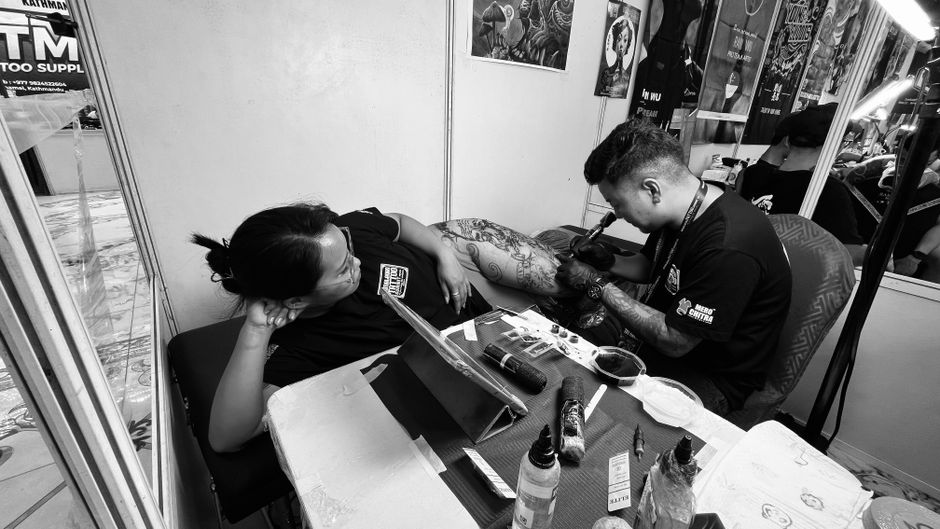
Tattoo conventions matter because they’re where relationships in this industry are built and kept alive.
Matt has been friends with some of the people he sees at conventions for nearly 20 years. Over a 30-year career, he says, you meet a lot of friends. Now he’s making a point to get out as much as he can over the next few years.
That’s exactly what Convention Connection is about. Tattooing has always been built on relationships, between Tattoo Artists and between Tattoo Artists and clients.
Matt also reminds us what tattooing was like before social media. Back then, it wasn’t about the image. It was about the act of getting tattooed and the experience behind it.
Tattooing is still a human craft. Clients come to you because they’re trying to solve something, close something, accomplish something, or reward themselves. Your job is to help them celebrate it.
What Do You Actually Get From Showing Up?
Showing up gives you relationships, perspective, and lessons you won’t find scrolling online.
Here’s what Matt’s interview shows you can take away from a convention:
Lasting friendships: Matt drove three days to see friends he’s known for decades.
Fresh perspective: Social media can leave you wondering what you’re supposed to be doing. In person, it’s easier to see what really matters.
Business lessons: Matt shared years of hard-won advice in one conversation. One of our hosts said he was going home to change how he runs things.
A wider network: Matt’s shop owners group brings together owners from across the country who face the same challenges.
Matt also warns about comparing yourself to everyone else online. It’s easy to fall into “compare and despair.” Conventions remind you that business basics haven’t changed. Matt says there are only about seven things to learn in business, and they apply to everything.
How Do You Prepare for Your First Convention?
You prepare by making yourself easy to find, easy to book, and ready to give clients a great experience.
Step 1: Make booking simple. Matt’s biggest point is that a frustrating booking process costs you clients. Make it clear where you work and how to book you.
Step 2: Be present and on time. Matt sets the standard early by showing up fully for every client.
Step 3: Practice listening. Pay attention to body language and what clients don’t say, not just their words.
Step 4: Plan for collaboration. Be ready to meet clients in the middle instead of pushing your style on them.
Step 5: Go to connect, not just to sell. Matt spends conventions building relationships with old and new friends.
Step 6: Build your presence online. Clients will look you up after meeting you.
Before you spend a dollar, make sure you're not sabotaging yourself with avoidable errors. Our breakdown of mistakes aspiring tattoo apprentices should avoid is required reading for anyone stepping into these rooms. And if you're still gathering gear, check our list of tools every beginner tattoo artist should know.

What Mistakes Do New Artists Make at Conventions?
Matt’s advice points to a few mistakes new Tattoo Artists make, at conventions and beyond:
Chasing the fast dollar: Cheap, quick tattoos attract price-sensitive clients who rarely come back. Matt builds for the long term.
Chasing peer approval: Wanting other Tattoo Artists to admire you is a normal stage, but your clients are the ones who keep you busy.
Not listening: Clients want to be heard. If you only hear their words, you’ll miss what really matters to them.
Making clients do the legwork: Unclear booking steps and slow replies push clients away.
Skipping safety basics: Clients trust professional tattoo studios. Know the OSHA bloodborne pathogens standards and work like a professional.
Matt also offers a reminder about running a tattoo shop. He once paid a lot of money to learn one lesson: you can be mad and you can be upset, but you’re too old to be surprised.
How Does Ink Different Prepare You for This World?
Ink Different Tattoos prepares you with job-ready skills, experienced Mentors, and a culture built around people.
Matt’s lessons on client care, leadership, and culture apply long after training ends. But you need strong skills first. The Traditional Tattoo Apprenticeship is a college alternative for people who want a hands-on path into tattooing.
What You Can Expect from Our Traditional Tattoo Apprenticeship
The Traditional Tattoo Apprenticeship is an 18 to 24 month, four-phase tattoo apprenticeship that takes complete beginners to job-ready Tattoo Artists. No prior art experience is required.
Hands-on training: You learn in person from experienced Mentors inside a working tattoo studio.
Beginner-friendly: You’ll learn drawing and fundamentals from the start.
Licensing support: Guidance through your state’s requirements.
A guaranteed job offer: You’ll receive a guaranteed job offer at one of Ink Different’s tattoo studios.
A Career That Comes With Confidence
This is a career that comes with confidence. You’ll finish with job-ready skills, licensing support, and a guaranteed job offer at one of Ink Different’s tattoo studios nationwide. Ink Different has trained Tattoo Artists for 15 years.
Mentorship That Pushes Your Brand and Skills Further
Once you’ve built your foundation, you can keep growing with Ink Different’s Master Mentors, including Al Fliction, Liz Cook, Kyle Dunbar, Boneface, and Jordi Pla. Learning from Tattoo Artists at that level sharpens your technique, your style, and your business sense.
Making Tattoo Training Accessible for Everyone
Ink Different offers Spanish-speaking locations in Denver, Orange County, NYC, Miami, San Antonio, and San Diego. You’ll also join Ink Different’s “Good Humans” culture, a supportive community that wants you to succeed.
Ready to Build Your Convention Connection?
Matt Hodel’s lesson is simple. Treat every client the way a great hotel treats its guests. Listen closely, make the process easy, and build relationships that last.
He’s also honest about the business side. He once had eight people working at Ragtime Tattoo. He loved each of them individually, but as a whole, he hated going to work. He prefers to tattoo in the slow lane, and he learned that culture has to come before growth.
He sees leadership the same way. Anyone can be a boss, and he doesn’t want to be called one. A leader shows the team where they are, where they’re going, and how to get there. A manager makes sure the bills get paid. As a tattoo shop owner, you’re both, and as a Tattoo Artist, you’re also the craftsman. And when something goes wrong, Matt’s first question is what he could have done differently.
For more of his business lessons, Matt runs Jackpot Coaching at jackpotcrushers.com. He says it’s free, and he recommends signing up on a desktop. It includes articles, videos, and a shop owners group that meets twice a month.
Ready to become a Tattoo Artist? Apply now to Ink Different's Traditional Tattoo Apprenticeship and start building an AI-proof career with licensing support and a guaranteed job offer. Prefer to explore first? Fill out our quick questionnaire to see if the Traditional Tattoo Apprenticeship is right for you.
Frequently Asked Questions
What is the $700 hotel room lesson?
It’s Matt Hodel’s comparison for great client service. Notice how a high-end hotel makes you feel cared for, then bring that same attention to your clients.
How can I book a tattoo with Matt Hodel?
Visit matthodeltattoo.com or ragtimetattoo.com, or find him on Instagram at @matt_hodel_tattoo.
What is Jackpot Coaching?
It’s Matt’s free business community at jackpotcrushers.com, with articles, videos, and a shop owners group that meets twice a month.
How long does the Traditional Tattoo Apprenticeship take?
The Traditional Tattoo Apprenticeship takes 18 to 24 months across four phases, with licensing support and a guaranteed job offer.
Can I train with Ink Different if I speak Spanish?
Yes. Ink Different offers Spanish-speaking locations in Denver, Orange County, NYC, Miami, San Antonio, and San Diego.
Why is tattooing considered an AI-proof career?
Tattooing depends on hands-on skill, listening, and human trust. Those are things automation and software can’t replace.