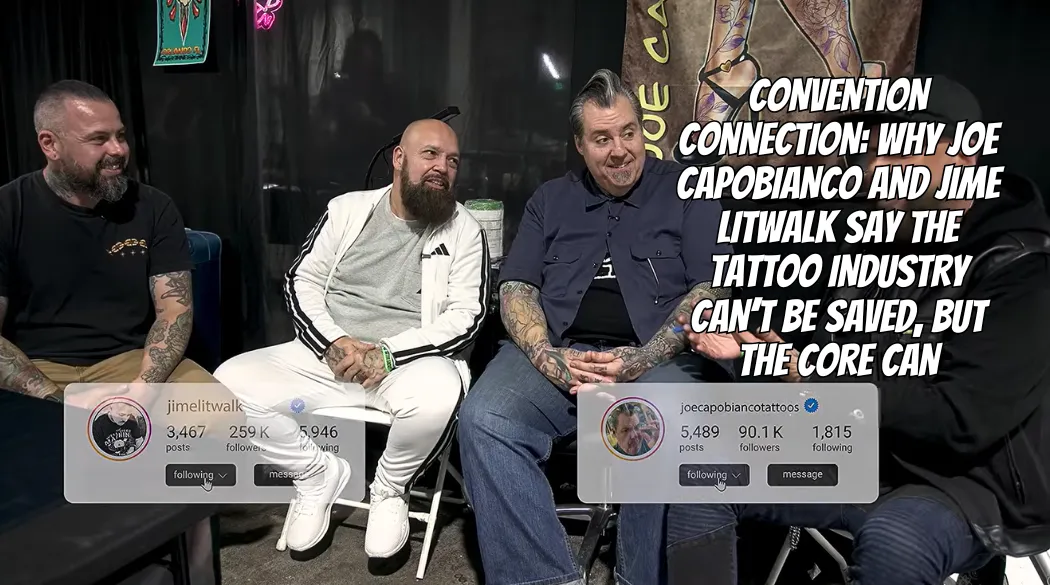
Convention Connection: Why Joe Capobianco and Jime Litwalk Say the Tattoo Industry Can’t Be Saved, but the Core Can
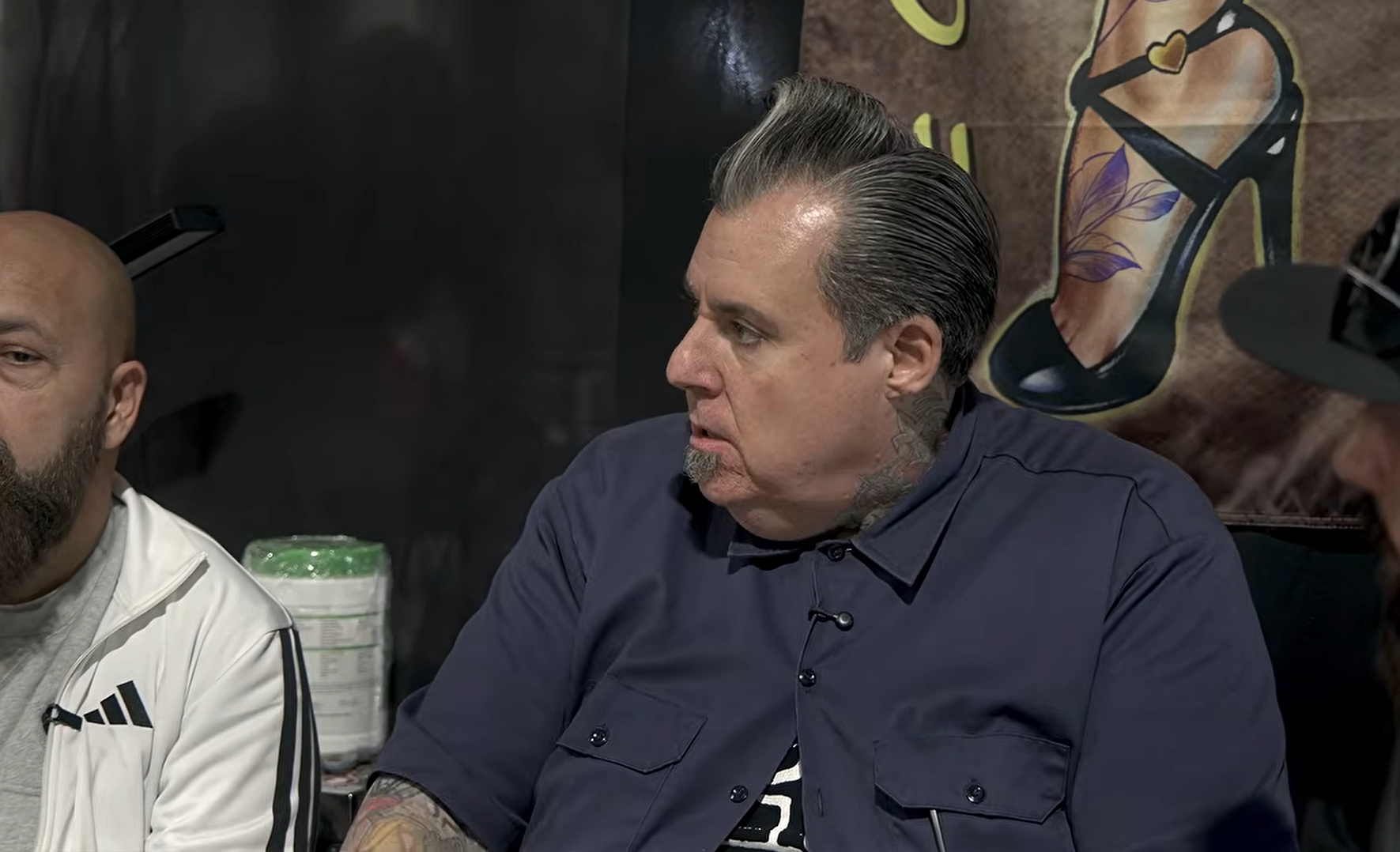
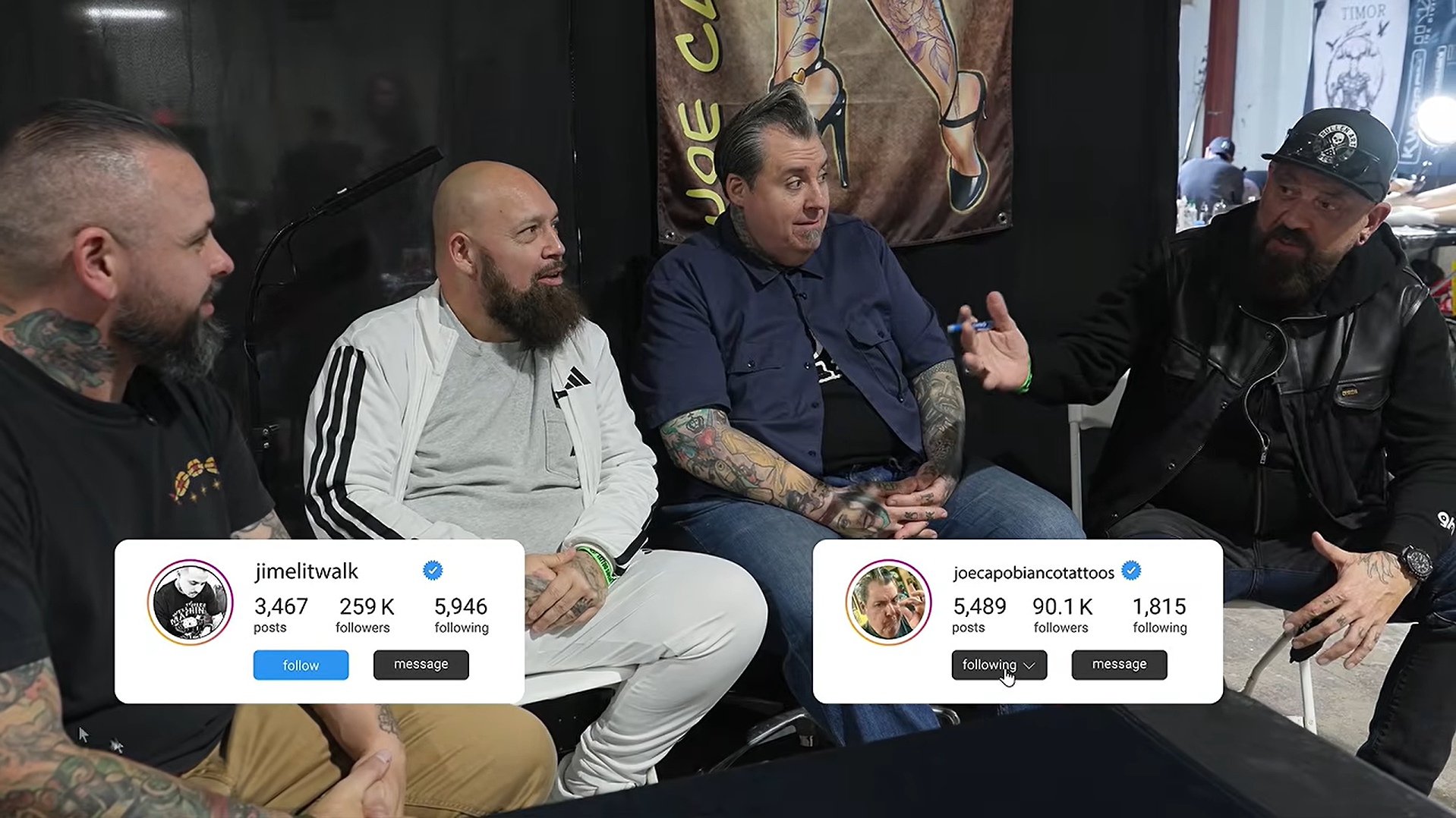
“You can teach people technique,” one of them said. “You can’t teach people passion.” That line set the tone for one of the most honest conversations in Convention Connection history. Chico Cortez sat down with Joe Capobianco and Jime Litwalk at the Tattoo Society World Expo in New York.
For years, Chico waited in line at conventions just to meet them. They didn’t hold back. They talked about Tattoo Artists who care more about sponsorships than skill, how TV changed everything, and why conventions don’t feel the way they used to. Their conclusion: the industry can’t be saved, but the core of tattooing can.
Key Takeaways
Passion can’t be taught: Technique can be learned, but caring about the craft has to come from you.
The floodgates are open: In their view, there’s no going back to the old tattoo industry, so energy should go into strengthening the core.
Clout isn’t skill: They criticize Tattoo Artists who chase sponsorships and fame without understanding their own tools.
Conventions have changed: With shows every weekend and fewer hotel-lobby hangouts, real connection takes more effort.
Respect the legends: They believe Tattoo Artists like Filip Leu, Paul Booth, and Jack Rudy deserve recognition for paving the way.
What does it mean to save the core of tattooing?
To Joe and Jime, saving the core means focusing on the people who truly care about the craft, rather than trying to change the entire industry.
As the conversation put it, you can’t change the industry, but you can strengthen the core. Instead of spreading yourself thin trying to make everyone care, focus on the people who already do. One of them described it as choosing 10 incredibly strong warriors instead of 100 average ones.
They believe the craft still exists for the people who care about it. Those are the Tattoo Artists who care what machine and needles they use, and why.
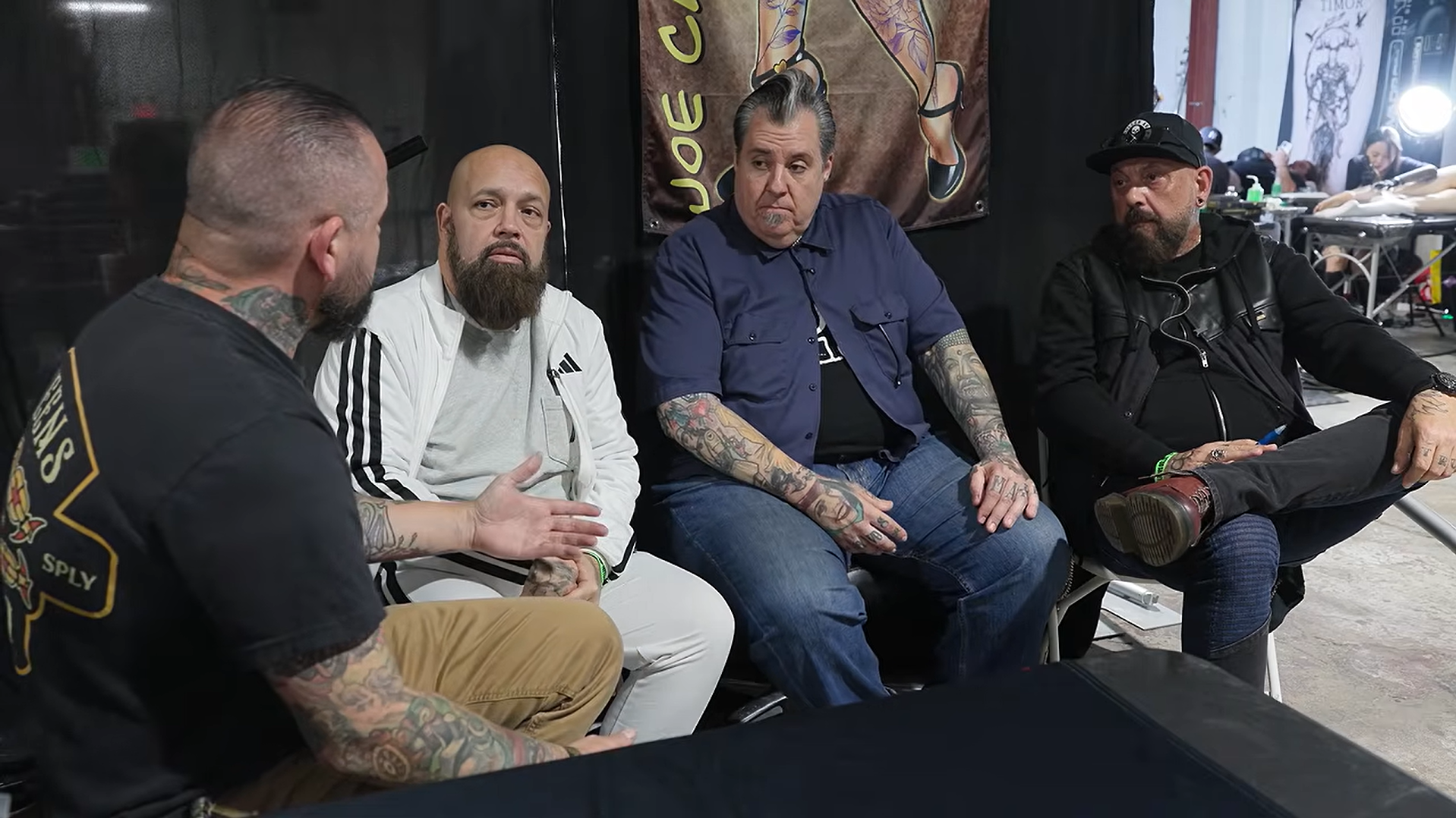
Why do master artists say the industry can't be saved?
Joe and Jime say the floodgates have opened, and there’s no coming back.
They explained it with a simple idea: anyone can tattoo, but not everyone can tattoo well. They also feel that made-up style names now give poor work a label that makes it seem acceptable. They pointed to Tattoo Artists who brag about “ignorant tattoos.” One compared that to bragging about coming in third in a two-man race.
They also used a food analogy. You can’t stop people from going to fast food restaurants. It’s about necessity and instant gratification. A chef, on the other hand, builds something carefully with their hands. Some people care about doing things right, and some just want the money. You can’t convince the second group otherwise.
TV changed everything
Chico said he started Convention Connection to give Tattoo Artists’ stories a chance to be heard. He calls TV both the best and worst thing that happened to tattooing. It brought in the masses, and with them came people who didn’t respect the craft.
The guests agreed the industry got what it asked for. For years, Tattoo Artists wanted to be publicly accepted as hardworking people, not outcasts. They got that. The public became their clients. Then clients became their peers.
The old way of learning
They also noted that tattooing used to rely on mentorship, much like a welder taking on an apprentice and expecting years of dedication. One of them said today, all you need is a credit card.
We agree with the heart of that point: real skill takes time, mentorship, and commitment. That’s why Ink Different’s Traditional Tattoo Apprenticeship is built on hands-on training with experienced Mentors over 18 to 24 months, not shortcuts.
Reality check: You can’t fix the whole industry. But you can become a Tattoo Artist who truly cares about the craft.
Read about the mistakes aspiring tattoo apprentices should avoid.
Who are Joe Capobianco and Jime Litwalk?
Joe Capobianco and Jime Litwalk are two of the most respected Tattoo Artists in the industry. Joe is widely known for his pin-up work, and Jime for his bold new school style.
As the conversation’s opening line joked, if you need to Google who they are, you’re watching the wrong video.
They’re humble about their own place in tattoo history. They described themselves as coming after the true originals. Chico disagreed and called them part of a renaissance, a clear before and after in the craft.
They also feel the industry has lost its legends. As one put it, “there’s no gods anymore.” They pointed to Tattoo Artists who still deserve recognition: Filip Leu, a true original, Paul Booth, and Jack Rudy. They believe these Tattoo Artists left an indelible mark on the community.
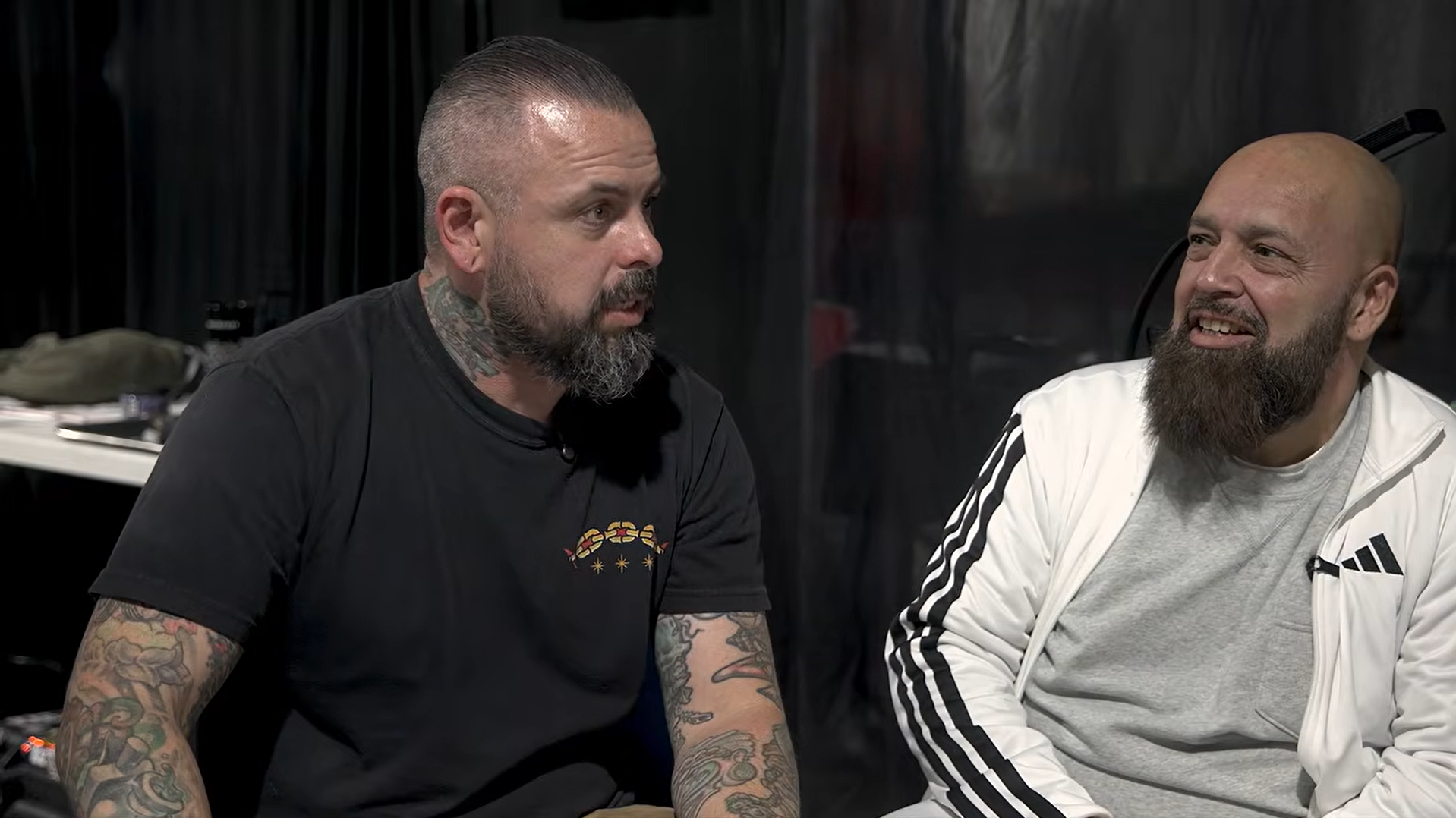
Why do tattoo conventions still matter?
Conventions still matter, but Joe and Jime say they’ve changed dramatically.
Then and now
Back in the day, everything was new and exciting. You might see someone once a year. Now, Tattoo Artists can see the same people six or seven times a year. That repetition can wear you down, the same way going to the same restaurant and coffee shop every day becomes routine.
There also used to be one big convention in California a year. Now, they said, there’s a show nearly every weekend.
Leaving the hotels changed everything
One of the biggest shifts, they said, came when big-city conventions moved out of hotels. Tattoo Artists used to work elbow to elbow all day, then drop off their gear and gather in the hotel lobby. You’d run into people you wanted to see and some you didn’t. You might even catch a conversation you’d never hear anywhere else.
Now, they said, many young Tattoo Artists barely look up from a three-day tattoo unless they’re heading to the stage for an award.
What still matters
Even with all the changes, they still love seeing each other. That connection is what keeps them coming back.
Chico remembers waiting in line just to meet Tattoo Artists like Joe and Jime. He was already known in the industry, but he was humbled. He feels the new generation isn’t as humble anymore.
Build your presence with these platforms to help Tattoo Artists build their brand.
How can you help protect the core of the craft?
Based on Joe and Jime’s conversation, here’s how you can be part of the core:
Step 1: Bring real passion. It can’t be taught, so it has to come from you.
Step 2: Learn why, not just what. They criticized Tattoo Artists who use a machine just because famous Tattoo Artists do. Know why your tools work. See the tools every beginner Tattoo Artist should know.
Step 3: Respect who came before. Learn about the legends who paved the way.
Step 4: Find your people. They noted that like-minded people naturally gravitate toward each other. Surround yourself with Tattoo Artists who care.
Step 5: Seek out conventions with real connection. They suggested Tattoo Artists share which shows still have an old-school feel, where people hang out, talk shop, and build camaraderie. One mentioned a show in Lenoir that reminded him of the old days. They’d rather skip shows where everyone’s booked before the doors open and booths sit next to unrelated vendors.
Step 6: Learn safety. Every Tattoo Artist must follow the OSHA bloodborne pathogens standard.
Step 7: Get licensed. Know your state’s rules, like how to get your tattoo license in Texas or how long a tattoo license takes in Colorado.
How does Ink Different keep the core alive?
Ink Different keeps the core alive by pairing aspiring Tattoo Artists with experienced Mentors through structured, hands-on training. Ink Different has trained Tattoo Artists for 15 years.
Joe and Jime worry about people entering tattooing without mentorship or real commitment. Ink Different’s approach is built to address that: real Mentors, real time, and real standards.
Its “Good Humans” culture also reflects what they value most: connection and community.
What is the Traditional Tattoo Apprenticeship?
Ink Different’s Traditional Tattoo Apprenticeship is an 18 to 24 month, four-phase tattoo apprenticeship that takes beginners to job-ready Tattoo Artists.
Length: 18 to 24 months across four structured phases.
Format: Hands-on, in-person mentorship from experienced Mentors inside a working tattoo studio.
Who it’s for: Beginners welcome. No formal art background needed.
Outcome: Job-ready skills, licensing support, and a guaranteed job offer at one of Ink Different’s own tattoo studios.
This is a career that comes with confidence. The Traditional Tattoo Apprenticeship is available at 60+ tattoo studios nationwide.
What is the Master Mentorship program?
Once you’ve built your foundation, Ink Different’s Master Mentorship connects you with Master Mentors, including Al Fliction, Liz Cook, Kyle Dunbar, Boneface, Jordi Pla, Marcel Oliveira, and Kara Gutierrez.
Joe and Jime believe the craft lives on through people who care deeply about it. Master Mentorship connects you with Tattoo Artists who do.
Making tattoo training accessible for everyone
Ink Different offers Spanish-speaking locations in Denver, Orange County, New York City, Miami, San Antonio, and San Diego.
Ready to become a Tattoo Artist?
Joe Capobianco and Jime Litwalk don’t think the tattoo industry can go back to what it was. But they believe the people who truly care can keep its core alive.
As they wrapped up, the message was clear: money pays the bills, but tattooing was always about the connection.
Ready to become a Tattoo Artist? Apply now to Ink Different’s Traditional Tattoo Apprenticeship and start building an AI-proof career with licensing support and a guaranteed job offer at one of Ink Different’s own tattoo studios. Prefer to explore first? Fill out our quick questionnaire to see if it’s right for you.
Follow Joe at @joecapobiancotattoos, Jime at @jimelitwalk, and Chico at @m4l_chico.
Frequently Asked Questions
Why do Joe Capobianco and Jime Litwalk say the industry can’t be saved?
They feel the industry has grown too much to go back to what it was. Instead, they believe the focus should be on strengthening the core: the people who truly care about the craft.
What do they mean by “you can’t teach passion”?
Technique can be learned, but genuine love for tattooing has to come from the Tattoo Artist.
How have tattoo conventions changed?
There are far more shows now, Tattoo Artists see each other more often, and conventions leaving hotels removed many of the lobby hangouts where connections used to happen.
Who do they say deserves more recognition?
Legends like Filip Leu, Paul Booth, and Jack Rudy.
How long does the Traditional Tattoo Apprenticeship take?
Ink Different’s Traditional Tattoo Apprenticeship takes 18 to 24 months across four phases, with licensing support and a guaranteed job offer at one of Ink Different’s own tattoo studios.
Do I need art experience to start?
No. The Traditional Tattoo Apprenticeship is built for beginners.