Could You Trust a Robot to Tattoo Your Skin?
Robots Can Do a Lot, but Should They Tattoo You?
Robots have already taken over a surprising number of jobs. From packaging food in factories to screening resumes in HR offices, automation keeps creeping into spaces we never expected. Over 13.7% of U.S. workers say they have personally lost a job to a robot or AI-driven system. So it kind of makes sense that people are starting to ask: is tattooing next?
It sounds like something out of a sci-fi movie, but robotic tattoo machines are an actual thing. They have been tested on actual human skin, but on volunteers. For tattoo clients, that raises a pretty valid question: should you be worried, curious, or both?
Read on as we will look at what robotic tattooing actually is and why the human touch in tattooing isn’t something any machine can replicate.
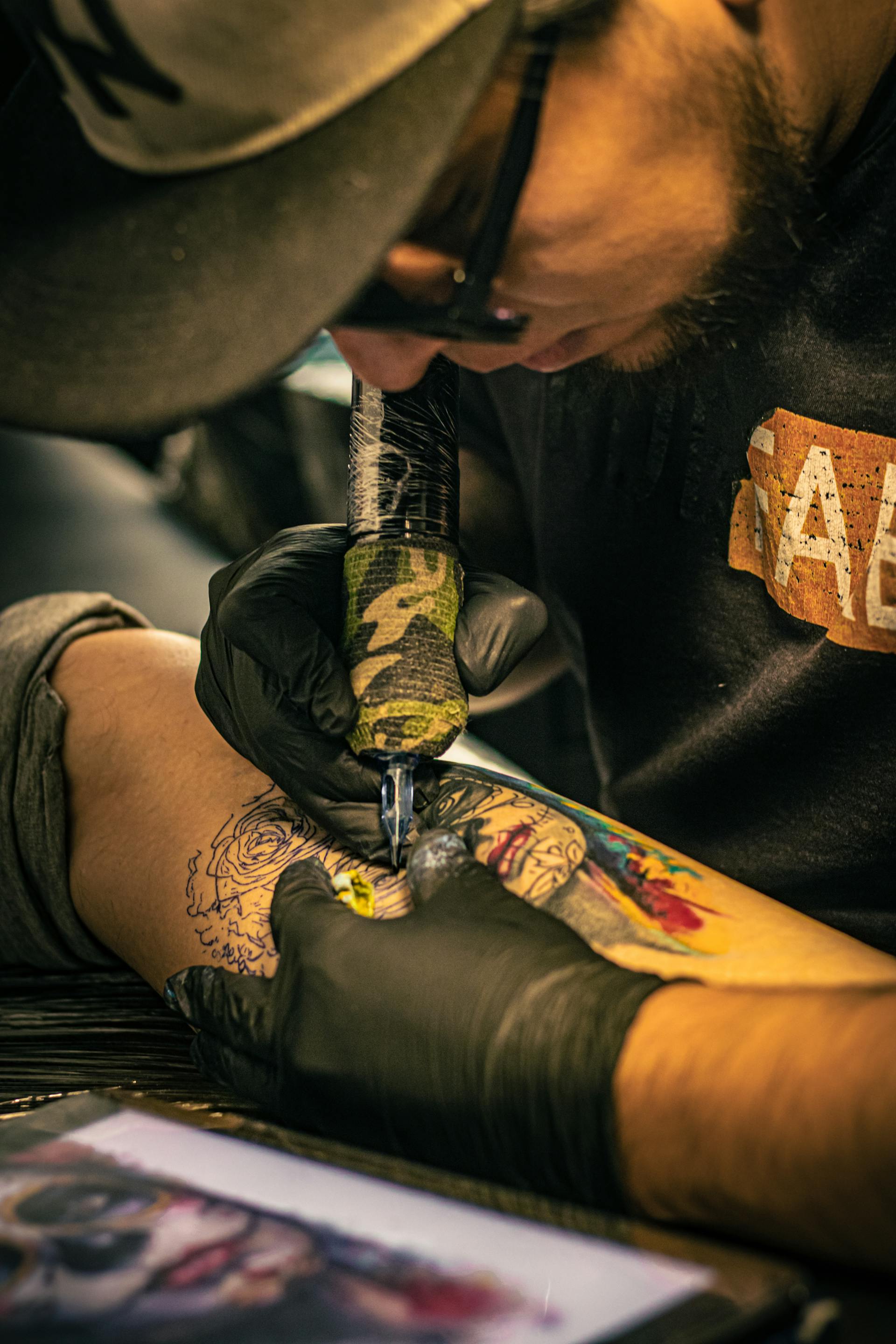
Are Robot Tattoos Actually a Thing?
Yes, and it is not as far off as you might think. Back in 2016, the design team from Appropriate Audiences built a robotic arm that could tattoo a human volunteer. The device used a modified tattoo machine attached to a robotic arm, and it worked with pre-programmed designs to ink the person's skin. It was a proof of concept, but it made headlines worldwide because no one had really seen anything like it before.
Since then, a handful of startups and experimental studios have continued exploring this space, mostly for novelty purposes or for highly geometric, repetitive designs.
But here is the honest truth: the technology is still very limited. It is nowhere near the point where it can handle the full complexity of actual tattooing. And as you will see below, the gaps are pretty significant.
What Robots Can (and Can’t) Do
To be fair, robotic tattoo tech does have a few things going for it. Here is what it can pull off:
Execute pre-programmed designs with mechanical precision
Maintain consistent needle depth on flat surfaces
Reduce the effect of human tremor on simple geometric patterns
That sounds decent on paper. But once you look at what robots cannot do, the picture gets a lot more complicated. Human skin stretches, contracts, and reacts differently depending on the body part, a person's age, and even hydration levels.
Robotic systems have no live sensory feedback loop, which means they cannot adjust to any of that in real-time. Here is what falls completely outside their reach:
Read the body’s curves, skin texture, and real-time feedback
Adjust for skin elasticity, aging, or any unexpected movement mid-session
Replace the consultation, emotional read, and creative collaboration that a human Tattoo Artist brings
The gap between what robots can handle and what actual tattooing requires is still massive. Mechanical precision is only one small part of the job.
The Big Risks You Should Know About
If you are considering any kind of robotic tattoo, it is worth knowing what you are actually signing up for. Tattooing is a medical-adjacent procedure, and the risks are big. Here are the concerns that no robot can currently account for:
Your skin is not a flat canvas: Bodies breathe, shift, and flinch during a session, and a robot has no way of recognizing and responding to those natural movements.
No robot can handle an allergic reaction mid-session: Tattoo complications, including infections, allergic reactions, and scarring, often require an immediate human response that only a trained Tattoo Artist can provide.
Liability is murky at best: If something goes wrong during a robotic tattoo session, it is genuinely unclear who is responsible. That ambiguity is not something you want to deal with when your skin is involved.
Sterilization still needs human oversight: Proper hygiene and infection control in a tattoo session are not automated processes. They require a knowledgeable professional who understands safety protocols inside and out.
The bottom line is that tattooing carries health considerations, and right now, no robotic system is equipped to manage those responsibly on its own.
Why the Human Element Still Matters A Lot
Here is the bigger picture. Tattoos have never just been about the needle hitting skin. They are personal, meaningful, and deeply tied to the relationship between a client and their Tattoo Artist. Think about it: around 32% of Americans now have at least one tattoo.
More people than ever are getting tattooed, and the experience itself matters just as much as the final result. Here is why no machine can replace that:
The consultation process is irreplaceable: A human Tattoo Artist takes the time to understand what a design means to you personally, and that conversation shapes the entire tattoo outcome.
Body language and real-time adjustments matter: Tattoo Artists read how a client is doing throughout the session, adjusting pressure, pace, and positioning based on subtle cues that no robot can detect.
Trust is built, not programmed: The relationship between a client and their Tattoo Artist creates a sense of safety and confidence that makes the whole experience better.
Custom work requires creative judgment: Bringing a unique vision to life means making dozens of small creative decisions in real-time. That kind of nuanced thinking is something only a skilled human can do.
Emotional support is part of the job: A nervous first-timer needs reassurance and a calm, encouraging presence, and no robot is going to offer that in a way that actually helps.
Tattooing is a craft built on connection and trust. That is not something you can reduce to a set of coordinates and a pre-loaded design file.
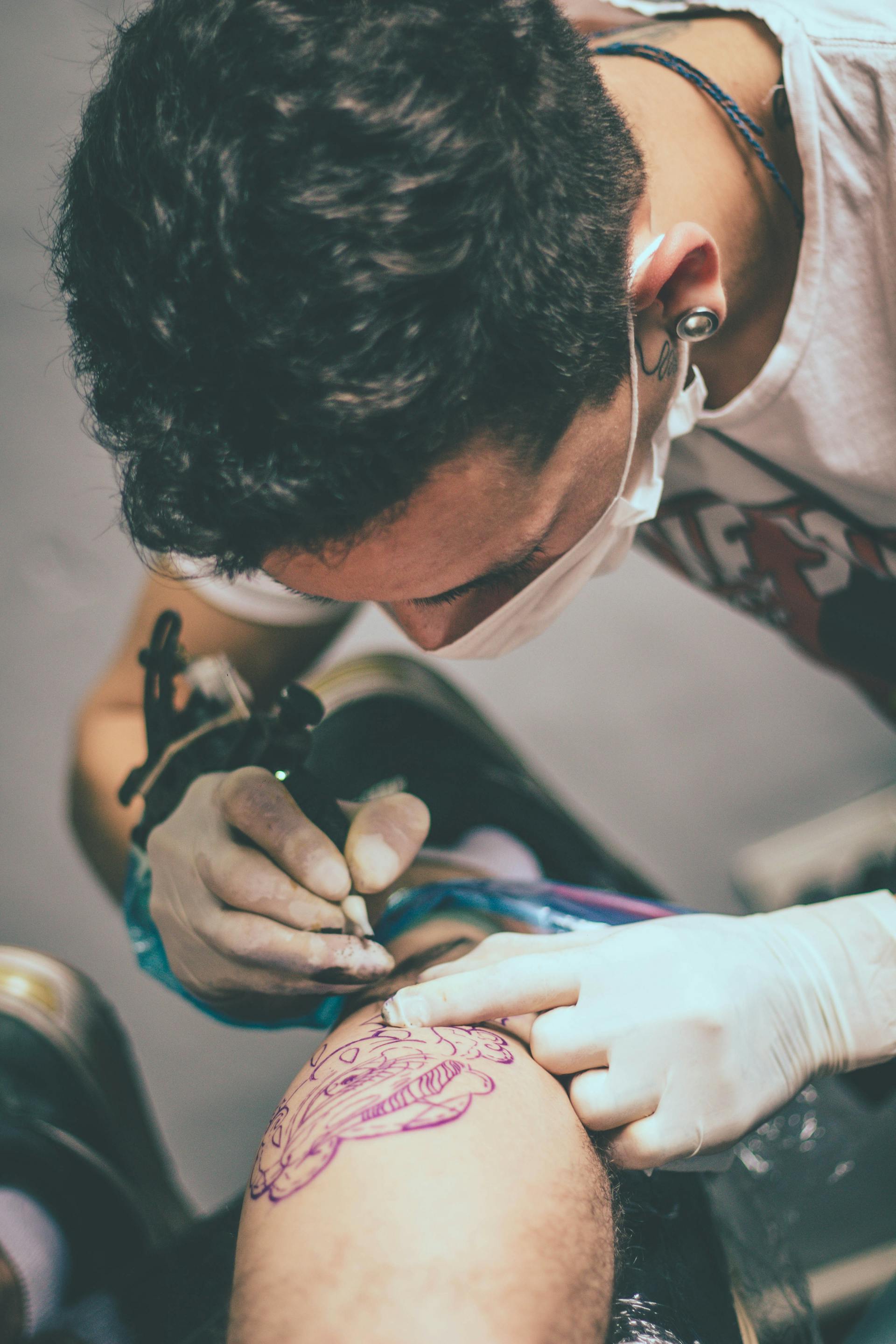
Could AI Play a Supporting Role Instead?
To be fair, not everything about AI and technology in tattooing is a red flag. There are some genuinely useful applications starting to pop up. When used as a support tool, technology can actually make the tattoo experience better for clients.
AI design tools can help clients visualize concepts before committing to anything.
Apps that simulate tattoo placement on your actual skin make it easier to decide on sizing and positioning.
Digital stenciling tools give Tattoo Artists a more precise starting point when planning complex pieces.
The key word in all of this is assist. Technology works well when it helps the Tattoo Artist do their job better, not when it tries to replace them. The needle still needs a skilled human hand behind it.
What Sets Ink Different Tattoos Apart from the Machine
Getting a tattoo is a deeply personal decision. And, the experience you have in the tattoo studio shapes how you feel about that tattoo for the rest of your life. At Ink Different Tattoos, we take that seriously. Here is what makes us a tattoo studio you can actually trust:
Tattoo Artists who listen first: Our Tattoo Artists do not just execute a design. They take time to understand your story, your vision, and what this tattoo means to you before a single drop of ink touches your skin.
A clean, safe, and comfortable tattoo studio environment: Hygiene is non-negotiable at Ink Different Tattoos. We follow strict sterilization and safety protocols so you can relax knowing you are in a professional space that genuinely prioritizes your health.
Mentorship at the core of everything we do: Ink Different Tattoos also trains the next generation of Tattoo Artists through our Traditional Tattoo Apprenticeship. That means every Tattoo Artist here works alongside experienced professionals who are deeply committed to the craft.
Custom tattoos built around your vision: We do not do cookie-cutter work. Whether your idea is subtle or bold, simple or complex, we work with you to create something that is genuinely yours.
A robot follows instructions. Our Tattoo Artists bring creativity, care, and years of hands-on experience to every single session. That difference is everything.
Your Skin Deserves a Human, Not a Hard Drive
Robotic tattooing is a fascinating experiment, and it is worth following as the technology evolves. But right now, trusting a robot with something as permanent as a tattoo on your skin is a significant leap of faith. The gaps in safety, adaptability, creativity, and human connection are too large to ignore.
Tattooing is one of those things that genuinely needs a human behind it. It needs someone who can look at you, understand what you want, adjust on the fly, and care about the outcome as you do. No machine does that. No machine even comes close.
If you are ready to get a tattoo done right, book a consultation with Ink Different Tattoos today. Our Tattoo Artists are here to make the experience feel exactly like it should: personal, professional, and worth every moment.
Frequently Asked Questions
Are robotic tattoos FDA-approved or legally regulated?
Robotic tattoo devices are not regulated as medical or cosmetic devices by the FDA in the same way traditional tattoo equipment is overseen. This regulatory grey area means there are no standardized safety benchmarks these machines must meet before being used on a person's skin.
Can a robot tattoo machine work on all body parts?
No, and that is one of the biggest limitations right now. Robotic tattoo arms have only been tested on relatively flat skin surfaces, and they struggle with curved areas where skin tension and angles change constantly.
If something goes wrong with a robot tattoo, who is responsible?
That question does not have a clean answer yet, and that is genuinely concerning. Liability in robotic tattoo cases could fall on the machine's manufacturer, the studio offering the service, or both. There’s also no established legal framework that spells it out clearly.
Will AI eventually replace human Tattoo Artists completely?
No, at least not in any meaningful sense. Tattooing involves too much human judgment, emotional intelligence, and creative problem-solving for a machine to fully replicate, especially for custom work that clients care about.