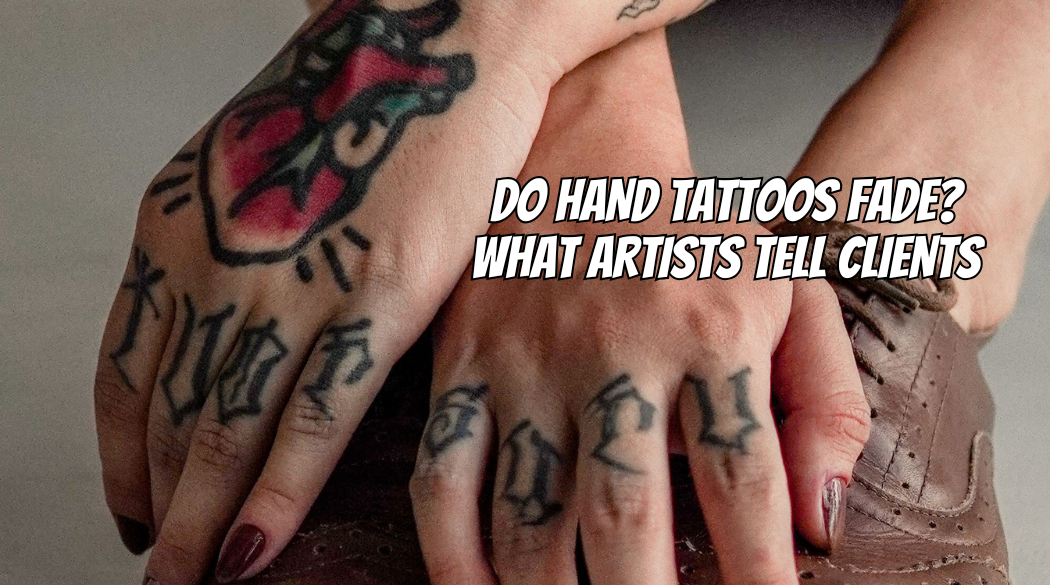
Do Hand Tattoos Fade? What Artists Tell Clients
Yes, hand tattoos tend to fade faster than tattoos on most other parts of the body. Your hands get constant sun, frequent washing and daily friction. On top of that, the skin on your fingers and palms is especially hard on ink. Many hand tattoos need touch-ups sooner than other placements. Bold, simple designs, good aftercare and sunscreen can help them last much longer.
This guide is part of our tattoo placement series. It covers why hand tattoos fade, what to expect from pain and healing, what experienced Tattoo Artists tell clients and how to keep your hand tattoo looking its best.
Key Takeaways
They fade faster: Sun, washing and friction wear hand tattoos down sooner than most placements.
Fingers and palms are toughest: These areas often blur or fade unevenly and may need touch-ups.
Pain is usually higher: Thin skin over bone and tendons makes hands one of the more painful spots.
Design matters: Bold lines and simple shapes age better than tiny, detailed work.
Sunscreen helps: Once healed, protecting your hand tattoo from UV light slows fading.
Do hand tattoos really fade faster?
Yes. Hand tattoos are known for fading faster than most placements because of how much wear hands get every day.
You wash your hands many times a day, use them for nearly every task and expose them to the sun constantly. All of that adds up over time and softens lines and color.
Experienced Tattoo Artists are upfront about this before you book. When your expectations match what’s realistic, you’re much more likely to be happy with how your tattoo looks for years to come.

Why Do Hand Tattoos Fade More Than Other Placements?
Hand tattoos fade faster because of constant sun exposure, frequent washing and daily friction, plus the unique skin on fingers and palms.
Sun exposure: Your hands are rarely covered. The American Academy of Dermatology notes that UV light can fade some tattoo inks. Sun is a big factor for tattoos overall: a chapter in Current Problems in Dermatology reports that about one in five tattooed people have sun-related tattoo problems.
Frequent washing: Soap, water and sanitizer are part of daily life, and constant washing is hard on any skin.
Friction: Gripping, typing, lifting and working with your hands all create wear.
Fingers and palms: The skin on the sides of the fingers and on the palms is often especially tough for ink to hold in evenly.
How Much Do Hand Tattoos Hurt?
Hand tattoos are usually on the more painful side. The skin is thin, with little padding over the bones, knuckles and tendons.
Pain varies by person and by area:
Back of the hand: Often uncomfortable because of the bones and tendons close to the surface.
Knuckles and fingers: Usually among the more sensitive spots.
Palms: Often very sensitive, and also tricky to tattoo and heal.
Getting good rest, eating beforehand and taking breaks can help. Smaller hand designs also mean shorter sessions.
How Long Do Hand Tattoos Take to Heal?
Most tattoos take about two weeks to heal on the surface, according to Mayo Clinic. Hand tattoos can be harder to heal, because you use your hands constantly and wash them often.
Deeper healing takes longer. According to Healthline, the skin below a tattoo can take as long as six months to fully heal.
During healing, try to limit heavy hand use when you can. Avoid soaking your hands, and keep the tattoo out of the sun. If you notice spreading redness, increasing pain or swelling, pus or fever, contact a healthcare provider.
What Do Tattoo Artists Tell Clients About Hand Tattoos?
Honest Tattoo Artists tell clients that hand tattoos look great but take more upkeep, often need touch-ups and hold up best with bold, simple designs.
Here’s what you’ll often hear in a consultation:
Expect some fading: Hand tattoos usually soften faster than tattoos on protected areas.
Plan for touch-ups: Many hand tattoos, especially on fingers, need a touch-up after healing or down the road.
Go bolder: Thicker lines and solid shapes age more gracefully than delicate detail.
Think about visibility: Hand tattoos are hard to cover. Some workplaces still have dress codes, so consider your job and plans.
Pro Tip: If a Tattoo Artist promises your finger tattoo will never fade or need a touch-up, be cautious. Honest expectations are a sign of professionalism.

Which Hand Tattoo Designs Hold Up Best?
Bold, simple designs with clear lines tend to last best on the hands.
Bold symbols: Hearts, stars, moons, crosses and other simple shapes.
Traditional-style pieces: Bold outlines and solid color or black hold up well.
Knuckle lettering: Clear, chunky letters are easier to read over time than thin script.
Back-of-hand designs: Roses, animals and ornamental pieces can work well when sized properly.
Very fine linework and tiny script tend to blur fastest, especially on fingers. Your Tattoo Artist may suggest sizing up or simplifying a design.
How Can You Slow Down Hand Tattoo Fading?
Choose a design suited to the hands, heal it carefully, protect it from the sun and keep up with touch-ups.
Heal it properly. Follow your Tattoo Artist’s aftercare instructions closely for the first few weeks.
Moisturize regularly. Keeping your skin hydrated helps tattoos look their best. The AAD suggests a water-based lotion when tattooed skin feels dry.
Use sunscreen once healed. Apply it to your hand tattoo whenever you’ll be in the sun.
Reduce harsh friction. Wear gloves for rough work, like gardening or handling tools.
Book touch-ups early. Schedule a refresh when lines start to soften, rather than waiting years.
Why Does Your Tattoo Artist’s Skill Matter Most?
On the hands, technique makes a huge difference in how well a tattoo heals and holds up.
If ink isn’t placed deep enough, it can fade or fall out as the skin heals. If it goes too deep, it can blow out into a blurry haze. An experienced Tattoo Artist knows how to work with thin hand skin, choose a design that will age well and pack ink evenly. They’ll also follow strict hygiene practices, like the OSHA Bloodborne Pathogens Standard.
When choosing a Tattoo Artist for a hand tattoo, look for healed hand work in their portfolio. It’s the best way to see how their tattoos hold up over time.
Curious About Tattooing as a Career?
If learning about placements like this has you thinking about tattooing professionally, Ink Different’s Traditional Tattoo Apprenticeship teaches the technique behind tattoos that last, including the depth control that tricky areas like hands require.
For 15 years, Ink Different has trained aspiring Tattoo Artists as a college alternative. The Traditional Tattoo Apprenticeship runs 18 to 24 months across four phases, with in-person training at one of 60+ tattoo studios nationwide. No prior art experience is needed.
Phase 1, Art and Design Principles: Drawing, shading, digital design and building a portfolio.
Phase 2, Machine Mastery and Practice Tattooing: Hand-control exercises, machine operation, lining, shading and color packing.
Phase 3, Supervised Tattoos: Tattooing real skin under a Mentor’s direct supervision.
Phase 4, Junior Artist Externship: Building client relationships and refining your skills while you start earning.
You’ll finish with job-ready skills, licensing support and a guaranteed job offer at one of Ink Different’s own tattoo studios. Interest-free payment plans help make training more accessible.
For Tattoo Artists who want to go further, the one-year, in-person Master Mentorship offers training with celebrity and award-winning Master Mentors, including Al Fliction, Liz Cook, Kyle Dunbar, Boneface, Jordi Pla and Marcel Oliveira.
We also offer Spanish-speaking locations in Denver, Orange County, NYC, Miami, San Antonio and San Diego, and our “Good Humans” culture means you join a supportive, family-like community. Each Mentor takes just two tattoo apprentices per tattoo studio, so seats fill up quickly.
Ready to learn? Apply now to Ink Different’s Traditional Tattoo Apprenticeship, or fill out our quick questionnaire to see if it’s right for you.

Frequently Asked Questions
Do hand tattoos fade more than other tattoos?
Yes. Constant sun exposure, washing and friction usually make hand tattoos fade faster than tattoos on more protected areas.
Do finger tattoos fade even faster?
Often, yes. Finger tattoos, especially on the sides of the fingers, tend to blur or fade unevenly and may need more frequent touch-ups.
Can you prevent a hand tattoo from fading?
You can’t stop fading completely, but good healing, moisturizing, sunscreen and timely touch-ups can slow it down a lot.
Do hand tattoos hurt?
Usually more than fleshier areas. Thin skin over bones, knuckles and tendons makes hands one of the more sensitive placements.
How long does a hand tattoo take to heal?
The surface often heals in a couple of weeks, though frequent hand use and washing can slow it down. Deeper healing takes longer.
What hand tattoo designs last the longest?
Bold, simple designs with clear lines, like traditional-style pieces and chunky lettering, usually age best.