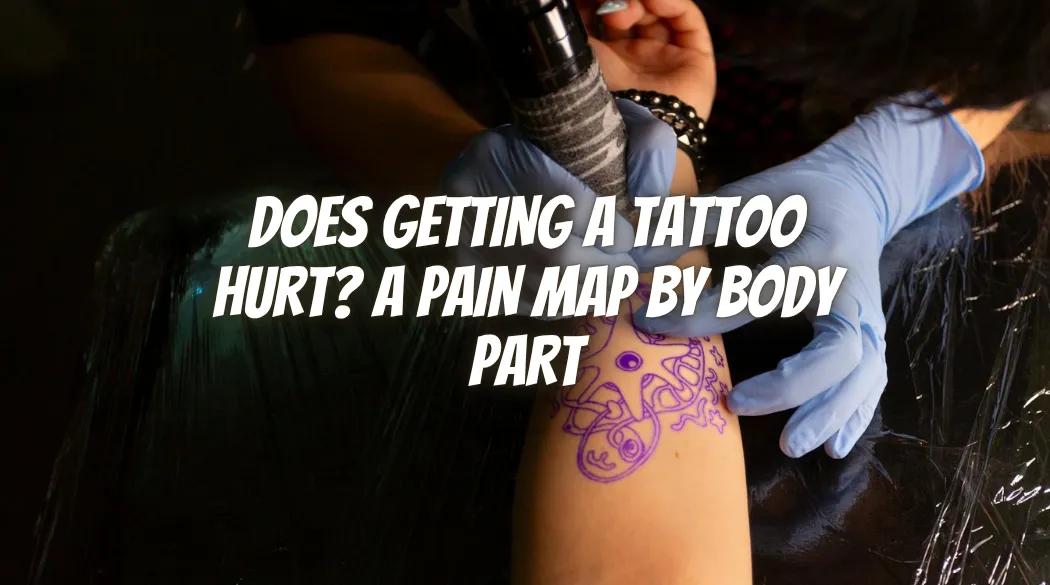
Does Getting a Tattoo Hurt? A Pain Map by Body Part
How bad does getting a tattoo actually hurt? Tattoo pain is the physical sensation caused by a needle repeatedly puncturing the skin to deposit ink, and how much it hurts depends almost entirely on where on your body the work happens. Think of your body as a landscape: some regions are soft meadows, others are rocky ridges pressed right against bone.
Knowing the terrain before you begin is what separates a rattled beginner from a calm professional, whether you're the one in the chair or the one holding the machine. At Ink Different Tattoos, we believe knowledge kills fear, and a good pain map turns anxiety into a plan.
Key Takeaways
Yes, it hurts:Most people describe tattoo pain as a hot scratching or stinging sensation, rarely unbearable.
Location matters most: Bony, thin-skinned, and nerve-dense areas hurt far more than muscular, fatty ones.
Most painful: Ribs, spine, ankles, feet, hands, and inner arm rank highest on the pain map.
Least painful: Outer arm, forearm, thigh, and calf are the most tolerable spots for most people.
Pain is manageable: Rest, hydration, breathing, and a skilled Tattoo Artist dramatically reduce discomfort.
Does getting a tattoo actually hurt?
Yes, getting a tattoo hurts, but most people describe it as a manageable hot, scratching, or stinging sensation rather than sharp or unbearable pain. The intensity ebbs and flows throughout a session and depends on your placement, pain tolerance, and the artist's technique.
Your body is far tougher than your nerves want you to believe. The needle only penetrates the top few layers of skin, and the sensation your brain registers is more of a persistent irritation than a wound. Many clients report the anticipation feels worse than the reality.
Pain is also personal. Sleep, hydration, stress, and even your mood all shape how your nervous system reads the experience. A well-rested, calm client almost always has an easier time than an anxious, exhausted one.
Why does tattoo pain vary by body part?
Tattoo pain varies by body part because of skin thickness, nerve density, and how close the area sits to bone. Thin skin over bone with lots of nerve endings hurts more, while padded, muscular areas feel far more comfortable.
Three factors drive the entire pain map:
Nerve endings: Areas packed with nerves (hands, feet, ribs) transmit sharper signals.
Skin thickness: Thin skin offers less cushion between needle and nerve.
Proximity to bone: Vibration against bone creates a deep, rattling ache.
Understanding this science is your compass. Once you know why a spot hurts, you can predict how any placement will feel before the machine ever touches your skin.

What is the tattoo pain map by body part?
A tattoo pain map ranks body parts from least to most painful based on skin thickness, nerve density, and bone proximity, giving you a realistic preview of any placement.
Here is a general pain map, from most tolerable to most intense:
Low pain: Outer upper arm, outer forearm, outer thigh, calf, shoulder.
Moderate pain: Upper back, lower back, chest (padded areas), stomach.
High pain: Inner arm, inner thigh, neck, behind the knee, lower stomach.
Severe pain: Ribs, spine, ankles, feet, hands, fingers, elbow, sternum.
Remember, this is a map and not a law. Everyone's terrain is slightly different, and your personal tolerance may shift the rankings a notch in either direction.
Where are the most painful places to get tattooed?
The most painful places to get tattooed are the ribs, spine, ankles, feet, hands, fingers, elbows, and sternum, because these areas have thin skin, dense nerves, and little padding over bone.
The ribs are legendary for a reason. Thin skin, constant breathing movement, and bone right underneath make it one of the sharpest experiences. The spine delivers a similar deep, bony rattle.
Hands, fingers, and feet are packed with nerve endings and get used constantly, which also makes healing trickier. If you are an aspiring artist, knowing this helps you set honest expectations and pace your client's sessions with care.
Pro Tip:If a client wants a first tattoo, gently steer them toward a lower-pain placement. A positive first experience builds trust and turns nervous clients into loyal ones.
Where are the least painful places to get tattooed?
The least painful places to get tattooed are the outer upper arm, outer forearm, outer thigh, calf, and shoulder, thanks to thicker skin, more muscle padding, and fewer nerve endings.
The outer upper arm is often the gold standard for comfort. It has plenty of muscle, minimal bone contact, and a forgiving surface for both first-timers and large-scale work.
Thighs and calves are also friendly zones. They can handle long sessions, which makes them ideal canvases for detailed pieces. When a beginner asks where to start, these areas are your safest recommendation.
How can you manage tattoo pain?
You can manage tattoo pain by sleeping well, staying hydrated, eating beforehand, breathing steadily, taking breaks, and working with a skilled, efficient Tattoo Artist. Preparation controls the majority of your discomfort.
Follow these steps to walk in ready:
Step 1: Rest. Get a full night of sleep so your nervous system is calm and resilient.
Step 2: Fuel up. Eat a solid meal and drink water; low blood sugar makes pain worse.
Step 3: Breathe. Slow, steady breathing keeps your body relaxed and your muscles loose.
Step 4: Communicate. Tell your artist when you need a short break; there is no prize for suffering silently.
Step 5: Aftercare. Follow the American Academy of Dermatology tattoo care guidelines to heal comfortably.
A knowledgeable artist also protects you. A clean, safe technique that follows OSHA bloodborne pathogen standards keeps sessions healthy and reduces complications that could add to your discomfort.
Why does understanding pain matter for a Tattoo Artist?
Understanding tattoo pain matters for a Tattoo Artist because managing a client's comfort is a professional skill that builds trust, protects your reputation, and shapes the entire experience.
Anyone can push a needle, but a true professional reads their client. Knowing the pain map lets you plan session length, guide placement decisions, and keep people calm through the tough stretches. That soft skill is exactly what turns a nervous first-timer into a lifelong client.
This is where real training separates the pros from the hobbyists. You cannot learn bedside manner, machine control, and safety fundamentals from a YouTube video. You learn them beside a Mentor, in a working studio, with real skin in front of you. If you are curious about the craft, our guide ontools every beginner tattoo artist should knowis a great place to start.
How Ink Different trains you to tattoo with confidence
Ink Different Tattoos trains you through a hands-on Traditional Tattoo Apprenticeship that builds job-ready skills and licensing support, so you can tattoo confidently and manage client comfort like a professional.
If you feel stuck in a job that drains your creative potential, this is your sign. For 15 years, we have guided beginners with zero experience into professional careers behind the machine. We are a genuine college alternative for people who want to build something real with their hands instead of racking up debt for a degree they may never use.
What can you expect from our Traditional Tattoo Apprenticeship?
Our Traditional Tattoo Apprenticeship runs 18 to 24 months across a proven 4-Phase structure. You start remote to build your foundations, then finish in real Tattoo Studios working alongside experienced Mentors.
Beginner-friendly: No prior art experience required; we teach you from the ground up.
Personalized: Hands-on training tailored to your pace and goals.
Job-ready: Real skills plus licensing support so you can work professionally.
Why is tattooing an AI-proof career?
A machine cannot read a nervous client, adapt to living skin, or build the human trust that keeps people coming back. Learn more in our piece on why tattoo artists are still essential. The Bureau of Labor Statistics also tracks steady demand for skilled craft and fine artists.
How can mentorship with award-winning artists accelerate your growth?
Ready to level up faster? Our one-year, in-person Master Mentorship pairs you with celebrity and award-winning Mentors like Al Fliction, Liz Cook, Kyle Dunbar, Boneface, and Jordi Pla. It is built for mastering a specific style, exploding your career, and even owning your own Tattoo Studio.
Where can you find Spanish-speaking Ink Different locations?
We offer Spanish-speaking locations in Denver, Orange County, NYC, Miami, San Antonio, and San Diego. Wherever you are, our "Good Humans" culture means you join a supportive, family-like community that has your back from day one.
Curious how tattooing stacks up against a traditional degree? Read why tattoo apprenticeships are gaining ground as a solid alternative to college, and avoid the pitfalls covered in our guide to mistakes aspiring tattoo apprentices should avoid.
Ready to become a Tattoo Artist?
Pain is only scary when you do not understand it. The same is true of a career change. Once you have the map, the fear turns into a plan, and the plan turns into momentum. Seats in our Tattoo Apprenticeship Program are limited, and the best time to plant this seed is now.
Ready to become a Tattoo Artist? Apply now to Ink Different's Traditional Tattoo Apprenticeship and start building an AI-proof career with licensing support along the way. You can also fill out our quick questionnaire to get personalized support and find out if the apprenticeship is right for you.
Frequently Asked Questions
Where does a tattoo hurt the most?
Tattoos hurt most on ribs, spine, ankles, feet, hands, fingers, elbows, and sternum due to thin skin, dense nerve endings, and bone proximity.
Where is the least painful place to get a tattoo?
The outer upper arm, outer forearm, outer thigh, calf, and shoulder have thicker skin, more muscle padding, and fewer nerves.
Do I need art experience to become a Tattoo Artist?
No. Ink Different's Traditional Tattoo Apprenticeship is built for beginners with zero art background. We teach drawing fundamentals, machine control, and safety from day one.
How long does the Tattoo Apprenticeship Program take?
Ink Different's Traditional Tattoo Apprenticeship takes 18 to 24 months across four structured phases, starting remotely and finishing in real Tattoo Studios.
Can you reduce tattoo pain?
Yes. Sleeping well, eating beforehand, staying hydrated, breathing steadily, taking breaks, and working with a skilled artist significantly reduce discomfort.
What makes Ink Different different from a tattoo school?
Ink Different is a college alternative offering live, in-person mentorship with award-winning Mentors, 15 years of experience, and a "Good Humans" community, not classroom-only training.