Fine Line, Blackwork, Traditional: Which Tattoo Style Suits What You Want
You have probably scrolled through hundreds of tattoos without realizing you were already reading a visual language. A tattoo style is a distinct visual approach to tattooing, defined by line weight, shading technique, color use, and cultural lineage, that shapes how a design looks and ages on the skin. Fine line, blackwork, and traditional are three of the biggest dialects in that language, and each one says something different on skin.
At Ink Different Tattoos, we've spent 15 years helping people tell these styles apart and, for some, turn that eye for detail into a real, hands-on craft. In this article, we'll break down what makes each style unique, how to choose the one that suits you, and how to actually learn to tattoo in it.
Key Takeaways
Fine line:Uses single-needle, thin lines for delicate, minimal designs that need precise technique to age well.
Blackwork: Relies on bold black ink and heavy saturation for dramatic, high-contrast pieces that hold up over decades.
Traditional: Features thick outlines and a limited color palette, the oldest and most durable Western style.
Choosing a style: Match your natural drawing instincts and the placement, longevity, and mood you want.
Learning path: Ink Different's Traditional Tattoo Apprenticeship (18 to 24 months) teaches every style with live mentorship and licensing support.
What is a tattoo style, and why does it matter?
A tattoo style is a recognized visual approach that determines line weight, shading, color, and how a piece will look years down the road. Choosing one is less about picking a favorite and more about matching your instincts to a craft you can grow into.
Think of styles as different dialects of the same language. A fine line piece and a traditional piece can show the same rose, yet they speak in completely different accents. Understanding these accents is the foundation every serious Tattoo Artist builds on.
Before you can master a style, you have to know what makes each one tick. Skip this step, and you risk the same fate as many beginners—a topic we cover in our guide to mistakes aspiring tattoo apprentices should avoid. Let us walk through the three styles that anchor the modern industry.
What is fine line tattooing, and who is it for?
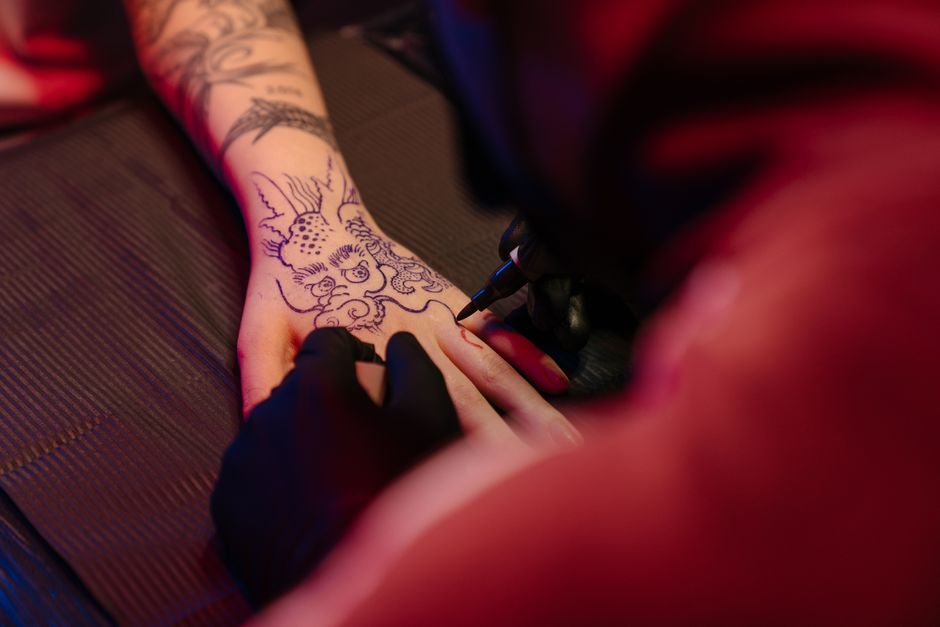
Fine line tattooing uses a single needle or a tight needle grouping to create thin, delicate lines, making it ideal for minimalist designs, script, and subtle botanical work. It rewards patience and a steady hand above all else.
Fine line has exploded in popularity because it feels personal and understated. Small florals, tiny lettering, dainty animals—these live and die by precision. There is nowhere to hide a shaky line.
This style suits you if you love detail, geometry, and quiet elegance. Be honest with yourself, though. Fine line looks simple, but the technique demands serious control, because thin lines can blur or fade faster if applied incorrectly.
Pro Tip:Fine line rewards artists who obsess over consistency. If you enjoy drawing steady, repeatable lines for hours, this style may be your natural home.
What is blackwork, and when should you choose it?
Blackwork is a tattoo style built entirely from bold black ink, using heavy saturation, negative space, and geometric or ornamental patterns to create high-contrast, long-lasting pieces. Choose it when you want drama that endures.
Blackwork ranges from dotwork mandalas to sprawling tribal-inspired sleeves to stark illustrative designs. Because it leans on solid black, it tends to age beautifully, holding its punch when softer styles begin to fade.
This style calls to you if you think in shapes, contrast, and negative space. You are drawn to bold statements rather than whispers. Blackwork also demands stamina, because packing solid black cleanly is a physical, disciplined process.
If you are curious about how any tattoo heals and holds up over time, the American Academy of Dermatology tattoo care guidelines explain why proper technique and aftercare protect that crisp saturation for years.
What is traditional tattooing, and why does it last?
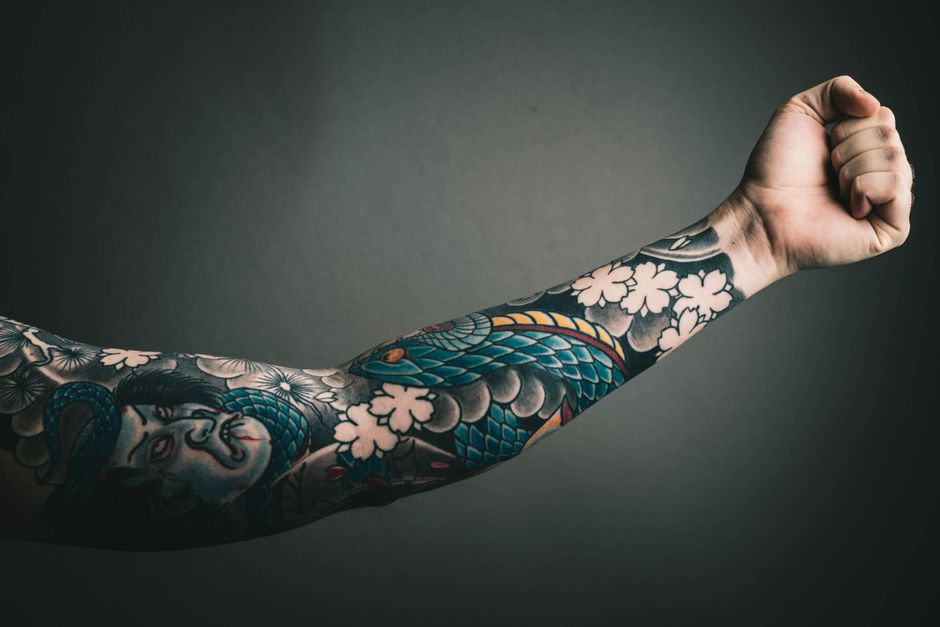
Traditional tattooing (also called American Traditional or Old School) uses thick, bold outlines, a limited color palette, and iconic imagery like anchors, roses, and swallows, producing tattoos that stay legible for decades. It is the backbone of Western tattoo history.
Popularized by legends like Sailor Jerry, traditional work follows time-tested rules for a reason. Bold lines and simple color blocks resist the natural spreading and fading that skin causes over time. A traditional piece from 30 years ago still reads clearly today.
This style suits you if you respect craft, history, and durability. It teaches fundamentals that transfer to every other style, which is exactly why so many mentors start beginners here. Master traditional line work and shading, and every other style becomes easier to reach.
How do you choose the tattoo style that suits you?
Choose your tattoo style by matching your natural drawing instincts, the placement and size you gravitate toward, the mood you want to create, and how long you want the piece to stay crisp. Follow these steps to narrow it down.
Step 1: Study your own sketchbook
Look at what you already draw without thinking. Do you fill pages with tiny detailed doodles, bold geometric shapes, or classic iconic imagery? Your hand tells you where your instincts already live.
Step 2: Consider longevity and placement
Fine line shines on protected areas and reads best small. Blackwork and traditional hold up on high-friction areas and larger canvases. Decide whether crispness at ten years matters more than delicate detail today.
Step 3: Match the mood you want to create
Ask what feeling you want people to have. Quiet and personal points toward fine line. Bold and striking points toward blackwork. Timeless and iconic points toward traditional.
Step 4: Try them all under guidance
You do not have to commit to one forever. The best Tattoo Artists sample every style during training, then let their strengths guide their specialty. That is exactly what a structured tattoo apprenticeship makes possible.
How do you learn to tattoo in the style you love?
You learn a tattoo style through a structured tattoo apprenticeship, where a licensed Mentor teaches you fundamentals first, then guides you into the specific style that fits your strengths. There is no legitimate shortcut around real, hands-on training.
Watching tutorials can spark inspiration, but it cannot correct your line pressure in real time or teach you sterilization protocols that protect your clients. That is why live, in-person mentorship remains the gold standard. Proper safety training follows standards like the OSHA bloodborne pathogen standards, which every responsible studio takes seriously.
The craft is also more secure than most people assume. As we explain inwhy tattoo artists are still essential, this is a human, AI-proof career. Machines cannot replicate the trust, artistry, and hand of a skilled Tattoo Artist. The Bureau of Labor Statistics tracks craft and fine artists as a real, ongoing profession, and tattooing sits firmly within that creative economy.
This is where you stop waiting and start building. If you have been treating a fulfilling creative life like a someday idea, it is time to plant that seed. Our guide to tattoo apprenticeships as a college alternative shows why so many people are choosing hands-on training over crushing tuition debt.
What does Ink Different's Traditional Tattoo Apprenticeship offer?
Ink Different's Traditional Tattoo Apprenticeship is an 18- to 24-month, four-phase Tattoo Artist Training program that takes complete beginners to job-ready professionals through personalized, live mentorship. You start remote and finish in real Tattoo Studios.
We built this program for people exactly where you are, standing at the edge of a life-changing decision. You do not need prior art experience. You need the willingness to show up and grow. Here is what your journey looks like:
Phase-based structure: A clear four-phase path that builds fundamentals before style specialization.
Start remote, finish in studios: Begin learning theory and drawing remotely, then transition into hands-on Tattoo Studio work.
Beginner-friendly: No portfolio or formal art background required to begin.
Licensing support: We guide you toward your state license, whether that means understanding how to get your tattoo license in Texas or how long a tattoo license takes in Colorado.
A career that comes with confidence
By the end of your training, you walk out with job-ready skills across fine line, blackwork, traditional, and beyond. We do not sell shortcuts. We build real Tattoo Artists who can hold their own in any studio, in an AI-proof craft that people will always want done by human hands.
Mentorship that pushes your brand and skills further
Ready to level up faster or explode into a specialty? Our one-year, in-person Master Mentorship connects you with celebrity and award-winning Mentors like Al Fliction, Liz Cook, Kyle Dunbar, Boneface, and Jordi Pla. It is built to master a specific style, support career growth, and enable studio ownership.
Making Tattoo Artist Training accessible for everyone
We offer Spanish-speaking locations in Denver, Orange County, NYC, Miami, San Antonio, and San Diego, because talent speaks every language. Once you find your footing, our list of platforms to help tattoo artists build their brand will help you grow a client base in your chosen style.
Good Humans culture:You are not joining a classroom. You are joining a family-like community that has trained professional Tattoo Artists since 2011. Seats are limited, because real mentorship cannot be mass-produced.

Ready to turn your favorite style into a career?
You already know which tattoos stop your scroll. That instinct is not random; it is the beginning of your craft. The only thing standing between you and a fulfilling creative life is the decision to stop waiting and start training.
Ready to become a Tattoo Artist? Apply now to Ink Different's Traditional Tattoo Apprenticeship and start building an AI-proof career, with licensing support along the way. If you are not sure yet, fill out our quick questionnaire to get personalized support and find out if our Tattoo Apprenticeship Program is right for you.
Want a little more inspiration before you leap? Read about career change tattoo apprenticeship and see why so many people just like you are trading dead-end jobs for the tattoo machine. Or explore starting your tattoo apprenticeship this spring to learn why momentum matters when making big life changes.
Frequently Asked Questions
Which tattoo style is easiest for beginners to learn?
Traditional tattooing is often best for beginners because its bold lines and limited palette teach core fundamentals that transfer to fine line and blackwork later.
Do I need to pick one tattoo style forever?
No. Most Tattoo Artists learn several styles during training, then specialize based on their strengths. Apprenticeship lets you sample all three before choosing.
Why does fine line fade faster than other styles?
Fine line uses thin, delicate lines that can blur or lighten over time, especially on high-friction areas or if applied without precise technique. Proper training minimizes fading.
How long does Ink Different's Tattoo Apprenticeship take?
The Traditional Tattoo Apprenticeship takes 18 to 24 months across four phases, starting remote and finishing with hands-on training inside real Tattoo Studios.
Do I need art experience to join the apprenticeship?
No prior art experience is required. Ink Different's apprenticeship is built for beginners and teaches drawing and technique from the ground up with live mentorship.
Is tattooing a stable career choice?
Yes. Tattooing is a human, AI-proof craft tracked by the Bureau of Labor Statistics. People always value tattoos applied by skilled human artists.