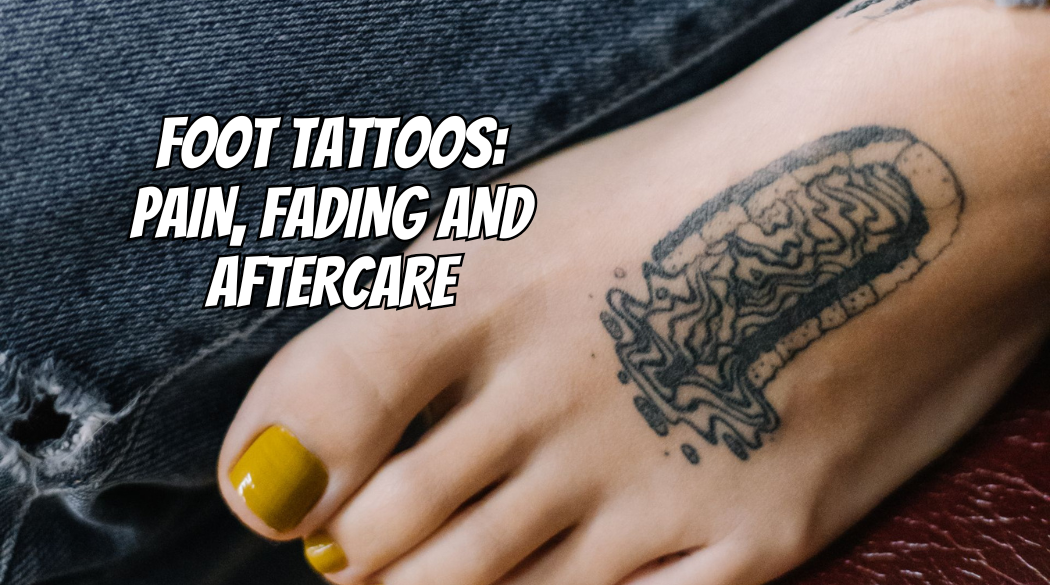
Foot Tattoos: Pain, Fading and Aftercare
Foot tattoos are popular for small, meaningful designs, but they come with trade-offs. They’re usually more painful than fleshier areas because the skin is thin over bone. They can be harder to heal because of shoes, socks and swelling. And they often fade faster from daily friction. With a skilled Tattoo Artist, a design suited to the area and careful aftercare, a foot tattoo can still look great for years.
This guide is part of our tattoo placement series. It covers what to expect from a foot tattoo, from pain and healing to how it ages and which designs work best.
Key Takeaways
Pain: Usually on the higher side, especially over bone and near the toes and ankle.
Healing: The surface often takes a few weeks, and shoes and swelling can slow it down.
Fading: Friction from shoes and socks, plus sun on sandal days, can wear foot tattoos down faster.
Aftercare: Keep it clean, let it breathe, avoid tight shoes and keep it out of water and sun.
Design matters: Bold, simple designs tend to age better on the foot than tiny, intricate ones.
Why do people choose foot tattoos?
People choose foot tattoos because they’re easy to show or hide, feel personal and suit delicate designs like script, florals and small symbols.
Many people like that a foot tattoo is something they carry everywhere but choose when to show. The foot’s curve also works well for designs that wrap naturally along the side or top of the foot.
How bad do foot tattoos hurt?
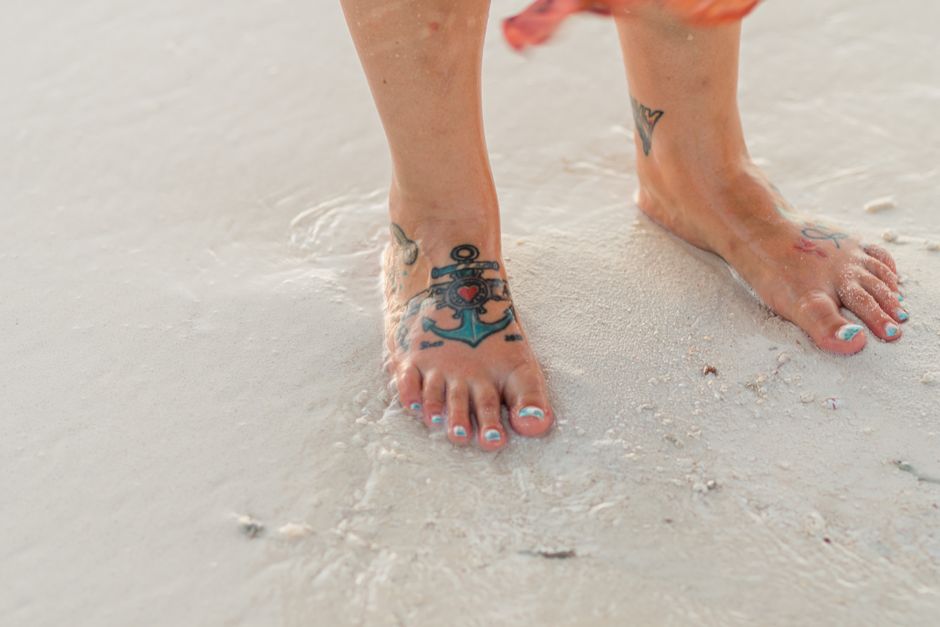
Foot tattoos are usually among the more painful placements. The skin on top of the foot is thin, with little padding over the bones and tendons.
Pain varies from person to person, but these areas tend to be the most tender:
Top of the foot: Thin skin over bone and tendons.
Toes and near the toes: Very little padding.
Ankle bones: Bony and sensitive.
Sides and soles: Often uncomfortable, and soles can be especially hard to tattoo and heal.
A few things can make your session easier: eat beforehand, stay hydrated, get a good night’s sleep and ask for short breaks if you need them. Your Tattoo Artist can also help by pacing the session and keeping you informed.
How Long Do Foot Tattoos Take to Heal?
Most tattoos take about two weeks to heal on the surface, according to Mayo Clinic. Foot tattoos often take a bit longer, because shoes, socks and swelling can slow things down.
Deeper healing takes longer still. According to Healthline, the skin below a tattoo can take as long as six months to fully heal. That’s why it’s worth protecting your foot tattoo even after it looks healed.
Feet also tend to swell after a session, especially if you’re on them a lot. Resting with your foot raised can help you feel more comfortable during the first few days.
Why do foot tattoos fade faster?
Foot tattoos often fade faster because of daily friction from shoes and socks, and because feet get a lot of sun when you wear sandals.
Every step creates rubbing and pressure, which can wear on a tattoo over time. If your shoes rub the area while it’s healing, they can also disturb the skin and cause patchy spots.
Sun is another factor. The American Academy of Dermatology notes that UV light can fade some tattoo inks. Once your foot tattoo is fully healed, sunscreen on sandal and beach days helps keep it bold.
How do you care for a foot tattoo step by step?
Keep it clean and lightly moisturized, let it breathe, avoid tight footwear and keep it out of water and sun while it heals. Always follow your Tattoo Artist’s aftercare instructions first.
Follow your bandage instructions. Keep the initial wrap or second-skin bandage on for as long as your Tattoo Artist recommends.
Wash gently. Use lukewarm water and a mild, fragrance-free soap, then pat dry with a clean paper towel.
Moisturize lightly. Apply a thin layer of the product your Tattoo Artist recommends. The AAD suggests a water-based lotion when tattooed skin feels dry.
Let it breathe. Wear loose, open shoes or go barefoot at home on clean floors. Avoid tight socks and shoes that rub the tattoo.
Rest and raise your foot. Elevating your foot can ease swelling in the first few days.
Avoid soaking. Skip baths, pools, hot tubs and the ocean until it’s healed. The CDC advises people with new tattoos to stay out of saltwater and brackish water if possible.
Keep it out of the sun. Cover it or keep it in the shade while it heals.
If you notice spreading redness, increasing pain or swelling, pus or fever, contact a healthcare provider. Mayo Clinic notes that skin infections are possible after tattooing.
What Foot Tattoo Designs Hold Up Best?
Designs with clear lines and some breathing room tend to age best on the foot.
Script along the side of the foot: Choose a slightly larger, clean lettering style so it stays readable.
Simple florals and vines: These can follow the foot’s curve naturally.
Small symbols: Hearts, stars, moons and other bold shapes are easy to read.
Ankle-wrapping designs: Bands and patterns that wrap the ankle can extend onto the top of the foot.
Mandalas and ornamental pieces: These can work well when sized to fit the top of the foot.
Very tiny, detailed designs can blur sooner, especially on a high-friction area. A good Tattoo Artist may suggest sizing up or simplifying details.

What mistakes make foot tattoos look worse?
The biggest mistakes are wearing tight shoes too soon, soaking or sunning the tattoo while it heals, picking at flakes and choosing a design that’s too detailed for the area.
Tight shoes too soon: Rubbing can irritate healing skin and cause patchy spots.
Soaking or sun exposure: Both can slow healing and affect how the ink settles.
Picking or scratching: Let flakes fall off on their own.
Overly fine detail: Tiny lines can close up and blur over time.
Skipping touch-ups: Foot tattoos sometimes need a touch-up after healing. Ask your Tattoo Artist about their touch-up policy.
Why Does Your Tattoo Artist’s Skill Matter So Much?
On a tricky area like the foot, technique and design choices make a big difference in how your tattoo heals and ages.
An experienced Tattoo Artist knows how to work with thin skin, adjust for the foot’s curves and suggest a design that will hold up. They’ll also follow strict hygiene practices, like the OSHA Bloodborne Pathogens Standard, and give you clear aftercare instructions.
When you’re choosing a Tattoo Artist, look for healed foot tattoos in their portfolio, not just fresh ones. Healed photos show how their work holds up on this challenging area.

Curious About Tattooing as a Career?
If learning about placements like this one has you curious about creating tattoos yourself, Ink Different’s Traditional Tattoo Apprenticeship is a place to start. Challenging areas like feet are exactly the kind of skill that’s best learned with an experienced Mentor beside you.
For 15 years, Ink Different has trained aspiring Tattoo Artists as a college alternative. The Traditional Tattoo Apprenticeship runs 18 to 24 months across four phases, with in-person training at one of 60+ tattoo studios nationwide. No prior art experience is needed.
Phase 1, Art and Design Principles: Drawing, shading, digital design and building a portfolio.
Phase 2, Machine Mastery and Practice Tattooing: Hand-control exercises, machine operation, lining, shading and color packing.
Phase 3, Supervised Tattoos: Tattooing real skin under a Mentor’s direct supervision.
Phase 4, Junior Artist Externship: Building client relationships and refining your skills while you start earning.
You’ll finish with job-ready skills, licensing support and a guaranteed job offer at one of Ink Different’s own tattoo studios. Interest-free payment plans help make training more accessible.
For Tattoo Artists who want to go further, the one-year, in-person Master Mentorship offers training with celebrity and award-winning Master Mentors, including Al Fliction, Liz Cook, Kyle Dunbar, Boneface, Jordi Pla and Marcel Oliveira.
We also offer Spanish-speaking locations in Denver, Orange County, NYC, Miami, San Antonio and San Diego, and our “Good Humans” culture means you join a supportive, family-like community. Each Mentor takes just two tattoo apprentices per tattoo studio, so seats fill up quickly.
Ready to learn? Apply now to Ink Different’s Traditional Tattoo Apprenticeship, or fill out our quick questionnaire to see if it’s right for you.
Frequently Asked Questions
How long do foot tattoos take to heal?
The surface often takes a few weeks, sometimes longer than other placements because of shoes and swelling. Deeper healing can take months.
Do foot tattoos hurt more than other placements?
Usually, yes. The skin on the foot is thin with little padding over bone, which tends to make tattooing there more painful.
Can I wear shoes after getting a foot tattoo?
Loose, open shoes are best while it heals. Avoid tight shoes and socks that rub the tattoo, and follow your Tattoo Artist’s advice.
Why do foot tattoos fade faster?
Daily friction from shoes and socks, plus sun exposure on sandal days, can wear down foot tattoos over time.
Do foot tattoos need touch-ups?
Sometimes. Because of friction and slower healing, foot tattoos may need a touch-up after they heal. Ask your Tattoo Artist about their policy.
Can I go to the beach with a new foot tattoo?
Wait until it’s healed. The CDC advises people with new tattoos to stay out of saltwater and brackish water if possible, and sun can irritate healing skin.