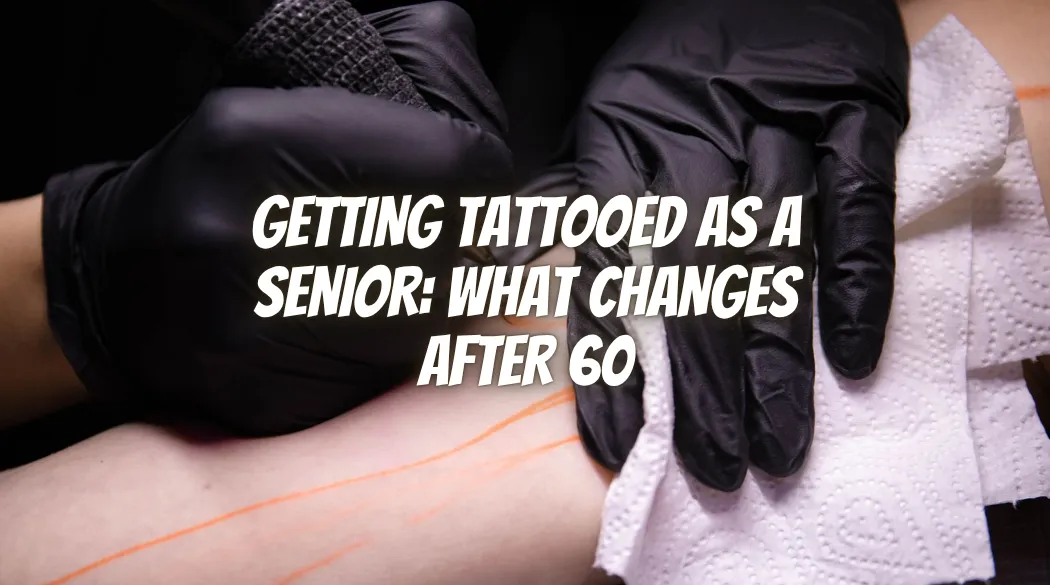
Getting Tattooed as a Senior: What Changes After 60
Maybe you always told yourself you would get that tattoo "someday." Someday you would honor a lost loved one, mark a survived battle, or finally wear the ink you have imagined for decades. If you have crossed the 60 mark, that someday is knocking louder than ever, and you may be wondering whether your body is still up for it. The truth is refreshing: age is not the barrier you fear.
Getting tattooed as a senior is entirely possible, and understanding what changes after 60 helps you make a confident, informed decision. Getting tattooed as a senior is the process of receiving permanent body ink at age 60 or older with the same procedure as at any other age, but with extra considerations for thinner skin, slower healing, and the need for a skilled artist who can adjust their technique.
Key Takeaways
Healthy adults over 60 can safely get tattooed with proper preparation and a skilled, licensed artist.
Thinner, less elastic mature skin requires a lighter hand and precise technique to prevent ink migration.
Healing takes three to four weeks or longer for seniors, making consistent aftercare essential.
Bold lines and simpler designs hold up better on aging skin than intricate micro-detail work.
Skilled artists trained in mature skin techniques create lasting, beautiful tattoos on seniors.
Can You Get Tattooed After 60?
Yes, you can get tattooed after 60 as long as you are in reasonably good health and work with an experienced, licensed artist who has successfully tattooed mature skin. There is no legal upper age limit for getting a tattoo anywhere in the United States.
Your age alone does not disqualify you. What matters far more is your overall health, any medications you take, and the skill of the person holding the tattoo machine. Plenty of people plant their first tattoo well into their golden years and walk away thrilled with the result.
If you have conditions like diabetes, a bleeding disorder, or a weakened immune system, a quick conversation with your doctor is wise before you book. This is not about fear. It is about walking into your session with your eyes open and your body ready to heal.
Good to Know: Some of the most meaningful tattoos are placed later in life. Memorial pieces, family names, and symbols of hard-won survival carry decades of story behind them, making the decision to get inked after 60 deeply personal and powerful.
How Does Aging Skin Affect Tattoos?
Aging skin is thinner, drier, and less elastic, which means ink can spread slightly and fine details may soften over time, calling for an artist who adjusts their technique to your unique skin. These changes are manageable with the right professional.
As we age, our skin loses collagen and fat beneath the surface. That is why mature skin bruises easier and feels more delicate to the touch. When a tattoo needle enters this skin, the ink can migrate slightly if the artist packs it too heavy or works too deep into the dermis.
This is not a reason to skip the tattoo. It is a reason to choose your artist carefully. A trained hand knows how to read your skin like a seasoned gardener reads soil, adjusting pressure and depth so the ink settles cleanly and lasts for decades without blurring.
The American Academy of Dermatology tattoo care guidelines offer helpful guidance on skin health and tattoo aftercare that seniors should review before and after their session. Their research on mature skin is invaluable for anyone getting inked after 60.
What Changes in Healing After 60?
Healing after 60 typically takes longer because mature skin regenerates more slowly, so expect three to four weeks or more for full recovery compared to younger skin's two to three weeks. Diligent aftercare makes all the difference in how well your tattoo sets.
Younger skin often heals a fresh tattoo in two to three weeks. For seniors, that timeline can stretch a bit longer—sometimes into a fourth week or beyond. Circulation, hydration, medications, and overall immune function all play a role in how quickly your skin knits itself back together.
The good news is that patience and proper aftercare handle this beautifully. Keeping your tattoo clean, moisturized, and out of direct sun protects your ink while it settles into the dermis. Think of it as tending a seedling: consistent care today grows into something strong and vibrant tomorrow.
Because open skin carries infection risk at any age, always confirm your artist follows strict sanitation practices. The OSHA bloodborne pathogen standards are the benchmark every reputable studio should meet without exception, protecting both artist and client.
How Should Seniors Prepare for a Tattoo?
Seniors should prepare by staying hydrated, eating well, checking medications with a doctor, and choosing a licensed studio with an experienced artist skilled in mature skin. A little planning sets you up for a smooth, comfortable session.
Here is a simple, step-by-step way to get ready for your first (or next) tattoo after 60.
Step 1 - Talk to your doctor. If you take blood thinners or have a chronic condition, get a quick clearance so you know you are good to go and have no underlying health concerns.
Step 2 - Hydrate and nourish. Well-hydrated, well-fed skin takes ink better and heals faster. Start hydrating and eating nutrient-rich meals a few days ahead of your appointment.
Step 3 - Research your artist. Look for a licensed professional with a portfolio showing clean work on mature skin and a range of skin types and ages.
Step 4 - Verify the studio's hygiene. Confirm single-use needles, sterile equipment, autoclave certification, and clear sanitation practices before you sit down in the chair.
Step 5 - Plan your aftercare. Buy your recommended ointment and bandages ahead of time so you are fully ready the moment you leave the studio.
Preparation removes the guesswork and anxiety. When you walk in ready and informed, you can relax into the experience instead of worrying about the unknown or second-guessing your decision.
What Tattoo Designs Age Best on Mature Skin?
Bold lines, solid shapes, and simpler designs age best on mature skin because they hold up as skin naturally changes and loses elasticity over time. Intricate micro-detail may blur faster on aging skin.
This does not mean you cannot have something beautiful, meaningful, and deeply personal. It means working with your artist to design something that will still look sharp and clear years from now. A skilled artist knows how to space lines, balance negative space, and choose weight so your tattoo stays legible and vibrant.
Consider placement, too. Areas with less movement and better skin thickness, like the upper arm, shoulder, or back, tend to preserve tattoos more gracefully than high-friction spots like the inner wrist or foot. Your artist can guide you toward the smartest canvas for your design idea.
Pro Tip: Bring reference images to your consultation. A great artist will adapt your vision to what will look best on your skin for the long haul, ensuring your tattoo remains beautiful as you age.
Why Does Tattooing Mature Skin Demand Skilled Artists?
Tattooing mature skin demands skilled artists because thinner, less elastic skin is less forgiving, requiring precise technique and real-time adjustment that only comes from proper hands-on mentorship. Raw talent alone is not enough to tattoo aging skin well.
Every senior who sits in a tattoo chair is trusting the artist to read their unique skin in real time and adjust pressure, depth, and technique on the fly. That kind of judgment and adaptation is not born from watching videos or copying trends on social media. It is built through live, in-person mentorship under experienced professionals who have tattooed hundreds of different skin types.
This is exactly why the world needs more properly trained Tattoo Artists, and why so many people are trading dead-end jobs for a hands-on, AI-proof craft. If you have ever felt your own creative potential going to waste, this is the seed worth planting. Learn more about why tattoo artists are still essential in an automated world, and how human skill will always outpace machines.
According to the Bureau of Labor Statistics on craft and fine artists, skilled craft and fine artists remain in steady demand precisely because their work cannot be replicated by robots or algorithms. A tattoo is a human hand meeting human skin, and that intimate, adaptive craft will never be automated.
Get Serious About Tattooing With Become A Tattoo Artist
If reading this stirred something in you, a desire to give others the gift of meaningful ink, know that becoming a Tattoo Artist yourself is a real, reachable path, and Ink Different Tattoos has guided aspiring artists into thriving careers for over 15 years.
Maybe you are ready to make a change. Maybe you are in work that doesn't use your creative side, and that's worth paying attention to. A tattoo apprenticeship is a serious college alternative for people ready to build something lasting with a clear purpose.
What You Can Expect from Our Traditional Tattoo Apprenticeship
Our Traditional Tattoo Apprenticeship runs 18 to 24 months through a proven four-phase structure designed to transform beginners into confident, job-ready artists. It is built for people with no prior art experience. You train hands-on in real tattoo studios under experienced Mentors every step of the way, gaining the exact skills you see demonstrated in this article.
Because we know the leap can feel big, we recommend avoiding the common pitfalls first. Read up on mistakes aspiring tattoo apprentices should avoid and get familiar with the tools every beginner tattoo artist should know before your first day.
A Career That Comes With Confidence
Our Traditional Tattoo Apprenticeship focuses on job-ready skills and includes licensing support and a guaranteed job offer at one of our tattoo studios, so you graduate prepared to work professionally right away. This is not a shortcut or a gimmick. It is a foundation built on real skill, real safety practices that align with OSHA standards, and the kind of confidence that only comes from doing the work under expert guidance.
Mentorship That Pushes Your Brand and Skills Further
For those ready to level up faster and go deeper into a specific style, our Master Mentorship is a one-year, in-person program with celebrity and award-winning Mentors including Al Fliction, Liz Cook, Kyle Dunbar, Boneface, and Jordi Pla. It is perfect for mastering a specific style, growing your career visibility, and stepping into business ownership with confidence.
Making Tattoo Training Accessible for Everyone
We believe great mentorship should have no language barrier. Ink Different offers Spanish-speaking locations in Denver, Orange County, NYC, Miami, San Antonio, and San Diego, so more people can find a welcoming home in our "Good Humans" community and pursue this craft without feeling like an outsider.
Seats in our Traditional Tattoo Apprenticeship are limited by design, because personalized, family-like mentorship cannot be mass-produced or scaled.
Ready to Become a Tattoo Artist?
Whether you are the senior finally getting the ink you always wanted, or the person ready to become the artist behind it, one truth holds: age is not the wall you feared. It is simply a new chapter of your story, full of possibility.
Ready to become a Tattoo Artist? Apply now to Ink Different's Traditional Tattoo Apprenticeship and start building an AI-proof career with comprehensive licensing support along the way. Fill out our quick questionnaire to get personalized guidance and find out if the Traditional Tattoo Apprenticeship is the right fit for your journey.
Frequently Asked Questions
Is it safe to get a tattoo after 60?
Yes, getting tattooed after 60 is safe for most healthy adults. Always consult your doctor if you take blood thinners, and choose a licensed, hygienic studio with an experienced artist.
Does getting a tattoo hurt more as a senior?
Pain varies by person and placement, not strictly by age. Thinner skin may feel more sensitive in certain areas, but a skilled artist with a lighter technique keeps discomfort manageable.
How long does a tattoo take to heal after 60?
Healing may take three to four weeks or longer for mature skin. Proper aftercare, hydration, and sun protection speed recovery and protect your ink's clarity and color.
What tattoo designs look best on mature skin?
Bold lines, solid shapes, and simpler designs age best on mature skin. Very fine micro-detail may soften over time, so work with your artist to plan something built to last decades.
Do I need art experience to join Ink Different's apprenticeship?
No. Ink Different's Traditional Tattoo Apprenticeship is built for beginners with no prior art experience. You learn drawing fundamentals and professional technique from day one under experienced mentors.
How long is the Traditional Tattoo Apprenticeship?
The Traditional Tattoo Apprenticeship runs 18 to 24 months through a 4-Phase structure. You start remote and finish hands-on in real studios, graduating with job-ready skills and licensing support.
Related reading: Ready for a career change? Try a tattoo apprenticeship, plant the seed and start your tattoo apprenticeship, and why spring is the best time to become a tattoo artist.