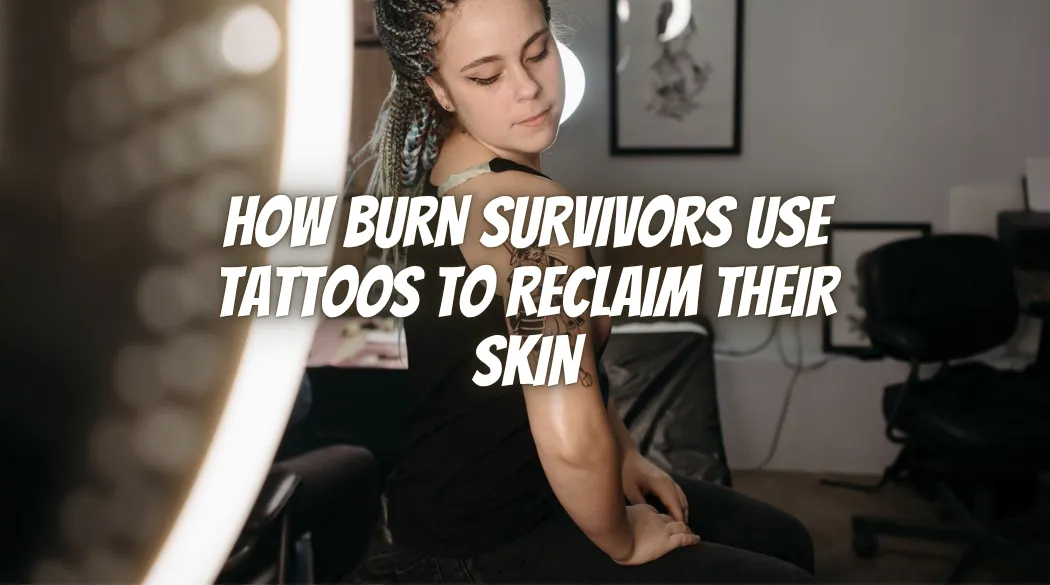
How Burn Survivors Use Tattoos to Reclaim Their Skin
Imagine looking in the mirror every morning and seeing a reminder of the worst day of your life. For thousands of burn survivors, that is the reality until they discover a different path forward. Scar-covering tattoo work is the specialized practice of tattooing over healed burn scars to transform reminders of trauma into art the survivor chooses for themselves. It is one of the most meaningful things a Tattoo Artist can do, and at Ink Different Tattoos, we believe that kind of impact is worth building a career around.
This is not just about ink and skin. It is about giving someone back a sense of ownership over their own body. And behind every one of those transformations is a trained, patient, deeply skilled Tattoo Artist who chose to learn this craft the right way.
Key Takeaways
Purpose: Burn survivors use tattoos to cover scars, restore confidence, and reclaim control over their own skin.
Safety first: Scars must be fully healed (often 12 to 24 months) before tattooing over them.
Skill required: Tattooing scarred skin demands advanced technique, patience, and mentorship, not shortcuts.
Career path: Ink Different Tattoos trains beginners through a Traditional Tattoo Apprenticeship with licensing support.
AI-proof craft: Human-centered tattoo work like scar restoration cannot be replaced by machines.
What is scar-covering tattoo work for burn survivors?
Scar-covering tattoo work for burn survivors is the practice of tattooing decorative or restorative designs over healed burn scars to conceal, reshape, or reframe damaged skin into something the person chooses. It blends medical awareness with true technical skill.
Some survivors want a full cover-up: florals, geometric patterns, or symbolic imagery that flows across the scar tissue. Others pursue paramedical work like skin-tone camouflage or areola restoration after reconstructive surgery. Every case is different, and every case tells a story.
What matters most is that the survivor is in the driver's seat. For years, that scar was written by an accident. Now they get to decide what their skin says.

Why do burn survivors turn to tattoos to reclaim their skin?
Burn survivors turn to tattoos because ink lets them take back authorship of a body that trauma tried to define, replacing a mark they never chose with one they did.
Scars carry weight. They can pull attention, invite questions, and keep the memory of an accident alive on the surface of the skin. A tattoo flips that script. Suddenly the conversation is about the design, the meaning, the beauty, not the burn.
Think of it like planting a garden over scorched ground. The burn happened. Nobody pretends it did not. But what grows on top of it now is something intentional, chosen, and alive. That shift, from victim of an event to author of a story, is where the real healing lives.
Remember: The survivor is always the hero of this story. The Tattoo Artist is the trusted guide who helps them cross the bridge.
Can you tattoo over burn scars safely?
Yes, you can tattoo over fully healed burn scars, but only after the tissue has completely matured, which often takes 12 to 24 months, and always with awareness of the skin's changed texture and healing behavior.
Scar tissue is not the same as unblemished skin. It can be thinner or thicker, less elastic, and it holds ink differently. Rushing this is where amateurs get people hurt. A responsible Tattoo Artist understands hygiene, bloodborne pathogen safety, and when to say "not yet."
The OSHA bloodborne pathogen standards exist for exactly this reason: to keep both artist and client protected. And once a piece is done, following trusted American Academy of Dermatology tattoo care guidelines helps the healing go smoothly. This is knowledge you learn properly through mentorship, not YouTube.
How do skilled Tattoo Artists approach scarred skin?
Skilled Tattoo Artists approach scarred skin with a slower, gentler technique, adjusting needle depth, saturation, and passes to respect tissue that behaves differently from healthy skin.
Here is a simplified look at how the process typically unfolds. This is HowTo-eligible territory, and it shows why real training matters.
Step 1: Consultation. Assess the scar, discuss goals, and confirm the tissue is fully healed and cleared for tattooing.
Step 2: Design. Build a custom design that works with the scar's shape and texture, not against it.
Step 3: Test and adjust. Read how the skin takes ink, then adapt machine speed, needle configuration, and pressure.
Step 4: Patient application. Work in shorter sessions when needed, protecting fragile tissue and avoiding overworking the skin.
Step 5: Aftercare guidance. Coach the survivor through healing so the result lasts and stays vivid.
None of this is guesswork. It is craft, learned hands-on from experienced Mentors who have done it hundreds of times. Want to avoid the common pitfalls beginners make? Read our guide on mistakes aspiring tattoo apprentices should avoid.
What is the emotional power of a healing tattoo?
The emotional power of a healing tattoo is its ability to restore identity, dignity, and confidence, turning a source of shame into a source of pride the survivor controls.
When you help a burn survivor look at their arm and smile instead of flinch, you are doing far more than decorating skin. You are handing someone a piece of their life back. That is a responsibility, and it is also a privilege.
This is the kind of work that reminds you why the human element in tattooing can never be automated. As we explore in our post on why tattoo artists are still essential, no machine can hold space for someone's story the way a caring human can. This is an AI-proof career built on empathy and skill.

How can you become the artist who helps them heal?
You become the artist who helps burn survivors heal by pursuing structured, hands-on Tattoo Artist Training under experienced Mentors who teach both technical mastery and human-centered care.
Maybe you are stuck in a job that drains you, watching your creative potential go to waste year after year. Maybe you have felt the pull toward tattooing but never had a real path in. That pull is a seed worth planting.
At Ink Different Tattoos, we have spent 15 years training aspiring Tattoo Artists to work at a professional level. We are a genuine college alternative for people who want a meaningful, AI-proof career instead of a mountain of debt. Curious how that stacks up against a traditional degree? See why tattoo apprenticeships are gaining ground as a solid alternative to college.
What does the Traditional Tattoo Apprenticeship include?
The Traditional Tattoo Apprenticeship at Ink Different Tattoos is an 18 to 24 month, four-phase tattoo apprenticeship where you train hands-on in real tattoo studios, building job-ready skills with licensing support along the way.
Here is what you can expect as a Tattoo Apprentice:
Beginner-friendly: No prior art experience required. We build your foundation from the ground up.
Personalized, hands-on training: Live, in-person mentorship, not pre-recorded videos.
Four progressive phases: From fundamentals to real client work in a Tattoo Shop.
Licensing support and job-ready skills: Graduate prepared to work professionally.
A career like this comes with confidence. When you finish, you know your craft, you understand safety and hygiene, and you carry skills that translate into real income.
What is the Master Mentorship program?
The Master Mentorship is a one-year, in-person program where beginner and experienced artists train directly with celebrity and award-winning Mentors to master a specific style, grow their career, and build a business.
If you want to go deep, this is where you level up. You learn from names the industry respects, including Al Fliction, Liz Cook, Kyle Dunbar, Boneface, and Jordi Pla. This is intensive skill development for artists who want to specialize, and paramedical and scar work is exactly the kind of niche where advanced mentorship pays off.
How is Ink Different making training accessible?
Ink Different makes Tattoo Artist training accessible through Spanish-speaking locations in Denver, Orange County, NYC, Miami, San Antonio, and San Diego, so language is never a barrier to a life-changing career.
We believe excellence in the tattoo industry should be within reach for anyone willing to pursue it. That is part of our "Good Humans" culture: a supportive, family-like community where you are never figuring things out alone.
Whether you are searching for a Tattoo Studio near Miami or near San Antonio, there is a place for you here. According to the Bureau of Labor Statistics on craft and fine artists, skilled tattoo work sits at the intersection of growing creative careers and specialized craftsmanship that employers and clients continue to seek out.

Ready to become a Tattoo Artist?
Every scar tells a story of survival. As a Tattoo Artist, you get to help write the next chapter, the one the survivor chooses. That is not just a job. That is a purpose you can build a life around.
Ready to become a Tattoo Artist? Apply now to Ink Different's Traditional Tattoo Apprenticeship and start building an AI-proof career, with licensing support along the way. Not sure yet? Fill out our quick questionnaire to get personalized support and find out if our Traditional Tattoo Apprenticeship is right for you.
Frequently Asked Questions
Can you tattoo over burn scars?
Yes, once the scar tissue is fully healed and matured, which often takes 12 to 24 months. A trained Tattoo Artist adjusts technique because scarred skin holds ink differently than healthy skin.
Do I need art experience to learn scar-covering tattoo work?
No. Ink Different Tattoos' Traditional Tattoo Apprenticeship is built for beginners and teaches fundamentals from day one. Advanced work like scar restoration builds naturally on that foundation.
How long does the Traditional Tattoo Apprenticeship take?
The Traditional Tattoo Apprenticeship takes 18 to 24 months across four phases. You start remote and finish training in real Tattoo Studios, with licensing support upon completion.
What makes Ink Different Tattoos different?
Ink Different offers live, in-person mentorship, 15 years of experience training professional tattoo artists, award-winning Mentors, and a supportive "Good Humans" culture, positioning it as a genuine college alternative.
Is tattooing an AI-proof career?
Yes. Human-centered work like scar-covering tattoos for burn survivors relies on empathy, judgment, and hands-on skill that machines cannot replicate, making it a resilient, future-proof craft.
Are there Spanish-speaking training locations?
Yes. Ink Different Tattoos offers Spanish-speaking Tattoo Apprenticeship locations in Denver, Orange County, NYC, Miami, San Antonio, and San Diego, so language is never a barrier.