How Collagen Loss Changes the Look of Tattoos as You Age
Older tattoos often look softer and fainter than they did when they were fresh, and collagen loss is a big reason why. Collagen loss is the gradual breakdown of the protein that gives skin its structure, firmness, and elasticity, which slowly softens, stretches, and blurs the tattoos resting within it.
For anyone serious about this craft, understanding this process is the difference between a tattoo that fades into mush and one that still reads clearly decades later. At Ink Different Tattoos, we teach aspiring Tattoo Artists to design work that holds up as the body around it changes.
Key Takeaways
Definition: Collagen loss is the breakdown of the skin's structural protein, which softens and blurs tattoos over time.
Timeline: Collagen production begins declining in your mid-20s, accelerating noticeably after age 40.
Impact: Thin lines and tiny details blur first, while bold lines and solid color hold up longest.
Prevention: Sun protection, hydration, and healthy skin dramatically slow how quickly tattoos distort.
Why it matters: Great Tattoo Artists design for aging skin, a skill taught in Ink Different's Traditional Tattoo Apprenticeship.
What is collagen loss in the skin?
Collagen loss is the natural decline of collagen, the protein that keeps skin firm and elastic, which begins in your mid-20s and speeds up with age, sun exposure, and lifestyle.
Collagen is the scaffolding beneath your skin. It holds everything taut and in place, like the wooden frame stretching a painter's canvas. When that scaffolding weakens, the surface loosens, wrinkles form, and anything printed on it, including tattoo ink, begins to shift.
According to the American Academy of Dermatology tattoo care guidelines, the skin changes it undergoes with age directly affect how tattoos look over the years. You cannot stop the clock entirely, but you can understand it well enough to work with it instead of against it.
Why do tattoos change as you age?
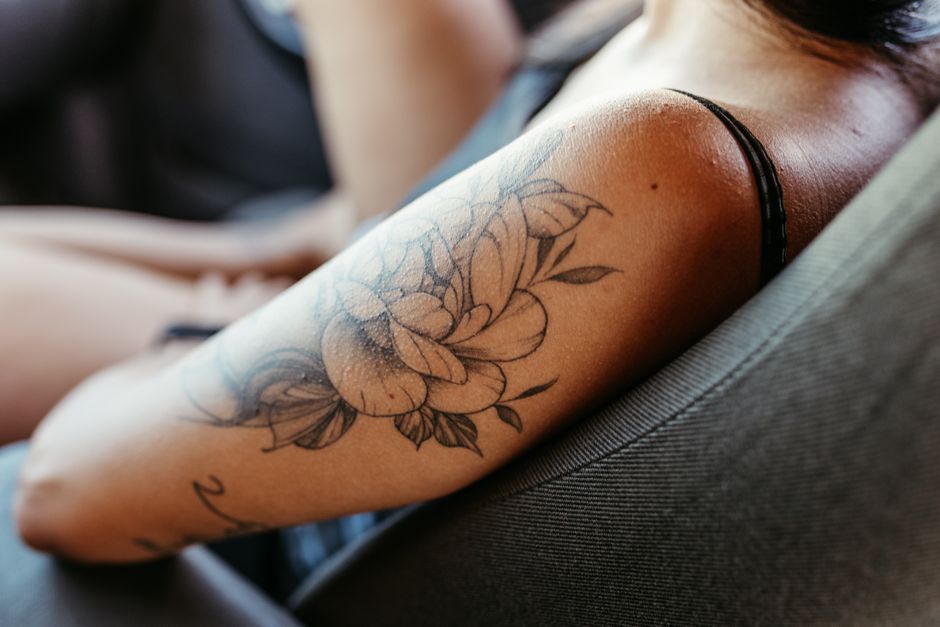
Tattoos change as you age because the dermis holding the ink loses collagen and elastin, causing the skin to thin, sag, and stretch, which scatters the pigment and softens the design.
Tattoo ink sits in the dermis, the deeper layer of your skin. That layer is where collagen does its most important work. As the protein depletes, the ink particles slowly spread and settle differently, the way a drop of water loosens its edges on a paper towel.
Several forces speed this up:
Sun exposure: UV rays break down collagen and fade pigment faster than almost anything else.
Weight fluctuation: Stretching and shrinking skin distorts the shape of a tattoo.
Hydration and nutrition: Dry, undernourished skin ages and blurs ink more quickly.
Placement: High-movement areas like hands, feet, and elbows wear faster.
None of this means a tattoo is doomed to look bad. It means the artist's choices matter enormously, which is a point we will come back to.
How does collagen loss affect tattoo lines and color?
Collagen loss causes fine lines to blur, small details to merge, and colors to soften, while bold outlines and solid saturated ink hold their shape far longer.
Think of your tattoo as a garden. In youth, with rich firm soil, every plant stands crisp and distinct. As the soil loosens over decades, the delicate seedlings blur together first, while the strong, deep-rooted trees keep their shape.
What fades or blurs first?
Hairline-thin lines: These soften and can disappear entirely.
Micro-text and tiny script: Letters merge and become unreadable.
Subtle gradients and watercolor washes: These lose definition quickly.
Light pastels and white highlights: Among the first colors to fade.
What holds up longest?
Bold, confident outlines that give the design structure.
Solid black and heavily saturated color.
Designs with built-in breathing room between elements.
This is why a seasoned Tattoo Artist thinks decades ahead, not just about how the piece looks the day it heals. It is also why learning proper tool selection and technique matters early.
Which tattoos age best over time?
Tattoos age best when they use bold lines, strong contrast, intentional spacing, and placement on areas with less sun exposure and movement, like the upper arm, back, or thigh.
Styles like traditional American and bold blackwork have endured for over a century precisely because they were designed for the realities of aging skin. Those thick lines and solid fields are not just a look. They are engineering.
Delicate fine-line and single-needle work can be stunning, but it demands honest conversations with clients about longevity. A great artist does not just say yes to every request. They guide the client toward choices that will still look like something in thirty years.
Pro Tip: The OSHA bloodborne pathogen standards govern safe technique, but longevity is a design discipline. Mastering both is what separates a hobbyist from a true professional.
How can a skilled artist design tattoos that age gracefully?
A skilled artist designs for aging skin by choosing bold lines, strong contrast, smart placement, and proper spacing, then educating the client on sun protection and aftercare.
Designing a tattoo that ages well is a learnable process. Here is how a trained professional approaches it, step by step.
Assess the skin and placement. Consider the client's age, skin type, sun habits, and whether the chosen spot sees heavy movement or exposure.
Choose line weight intentionally. Use confident outlines that will hold their shape as the skin softens over time.
Build in spacing. Leave room between elements so blurring never causes them to merge into a dark blob.
Prioritize contrast and saturation. Deep, well-packed color and black survive collagen loss far better than faint washes.
Educate the client on aftercare. Teach them that hydration and daily sunscreen directly protect their investment for decades.
These decisions are not instinct you are born with. They are skills passed down through hands-on mentorship, the way they have always been in this craft. You can read more about the early missteps to sidestep in our guide to the mistakes aspiring tattoo apprentices should avoid.
Why does this matter if you want to become a Tattoo Artist?
Understanding collagen loss matters because clients trust Tattoo Artists who create work that lasts a lifetime, and that lasting quality is what builds a reputation, a loyal following, and a sustainable income.
Anyone can copy a design onto skin. Very few can create work that still looks intentional and beautiful forty years later. That deeper knowledge is exactly what makes this career impossible for a machine to replace. A tattoo is a human conversation about a human body changing over a human lifetime, which is why we believe tattoo artists are still essential in an AI-driven world.
If you are stuck in a job that drains you while your creative potential gathers dust, this is your sign. The skills that let you design timeless work are teachable, and the demand for genuine craftsmanship is real. The Bureau of Labor Statistics on craft and fine artists tracks craft and fine artists as a recognized professional field, and skilled Tattoo Artists remain in steady demand.
The question is not whether you are talented enough. It is whether you are willing to plant the seed today instead of waiting another year wondering what if. For a bigger-picture look, see why many are treating tattoo apprenticeships as a college alternative.
Get Serious About Your Craft With Ink Different Tattoos
Ink Different Tattoos has spent over a decade training aspiring artists to create tattoos that look great the day they heal and decades down the road.
We are a nationwide tattoo apprenticeship built around live, in-person mentorship from artists who have mastered the long game of this craft. This is the college alternative for people who want real skills, not a diploma that sits in a drawer.
What You Can Expect from our Traditional Tattoo Apprenticeship
Our Traditional Tattoo Apprenticeship runs 18 to 24 months across four structured phases. You train hands-on in professional tattoo studios with guidance from experienced Mentors.
Beginner-friendly: No prior art experience needed, we teach from the ground up.
Hands-on training: Learn design longevity, line work, and safe technique in real studios.
Licensing support: We help you navigate state requirements and certification pathways.
Job-ready skills: You graduate prepared to work professionally in an AI-proof career.
A Career That Comes With Confidence
By the time you finish, you will understand not just how to tattoo, but how to tattoo work that endures. You graduate with job-ready skills, licensing support, and a guaranteed job offer at one of our tattoo studios, so you can walk into a studio and belong there.
Mentorship That Pushes Your Brand and Skills Further
For those ready to go deeper, our one-year in-person Master Mentorship puts you alongside celebrity and award-winning Mentors, including Al Fliction, Liz Cook, Kyle Dunbar, Boneface, and Jordi Pla. It is built for mastering a specific style, growing your career, and building a business of your own.
Making Tattoo Training Accessible for Everyone
Ink Different operates nationwide, with the Traditional Tattoo Apprenticeship available in 60+ locations, including Spanish-speaking locations in Denver, Orange County, NYC, Miami, San Antonio, and San Diego. Our Good Humans culture means you join a supportive, family-like community, not a competition.
Ready to Become a Tattoo Artist?
Seats in our hands-on tattoo apprenticeship are limited by their very nature, because real mentorship cannot be mass-produced.
Apply now to Ink Different's Traditional Tattoo Apprenticeship and start building a career with licensing support along the way. Prefer to test the waters first? Fill out our quick questionnaire to get personalized support and find out if our Traditional Tattoo Apprenticeship is right for you.
Frequently Asked Questions
At what age do tattoos start to show changes from collagen loss?
Collagen production declines in your mid-20s, but most visible tattoo changes appear after age 40 when skin thins and loses elasticity more noticeably.
Can you slow down how fast your tattoos age?
Yes. Daily sunscreen, consistent hydration, healthy diet, and avoiding major weight swings all slow collagen loss and keep tattoos sharper longer.
Do I need art experience to join a tattoo apprenticeship?
No. Ink Different's Traditional Tattoo Apprenticeship teaches drawing fundamentals, design longevity, and technique from day one with no prior experience required.
How long does the Traditional Tattoo Apprenticeship take?
The program runs 18 to 24 months across four phases: remote foundation-building, then hands-on training in professional Tattoo Studios.
What makes Ink Different different from a tattoo school?
Ink Different offers live mentorship from award-winning artists, licensing support, and a family-oriented Good Humans culture built since 2011 as a genuine college alternative.
Why should Tattoo Artists learn about collagen loss?
Clients trust artists who create tattoos lasting decades. Designing for aging skin builds your reputation, following, and sustainable income in an AI-proof career.