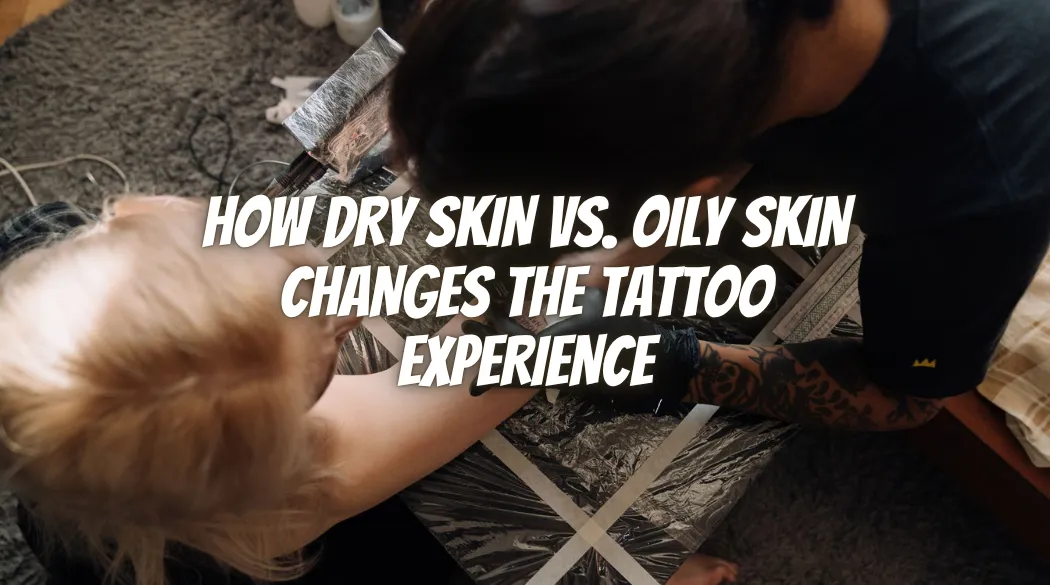
How Dry Skin vs. Oily Skin Changes the Tattoo Experience
You've probably stared at your own artwork and wondered why some pieces feel crisp and bold while others fade or blur. The secret isn't your line work: it's the canvas itself. Skin type is the biological difference in how a person's skin holds moisture and oil, which directly affects how ink settles, heals, and ages in a tattoo.
At Ink Different Tattoos, we teach aspiring Tattoo Artists that mastering the skin is just as important as mastering the machine.
Key Takeaways
Dry skin: Can be tighter and more sensitive, sometimes healing faster but requiring gentle technique and consistent moisture.
Oily skin: Produces more sebum, which can push out ink and cause blurring, demanding careful saturation and aftercare.
Reading skin: Great Tattoo Artists adjust needle depth, speed, and pressure based on each client's unique skin.
Learning path: Our Traditional Tattoo Apprenticeship trains you hands-on to work confidently with every skin type.
Career: Skin knowledge is one reason tattooing stays an AI-proof, human craft.
Why does skin type matter in tattooing?
Skin type matters in tattooing because it determines how ink is absorbed, how the skin reacts to the needle, and how the final piece heals and holds up over years.No two clients are the same, and treating them like they are is how amateurs make permanent mistakes.
Skin is the surface an artist works on, and dry, oily, combination, mature, and thin skin all take ink in their own way. A Tattoo Artist who ignores this risks the final result without realizing it.
Your reputation lives in how your tattoos look ten years later. Proper technique and aftercare are essential to how tattoos heal, and skin condition plays a major role in that process.

How does dry skin change the tattoo experience?
Dry skin is often tighter, more sensitive, and prone to flaking, so it can feel more tender during the tattoo and needs careful moisture management to heal cleanly. Dry skin isn't a problem: it's just a different terrain to learn.
Because dry skin lacks natural oils, the surface can feel rougher, and the client may report more sensitivity to the needle. A skilled Tattoo Artist reads this in real time and adjusts pressure and speed so the skin doesn't get overworked or traumatized.
The upside? Dry skin can sometimes hold crisp lines beautifully once it's properly hydrated during healing. The risk is excessive scabbing or cracking if the client neglects moisture. Here's what dry skin typically asks of you:
Lighter touch: Avoid over-passing the same lines, which can damage delicate skin.
Hydration coaching: Teach clients to keep the area moisturized without drowning it.
Session pacing: Longer or repeated passes can irritate dry skin faster.
How does oily skin change the tattoo experience?
Oily skin produces excess sebum that can push ink out during healing, leading to slight blurring or fading if the artist doesn't adjust saturation and technique. Oily skin is one of the trickiest canvases, and it's exactly where trained hands separate themselves from hobbyists.
The extra oil means ink can migrate slightly or heal softer, especially in fine detail work. Tattoo Artists working on oily skin often focus on solid saturation and thoughtful line spacing so the design stays legible as the skin does its thing over the following weeks.
Oily skin also tends to heal a little slower and can be more prone to breakouts around fresh work. That's why aftercare guidance matters so much. Following OSHA bloodborne pathogen standards and proper hygiene keeps every skin type protected during and after the session.
Pro Tip:Fine-line and micro-detail designs can blur faster on very oily skin. When you understand this, you can guide clients toward designs that will age well, and that builds trust for life.
How do professional tattoo artists read a client's skin?
Professional Tattoo Artists read skin by observing texture, elasticity, moisture, and how it responds to the first few passes, then adapting needle depth, angle, and speed accordingly. This is instinct built through thousands of hours under a Mentor, not something you read once and master.
A great Tattoo Artist watches how the skin takes the initial line. Does the ink sit evenly? Does the surface swell or bleed more than expected? These micro-signals guide every decision that follows. This kind of real-time adaptation is why tattooing remains a deeply human craft, as we explain in our post on why tattoo artists are still essential.
Reading skin also means knowing your equipment. Different needle groupings and machines behave differently across skin types, which is why every beginner should understand the tools every beginner tattoo artist should know before they ever touch a client.
How does skin type affect tattoo healing?
Skin type affects healing speed and outcome: dry skin may flake and crack without moisture, while oily skin heals slower and can push out ink, both influencing how the final tattoo looks. The tattoo isn't finished when the machine stops. It's finished weeks later, and healing makes or breaks the result.
Healing is a partnership between your technique and your client's aftercare. When you coach clients correctly, dry skin stays supple and oily skin stays clean, and both hold color far better. When you don't, even flawless line work can heal patchy.
This is one of the biggest mistakes aspiring tattoo apprentices should avoid, and skin management is near the top of the list. New artists often overlook how much the healing phase depends on their initial guidance.

How do you prep any skin type for a tattoo?
You prep any skin type by cleaning, assessing, hydrating appropriately, and adjusting your technique before and during the session. Follow these steps, and you'll walk into every session with a plan instead of a guess.
Assess the canvas: Examine texture, moisture, and elasticity. Ask the client about their skin and any sensitivities.
Clean and prep: Follow strict hygiene and sanitation standards to protect the skin barrier before you begin.
Test your first passes: Watch how the skin takes ink and adjust depth, angle, and speed immediately.
Adapt for dry skin: Use a lighter touch and avoid over-working delicate areas.
Adapt for oily skin: Focus on solid saturation and smart line spacing to fight future blurring.
Coach aftercare: Give clear, skin-specific instructions so the healing stage protects your work.
Every one of these steps gets sharper with live, in-person guidance from a Mentor who has tattooed thousands of different clients. That's a skill you cannot download.
Where do you learn to work with every skin type?
You learn to work with every skin type through hands-on Tattoo Artist training under experienced Mentors, not from online videos or self-teaching on a whim. Skin reading is a physical, real-world skill, and it demands real-world repetition with feedback.
This is exactly why so many people are choosing tattoo apprenticeships as a college alternative. Instead of taking on debt for a degree that may not translate to a living, you build a hands-on trade that pays you to create.
What can you expect from our Traditional Tattoo Apprenticeship?
Our Traditional Tattoo Apprenticeship is an 18- to 24-month, four-phase Tattoo Artist training program that teaches beginners everything from skin reading to line work, with licensing support along the way. You train in real tattoo studios, learning the craft the way it's meant to be learned: hands-on.
At Ink Different Tattoos, we've spent 15 years training professional Tattoo Artists. No prior art experience is required.
A career that comes with confidence
Tattooing is an AI-proof, deeply human craft that a robot cannot replicate, because reading skin and connecting with a client is something only a person can do. Our tattoo apprenticeship builds job-ready skills and provides licensing support, along with a guaranteed job offer, so you finish prepared to work professionally.
Mentorship that pushes your brand and skills further
For beginners and experienced Tattoo Artists ready to grow their careers, our one-year, in-person Master Mentorship pairs you with award-winning Master Mentors like Al Fliction, Liz Cook, Kyle Dunbar, Boneface, and Jordi Pla. It's built for mastering a specific style, building your brand, and owning your future.
Making Tattoo Training accessible for everyone
We offer Spanish-speaking locations in Denver, Orange County, NYC, Miami, San Antonio, and San Diego, because talent doesn't speak just one language.
Our "Good Humans" culture means you're never grinding alone. You join a family-like community of Tattoo Artists who lift each other up.
Ready to become a Tattoo Artist?
Understanding dry skin versus oily skin isn't trivia; it's proof that tattooing is a real, learnable craft with room for you to master it. Seats in our tattoo apprenticeship are limited.
Ready to become a Tattoo Artist? Apply now to Ink Different's Traditional Tattoo Apprenticeship and start building an AI-proof career with licensing support along the way. Want to know if it's the right fit? Fill out our quick questionnaire to get personalized support and take the first real step toward the career you keep imagining.
Frequently Asked Questions
Does dry skin or oily skin hold tattoos better?
Both can hold tattoos well with proper technique. Dry skin often takes crisp lines when hydrated, while oily skin needs strong saturation to prevent blurring. Skilled artists adapt to each.
How does oily skin affect a tattoo over time?
Oily skin produces more sebum, which can push out ink and cause fine details to soften or blur over the years. Solid saturation and good aftercare help preserve the design.
Do I need art experience to learn how to work with different skin types?
No. Ink Different Tattoos' Traditional Tattoo Apprenticeship is built for beginners and teaches drawing fundamentals, skin reading, and machine handling from day one, no prior experience needed.
How long does the Traditional Tattoo Apprenticeship take?
The Traditional Tattoo Apprenticeship takes 18 to 24 months across four phases. You start remotely and finish hands-on in real Tattoo Studios with personalized mentorship and licensing support.
What makes Ink Different Tattoos different from other options?
Ink Different offers live, in-person mentorship, 15 years of experience, award-winning Mentors, a supportive "Good Humans" culture, and a real college alternative for building an AI-proof tattoo career.
Is tattooing really an AI-proof career?
Yes. Reading a client's skin, adapting technique in real time, and building human trust are things machines cannot replicate, making tattooing one of the most human-proof creative careers available.