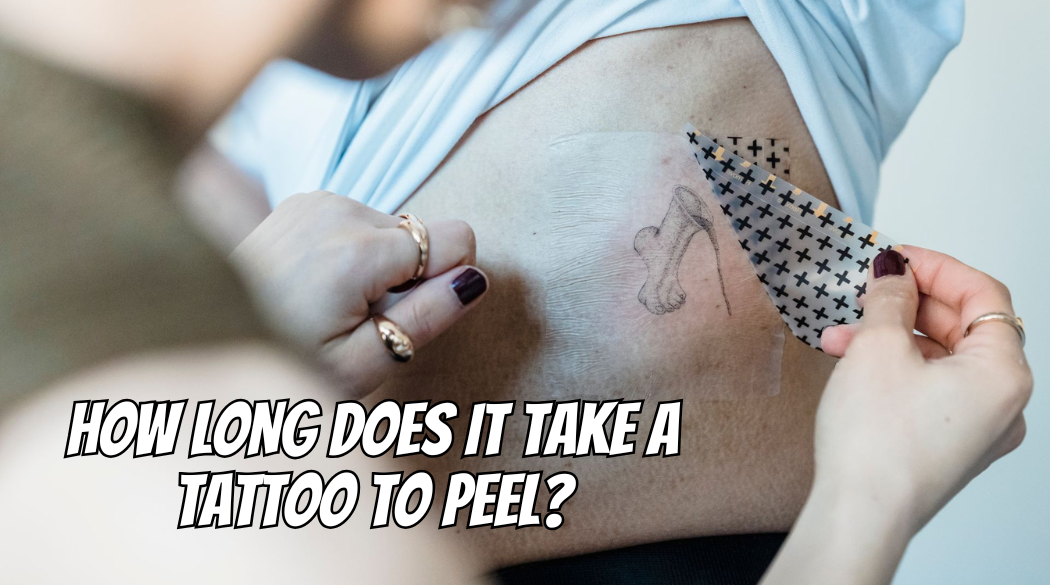
How Long Does It Take a Tattoo to Peel?
Most tattoos start peeling a few days after your session, often around days three to five, and finish peeling within about one to two weeks. Larger or heavily saturated pieces can take a little longer. Peeling is a normal part of healing. It’s the outer layer of skin shedding, not your tattoo coming off.
Mayo Clinic notes that most tattoos take about two weeks to heal, which lines up with the typical peeling window. Below, we cover what normal peeling looks like, how to care for it and the signs that mean it’s time to call a doctor. Always follow your own Tattoo Artist’s aftercare instructions first.
Key Takeaways
When it starts: Usually around three to five days after your session.
How long it lasts: Typically one to two weeks, sometimes longer for big pieces.
What’s normal: Light, flaky skin, sometimes with tinted flakes, plus some itching.
Hands off: Don’t pick or scratch, since that can pull out ink.
Healing continues: The deeper skin keeps healing after peeling stops.
When does a tattoo start to peel?
Most tattoos begin peeling about three to five days after the session, once the early tenderness and redness start to settle.
In the first couple of days, your tattoo is still an open wound. It may ooze a little clear fluid or excess ink and feel tender, like a mild sunburn. Around day three, the surface starts to tighten and dry out. That dryness is the sign that flaking is about to begin.
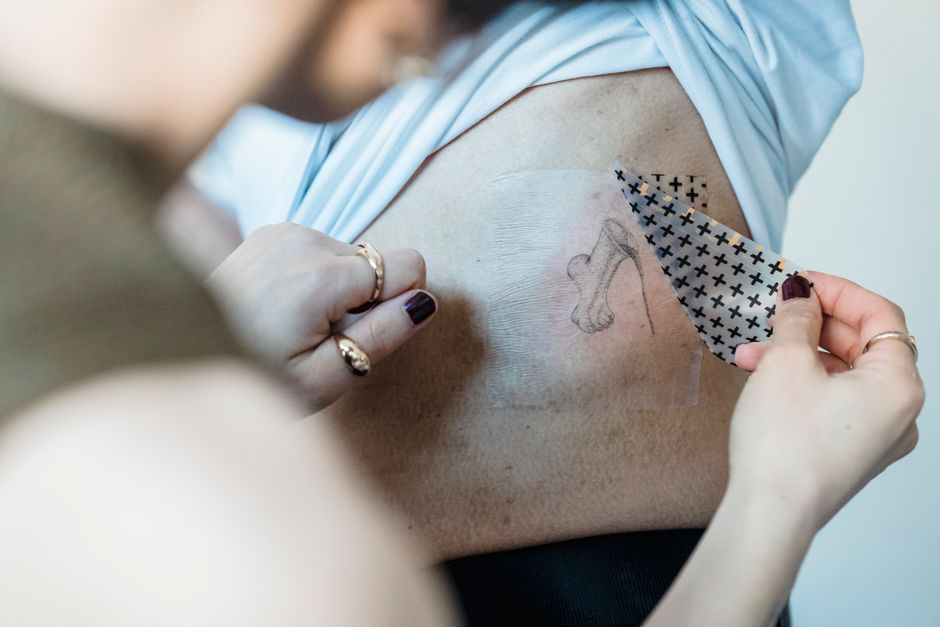
If you used a second-skin bandage like Saniderm, you may notice peeling under or after removing the bandage. That’s normal too.
How long does a tattoo take to peel completely?
Most tattoos finish peeling within one to two weeks. Larger or more detailed pieces can take a bit longer.
Peeling usually builds gradually, peaks a few days in, then tapers off. Several things can affect your timeline:
Tattoo size: Bigger tattoos cover more skin and take longer to shed.
Placement: Areas that move or bend a lot, like elbows and hands, can heal unevenly.
Your skin: Everyone heals at a slightly different pace.
Aftercare: Gentle, consistent care helps the process go smoothly.
Finishing the peeling stage doesn’t mean healing is done. According to Healthline, it can take as long as six months for the skin below a tattoo to fully heal. That’s why a tattoo can look a little cloudy or dull for a while after peeling ends.
Why do tattoos peel in the first place?
Tattooing creates many tiny punctures in the skin. As your body repairs that damage, the outer layer of skin sheds and new skin forms underneath.
The ink is placed deeper, in a layer of skin called the dermis. The outer layer, the epidermis, takes the surface damage from the needle, and your body treats it like any minor wound by shedding it.
Your skin renews itself all the time. Peeling is that same process, just more noticeable while a new tattoo heals. The American Academy of Dermatology shares tips for caring for tattooed skin, including using a water-based lotion when it feels dry and protecting it from the sun.
What does normal tattoo peeling look like?
Normal peeling looks like thin, dry flakes lifting off, sometimes with a little color in them, while the tattoo underneath stays intact.
Don’t panic if you see tinted flakes. That’s surface skin that picked up a little pigment as it healed. The tattoo itself sits deeper in the skin.
Healthy peeling usually includes:
Texture: Light, papery flakes, a lot like a healing sunburn.
Color: Occasional ink-tinted flakes.
Itching: Mild itchiness as new skin forms.
Appearance: A temporary cloudy or shiny look over the tattoo.
How do you care for a peeling tattoo step by step?
Wash gently, moisturize lightly, keep it out of the sun and let the flakes fall off on their own.
Step 1: Wash gently. Use lukewarm water and a mild, fragrance-free soap. Pat dry with a clean paper towel.
Step 2: Moisturize lightly. Apply a thin layer of unscented lotion or the product your Tattoo Artist recommends. Too much can trap moisture.
Step 3: Leave it alone. Let flakes come off naturally. Don’t peel, scratch or scrub them.
Step 4: Protect it from the sun. Keep it covered or in the shade while it heals. The AAD notes that UV light can fade some tattoo inks.
Step 5: Avoid soaking. Skip pools, hot tubs, baths and open water until it’s fully healed.
Pro Tip: If your skin feels tight and itchy, a thin layer of moisturizer usually helps. Aim for light and even, not thick.

When should you worry about peeling?
Contact a doctor if peeling comes with spreading redness, increasing swelling or pain, pus, a bad smell or fever. These aren’t part of normal peeling.
Normal peeling is mild and gradually improves. Watch for:
Possible infection: Redness that spreads, heat, swelling or yellow or green discharge. Mayo Clinic notes that skin infections are possible after tattooing.
Possible allergic reaction: Raised, itchy bumps, sometimes in one specific ink color. Mayo Clinic notes that red ink is more likely to cause allergic reactions than other colors.
Damage from picking: Raw spots or deep scabs where skin was picked off early.
If something doesn’t look right, contact a healthcare provider. Your Tattoo Artist can also tell you what’s normal for your tattoo.
Why does understanding healing make you a better Tattoo Artist?
For Tattoo Artists, explaining healing clearly builds trust and protects how their work looks long term.
A tattoo that heals poorly reflects on the Tattoo Artist, even if the original work was clean. That’s why good Tattoo Artists give clear aftercare instructions and answer questions about peeling, itching and healing.
That kind of hands-on knowledge comes from real training, which is part of why tattoo apprenticeships are gaining ground as a solid alternative to college. It’s also a human skill that’s hard to automate, which we explore in why Tattoo Artists are still essential.
How can you turn this knowledge into a career?
If you’re curious about the craft behind your tattoo, you can learn it through a structured tattoo apprenticeship under experienced Mentors.
The pay can be strong. According to ZipRecruiter, the average Tattoo Artist in the United States earns $106,858 a year as of November 2026.
Get Serious About Your Craft With Ink Different Tattoos
For 15 years, Ink Different Tattoos has trained aspiring Tattoo Artists, including complete beginners. We’re a college alternative, and our “Good Humans” culture means you join a supportive, family-like community.
What You Can Expect from our Traditional Tattoo Apprenticeship
The Traditional Tattoo Apprenticeship runs 18 to 24 months across four phases of hands-on training. You train in person with a Mentor at one of 60+ tattoo studios nationwide. No prior art experience is required. Training covers everything from first lines to sanitation under the OSHA Bloodborne Pathogens Standard and client aftercare. Interest-free payment plans help make training more accessible.
A Career That Comes With Confidence
You’ll finish with job-ready skills, licensing support and a guaranteed job offer at one of Ink Different’s own tattoo studios.
Mentorship That Pushes Your Brand and Skills Further
Our one-year, in-person Master Mentorship lets you train alongside celebrity and award-winning Master Mentors, including Al Fliction, Liz Cook, Kyle Dunbar, Boneface, Jordi Pla and Marcel Oliveira. It’s built for mastering a specific style, growing your career and learning business ownership.
Making Tattoo Training Accessible for Everyone
We offer Spanish-speaking locations in Denver, Orange County, NYC, Miami, San Antonio and San Diego.

Ready to Become a Tattoo Artist?
Peeling is a small but important part of how a tattoo heals. If learning about it has you curious about the craft itself, there’s a clear path in. Each Mentor takes just two tattoo apprentices per tattoo studio, so seats fill up quickly.
Ready to become a Tattoo Artist? Apply now to Ink Different’s Traditional Tattoo Apprenticeship and start building an AI-proof career, with licensing support along the way.
Frequently Asked Questions
How long does it take a tattoo to peel?
Peeling usually starts around three to five days after your session and finishes within one to two weeks. Larger pieces may take a little longer.
Is it bad if my tattoo peels a lot?
Light to moderate flaking is normal. Contact a doctor if peeling comes with spreading redness, swelling, pus, a bad smell or fever.
Why are there colored flakes coming off my tattoo?
That’s surface skin that picked up a little pigment while healing. The tattoo itself sits deeper in the skin.
Should I peel the skin off my tattoo?
No. Let flakes fall off naturally. Picking can pull out ink, cause patchy healing and raise your risk of infection.
Is my tattoo healed once it stops peeling?
Not completely. The surface may look settled, but deeper skin can take months to fully heal, so keep protecting it from the sun.
When should I see a doctor about a peeling tattoo?
See a doctor if you notice spreading redness, heat, swelling, pus, a bad smell or fever.