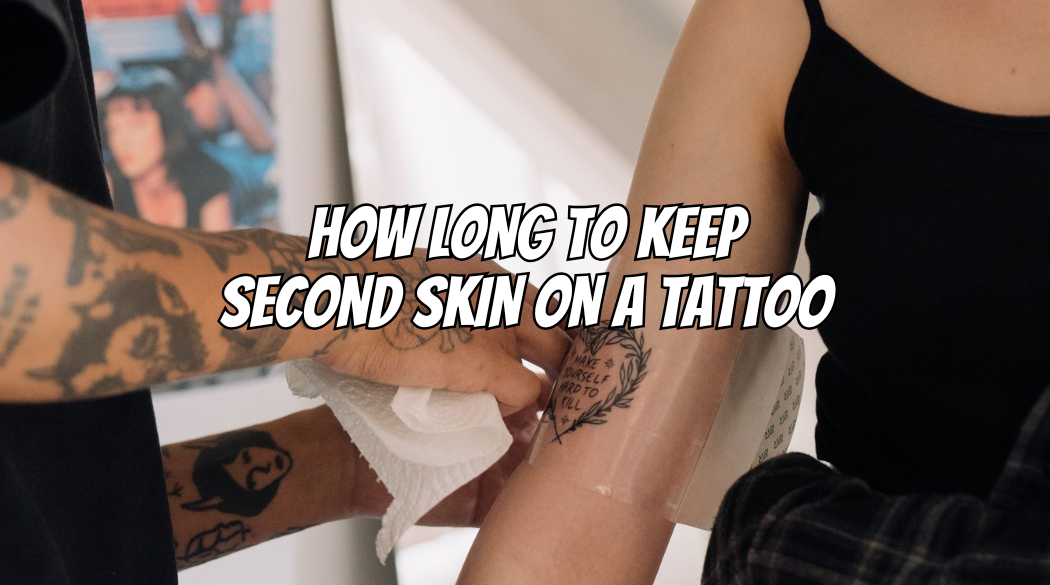
How Long to Keep Second Skin on a Tattoo
Most people keep second skin on a new tattoo for about a week total. The first bandage usually stays on for up to 24 hours, while it collects plasma and excess ink. After that, you wash the tattoo and apply a fresh bandage that can stay on for up to six more days.
That’s the general guideline from Saniderm, one of the most common second skin brands. Its instructions are to apply the bandage when the tattoo is finished and leave it on for 24 hours, then remove it, wash the tattoo and apply a second piece that stays on for up to six days, for a total healing time of seven days. Your Tattoo Artist may adjust that timing for your skin, placement or product, so always follow their instructions first.
Below, we cover what second skin is, why it works, how to remove it safely and the warning signs that mean it should come off early.
Key Takeaways
Typical timing: Up to 24 hours for the first bandage, then up to six days for the second, about seven days total.
Weeping is normal: Cloudy fluid under the first bandage is plasma and excess ink.
Extra bandage if needed: If the tattoo weeps heavily into the second bandage, it may need a third.
Remove it slowly: Peel it off flat and slowly under warm running water.
Remove it early if: The seal breaks, fluid leaks or you see signs of infection or an allergic reaction.
What Is Second Skin on a Tattoo?
Second skin is a thin, transparent adhesive bandage that seals over a fresh tattoo. It keeps moisture in and dirt and bacteria out, without frequent re-wrapping.
You may hear it called by brand names like Saniderm, Dermalize or Tegaderm. These films are similar to the transparent dressings used on wounds in medical care. They’re waterproof on the outside but let oxygen and moisture vapor pass through, so the skin can breathe while staying protected.
For you as a client, that means less fuss in the first week. Instead of washing and re-wrapping several times a day, the bandage does most of the work while your skin starts to heal.

How Long Should You Keep Second Skin on a Tattoo?
Plan on about seven days total. The first bandage comes off within about 24 hours, and the second can stay on for up to six days.
Here’s the typical timeline. Your Tattoo Artist’s instructions always come first, since products and skin vary.
The Standard Second Skin Timeline
First bandage (up to 24 hours): This one collects blood, plasma and excess ink. Saniderm recommends leaving the first bandage on for between 8 and 24 hours. saniderm
Wash and reapply (about day 1): Remove the first bandage, gently wash the tattoo, let it dry completely and apply a fresh bandage.
Second bandage (up to six days): This is when most of the early healing happens undisturbed.
If it keeps weeping: If the tattoo weeps into the second piece, Saniderm advises removing it at the next 24-hour mark, washing the tattoo and applying a third piece. saniderm
Final removal (around day 7): Take off the last bandage and switch to regular aftercare with a gentle, fragrance-free moisturizer.
Pro Tip: The cloudy, colored fluid under the first bandage is normal. Saniderm explains that plasma carries important nutrients, hormones and proteins to the wound site, but is only viable for 24 hours, so the first bandage should come off at the 24-hour mark. saniderm
Why Does Second Skin Matter for Healing?
Second skin keeps your tattoo in a moist, protected environment. That can mean less scabbing, smoother healing and better-looking results.
The science behind it goes back decades. According to a review published in Advances in Wound Care, George Winter was the first to show in a porcine model that wounds heal faster when kept moist. Winter’s findings, published in Nature in 1962, moved wound care toward moist treatment and led to more than 100 different moist dressings. The same review notes that healing in a moist environment results in less inflammation than in a dry environment and improves the quality of healing, with less scarring.
For tattoos, that matters. When a tattoo heals exposed to air, it can form thicker scabs. Those scabs can pull pigment out if they’re picked or come off too soon, leaving patchy spots. Second skin helps limit heavy scabbing.
It also protects against contamination. A fresh tattoo is an open wound, which is why professional Tattoo Artists follow the OSHA Bloodborne Pathogens Standard while they work. The American Academy of Dermatology also recommends keeping tattooed skin moisturized and protected from the sun.
How Do You Remove Second Skin Safely?
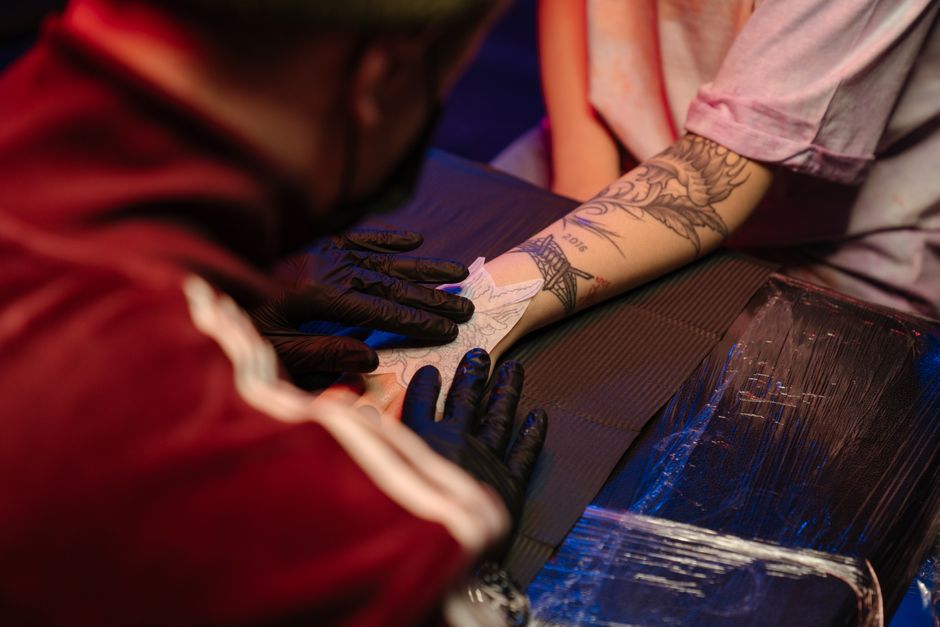
Peel it off slowly under warm running water, keeping it flat against your skin rather than pulling straight up. This avoids tearing healing skin.
Yanking the bandage off dry is one of the most common mistakes. It can irritate healing skin and disturb the ink.
Step-by-Step Second Skin Removal
Step 1: Wash your hands, then step into a warm shower and let water run over the bandage for a minute or two.
Step 2: Find an edge or corner of the bandage.
Step 3: Peel it back slowly, keeping it low and flat against your skin, almost folding it back on itself.
Step 4: Keep the area under warm water as you go to help release the adhesive.
Step 5: Gently wash the tattoo with fragrance-free soap and pat it dry with a clean paper towel.
Step 6: If you’re applying another bandage, make sure the skin is completely dry first. Otherwise, apply a thin layer of moisturizer.
When Should You Remove Second Skin Early?
Remove it early if the seal breaks, fluid leaks from the edges, or you notice signs of an allergic reaction or infection.
Second skin only works while the seal holds. A broken seal can let water and bacteria in. Watch for these signs:
Leaking seal: If fluid is escaping around the edges, the barrier is broken. Remove it, wash the tattoo and reapply or switch to regular aftercare.
Lifting adhesive: If the bandage is peeling up on its own, it’s no longer protecting the tattoo.
Possible allergic reaction: Intense itching, a rash or small bumps where the adhesive sits may mean your skin reacts to it. Remove it and ask your Tattoo Artist about other options.
Possible infection: Spreading redness, heat, swelling, pus or fever. Remove the bandage and contact a healthcare provider promptly.
When you’re unsure, reach out to your Tattoo Artist. For anything that looks like infection, contact a doctor rather than waiting it out.
What Comes After You Remove Second Skin?
Once the last bandage comes off, switch to regular aftercare. Wash gently, apply a thin layer of moisturizer and keep the tattoo out of the sun and out of pools or baths until it’s fully healed.
The surface may look healed when the bandage comes off, but the skin underneath keeps repairing for weeks. Light flaking or a cloudy look is normal and fades as the skin settles.
Don’t pick or scratch. Skip swimming pools, hot tubs and long baths until the skin is fully healed. After that, sunscreen helps keep your tattoo looking bold, since the AAD notes that UV light can fade some tattoo inks.
Why Learning Aftercare Matters for Your Career
For Tattoo Artists, aftercare is part of the job. A well-healed tattoo is the real proof of their work, and it’s what fills their portfolio and builds their reputation.
That’s why good Tattoo Artists explain aftercare clearly and expect follow-up questions. It’s also part of what makes tattooing such a human craft. Software can’t calm a nervous client, adjust a design in real time or guide someone through healing. Read more about why Tattoo Artists are still essential.
If you’ve ever been curious about the other side of the chair, it can be a rewarding career. According to ZipRecruiter, the average Tattoo Artist in the United States earns $106,858 a year as of November 2026. To start on the right foot, read about the mistakes aspiring tattoo apprentices should avoid.
Get Serious About Aftercare With Ink Different Tattoos
Ink Different’s Traditional Tattoo Apprenticeship teaches everything from the first line to the final heal, including bandaging, sterilization and client aftercare, under experienced Mentors.
For 15 years, we’ve trained people with no formal art background to become working Tattoo Artists. It’s a college alternative for people who learn by doing, supported by our family-like “Good Humans” culture.
What You Can Expect from Our Traditional Tattoo Apprenticeship
Length: 18 to 24 months across four structured phases.
In-person training: Learn with a Mentor at one of 60+ tattoo studios nationwide.
Beginner-friendly: No prior experience is required. We teach drawing and fundamentals from day one.
Hands-on skills: Learn aftercare, hygiene, bandaging and machine handling from experienced Mentors.
A career that comes with confidence: Job-ready skills, licensing support and a guaranteed job offer at one of Ink Different’s own tattoo studios.
Interest-free payment plans: Flexible payments make training more accessible.
Licensing rules vary by state. See how to get your tattoo license in Texas, tattoo license requirements in California and how long it takes to get a tattoo license in Colorado.
Mentorship That Pushes Your Brand and Skills Further
Our one-year, in-person Master Mentorship lets you train alongside celebrity and award-winning Master Mentors, including Al Fliction, Liz Cook, Kyle Dunbar, Boneface, Jordi Pla and Marcel Oliveira. It’s built for mastering a specific style, growing your career and learning to run your own tattoo studio.
Making Tattoo Training Accessible for Everyone
We offer Spanish-speaking locations in Denver, Orange County, NYC, Miami, San Antonio and San Diego. Each Mentor takes just two tattoo apprentices per tattoo studio, so seats fill up quickly.
Frequently Asked Questions
How long do you keep second skin on a new tattoo?
Usually about seven days total. Keep the first bandage on for up to 24 hours, then apply a fresh one that can stay on for up to six days. Follow your Tattoo Artist’s instructions.
Is it normal for fluid to collect under second skin?
Yes. Cloudy or colored fluid under the first bandage is plasma and excess ink, which is normal in the first day.
What if my tattoo keeps weeping under the second bandage?
Saniderm advises removing it at the next 24-hour mark, washing the tattoo and applying a third piece.
Can I shower with second skin on my tattoo?
Yes, short showers are fine because the bandage is waterproof. Avoid soaking, swimming or hot tubs, which can loosen the seal.
What happens if the seal breaks?
Remove the bandage, gently wash the tattoo and either apply a fresh bandage once the skin is dry or switch to regular aftercare.
When should I see a doctor?
See a healthcare provider if you notice spreading redness, increasing pain, heat, swelling, pus or fever.
Ready to Become a Tattoo Artist?
Now you know how long to keep second skin on a tattoo, how to remove it safely and when to take it off early. If learning about aftercare made you curious about tattooing as a career, there’s a clear path in.
Ready to become a Tattoo Artist? Apply now to Ink Different’s Traditional Tattoo Apprenticeship and start building an AI-proof career with licensing support along the way.
Related reading: Tattoo apprenticeships as a college alternative, tools every beginner Tattoo Artist should know, and platforms to help Tattoo Artists build their brand.