How Long You Should Wait Between Tattoo Sessions on the Same Area
You booked the big piece: the sleeve, the back panel, the chest work that has been living in your head for years. Then the artist says four words that stop you cold: "See you next month." If you have ever wondered whether that gap is real advice or just scheduling, you are not alone.
Knowing how long to wait between tattoo sessions on the same area is one of the first signs of a truly skilled Tattoo Artist. The recommended wait between tattoo sessions on the same area is the healing window (usually two to four weeks) that lets damaged skin fully recover before it takes fresh ink again.
Getting this timing right protects your skin, your color, and your investment, and understanding it deeply is exactly the kind of craft knowledge we teach at Ink Different Tattoos.
Key Takeaways
Standard wait: Most artists recommend two to four weeks between sessions on the same body area.
Why it matters: Fresh tattoos are open wounds; re-tattooing too soon damages skin and blurs lines.
Full healing: Skin may look healed at two weeks but finishes remodeling underneath for up to a few months.
It varies: Age, health, tattoo size, placement, and aftercare all shift the ideal timeline.
Learn it right: Ink Different's Traditional Tattoo Apprenticeship teaches session planning and licensing support for an AI-proof career.
What Is the Wait Between Tattoo Sessions?
The wait between tattoo sessions is the intentional healing period an artist schedules before working over or beside the same area of skin, giving the wound time to close and settle.
Think of your skin like a garden bed. You would not plant new seeds over ground you just dug up an hour ago. You let it settle, water it, and let the roots take hold. Your skin needs that same respect between passes of the tattoo machine.
This gap is not a delay tactic. It is a core part of the craft, and a good Tattoo Artist plans the entire project around these windows so the finished work heals cleanly and lasts a lifetime. When you understand session timing, you are already thinking like a professional, and that is exactly what we help you develop in our apprenticeship.
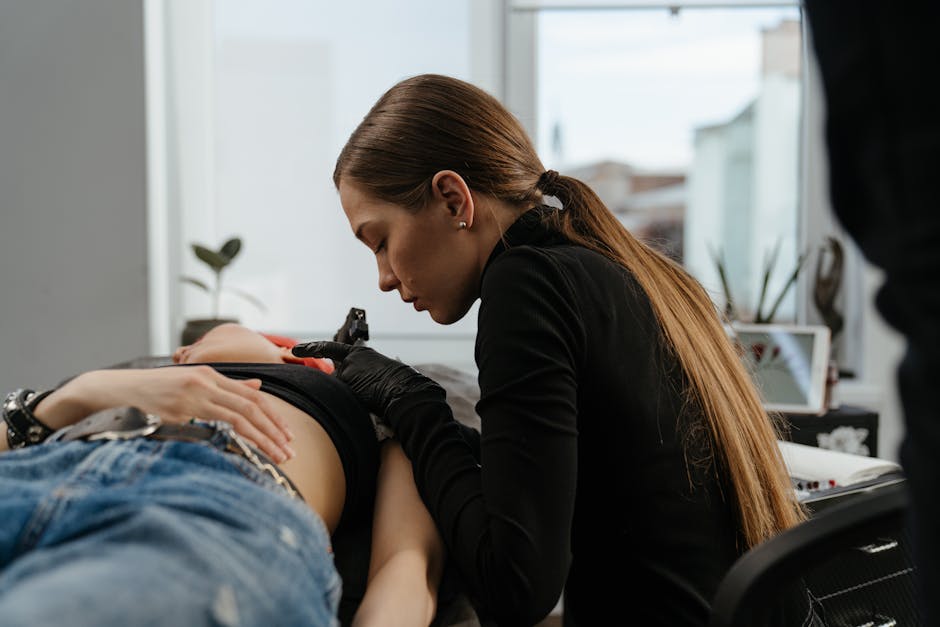
How Long Should You Wait Between Sessions on the Same Area?
You should wait two to four weeks between tattoo sessions on the same area, which gives the outer skin time to close while the deeper layers keep rebuilding underneath.
Two weeks is the common minimum most professionals hold to. By then, the top layer of skin has usually resurfaced, and the risk of reopening the wound has dropped significantly. Many artists prefer three to four weeks for larger or more detailed work.
For very large projects like full backs or full sleeves, some artists space sessions further apart, especially if the previous session was long and hard on the body. The goal is always the same: never lay fresh ink into skin that is still an open wound.
Pro Tip: If you are unsure, always ask your artist directly instead of pushing to book sooner. Rushing the timeline is one of the fastest ways to ruin good work.
Why Does Skin Need Time to Heal Before the Next Session?
Skin needs time to heal because a fresh tattoo is essentially an open wound, and tattooing over unhealed skin causes trauma, blurred lines, patchy color, and a higher risk of infection.
When a needle deposits ink, it creates thousands of tiny punctures. Your body treats this exactly like an injury. According to the American Academy of Dermatology tattoo care guidelines, the surface typically takes about two weeks to heal while the deeper layers keep repairing for months.
Working that area again too soon stacks trauma on trauma. The skin swells, scabs unpredictably, and the ink you fought to place can lift right back out. Respecting the wait is respecting the canvas.
There is also a safety dimension. Following proper hygiene and healing protocols, including those outlined in OSHA bloodborne pathogen standards, is part of what separates a professional Tattoo Studio from a risky one. This is foundational knowledge every certified tattoo artist must master.
What Factors Change the Ideal Wait Time?
The ideal wait between sessions shifts based on tattoo size, placement, your age and overall health, how you heal, and how carefully you follow aftercare instructions.
No two bodies heal on the same clock. A small color touch-up on a young, healthy client may settle in ten to fourteen days. A dense blackout panel on a high-friction spot like the elbow or ribs can take much longer.
Here are the biggest variables a skilled artist weighs:
Size and density: Larger, heavily saturated areas need more recovery time.
Placement: High-movement or high-friction spots (joints, ribs, hands, feet) heal slower.
Your health: Sleep, hydration, diet, and conditions that affect healing all matter.
Age: Younger skin often regenerates faster.
Aftercare: Following instructions closely can shorten the wait; ignoring them lengthens it.
This kind of judgment is not guesswork. It is trained observation, and it is exactly the type of thinking new artists develop under a live Mentor who has logged thousands of healing timelines.

How Do You Know Your Skin Is Ready for the Next Session?
Your skin is ready for the next session when all scabs and flaking have fully cleared, the area no longer feels raised or tender, and the surface looks and feels like normal, healed skin.
Do not go by the calendar alone. Go by the skin. A tattoo can look done on the surface while still being reactive underneath, so patience beats impatience every time.
Watch for these green lights before booking your next pass:
No scabbing: All crusting and peeling has finished naturally.
No tenderness: The area is not sore, warm, or sensitive to touch.
No redness or swelling: Inflammation has completely gone down.
Smooth texture: The skin feels flat and normal, not raised or bumpy.
If anything looks off, wait longer or check with your artist. Pushing forward on angry skin is one of the classic mistakes aspiring tattoo apprentices should avoid, and it is a lesson worth learning before you ever hold a machine.
How Should You Prepare for Your Next Session? (Step by Step)
Prepare for your next tattoo session by confirming your skin is fully healed, hydrating well, resting, eating beforehand, and communicating openly with your artist about the plan.
Step 1: Confirm full healing. Inspect the area for scabs, tenderness, or redness. If it is not fully settled, wait.
Step 2: Hydrate and nourish. Drink water in the days before and eat a solid meal beforehand so your body handles the session well.
Step 3: Rest up. Sleep well the night before. A rested body tolerates longer sessions and heals faster afterward.
Step 4: Moisturize leading up to it. Keep the skin healthy and supple in the days prior, following your artist's aftercare guidance.
Step 5: Communicate. Tell your artist how the last session healed. Honest feedback helps them adjust the plan and refine their approach to your unique skin.
Step 6: Book with the wait in mind. Schedule with the full two-to-four-week window respected, not squeezed.
Following this rhythm protects the work and builds trust between you and your artist. It is the same disciplined approach we drill into every Tattoo Apprentice at Ink Different.
Where Do You Learn to Manage Sessions Like a Pro?
You learn professional session management through hands-on tattoo apprenticeship training with experienced Mentors who teach healing, timing, and client care in a real working Tattoo Studio.
Here is the truth most people miss. Knowing how long to wait between tattoo sessions is not something you memorize from a chart. It is judgment you build by watching skin heal, working with clients, and learning under someone who has done it thousands of times.
If you are stuck in a job that drains you and your creative potential is going to waste, this is the seed worth planting. Tattooing is a hands-on, human craft that machines cannot replicate, which is exactly why we call it an AI-proof career for Tattoo Artists. Demand for skilled craft and fine artists remains real, as tracked by the Bureau of Labor Statistics.
For 15 years, since 2011, Ink Different Tattoos has trained aspiring Tattoo Artists through a genuine college alternative built on live, in-person mentorship. You do not need prior art experience. You need the willingness to start.
What You Can Expect From Our Traditional Tattoo Apprenticeship
Ink Different's Traditional Tattoo Apprenticeship is an 18 to 24 month, four-phase Tattoo Artist training that takes beginners from their first line to job-ready skills with licensing support.
You build your foundations, then finish hands-on in real tattoo studios alongside working professionals. Every phase is personalized, so you grow at the pace your skill demands. This is where session timing, healing, safety, and client care stop being theory and become second nature.
Here is what makes the path different:
A career with confidence: job-ready training plus licensing support so you finish prepared to work professionally.
Great for beginners: no prior experience required, taught step by step.
Good Humans culture: a supportive, family-like community that has your back.
Trained by the best: access to award-winning Mentors you cannot find in a classroom.
Curious about how the timeline and licensing work in your state? Explore resources like how to get your tattoo license in Texas and how long a tattoo license takes in Colorado.
Mentorship That Pushes Your Brand and Skills Further
Our Master Mentorship is a one-year, in-person track for beginner and experienced Tattoo Artists who want to master a specific style, explode their career, or own a business.
You train directly with celebrity and award-winning Master Mentors including Al Fliction, Liz Cook, Kyle Dunbar, Boneface, and Jordi Pla. It is intensive, focused skill development for those ready to level up fast.
Making Tattoo Training Accessible for Everyone
Ink Different offers Spanish-speaking locations so language is never a barrier to becoming a Tattoo Artist.
You can train in Spanish near Denver, in Orange County, in NYC, in Miami, in San Antonio, and in San Diego. Wherever you start, the same standard of excellence follows you.
Ready to Become a Tattoo Artist?
Every day you stay in work that leaves your creativity on the shelf is a day you do not get back. Waiting between tattoo sessions is smart. Waiting to start your own journey is just time slipping away. Seats in our tattoo apprenticeship are limited.
Ready to become a Tattoo Artist? Apply now to Ink Different's Traditional Tattoo Apprenticeship and start building an AI-proof career with licensing support along the way. You can also fill out our quick questionnaire to get personalized support and find out if the tattoo apprenticeship is right for you.
Frequently Asked Questions
How long should you wait between tattoo sessions on the same area?
Most artists recommend two to four weeks between sessions on the same area. This lets the surface skin fully close and heal before it takes fresh ink again.
Can you get tattooed on the same spot before it heals?
No. Tattooing unhealed skin causes trauma, blurred lines, patchy color, and a higher infection risk. Always wait until scabbing and tenderness are completely gone.
Does tattoo size affect how long you wait between sessions?
Yes. Larger, denser, or high-friction placements need more recovery time. A small piece may heal in about two weeks, while big projects often need longer.
Do I need art experience to start a tattoo apprenticeship?
No. Ink Different's Traditional Tattoo Apprenticeship is built for beginners with no prior experience and teaches fundamentals like drawing, machine handling, and session timing from day one.
How long is Ink Different's Traditional Tattoo Apprenticeship?
The Traditional Tattoo Apprenticeship runs 18 to 24 months across four phases. You start remotely to build foundations, then finish hands-on in real studios with licensing support.
What makes Ink Different different from learning on your own?
Ink Different offers live, in-person mentorship with award-winning Mentors, a Good Humans community, and 15 years of experience training professionals since 2011: a genuine college alternative.