How Many Tattoo Sessions Does a Full Back Piece Usually Take
You have seen them: jaw-dropping full-back tattoos that read like a story written across a human canvas. Maybe you have imagined creating one yourself, but you keep wondering how something that massive comes together. A full back piece is a large-scale tattoo that covers the entire back, usually completed across multiple sessions over weeks or months rather than in a single sitting.
At Ink Different Tattoos, we have spent 15 years teaching aspiring Tattoo Artists how to plan, execute, and finish work this ambitious.
Key Takeaways
Session count: A full back piece usually takes 5 to 15 sessions depending on detail, color, and size.
Session length: Most back sessions run 3 to 6 hours to balance progress with client comfort.
Healing time: Expect 2 to 4 weeks of healing between sessions before the next round.
Total timeline: Completing a large back tattoo commonly spans 6 months to over a year.
Skill matters: A trained Tattoo Artist finishes cleaner work in fewer sessions than an untrained one.
How many tattoo sessions does a full back piece usually take?
A full back piece usually takes between 5 and 15 tattoo sessions to complete, with most detailed color pieces landing around 8 to 12 sessions. The exact number depends on the design, the shading, and how much a client can tolerate in one sitting.
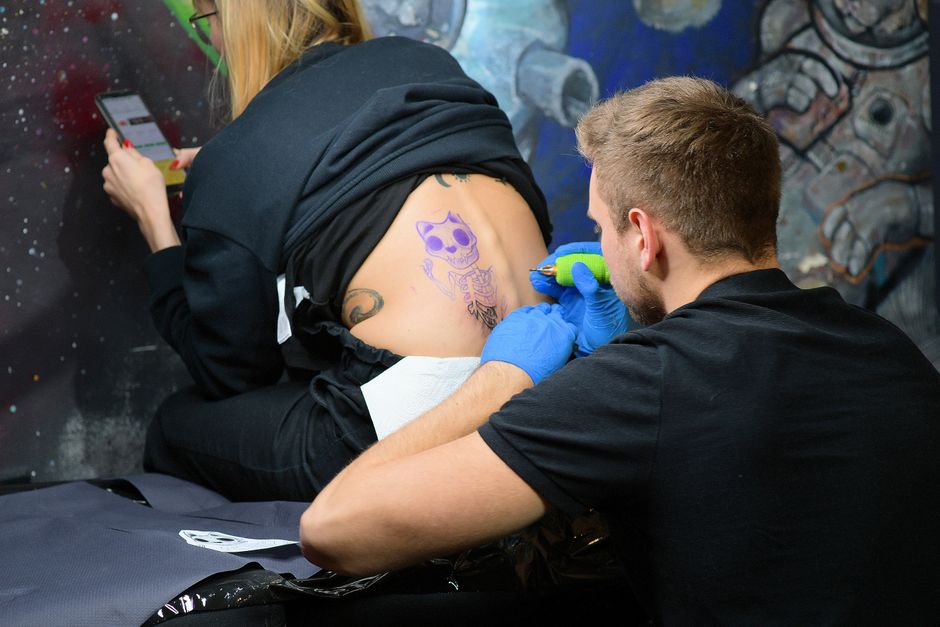
Think of a full back tattoo like building a house. You do not pour the foundation and hang the door on the same day. Each session lays another layer: outlines first, then shading, then color and refinement. Rushing it produces cracks you cannot fix later.
Smaller, black-and-gray back pieces may wrap up in five to seven sessions. Highly detailed color work with realism or intricate backgrounds can push well past a dozen. There is no shortcut, and the best artists never pretend there is one.
What affects the number of sessions a back piece needs?
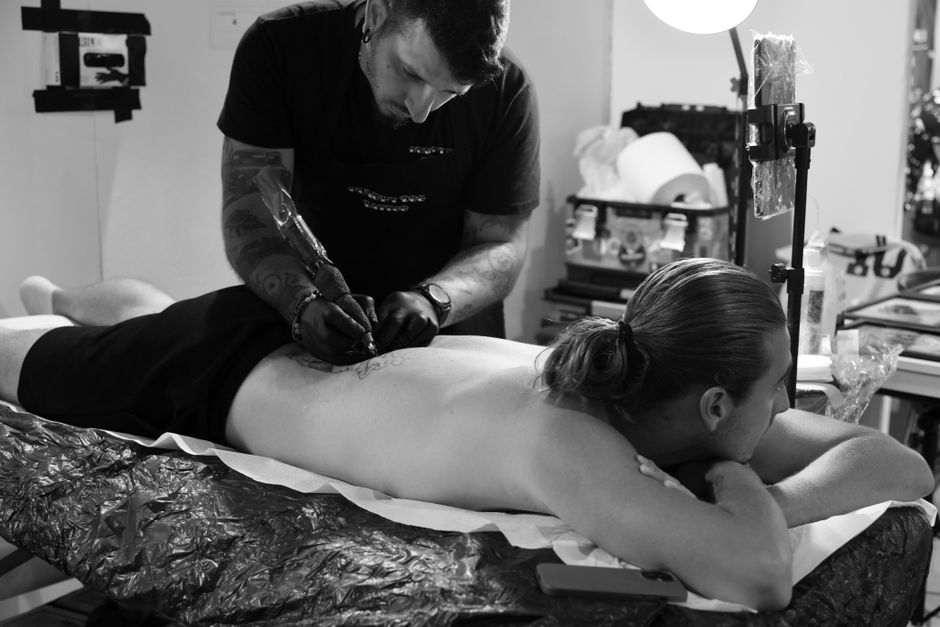
The number of sessions a full back piece needs depends on design complexity, color versus black-and-gray, tattoo size, client pain tolerance, and the artist's efficiency. Change any one of those and the session count shifts.
Here are the biggest factors that move the needle:
Design complexity: Fine linework, realism, and dense detail demand more passes.
Color: Color layering and blending take longer than black-and-gray.
Size and coverage: A full back is one of the largest surfaces on the body.
Client endurance: Some clients can sit six hours, others tap out at three.
Artist skill: Experienced hands cover ground faster with cleaner results.
This is exactly why planning matters so much. Beginners who skip the planning stage often make the same errors we cover in our guide to mistakes aspiring tattoo apprentices should avoid.
How long does a single back piece session last?
A single full back piece session typically lasts 3 to 6 hours, long enough to make real progress without pushing the skin or the client past their limit. Some marathon sessions stretch longer, but fatigue affects both the client and the artist.
Your skin can only take so much trauma in one sitting. Push past a healthy limit, and the skin swells, bleeds, and refuses to hold ink cleanly. A wise Tattoo Artist reads the body and calls the session before quality drops.
Longer sessions mean fewer total appointments, but each one demands more stamina. Shorter sessions are gentler on the skin but stretch the overall timeline. Neither is wrong: it is a conversation between the artist and the client.
How much time should you wait between sessions?
You should wait about 2 to 4 weeks between full back piece sessions so the skin fully heals before the next round of tattooing. Working over unhealed skin damages the design and slows recovery.
Healing is not optional. The skin needs to close, settle, and regenerate before an artist works the same area again. The American Academy of Dermatology publishes tattoo aftercare guidance that underscores why proper healing protects both the art and your health.
This healing rhythm is why a full back piece can span six months to well over a year. Patience is not a weakness here: it is the mark of a professional who respects the craft and the client.
Pro Tip: Never let a client (or an impatient artist) rush the healing window. Ink laid over irritated skin heals blotchy and often needs costly touch-ups.
What are the stages of completing a full back tattoo?
A full back tattoo is completed in clear stages: consultation and design, outlining, shading, color and detail, then final refinement and healing. Each stage stacks on the last like rings in a growing tree.
Here is how a professional Tattoo Artist walks a client through the process:
Step 1 – Consultation and design: Map the concept, sketch the composition, and plan how many sessions the piece will realistically need.
Step 2 – Outlining: Lay the linework that becomes the skeleton for everything else. This can take one or more sessions on its own.
Step 3 – Shading: Build depth, contrast, and dimension across the back.
Step 4 – Color and detail: Add color layers and the fine details that bring the piece to life, spread across multiple sittings.
Step 5 – Refinement and healing: Sharpen edges, add finishing touches, and let the final art settle and heal.
Learning to sequence these stages is a core skill, and it starts with mastering the fundamentals. Our post on the tools every beginner tattoo artist should know is a smart place to start understanding the gear behind the process.
Does pain or safety change the session count?
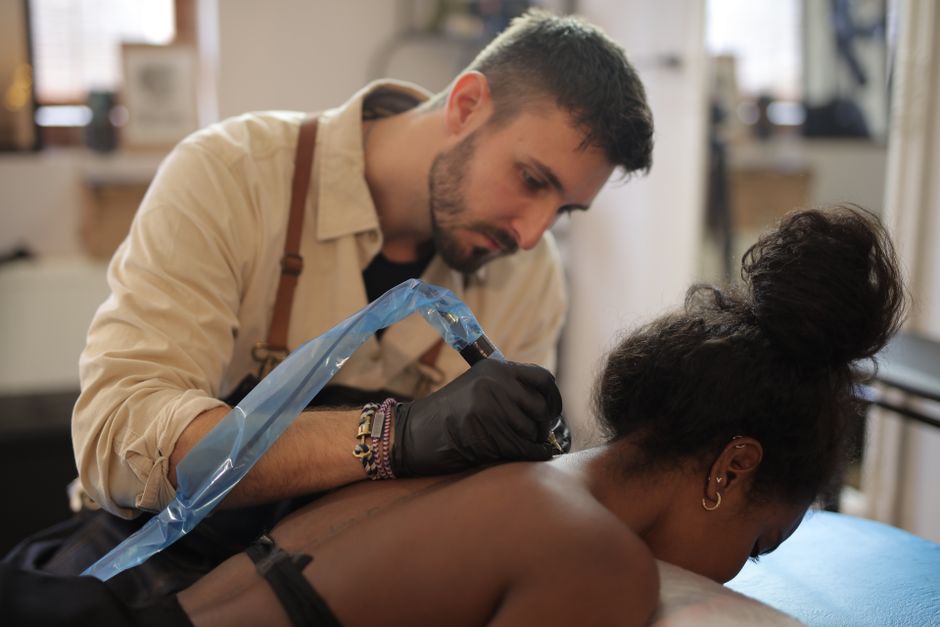
Yes, both pain tolerance and safety practices directly affect how many sessions a full back piece takes, because clients can only endure so much and artists must follow strict hygiene between sittings. Comfort and safety set the pace.
The back has sensitive zones, especially near the spine and shoulder blades. When a client hits their pain ceiling, a good artist stops rather than forcing a rushed, sloppy result.
Safety is non-negotiable. Every session means fresh setup, single-use needles, and sterile conditions in line with OSHA bloodborne pathogen standards. This discipline is exactly what separates a licensed professional from someone tattooing out of a garage.
Why does the artist's skill change everything?
A skilled Tattoo Artist completes a full back piece in fewer, cleaner sessions because trained hands work efficiently, plan the composition well, and avoid mistakes that force extra correction sittings. Skill is the difference between a finished piece and an endless one.
An untrained artist wastes sessions fixing crooked lines, patchy shading, and color that will not hold. A properly trained professional gets it right the first time, saving the client months of extra chair time.
This is not about talent alone. It is about training, repetition, and mentorship from people who have already mastered the craft. The demand for real, human-made tattoo work is not going anywhere, as we explain in why tattoo artists are still essential. According to the Bureau of Labor Statistics, skilled craft and fine artists continue to hold a distinct place that automation cannot easily replace.
How do you learn to tattoo work this big?
You learn to tattoo large-scale work like full back pieces through a structured tattoo apprenticeship where you build fundamentals, practice under supervision, and graduate to live client work with a Mentor guiding you. There is no self-taught shortcut to this level.
Every artist you admire started at zero. They planted a seed, committed to the work, and grew under someone who had already walked the path. If you are tired of watching your creative potential go to waste in a job that drains you, this is your sign. Consider a career change with a tattoo apprenticeship that transforms your creative passion into a thriving profession.
A tattoo apprenticeship is a proven college alternative for people who want a hands-on, AI-proof career. Learn why more people are choosing this route in our breakdown of tattoo apprenticeships as a college alternative.
Get Serious About Large-Scale Tattooing With Become A Tattoo Artist
Ink Different Tattoos offers a Traditional Tattoo Apprenticeship built to take you from complete beginner to job-ready professional capable of executing ambitious pieces like full back tattoos. We have trained aspiring artists for 15 years, since 2011.
What you can expect from our Traditional Tattoo Apprenticeship:
Length: 18 to 24 months across a proven 4-phase Tattoo Artist Training structure.
Format: Start remote, then finish hands-on in real Tattoo Studios.
Beginner-friendly: No prior art experience needed. We teach the fundamentals from day one.
Career outcome: Licensing support and job-ready skills so you can step into a professional Tattoo Shop with confidence.
A career that comes with confidence: our tattoo apprenticeship is designed to give you real, marketable skills and licensing support. Tattooing is a hands-made craft that artificial intelligence cannot replicate, which makes it one of the smartest career bets you can make today.
Mentorship that pushes your brand and skills further: for those ready to explode their growth, our Master Mentorship is a one-year, in-person tattoo apprenticeship taught by celebrity and award-winning Master Mentors including Al Fliction, Liz Cook, Kyle Dunbar, Boneface, and Jordi Pla. It is ideal for mastering a specific style and building your own business.
Making tattoo training accessible for everyone: we offer Spanish-speaking locations near Denver, Orange County, NYC, Miami, San Antonio, and San Diego, so language never has to stand between you and your future.
Ready to become a Tattoo Artist?
A full back piece usually takes 5 to 15 sessions, but the real story is the skill, patience, and training behind every clean line. Seats in our tattoo apprenticeship are limited.
Ready to become a Tattoo Artist? Apply now to Ink Different's Traditional Tattoo Apprenticeship and start building an AI-proof career with licensing support along the way. Not sure yet? Fill out our quick questionnaire to get personalized support and find out if our tattoo apprenticeship is right for you.
Frequently Asked Questions
How many sessions does a full back piece take?
A full back piece usually takes 5 to 15 sessions. Detailed color pieces often land around 8 to 12, while simpler black-and-gray designs can finish in five to seven.
How long does a full back tattoo take to complete overall?
A full back tattoo commonly takes 6 months to over a year, since each session needs 2 to 4 weeks of healing before the next round of work.
Do I need art experience to learn large-scale tattooing?
No. Ink Different Tattoos' Traditional Tattoo Apprenticeship is built for complete beginners and teaches drawing fundamentals, composition, and machine skills from day one.
How long is the Ink Different Tattoos apprenticeship?
The Traditional Tattoo Apprenticeship runs 18 to 24 months across a 4-phase structure, blending remote learning with hands-on training inside real Tattoo Studios.
What makes Ink Different Tattoos different?
Ink Different offers live, in-person mentorship from award-winning Mentors, a 15-year track record since 2011, licensing support, and a supportive Good Humans community.
Is tattooing a stable career in an age of AI?
Yes. Tattooing is a hands-on craft that artificial intelligence cannot replicate, making it an AI-proof career with lasting demand for skilled, licensed professionals.