How Much Does a Tattoo Cost, and Why Prices Vary So Much
Tattoo cost is the total price a client pays for a tattoo, determined by size, detail, placement, the artist's experience, and the studio's location and rates. There's no single sticker price, which is exactly why the same design can cost $80 at one shop and $800 at another.
Understanding what actually drives that number matters whether you're budgeting for your next piece or wondering if the people holding the machine actually make a real living doing it. At Ink Different Tattoos, we think understanding these numbers is the first seed you plant toward a creative, AI-proof career that rewards skill and mastery.
In this article, we'll break down what moves the price, how artists structure their rates, and what it means for your own earning potential if you decide to pick up the machine yourself.
Key Takeaways
Range:Small tattoos start around $50–$100; large custom pieces run into thousands.
Main factors: Size, detail, placement, color, and artist experience drive most of the price.
Two pricing models: Artists charge either hourly ($100–$250/hr) or flat rate per piece.
Shop minimum:Most studios charge a $50–$100 minimum, even for tiny designs.
Career angle: Skilled Tattoo Artists earn per session; training is a smart college alternative.
What Does a Tattoo Actually Cost?
A tattoo typically costs anywhere from $50 for a tiny simple design to several thousand dollars for a large, detailed custom piece, with most medium tattoos landing between $150 and $500.
There is no single sticker price for a tattoo, and that is by design. Unlike a product on a shelf, every tattoo is custom work performed on a living canvas that heals and holds ink differently from person to person. Your skin's texture, tone, and how your body heals will affect the final result, so pricing has to stay flexible.
Think of it like commissioning a painting. A quick sketch and a museum-sized oil piece are both "art," but nobody expects them to cost the same. Your tattoo sits somewhere on that spectrum, and where it lands depends on a handful of very real variables.
Why Do Tattoo Prices Vary So Much?
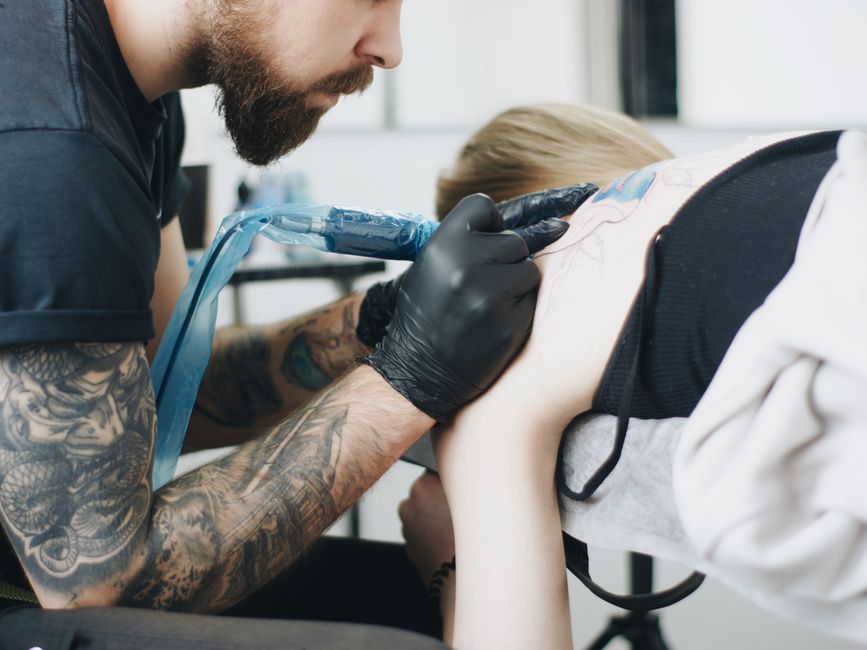
Tattoo prices vary because size, detail, placement, color, geographic location, and the artist's skill level each add or subtract value from the final piece.
Here is what moves the number up or down:
Size: More surface area means more ink, more time, and a higher price.
Detail: Fine linework, realism, and heavy shading take longer than simple designs.
Placement: Ribs, hands, feet, and other difficult areas are harder to tattoo than arms, so they often cost more.
Color: Color and gradients require more passes and more products than black and gray.
Location: Studios in major cities like New York or Los Angeles often charge more than rural shops.
Experience: An award-winning artist commands significantly more than someone fresh out of a tattoo apprenticeship.
The last one is the point that should light a fire under you. Experience and reputation are earned, and they directly raise what a Tattoo Artist can charge. That is a skill-based value ladder you can climb, and it is why investing in proper training pays off.
Pro Tip: Cheaper is not always better. A properly trained artist who followsOSHA bloodborne pathogen standardsprotects your health, and clean, safe work is worth every dollar. Quality and safety cannot be rushed.
How Do Hourly and Flat Rates Work?
Tattoo Artists charge either by the hour (commonly $100–$250 per hour) or a flat rate per piece, and which one you get depends on the artist and the complexity of the design.
Hourly pricing is common for large or open-ended work like sleeves and back pieces, where the total time is hard to predict at the start. You pay for the hours in the chair, and the artist has built-in protection if a design takes longer than expected.
Flat-rate pricing works well for smaller, well-defined designs. The artist looks at the piece, estimates the time and difficulty, and quotes one number up front. Both models reward speed and skill: the faster and cleaner an artist works, the more value they deliver per hour and per piece.
This is exactly why the craft rewards real training over shortcuts. If you want to understand the fundamentals before you ever pick up a machine, our guide to the tools every beginner tattoo artist should know is a solid starting point.
Why Is There a Shop Minimum?
A shop minimum, usually $50–$100, is the lowest price a studio will charge for any tattoo, covering setup, sterile supplies, and the artist's time regardless of how small the design is.
Even a dime-sized tattoo requires the same fresh needles, ink caps, gloves, autoclave sterilization, and station breakdown as a larger one. The minimum protects the studio from losing money on hygiene and prep—costs that do not scale down with design size.
It also protects you. A shop that skips proper single-use supplies to offer rock-bottom prices is a shop to avoid. Clean setup is not optional, and proper tattoo aftercare and safety standards are enforced by reputable studios the way hospitals handle sterilization.
How Can You Estimate the Cost of Your Tattoo?
You can estimate a tattoo's cost by evaluating its size, detail, placement, and color, then matching it to the artist's hourly or flat rate before your consultation.
Follow these steps to get a realistic ballpark:
Step 1: Define the design. Decide on subject, style, and roughly how large you want it on your body.
Step 2: Choose the placement. Note whether it lands on an easy spot (forearm, upper arm) or a tricky one (ribs, hands, feet).
Step 3: Factor in color. Add budget if you want full color, shading, or complex gradients.
Step 4: Research the artist. Look up their hourly or flat rate and browse their portfolio on social media.
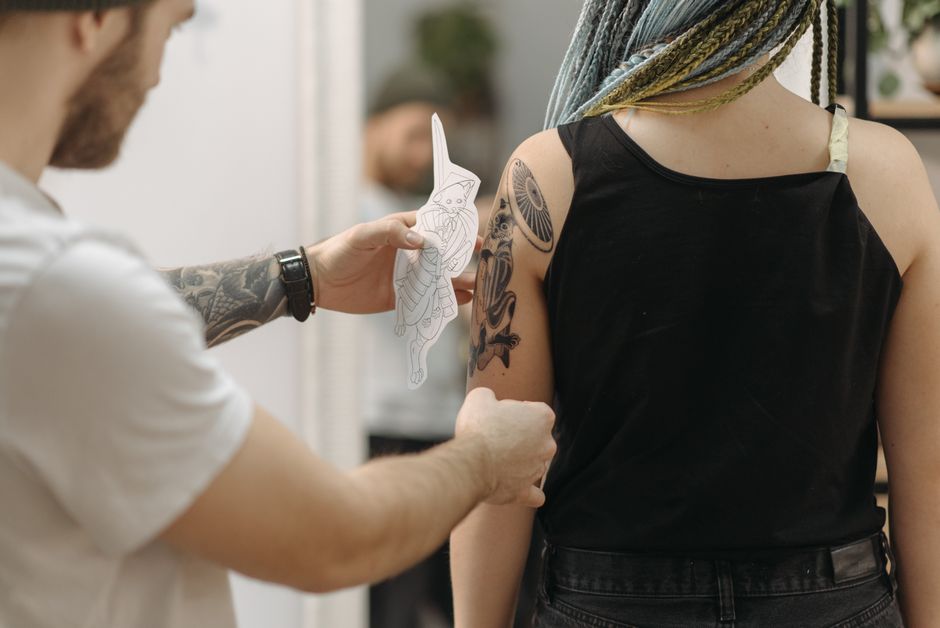
Step 5: Book a consultation. Bring reference images and let the artist give you an accurate, detailed quote.
A good consultation is where price, expectation, and trust all meet. It is also where you will notice how a confident, well-trained artist carries themselves, which is a preview of the kind of professional you can become if you pursue the craft.
What Does This Mean If You Want to Earn a Living Tattooing?
If you become a skilled Tattoo Artist, your income scales with your ability, reputation, and speed, making it one of the few hands-on careers where mastery directly increases what you earn per session and per year.
Look at the math again. An artist charging $150 an hour who books solid days can build a high income, and that number climbs as their portfolio grows and demand increases. The Bureau of Labor Statistics tracks craft and fine artists as a real and ongoing occupation, and tattooing is one of its most in-demand and fastest-growing corners.
Here is the part that should make you sit up: this is an AI-proof career. A machine cannot build human trust, adapt to living skin in real time, or sit with a client through a meaningful piece that changes their life. We break this down further in our piece on why tattoo artists are still essential.
If you are feeling stuck in work that wastes your creative potential, understanding tattoo pricing is not trivia. It is a glimpse of a life where your skill sets your income. And the smart path in is to avoid the classic beginner traps. Learn what to sidestep by reading about the mistakes aspiring tattoo apprentices should avoid.
How Ink Different Trains You to Build a Real Career
Ink Different Tattoos offers a Traditional Tattoo Apprenticeship: an 18–24 month, four-phase training that starts remote and finishes in real Tattoo Studios, with state licensing support and job-ready business skills.
We have spent 15 years, since 2011, training aspiring artists to work professionally and build lasting careers. Our Tattoo Apprenticeship Program is a college alternative built for people who want a hands-on, creative future instead of a diploma that leaves them in debt and still searching for meaning in their work.
What You Can Expect from Our Traditional Tattoo Apprenticeship
Beginner-friendly: No prior art experience needed. We teach drawing, fundamentals, and professional standards from day one.
Four phases: Progressive training that builds from foundational drawing to supervised live client work in a real studio.
Start remote, finish in studios: Learn the basics and theory remotely, then get hands-on, mentored training in a working Tattoo Shop.
Licensing support: We guide you toward the license your state requires to practice professionally.
State requirements differ, and we help you navigate them. Whether you are looking at how to get your tattoo license in Texas or how long a tattoo license takes in Colorado, we point you in the right direction.
A Career That Comes With Confidence
Our job-ready training means you finish knowing how to price your work, protect your clients' health and safety, build a loyal clientele, and carry yourself like a professional in any studio environment. Confidence is not a bonus feature; it is the foundation we help you build.
Mentorship That Pushes Your Brand and Skills Further
For those ready to go deeper and master a signature style, our Master Mentorship is a one-year, in-person program with celebrity and award-winning Mentors including Al Fliction, Liz Cook, Kyle Dunbar, Boneface, and Jordi Pla. It is built for mastering a specific style, exploding your career trajectory, and stepping into business ownership and artistic leadership.
Making Tattoo Training Accessible for Everyone
We offer Spanish-speaking locations near Denver, in Orange County, in New York City, in Miami, in San Antonio, and in San Diego, so language never stands between you and your future. And once you are trained, building your professional name and brand matters. That is why we share the best platforms to help tattoo artists build their brand on social media and beyond.
Seats in a live, in-person Tattoo Apprenticeship are limited by their nature. Real mentorship cannot be mass-produced, and that exclusivity is exactly what makes it valuable and effective.
Ready to Become a Tattoo Artist?
Understanding how much a tattoo costs is really understanding how much a skill is worth, and that skill can be yours. If you are done wasting your creative potential on work that does not fulfill you, this is your moment to plant the seed and grow into the artist you were meant to be. Many of our students started exactly where you are now: curious, uncertain, but hungry for change.
Ready to become a Tattoo Artist? Apply now to Ink Different's Traditional Tattoo Apprenticeship and start building an AI-proof career with licensing support and mentorship along the way. Prefer to test the waters first? Fill out our quick questionnaire to get personalized guidance and find out if our Tattoo Apprenticeship Program is the right fit for you. If you are feeling the pull toward change, our post on the career change tattoo apprenticeship is a great next read. You can also explore why spring is the best time to become a tattoo artist and learn how to start your tattoo apprenticeship this spring.
Frequently Asked Questions
How much does a small tattoo cost?
Small tattoos typically cost between $50 and $150, depending on design detail and placement. Most studios enforce a shop minimum of $50–$100, so tiny designs rarely cost less.
Why do some tattoo artists charge so much more than others?
Experienced, award-winning, or highly sought-after artists charge more because their skill, speed, reputation, and portfolio deliver higher-quality, longer-lasting work. Location and demand also raise prices.
Do I need art experience to start a tattoo apprenticeship?
No. Ink Different's Traditional Tattoo Apprenticeship is designed for absolute beginners and teaches drawing, fundamentals, and professional skills from day one.
How long does it take to become a professional tattoo artist?
Becoming a professional Tattoo Artist through Ink Different typically takes 18 to 24 months across four phases, depending on how quickly you master each stage and state licensing requirements.
What makes Ink Different different from other tattoo training programs?
Ink Different offers 15 years of proven experience since 2011, award-winning in-person mentorship, state licensing support, multiple Spanish-speaking locations, and a supportive Good Humans community culture.
Can I really earn enough as a tattoo artist to support myself?
Yes. Tattoo income scales directly with skill, speed, and reputation. The craft is AI-proof, in-demand, and one of the few hands-on careers where mastery significantly increases earning potential.