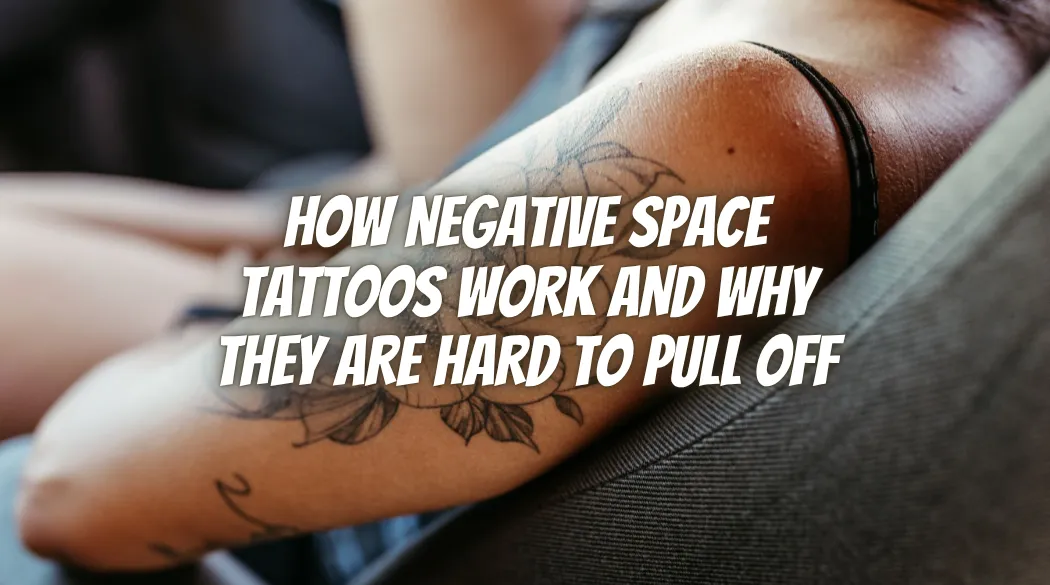
How Negative Space Tattoos Work and Why They Are Hard to Pull Off
Some of the most striking tattoos are built not from ink, but from the skin the Tattoo Artist leaves untouched. A negative space tattoo is a design where the image is formed by bare, uninked skin while the Tattoo Artist fills the surrounding area, letting absence create the picture. At Ink Different Tattoos, we have spent over 15 years teaching aspiring artists how to think this way, and this technique separates hobbyists from professionals.
Key Takeaways
Definition: Negative space tattoos form the image using bare skin, not ink, with surrounding areas filled solid.
Difficulty: They are hard because there is zero room for error; untouched skin cannot be added back.
Skill required: Mastery demands precise planning, clean line work, and an understanding of how skin ages.
How to learn: Live, in-person mentorship beats guesswork for mastering advanced negative space technique.
Career path: Ink Different's Traditional Tattoo Apprenticeship runs 18–24 months with licensing support across four phases.
What are negative space tattoos?
Negative space tattoos are designs where the image is created by the uninked skin itself, while the Tattoo Artist fills the area around it to make the subject appear. Instead of drawing a shape in ink, you draw everything except the shape.
Think of a sculptor who reveals a figure by removing stone rather than adding clay. The skin becomes the subject, and the ink becomes the background. A crescent moon, a flock of birds, or a single leaf can all emerge from what you deliberately leave blank.
This approach flips traditional tattooing on its head. Most beginners think in terms of filling space with color and line. Negative space demands that you think in reverse, and that mental shift is where real growth begins.
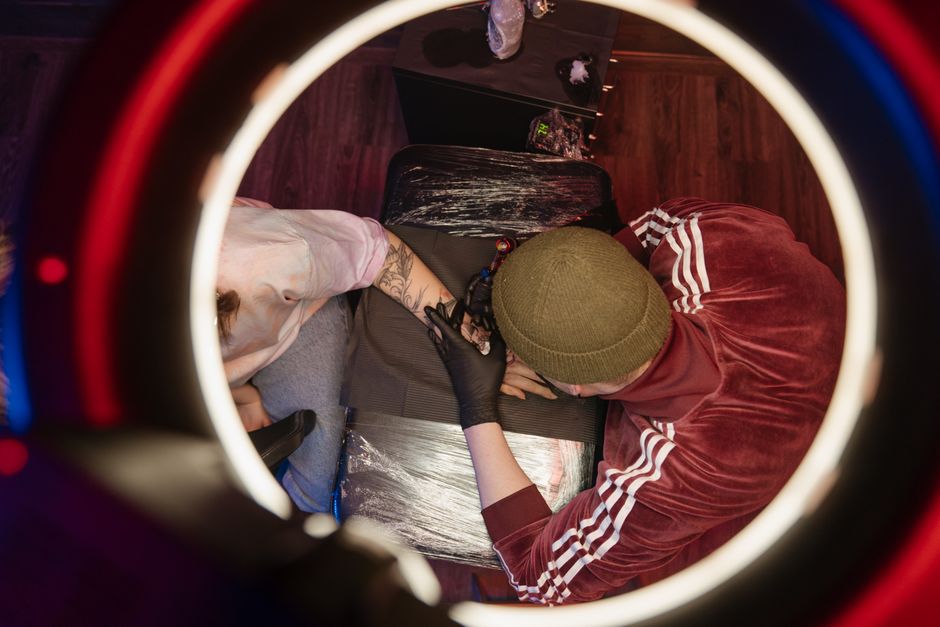
How do negative space tattoos work?
Negative space tattoos work by using heavy, solid ink around a protected area of skin, so the contrast between filled and bare regions produces the final image. The brain reads the gap as the figure.
The effect relies entirely on contrast. When you surround a blank shape with deep black or dense color, the eye interprets the untouched skin as the subject. The darker and cleaner the surrounding fill, the sharper the illusion.
Because the skin tone itself becomes part of the design, this technique behaves differently on every client. A design that pops on fair skin may read softer on deeper skin tones, which is why professional artists plan placement and contrast carefully for each individual.
Pro Tip: Negative space only reads clearly when the surrounding fill stays consistent and saturated. Patchy ink kills the illusion instantly.
Why are negative space tattoos so hard to pull off?
Negative space tattoos are hard because there is no margin for error: you cannot add skin back once ink crosses a boundary, so a single slip permanently ruins the design.
In a standard tattoo, a wobbly line can sometimes be corrected or absorbed into shading. In negative space work, the blank area is the whole point. One stray needle pass into that reserved skin and the image is broken forever.
The challenge grows with aging. As the American Academy of Dermatology tattoo care guidelines note, ink spreads and softens over the years. A crisp negative space edge today can blur over time, which means artists must build in subtle buffers without losing definition. This foresight is exactly what separates beginners from professionals, and it is one of the common mistakes aspiring tattoo apprentices should avoid.
Add in the physical demand of laying down large, flawless fields of solid ink, and you understand why negative space is a true test of discipline. It rewards patience and punishes shortcuts.
How does skin affect negative space tattoos?
Skin affects negative space tattoos because skin tone acts as the "color" of the image, and because healing, texture, and aging all change how crisp the final result stays.
Since the bare skin forms the subject, the client's natural complexion is baked into the design. A professional considers undertones, scarring, and sun exposure before a needle ever touches skin. What looks striking on paper may need adjustment to work on a real body.
Healing matters just as much. Solid fields of ink demand proper aftercare and strict hygiene, which is why every serious artist follows OSHA bloodborne pathogen standards. Clean technique protects both the image and the client.
Understanding your materials is foundational before you ever attempt advanced work. If you are still learning your gear, start with the tools every beginner tattoo artist should know, because mastery of the basics is what makes bold techniques possible.
How do artists plan a negative space tattoo step by step?
Artists plan a negative space tattoo through a deliberate sequence: mapping the blank area first, testing contrast, and filling outward with clean, saturated ink. Planning is where this technique is won or lost.
Step 1: Define the reserved space. Decide exactly which skin stays untouched. This blank area is your image, so outline it with total clarity before anything else.
Step 2: Test the contrast. Consider the client's skin tone and choose a surrounding fill dark enough to make the bare shape read instantly.
Step 3: Stencil with precision. Place a clean, confident stencil. In negative space work, the stencil is your safety net against crossing into protected skin.
Step 4: Build the border. Carefully outline the edge of the reserved area so your fill never bleeds into the image.
Step 5: Fill outward. Lay down smooth, even, saturated ink around the shape, working away from the boundary to keep the edge razor sharp.
Step 6: Plan for aging. Account for future ink spread so the design stays legible for decades, not just for the healing photo.
Notice how much of this happens before the tattoo begins. The actual inking is almost the easy part once the planning is sound. That kind of discipline is not something you absorb from a YouTube video. You learn it beside a Mentor who has done it thousands of times.
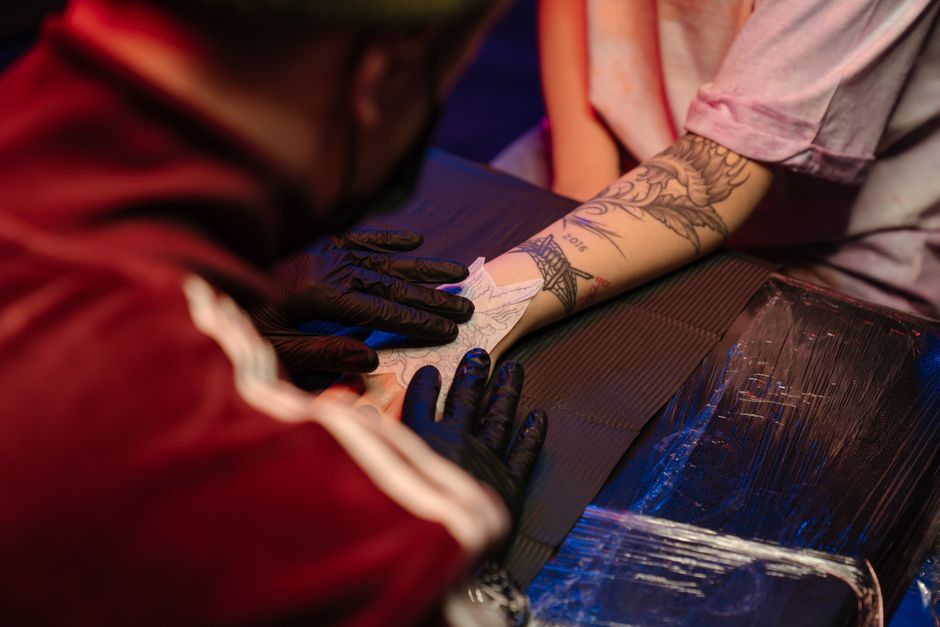
Where can you learn to master negative space work?
You can learn negative space tattooing through a structured, in-person Tattoo Apprenticeship where a licensed Mentor guides your hand through contrast, line control, and planning in real time.
Here is the honest truth: this is not a skill you teach yourself in isolation. Negative space exposes every weakness in your fundamentals, from line consistency to saturation control. You need feedback the moment your instinct goes wrong, not after you have ruined a client's skin.
That is exactly why live, in-person mentorship matters. It is the difference between guessing and knowing. And in a world where so many careers are being swallowed by automation, hand tattooing remains a craft that machines cannot replicate, which you can read more about in our piece on why tattoo artists are still essential.
If the gray cubicle has been draining you, there is a path out. Tattooing has quietly become a serious college alternative for people who want a real, AI-proof career built on skill rather than a diploma. You can even explore a career change through a tattoo apprenticeship at any stage of your life.
What to expect from our Traditional Tattoo Apprenticeship?
Ink Different's Traditional Tattoo Apprenticeship is an 18 to 24 month, four-phase tattoo apprenticeship that takes you from zero experience to job-ready, with licensing support along the way.
You train hands-on inside real tattoo studios with experienced Mentors. No prior art experience is required, because we built this for beginners who are serious about excellence. According to the Bureau of Labor Statistics on craft and fine artists, specialized artists continue to find strong demand for their skills, and few niches are more specialized than clean negative space tattooing.
Here is what sets our Tattoo Artist training apart:
Personalized, hands-on training: You learn beside Mentors, not from a pre-recorded screen.
Four structured phases: Each phase builds real, job-ready skills in order.
Licensing support: We help you navigate requirements like getting your tattoo license in Texas, transferring a tattoo license to California, and beyond.
"Good Humans" culture: A supportive, family-like community that has your back from day one.
This is a real path to working professionally. We never promise a handout, but we do give you the foundation, mentorship, and licensing guidance to build a career with confidence. Seats are limited, because real mentorship cannot be mass produced.
How does mentorship push your brand further?
Ink Different's Master Mentorship is a one-year, in-person program for beginner and experienced artists who want to master a specific style, grow their career, and move toward studio ownership.
If negative space is the style you want to own, this is where you go deep. You train alongside celebrity and award-winning Mentors like Al Fliction, Liz Cook, Kyle Dunbar, Boneface, and Jordi Pla. This is intensive skill development focused on turning you into a recognizable name.
We also make training accessible. Ink Different operates nationwide, with the Traditional Tattoo Apprenticeship available in 60+ locations, including Spanish-speaking locations in Denver, Orange County, NYC, Miami, San Antonio, and San Diego.
Ready to become a Tattoo Artist?
Negative space tattoos are hard, and that is what makes this craft worth building a career around.
Ready to become a Tattoo Artist? Apply now to Ink Different's Traditional Tattoo Apprenticeship and start building an AI-proof career, with licensing support along the way. Prefer to test the waters first? Fill out our quick questionnaire to get personalized support and find out if our Traditional Tattoo Apprenticeship is right for you.
Frequently Asked Questions
What is a negative space tattoo?
A negative space tattoo is a design where the image is formed by bare, uninked skin while the Tattoo Artist fills the surrounding area, letting absence create the picture.
Why are negative space tattoos harder than regular tattoos?
They are harder because you cannot add skin back. One stray line into the reserved area permanently ruins the image, leaving zero margin for error.
Do negative space tattoos work on all skin tones?
Negative space works on most skin tones, but the effect changes with complexion. Artists adjust contrast and placement for each client, since the skin itself forms the image.
Do I need art experience to learn negative space tattooing?
No. Ink Different's Traditional Tattoo Apprenticeship is built for beginners with no prior experience and teaches fundamentals before advancing to techniques like negative space work.
How long does Ink Different's Tattoo Apprenticeship take?
The Traditional Tattoo Apprenticeship runs 18–24 months across four phases. You start remote, finish in studios, and receive licensing support throughout.
What makes Ink Different different from a tattoo school?
Ink Different offers live, in-person mentorship with award-winning Mentors, a "Good Humans" community, and over 15 years of experience training professional Tattoo Artists nationwide.