How Tattoo Artists Feel About Clients Who Fall Asleep During Sessions
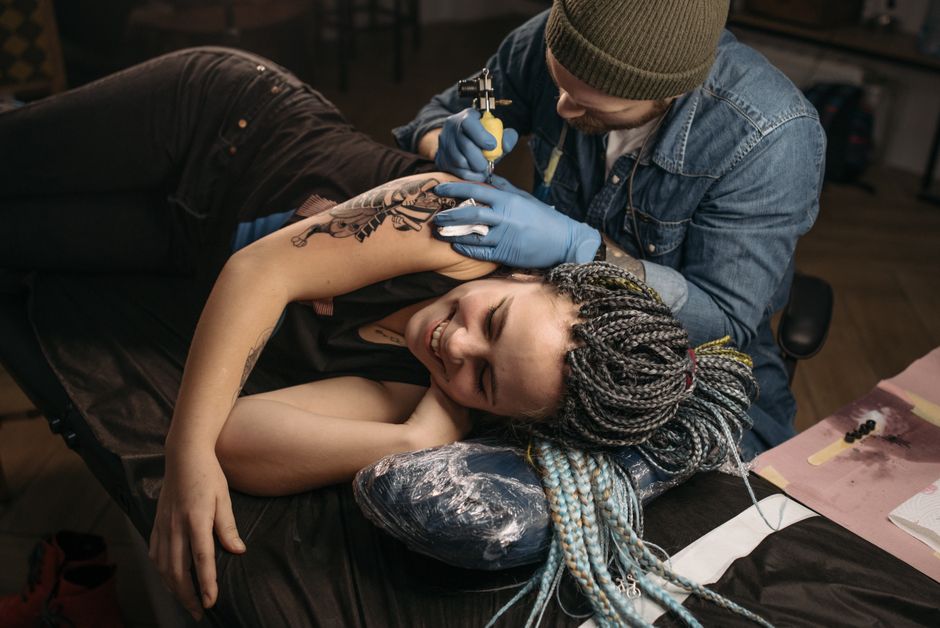
A client falling asleep during a tattoo session is a natural physiological response where the body, adjusting to prolonged sensation and released endorphins, relaxes into drowsiness or actual sleep. It happens more often than most people think, and how a Tattoo Artist responds to it says a lot about their skill, patience, and professionalism. This small moment reveals one of the biggest truths about building a career as a Tattoo Artist: your success depends far less on your needle than on your ability to read people, build trust, and manage real human situations with grace.
At Ink Different Tattoos, we have spent 15 years training aspiring Tattoo Artists to handle every real-world scenario a tattoo studio throws at them, including the sleepy client. Understanding this small moment reveals something bigger: great tattooing is about people, not just pigment. This is exactly why we believe a Tattoo Artist career is AI-proof and why real, in-person, hands-on mentorship remains irreplaceable.
Key Takeaways
It's common: Clients often fall asleep during long sessions as endorphins and fatigue trigger natural relaxation.
Mostly a compliment: Many Tattoo Artists take a sleeping client as a sign of comfort and trust they have earned.
Not always easy: Sleeping clients can shift, snore, or move suddenly, creating real technical challenges mid-stroke.
Skill matters: Managing client comfort, communication, and safety is a learned craft taught in professional Tattoo Artist Training.
Your path: Ink Different's Traditional Tattoo Apprenticeship teaches people skills alongside technique for a fulfilling, AI-proof career.
Why do clients fall asleep during tattoo sessions?
Clients fall asleep during tattoo sessions because the body releases endorphins in response to sustained sensation, and the repetitive hum of the Tattoo Machine combined with fatigue creates a deeply relaxing state.
Your body is a fascinating machine. When it experiences prolonged stimulation, it floods your system with endorphins, the same natural chemicals that create a runner's high. Over a long session, that endorphin release can leave a client feeling calm, warm, and unexpectedly sleepy.
Add in the white noise of the machine, the steady pressure, and the fact that many clients did not sleep well the night before out of nerves, and you have a recipe for a nap. This is a genuine physiological process, not laziness or disinterest. Some clients even describe long tattoo sessions as meditative once they settle in.
Good to know: The endorphin response is why some clients describe long tattoo sessions as deeply meditative and why many return for larger pieces.
How do Tattoo Artists actually feel about it?
Most Tattoo Artists feel positive about clients who fall asleep, viewing it as proof the client trusts them and feels safe enough to relax completely in the chair.
Ask a room full of experienced Tattoo Artists, and you will hear the same thing again and again: a sleeping client is usually a good sign. It means you have created an environment calm enough for someone to let their guard down entirely. That is not easy to earn, especially when someone is lying in your studio, vulnerable and under the needle.
Some artists even prefer it. A sleeping client is a still client, and stillness makes clean lines and smooth shading far easier to execute. There is a quiet satisfaction in knowing your steady hand and calm energy helped someone unwind. It is a reminder that your role goes beyond technical skill. You are a guide, a comfort, and a reason someone comes back.
Of course, feelings vary. A few artists find it mildly nerve-wracking, especially with newer clients, because sleep can bring unexpected movement. The consensus, though, leans warm and understanding.
Is a sleeping client a compliment or a problem?
A sleeping client is most often a compliment, signaling deep comfort and trust, but it becomes a problem only when unconscious movement interferes with the tattoo's precision.
Think of it like a barber whose client dozes off in the chair. It is flattering, a testament to your calming presence, right up until the moment they slump or twitch. The same principle applies to your future Tattoo Studio.
Here is how the two sides break down:
The compliment: The client feels safe, relaxed, and confident in your abilities.
The compliment: A still, sleeping client lets you work steadily on detailed line work and shading.
The problem: Sudden jerks, head drops, or muscle twitches can affect a line mid-stroke or ruin detail work.
The problem: A sleeping client cannot give feedback on pain, positioning, or how they are feeling physically.
The takeaway? It is overwhelmingly a compliment, as long as you know how to manage the risks. That management is a learned skill, and it is exactly the kind of thing that separates a hobbyist from a professional Tattoo Artist. This is precisely what you will master in a hands-on apprenticeship program.
What challenges does a sleeping client create for a Tattoo Artist?
A sleeping client creates challenges around involuntary movement, loss of communication, and monitoring the client's physical state, all of which a trained Tattoo Artist must anticipate and manage.
When a client is awake, they self-regulate. They shift when uncomfortable, tell you when they need a break, and hold still on request. When they sleep, that partnership pauses, and the full responsibility lands on you. This is where experience and training make the difference between a beautiful tattoo and a ruined session.
The main challenges include:
Involuntary twitches: Muscles relax and sometimes jerk as a person drifts off, which can disrupt a precise line or ruin detail work.
Position drift: A sleeping client may slowly slump, changing the angle of the skin you are working on and warping perspective.
No pain feedback: You lose the client's real-time signals about tender areas, fatigue, or discomfort.
Health monitoring: Rarely, drowsiness can signal a drop in blood sugar or lightheadedness that needs attention.
None of these are dealbreakers. They are simply reminders that professional tattooing is a full-body, full-attention craft. Following strong hygiene and safety practices, aligned with OSHA bloodborne pathogen standards, is part of staying alert and responsible throughout every session. This is one reason why working under a skilled mentor in a professional Tattoo Studio is so valuable. You learn to anticipate and handle these moments before they derail your work.
How should a Tattoo Artist handle a client who falls asleep?
A Tattoo Artist should handle a sleeping client by staying alert to movement, gently pausing when needed, keeping the client comfortable, and using clear communication before and after the nap.
This is where craft meets care. Here is a simple, professional approach you can follow in your own future Tattoo Studio.
Step 1: Set expectations early. Before a long session, tell your client it is completely normal to relax or doze, and that you will gently pause if you need them to reposition.
Step 2: Watch for the drift. Keep an eye on posture and muscle tension. If you see them slumping, pause your line before it is affected.
Step 3: Pause, don't startle. If you need them to move, wake them calmly with your voice, never a sudden touch that could cause a jerk.
Step 4: Take strategic breaks. Use natural pauses to check in, offer water, and let them stretch, which keeps blood sugar and comfort stable.
Step 5: Keep monitoring their well-being. Watch for signs of lightheadedness and follow proper aftercare guidance, like the American Academy of Dermatology tattoo care guidelines, once the session wraps.
Handled well, a sleeping client becomes a smooth, productive session and a happy customer who wakes up to fresh ink they love. This is the kind of real-world problem-solving that separates professionals from hobbyists, and it is exactly what you learn in a structured Tattoo Artist Training program.
What does this teach you about becoming a Tattoo Artist?
The sleeping-client scenario teaches that becoming a Tattoo Artist is as much about reading people and managing client comfort as it is about mastering technique.
Here is the truth that a lot of beginners miss: your talent with a Tattoo Machine only takes you so far. The Tattoo Artists who build loyal clients and full calendars are the ones who make people feel comfortable enough to fall asleep in the first place. They read energy, anticipate needs, and build trust before the first needle touches skin.
These are the "soft" skills that turn out to be the hardest to fake and the most valuable to own:
Reading body language and energy in real time.
Communicating clearly and calmly under pressure.
Balancing technical focus with client well-being.
Building the kind of trust that keeps people coming back.
You cannot download these from a video. This is also why a real Tattoo Artist is an AI-proof career. A machine cannot hold your hand, read your nerves, or earn your trust. If you want to understand why human artists remain essential, read our take on why Tattoo Artists are still essential. And if you are just starting out, avoid the common pitfalls we cover in mistakes aspiring Tattoo Apprentices should avoid.
How can Ink Different help you build these skills?
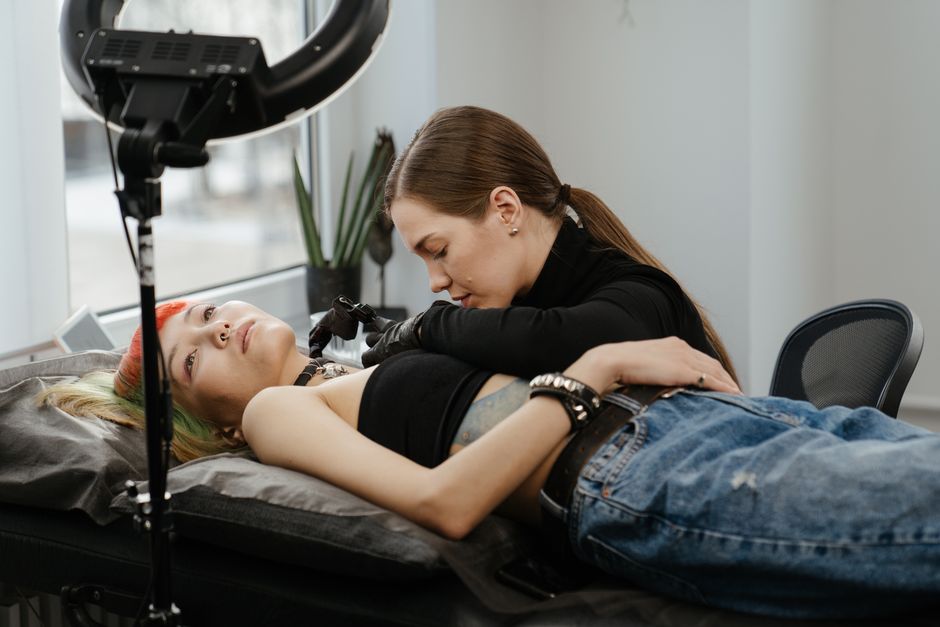
Ink Different Tattoos helps you build both technical and people skills through live, in-person mentorship in a working tattoo studio, so you learn to handle real clients from day one.
You have seen how much depends on more than needle control. That is why our approach is built around real experience, not just theory.
Get serious about your craft with Become A Tattoo Artist
For 15 years, Ink Different has been a college alternative for aspiring Tattoo Artists who pursue excellence. If you feel stuck in a dead-end job while your creative potential goes unused, this is your path out.
What you can expect from our Traditional Tattoo Apprenticeship
Our Traditional Tattoo Apprenticeship is an 18 to 24 month, four-phase Tattoo Artist training built for beginners with no prior experience. You train hands-on in real tattoo studios with personalized guidance where you learn to handle scenarios like the sleeping client from day one.
Beginner-friendly: No formal art background required to start; we teach from fundamentals.
Real environment: Learn client comfort, communication, and technique in a working studio with real clients.
Job-ready outcome: Graduate with licensing support and the skills to work professionally and confidently.
A career that comes with confidence
By the time you finish, you will know how to handle a sleeping client, a nervous first-timer, and everything in between. We provide licensing support and job-ready training so you step into the industry prepared, not guessing. According to the Bureau of Labor Statistics, skilled craft and fine artists continue to find opportunities built on their unique human abilities. Unlike jobs threatened by automation, a Tattoo Artist career depends on empathy, creativity, and human connection, things no AI can replicate.
Mentorship that pushes your brand and skills further
Ready to level up faster? Our one-year, in-person Master Mentorship pairs you with celebrity and award-winning Mentors like Al Fliction, Liz Cook, Kyle Dunbar, Boneface, and Jordi Pla. It is ideal for mastering a specific style, growing your career, and building your own business.
Making tattoo training accessible for everyone
We offer Spanish-speaking locations in Denver, Orange County, NYC, Miami, San Antonio, and San Diego, so language never stands between you and your future. Our "Good Humans" culture means you join a supportive, family-like community, not a competition. This is the mentorship and environment that teaches you to be the kind of Tattoo Artist clients fall asleep for.
Ready to become a Tattoo Artist?
The moment a client trusts you enough to fall asleep in your chair is the moment you realize this craft is about people first. Seats in our tattoo apprenticeship are limited. Consider making a career change with a tattoo apprenticeship and join artists who are building fulfilling, resilient careers.
Ready to become a Tattoo Artist? Apply now to Ink Different's Traditional Tattoo Apprenticeship and start building an AI-proof career with licensing support along the way. Not sure yet? Fill out our quick questionnaire to get personalized support and find out if our Traditional Tattoo Apprenticeship is right for you.
Frequently Asked Questions
Why do people fall asleep while getting tattooed?
People fall asleep during tattoos because sustained sensation triggers endorphin release, creating relaxation. Combined with the steady hum of the Tattoo Machine and pre-appointment fatigue, this often leads to drowsiness or sleep.
Do Tattoo Artists get annoyed when clients fall asleep?
Most Tattoo Artists are not annoyed and often take it as a compliment, since a sleeping client signals comfort and trust. A still client also makes precise line work easier to execute.
Is it dangerous to fall asleep during a tattoo session?
Falling asleep is usually safe, but a trained Tattoo Artist monitors for sudden movement and signs of lightheadedness. Staying hydrated and eating beforehand helps prevent blood sugar drops during long sessions.
Do I need prior experience to join Ink Different's Tattoo Apprenticeship?
No prior experience is required. Ink Different's Traditional Tattoo Apprenticeship is built for beginners and teaches technique, client communication, and safety over an 18 to 24 month four-phase Tattoo Artist Training.
How long does the Traditional Tattoo Apprenticeship take?
The Traditional Tattoo Apprenticeship takes 18 to 24 months. You start remote and finish in real Tattoo Studios, gaining hands-on experience, licensing support, and job-ready skills before graduating.
What makes Ink Different different from other training options?
Ink Different offers 15 years of experience, live in-person mentorship, award-winning Mentors, a "Good Humans" culture, and Spanish-speaking locations. It is a college alternative focused on real, AI-proof professional skills.