How Tattooing as a Career Compares to Traditional Nine-to-Five Jobs
Why More Creatives Are Rethinking Traditional Work Schedules
Key Takeaways
Many Tattoo Artists build careers with more schedule flexibility than traditional office workers.
Tattooing often offers stronger creative freedom than a nine-to-five job.
Traditional jobs usually provide predictable income, while tattooing rewards reputation and client demand.
Tattoo careers involve emotional connection, personal branding, and direct client relationships.
Tattoo Artists often control their growth, pricing, and work style more independently.
Burnout exists in both careers, but the causes are very different.
More people now prioritize flexibility and meaningful work over conventional office paths.
Clients often appreciate tattoos more when they understand the dedication behind the career.
For a long time, the career advice most people got followed a pretty familiar script. Study hard, get a degree, land a stable job with benefits, and repeat that cycle for the next 40 years. Office work became the default definition of a "professional" career, and anything outside of that structure was treated like a risky detour.
But that script has been quietly falling apart. More people are stepping back and asking a simple question: Is this actually the life I want? Tattooing has been one of the professions quietly gaining ground as a serious, respected, and genuinely sustainable career choice. And its visibility has grown faster in the last decade than most people expected.
So how does tattooing actually stack up against a traditional nine-to-five? Here is a side-by-side look at six areas where these two career paths go in completely different directions.

1. Tattoo Artists Usually Have More Flexible Schedules
One of the most obvious differences between tattooing and office work is how the day is actually structured. Traditional nine-to-five jobs tend to lock employees into fixed hours, set by someone else, in a location someone else chose.
Tattoo Artists, on the other hand, often have more say in when they work and how many clients they take on in a given week. Many Tattoo Artists schedule around their clients' availability, which means evenings and weekends are common working hours. The tradeoff is flexibility during times when most office workers are stuck at their desks.
That flexibility does not mean fewer hours, though. What clients do not see is everything that happens before they walk through the door. Tattoo Artists spend significant time outside of appointments drawing custom designs, responding to inquiries, managing bookings, and doing research. The schedule may look different from a nine-to-five, but the work ethic behind it is just as demanding.
2. Creative Freedom Looks Completely Different in Tattooing
In most office environments, creativity runs on a leash. Branding guidelines, manager approvals, and company policies tend to define how far any individual's creative input can actually go.
Tattoo Artists operate in a very different space. They develop personal styles over time, build recognizable specialties, and attract clients specifically because of what makes their work distinct. That is a rare thing in any profession: getting hired not just for what you can do, but for who you are creatively.
Tattooing also blends creativity with technical precision and strong communication skills. That combination is something most office environments simply do not demand.
3. The Paycheck: Salary Caps vs. Unlimited Earning Potential
Traditional employment usually comes with a fixed salary. Predictable, yes, but also capped. Raises tend to move slowly, and significant income growth often requires either a promotion or a job change.
Tattooing works on a completely different earning model. Income is tied directly to skill level, reputation, and demand, which means there is no ceiling in the same way a corporate pay grade creates one. According to ZipRecruiter, the average annual pay for a full-time professional Tattoo Artist in the United States sits at around $106,858.
What makes this even more interesting is the ceiling, or rather, the lack of one. Top earners in tattooing reach into the $340,000 range annually, which is a number most traditional career paths cannot touch without decades of climbing. The tradeoff is that early-career Tattoo Artists may earn less while building their client base, so the path to high income is less linear. But for Tattoo Artists who invest in their craft and build a strong following, the earning potential genuinely has no fixed upper limit.
4. The Dress Code: Corporate Uniforms vs. Showing Up as Yourself
Picture two mornings: one where you are ironing a button-down shirt and making sure your visible tattoos are covered before a 9 AM meeting. Then, here’s another where you’re walking into a tattoo studio in whatever expresses who you are that day. Office environments have loosened up over the years, but there is still a strong expectation of conformity in many traditional workplaces. That’s in how you dress, how you present yourself, and sometimes even how you speak or carry yourself.
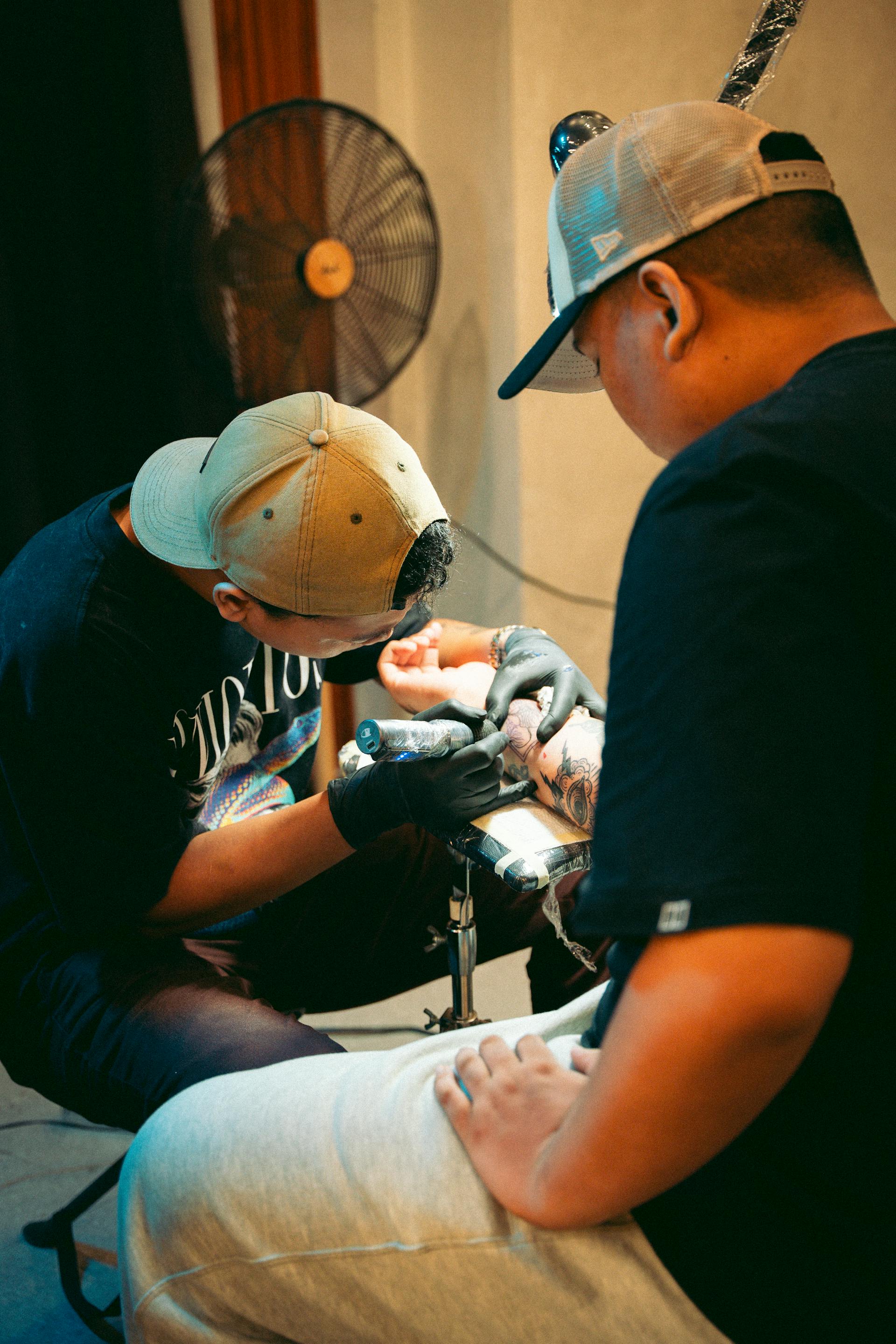
Tattoo studios tend to be the opposite. Self-expression is the culture, not the exception. Tattoo Artists often have visible ink, personal styles, and personalities that show up fully in their work environment without any friction. That sense of being able to show up authentically matters more than most people give it credit for. And it contributes to a very different day-to-day experience than what a corporate environment typically offers.
5. Career Growth Happens in Very Different Ways
In a traditional nine-to-five, career advancement usually follows a path that someone else laid out. Titles, performance reviews, and promotion timelines are largely controlled by management. A Tattoo Artist's growth looks nothing like that. Growth in tattooing is driven by:
Building a loyal, repeat client base through consistent quality
Growing a recognizable presence on social media
Attending tattoo conventions to gain exposure and network
Earning referrals through word-of-mouth reputation
Developing a signature style that sets them apart in the industry
Some Tattoo Artists eventually open their own tattoo studios or take on the role of mentor to new talent entering the industry through tattoo apprenticeship. That kind of progression is self-directed, which means the pace and direction of growth is largely in the Tattoo Artist's own hands. An office worker often needs someone else's approval to move forward. A Tattoo Artist builds visibility and lets the work speak for itself.
6. Tattooing Often Feels More Personal Than Traditional Work
Here is something worth sitting with: according to Gallup, around 87% of employees worldwide feel either disengaged or actively disconnected from their work. That is a staggering number, and it points to something that a lot of people in traditional careers quietly experience. It’s the feeling that the work they spend most of their waking hours doing does not actually mean much to anyone, including themselves.
Tattoo Artists rarely deal with that problem. The work is personal almost by definition. Clients come in carrying grief, recovery stories, family memories, identity milestones, and moments they want to hold onto permanently. Tattoo Artists witness emotional reactions on a regular basis That direct human connection is something that most careers cannot offer in the same way.
Where Dedication Behind the Craft Meets the Client in the Chair
Reading through these comparisons, one thing becomes clear: tattooing is not a casual career choice. It takes commitment, continuous skill development, and a genuine investment in the people sitting across from you. At Ink Different Tattoos, that commitment shows up in every appointment. Here is what sets the experience apart:
Tattoo Artists who actually listen. Our team at Ink Different Tattoos takes time to understand your story, your vision, and what the tattoo means to you. Every piece is approached with care, not just technique.
A clean, safe, and professional environment. Hygiene and safety are non-negotiable. Ink Different follows strict protocols to keep the tattoo studio sterile and comfortable, so the only thing you need to focus on is the experience.
Mentorship woven into the culture. Ink Different Tattoos is also invested in developing the next generation of skilled Tattoo Artists through our Traditional Tattoo Apprenticeship.
Custom work that is built around you. No cookie-cutter designs that do not fit who you are. Ink Different Tattoos works with you to bring your unique vision to life.
When you understand the career behind the craft, you start to see what makes a great tattoo studio different. Ink Different Tattoos brings together skilled professionals who chose this path intentionally and show up for it every single day.
The Way People Define Career Success Is Changing, and So Is the Tattoo Experience
Traditional office careers still work well for a lot of people. There’s value in stability, structure, and predictable growth. But tattooing offers something genuinely different. It is a career built on creativity, human connection, self-direction, and work that leaves a visible, lasting mark on people's lives. More workers today are actively choosing paths that offer meaning and flexibility over ones that simply offer routine. And the tattoo industry is growing right alongside that shift.
As a client, seeing the full picture changes the way you experience sitting in that chair. You are not just getting ink on skin. You are working with someone who chose a demanding, personal, and deeply human career to be there with you. That deserves appreciation, and it also deserves a tattoo studio that takes it seriously.
If you have been thinking about your next tattoo, now is the time to move on it. Calendars at Ink Different Tattoos fill up fast, and the Tattoo Artists here are ready to start planning something meaningful with you. Reach out to Ink Different Tattoos today and begin the conversation; your next piece is waiting.
Frequently Asked Questions
Do Tattoo Artists make more money than people in traditional nine-to-five jobs?
It depends on experience, location, and clientele, but the earning potential in tattooing can significantly exceed what many traditional salaried roles offer. Top-earning Tattoo Artists in the U.S. bring in well over $106,858 annually, with no fixed cap on income growth.
Is tattooing considered a stable career or is the income too unpredictable?
Income in tattooing can be less predictable early on. But Tattoo Artists who build a strong client base and reputation tend to maintain consistent bookings over time.
How does someone actually start a career as a Tattoo Artist?
Most Tattoo Artists begin through a tattoo apprenticeship, where they train hands-on under experienced professionals before working on clients independently. This path builds both technical skill and the industry knowledge needed to run a sustainable tattoo career.
Why do some clients feel a stronger connection to their Tattoo Artist than to other service providers?
Tattooing is one of the few services that involves something deeply personal: the story, the meaning, and the physical experience of sitting through a session. That combination of vulnerability and trust tends to create a lasting bond that most transactional service experiences simply do not produce.