How to Choose Between Color and Black and Grey Tattoos
You are standing at a crossroads with a design in your head, and one question keeps looping: should this tattoo live in bold color, or in deep, moody black and grey? Maybe you are the client wrestling with the choice. Or maybe you are the aspiring Tattoo Artist who feels that creative fire burning but has no clear path to learn the craft the right way.
Choosing between color and black and grey tattoos is the process of matching a design's subject, meaning, and skin placement to the medium that will carry it best over a lifetime. At Ink Different Tattoos, we have spent 15 years helping aspiring artists understand decisions exactly like this one.
Key Takeaways
Color tattoos: Best for bright, high-contrast subjects like florals, traditional work, and portraits that depend on hue to communicate their meaning.
Black and grey tattoos: Best for realism, portraits, shading, and designs that age gracefully and work across all skin tones.
The deciding factors: Subject matter, skin tone, placement, longevity, and the mood you want the piece to carry over decades.
Longevity: Black and grey generally holds its form longer, while color may need touch-ups over 5–10 years or more.
For artists: Mastering both styles makes you versatile, hireable, and future-proof in a competitive tattoo studio market.
What is the difference between color and black and grey tattoos?
Color tattoos use a full spectrum of pigments to create bright, saturated imagery, while black and grey tattoos rely only on black ink diluted with water to produce a range of tones from deep black to soft grey.
Think of it like two different brushes dipped in two different buckets. One bucket is a rainbow, the other is a single, powerful color stretched across endless shades. Both can tell a story, but they tell it in completely different dialects.
Color work leans on contrast and vividness to grab attention. Black and grey leans on depth, shadow, and texture to pull you in slowly. Neither is better. They simply serve different visions, and knowing which one to reach for is the foundation of good tattoo decision-making.
What are color tattoos best for?
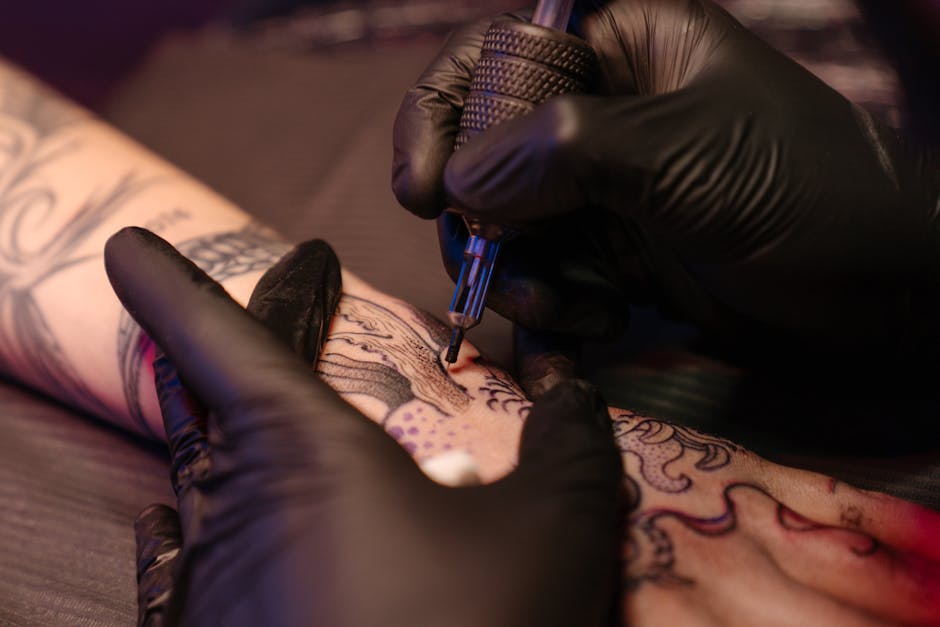
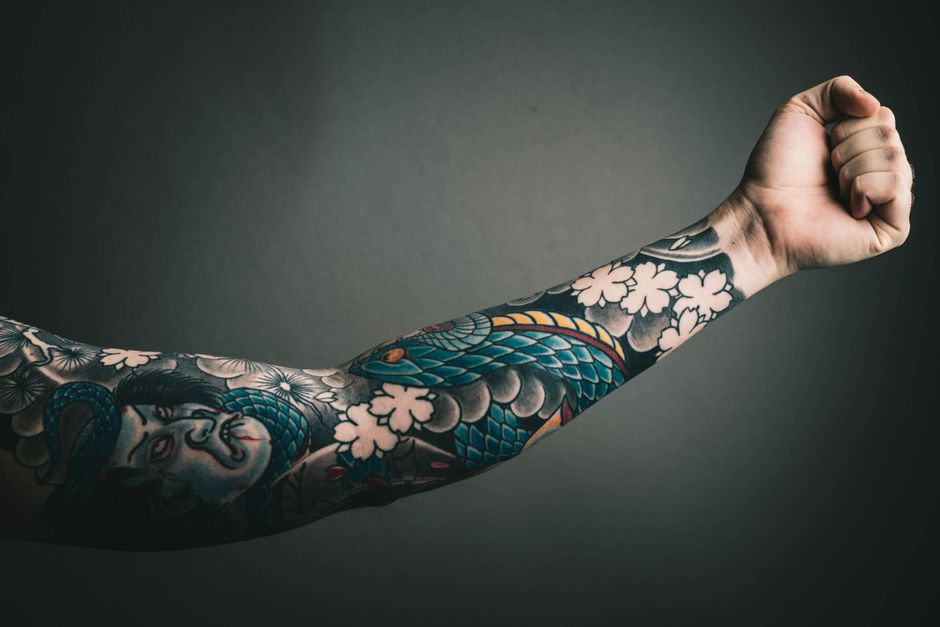
Color tattoos shine when a design depends on hue to communicate its meaning, such as floral pieces, traditional and neo-traditional work, watercolor styles, and portraits where skin tone or clothing color matters.
If the subject in your head glows, color is usually the move. A sunset, a koi fish, a bouquet of roses, a cartoon character: these pieces lose their soul in grayscale. The color is the point.
Color also carries emotion in an immediate, loud way. Reds feel urgent, blues feel calm, yellows feel alive. When you want a tattoo to shout rather than whisper, color is your voice.
Pro Tip: Color often reads best on fair to medium skin tones where pigments show their truest value. A skilled Tattoo Artist adjusts palette and saturation to work beautifully with any skin, which is exactly the kind of judgment you build through hands-on training. Learning to adapt color theory to diverse skin tones is one of the foundational skills in professional tattooing.
What are black and grey tattoos best for?
Black and grey tattoos excel at realism, portraits, religious and fine-line imagery, and any design built on shading, depth, and dramatic contrast rather than bright color.
Black and grey is the language of shadow. It is how artists capture the folds of fabric, the glint in an eye, the weathered lines of an old face. When you want a piece to feel timeless and cinematic, grayscale delivers.
It also plays well across every skin tone, because tone and contrast translate more universally than specific hues. That versatility is one reason black and grey has such deep roots, from Chicano fine-line work to modern photorealism.
If you are an aspiring artist, know that mastering shading in black and grey is one of the hardest and most rewarding skills you will build. It separates hobbyists from professionals, and it is a core focus of real mentorship. Understanding the anatomy of shadow and how ink settles into skin at different depths takes structured practice and experienced guidance.
How do you choose between color and black and grey?
To choose between color and black and grey, weigh five factors: the subject matter, your skin tone, the placement on your body, how you want the piece to age, and the mood you want it to carry.
This is not a coin flip. It is a decision you can work through step by step, the same way we teach apprentices to think like professionals.
Step 1: Define the subject and its meaning
Ask what the tattoo is about. If the subject literally depends on color (a national flag, a sunset, a specific flower), color wins. If it is a portrait, a skull, or a moody scene, black and grey may serve it better.
Step 2: Consider your skin tone and placement
Think about where the piece lives and how your skin will display it. Areas with lots of sun exposure or thinner skin affect how both styles hold up. An experienced Tattoo Artist reads your skin like a map.
Step 3: Think about longevity and touch-ups
Decide how much maintenance you are willing to accept. Color can fade and may require touch-ups over the years, while black and grey often ages with more grace. Longevity matters.
Step 4: Match the mood
Picture the feeling you want when you look at the piece in ten years. Loud and energetic leans color. Quiet, dramatic, and timeless leans black and grey.
Step 5: Trust your Tattoo Artist's eye
Bring your idea to a trained professional and listen. A good artist has seen hundreds of these decisions play out and can steer you toward the choice that will still make you proud decades from now. That expert eye is not born overnight: it is built through structured training.
How do color and black and grey tattoos age on your skin?
Black and grey tattoos generally age more gracefully because they rely on contrast that holds its shape, while color tattoos can fade or shift over time and may need periodic touch-ups to stay crisp.
Every tattoo lives on a living, growing surface. Sun, time, and skin changes all play a role. According to the American Academy of Dermatology tattoo care guidelines, protecting healed tattoos from sun exposure is one of the most effective ways to preserve their appearance long term.
That is why aftercare education is part of professional training. Understanding how pigment settles, how skin heals, and how to meet safety standards like the OSHA bloodborne pathogen standards is non-negotiable for anyone serious about this craft.
Why should a Tattoo Artist learn both styles?
A Tattoo Artist who masters both color and black and grey is more versatile, more hireable, and better equipped to serve any client who walks through the studio door.
Here is the truth that separates the pros from the dabblers: clients do not come to you with a single style. One day it is a photorealistic black and grey portrait, the next it is a bright neo-traditional sleeve. If you can only do one, you turn away half your income.
The Bureau of Labor Statistics on craft and fine artists notes that craft and fine artists who diversify their skills tend to find more consistent work. In tattooing, that versatility is your competitive edge, and it is also your protection against an AI-saturated creative world. Why tattoo artists are still essential precisely because of human judgment: a machine cannot read a client's skin, interpret their story, and make the call between color and grayscale with intuition and care.
Before you can master these decisions, though, you need the right foundation. Many beginners rush ahead and skip the fundamentals, which is one of the mistakes aspiring tattoo apprentices should avoid. Building both styles from the ground up through structured, hands-on mentorship is how you become the kind of artist who can own a room and fill a book.
How can you learn these styles the right way?
The most reliable way to learn both color and black and grey is through a structured, hands-on tattoo apprenticeship with live, in-person mentorship from experienced professional artists.
You cannot build this craft from a YouTube rabbit hole. You build it by planting a seed in real training and tending it under the eye of a Mentor who has done the work. That is where Become A Tattoo Artist, the Nationwide Tattoo Apprenticeship Program by Ink Different Tattoos, comes in. We are the college alternative for people who are done wasting time in dead-end jobs and ready to turn creative potential into a real career.
What You Can Expect from our Traditional Tattoo Apprenticeship
Our Traditional Tattoo Apprenticeship runs 18 to 24 months through a proven four-phase structure. You train hands-on in professional tattoo studios doing real work. No prior art experience is required: we teach you from the ground up, including how to think through choices like color versus black and grey with client confidence.
Phase-based structure: Progressive training that builds drawing, machine handling, and shading skills in both color and black and grey.
Beginner-friendly: Built for people starting from scratch, not just experienced artists with prior portfolios.
Real studio finish: Start remote, finish in working Tattoo Shops under mentor supervision with real clients.
Licensing support: Job-ready skills and guidance toward your license upon completion in your state.
A Career That Comes With Confidence
When you finish, you walk out with job-ready skills, licensing support, and a guaranteed job offer at one of our tattoo studios, not just a certificate on a wall. Understanding the legal path matters too, whether that is learning how to get your tattoo license in Texas or how long a tattoo license takes in Colorado. This is an AI-proof craft built on human skill and trust.
Mentorship That Pushes Your Brand and Skills Further
Ready to go deeper? Our one-year, in-person Master Mentorship puts you alongside celebrity and award-winning Mentors like Al Fliction, Liz Cook, Kyle Dunbar, Boneface, and Jordi Pla. It is ideal for mastering a specific style (color realism or black and grey, for example), growing your career, and building your own studio brand.
Making Tattoo Training Accessible for Everyone
Ink Different operates nationwide, with the Traditional Tattoo Apprenticeship available in 60+ locations, including Spanish-speaking locations near Denver, near Orange County, in NYC, in Miami, in San Antonio, and in San Diego. Our Good Humans culture means you join a supportive, family-like community from day one.
Ready to Become a Tattoo Artist?
Choosing between color and black and grey is a small decision compared to the big one in front of you: whether to keep daydreaming or finally pick up the tattoo machine and build a life around the work you love.
Seats in our tattoo apprenticeship are limited.
Ready to become a Tattoo Artist? Apply now to Ink Different's Traditional Tattoo Apprenticeship and start building an AI-proof career with licensing support along the way. You can also learn about platforms to build your artist brand and fill out our quick questionnaire to get personalized support and find out if our Traditional Tattoo Apprenticeship is right for you.
Frequently Asked Questions
Is color or black and grey better for a first tattoo?
Neither is universally better. Black and grey is often forgiving and ages gracefully, while color suits designs that depend on hue. Your subject matter should guide the choice.
Do color tattoos fade faster than black and grey?
Generally yes. Color pigments fade or shift over time and may need touch-ups, while black and grey holds its contrast longer. Sun protection extends the life of both significantly.
Do I need art experience to learn both tattoo styles?
No. Ink Different's Traditional Tattoo Apprenticeship is built for beginners and teaches drawing, shading, and color fundamentals from the ground up over 18 to 24 months.
How long does the Traditional Tattoo Apprenticeship take?
The Traditional Tattoo Apprenticeship takes 18 to 24 months through a 4-Phase structure. You start remote to build foundations, then finish with hands-on training in professional Tattoo Studios.
What makes Ink Different different from other training options?
Ink Different offers 15 years of experience, live in-person mentorship, award-winning Mentors, licensing support, and a Good Humans community. It is a college alternative for serious aspiring Tattoo Artists.
Can a Tattoo Artist specialize in just one style?
You can, but learning both color and black and grey makes you far more versatile and hireable. Our Master Mentorship helps artists master a chosen style while staying well-rounded.