How to Sleep With a New Tattoo
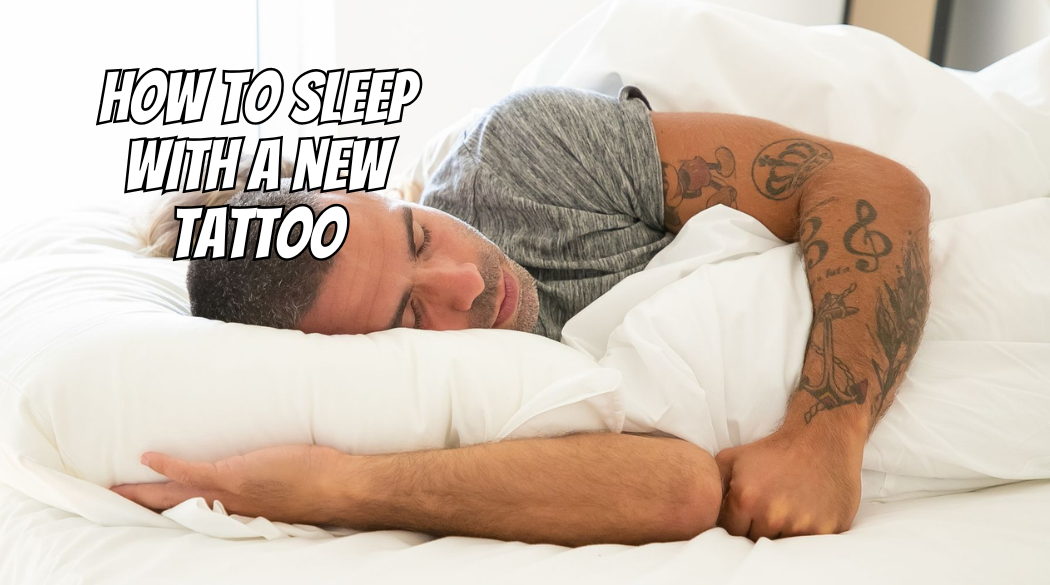
To sleep with a new tattoo, keep the tattooed area facing up and off the mattress when you can. Sleep on clean sheets and wear loose, breathable clothing. Follow your Tattoo Artist’s instructions on whether to keep it covered overnight. Take extra care for the first couple of weeks, while the surface of the skin heals.
Mayo Clinic notes that most tattoos take about two weeks to heal, and that’s the window when nighttime care matters most. Below, we cover the best positions by placement, how to prep your bed and the mistakes to avoid. Always follow your Tattoo Artist’s aftercare instructions first.
Key Takeaways
First nights: Follow your Tattoo Artist’s instructions on any wrap or second-skin bandage.
Position: Keep the tattoo facing up and away from the mattress whenever possible.
Protection: Clean sheets, loose clothing and a thin layer of the right aftercare product help prevent sticking and irritation.
Timeline: Take extra care for about the first two weeks, while the surface heals.
Don’t panic: If you roll onto it, gently clean it and continue your normal aftercare.
Why does sleep matter for a new tattoo?
A new tattoo is an open wound, and you can’t control how you move while you sleep. That makes nighttime a vulnerable time for friction and irritation.
While you sleep, you might roll onto the tattoo, press it into a pillow or sweat under heavy blankets. Any of these can irritate healing skin or cause it to stick to fabric. A little planning before bed helps your tattoo heal smoothly.
Pro Tip: Follow your Tattoo Artist’s specific aftercare instructions first. They know your tattoo, your skin and the bandage or product they used.
How long should you protect a fresh tattoo at night?
Take extra care at night for about the first two weeks, with the most care in the first few days, when the tattoo may still be weeping.
In the first nights, your tattoo may ooze clear fluid and a little ink, which can stain sheets or stick to fabric. That’s normal. The surface usually heals within a couple of weeks, though deeper healing takes longer. According to Healthline, the skin below a tattoo can take as long as six months to fully heal.
If your Tattoo Artist used a second-skin bandage, you may sleep with it on. Saniderm, for example, recommends leaving its first bandage on for between 8 and 24 hours, then applying a second one that can be worn for up to 6 days. Follow your Tattoo Artist’s timing for your specific tattoo.
Once flaking and peeling have stopped and your skin feels smooth again, you can usually go back to your normal sleep habits.
What is the best position to sleep in with a new tattoo?
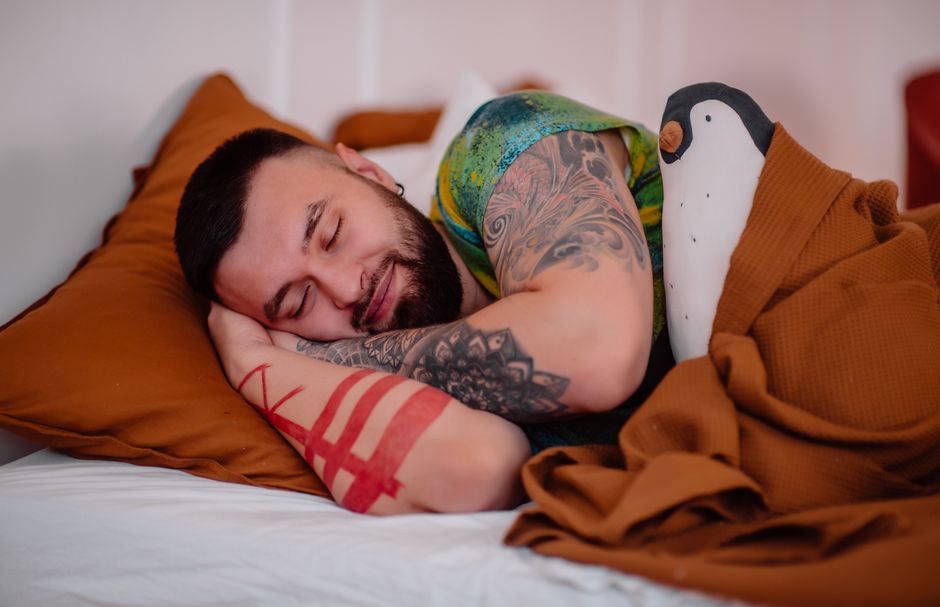
The best position keeps your new tattoo facing up and off the mattress, so nothing rubs or presses against it.
Your ideal position depends on where your tattoo is:
Back or shoulder: Sleep on your stomach or side, so the tattoo faces up.
Chest or stomach: Sleep on your back, with the area uncovered or lightly covered with loose fabric.
Arm: Rest the arm on top of the covers, slightly raised on a pillow.
Leg: Prop the leg on a pillow, so the tattoo doesn’t rub against the sheets.
If you move a lot in your sleep, line up a few pillows to help keep you from rolling onto the tattoo. It may feel awkward for a few nights, but it can make a real difference.
How do you prep your bed before sleeping with a new tattoo?
Clean the tattoo, apply the right product, put on clean sheets and loose clothing and set up pillows to keep the tattoo protected.
Follow these steps each night during early healing:
Wash gently. Clean the tattoo with lukewarm water and a mild, fragrance-free soap, then pat it dry with a clean paper towel.
Apply your aftercare product. Use a thin layer of the product your Tattoo Artist recommended, or apply a fresh second-skin bandage if that’s your method. The American Academy of Dermatology suggests a water-based lotion when tattooed skin feels dry.
Wear loose cotton. Choose soft, breathable clothing that won’t cling to the tattoo or trap heat.
Use clean sheets. Freshly washed bedding helps keep things clean. An old sheet or dark towel on top can catch any fluid or ink.
Set up your pillows. Arrange pillows to support the tattooed area and help keep you from rolling onto it.
Cleanliness matters. Professional tattoo studios follow strict hygiene practices, like the OSHA Bloodborne Pathogens Standard, and keeping things clean at home continues that care. Mayo Clinic notes that skin infections are possible after tattooing.
What sleep mistakes damage a healing tattoo?
The most common mistakes are sleeping directly on the tattoo, using dirty bedding, wearing tight clothing, overheating and pulling off flakes that stick to fabric.
Letting pets on the bed: Pet hair and dander can get on a fresh tattoo, so keep pets off the bed for the first nights if you can.
Skipping the evening wash: Going to bed with a day’s sweat and grime on a healing tattoo isn’t ideal.
Using too much ointment: A thick layer can trap moisture. Keep it thin.
Pulling flakes or scabs: If a flake sticks to your sheets, don’t pull. Let it come off naturally, or dampen the fabric gently to release it.
Overheating: Heavy blankets and a warm room can cause sweating, which can irritate healing skin.
If you notice spreading redness, increasing pain or swelling, pus or fever, contact a healthcare provider.
Why does good aftercare start with a great Tattoo Artist?
A skilled Tattoo Artist doesn’t just create clean work. They also choose the right bandage or aftercare approach and explain exactly how to care for your tattoo through the first nights.
The healing experience you have at home often reflects how well your Tattoo Artist was trained, from technique to the aftercare instructions they give you.
If you’re the friend everyone asks for tattoo advice, you might be curious about the career side. Tattooing is a hands-on craft built on trust and skill, which is why Tattoo Artists are still essential. According to ZipRecruiter, the average Tattoo Artist in the United States earns $106,858 a year as of November 2026.

What you can expect from our Traditional Tattoo Apprenticeship
Ink Different’s Traditional Tattoo Apprenticeship runs 18 to 24 months across four phases. It takes you from beginner to job-ready, with hands-on mentorship and licensing support.
For 15 years, Ink Different has trained professional Tattoo Artists as a college alternative. No prior art experience is needed. You train in person with a Mentor at one of 60+ tattoo studios nationwide.
Phase 1, Art and Design Principles: Drawing, shading, digital design and building a portfolio.
Phase 2, Machine Mastery and Practice Tattooing: Hand-control exercises, machine operation, lining, shading and color packing.
Phase 3, Supervised Tattoos: Tattooing real skin under a Mentor’s direct supervision.
Phase 4, Junior Artist Externship: Building client relationships and refining your skills while you start earning.
Along the way, you learn the full craft, including the aftercare conversations that build client trust.
A career that comes with confidence and credentials
You’ll finish with job-ready skills, licensing support and a guaranteed job offer at one of Ink Different’s own tattoo studios. Interest-free payment plans help make training more accessible.
Mentorship that pushes your brand and skills further
Our one-year, in-person Master Mentorship lets you train alongside celebrity and award-winning Master Mentors, including Al Fliction, Liz Cook, Kyle Dunbar, Boneface, Jordi Pla and Marcel Oliveira. It’s built for mastering a specific style, growing your career and learning to run a tattoo business.
Making tattoo training accessible for everyone
We offer Spanish-speaking locations in Denver, Orange County, NYC, Miami, San Antonio and San Diego. Our “Good Humans” culture means you join a supportive, family-like community. Each Mentor takes just two tattoo apprentices per tattoo studio, so seats fill up quickly.

Ready to become a Tattoo Artist?
Knowing how to sleep with a new tattoo is a small habit that protects your ink. If learning about aftercare has you curious about the craft itself, there’s a clear path in.
Ready to become a Tattoo Artist? Apply now to Ink Different’s Traditional Tattoo Apprenticeship and start building an AI-proof career with licensing support along the way.
Frequently Asked Questions
How soon after getting a tattoo can I sleep on it?
Try not to sleep directly on it for about the first two weeks. Once the surface stops peeling and feels smooth, you can usually return to normal sleep positions.
Should I wrap my new tattoo before bed?
Follow your Tattoo Artist’s instructions. Some use a breathable second-skin bandage for the first days, while others recommend leaving the tattoo uncovered with a thin layer of aftercare product.
What should I do if I accidentally slept on my new tattoo?
Don’t panic. Gently wash it with mild soap and lukewarm water, pat it dry and continue your aftercare routine.
What if my tattoo sticks to the sheets?
Don’t pull. Gently wet the fabric with clean, lukewarm water until it releases, then clean and care for the tattoo as usual.
Do I need art experience to join a tattoo apprenticeship?
No. Ink Different’s Traditional Tattoo Apprenticeship starts with art and design principles, so beginners are welcome.
How long is the Traditional Tattoo Apprenticeship?
It runs 18 to 24 months across four phases, with in-person training at a working tattoo studio.