How to Take Care of a New Tattoo: Day-by-Day Aftercare
Tattoo aftercare is the day-by-day routine of cleaning, moisturizing and protecting a new tattoo so it heals cleanly and keeps its color and detail. You’re far from alone in needing it. About 32% of Americans have a tattoo, according to Pew Research Center.
Below is a simple, day-by-day guide to taking care of a new tattoo, plus what to avoid and the warning signs that mean it’s time to call a doctor. Always follow your own Tattoo Artist’s instructions first, since they know exactly what was used on your skin.
Key Takeaways
Timeline: Most tattoos take about two weeks to heal on the surface, while deeper layers keep repairing for months.
First 24 hours: Leave the covering on as your Tattoo Artist instructs, then wash gently with fragrance-free soap and lukewarm water.
Daily routine: Wash two to three times a day, pat dry and apply a thin layer of unscented moisturizer.
Avoid: Sun, soaking, scratching and picking scabs, which can all damage color and linework.
Warning signs: Spreading redness, worsening pain, pus or fever mean it’s time to see a doctor.
What is tattoo aftercare?
Tattoo aftercare is the daily routine of cleaning, moisturizing and protecting a new tattoo so the skin heals properly and the ink stays sharp.
A new tattoo is an open wound. The needles of a tattoo machine deposit ink into the dermis, the second layer of skin, and your body immediately starts repairing it. Your job is to support that process, not fight it.
The American Academy of Dermatology recommends using a water-based lotion when tattooed skin feels dry and protecting your tattoo from the sun. Clean skin, light moisture and consistency are the foundation of a good heal.
Why does proper aftercare matter so much?
Proper aftercare helps prevent infection, preserves linework and color, and protects how your tattoo looks for decades.
When scabs get picked or the skin dries out, ink can lift out with the scab. That leaves patchy spots and faded lines that may need a touch-up. Mayo Clinic warns that picking at scabs increases the risk of infection and can damage the design and cause scarring.
There’s a real health side too. Mayo Clinic notes that a skin infection is possible after getting a tattoo, sometimes due to contaminated ink or equipment that isn’t sterilized correctly. Professional tattoo studios follow strict hygiene rules aligned with the OSHA Bloodborne Pathogens Standard. Your at-home care continues that same discipline.
Pro Tip: Always follow the specific instructions your Tattoo Artist gives you. They know the exact products and techniques used on your skin and can tailor advice to your tattoo.
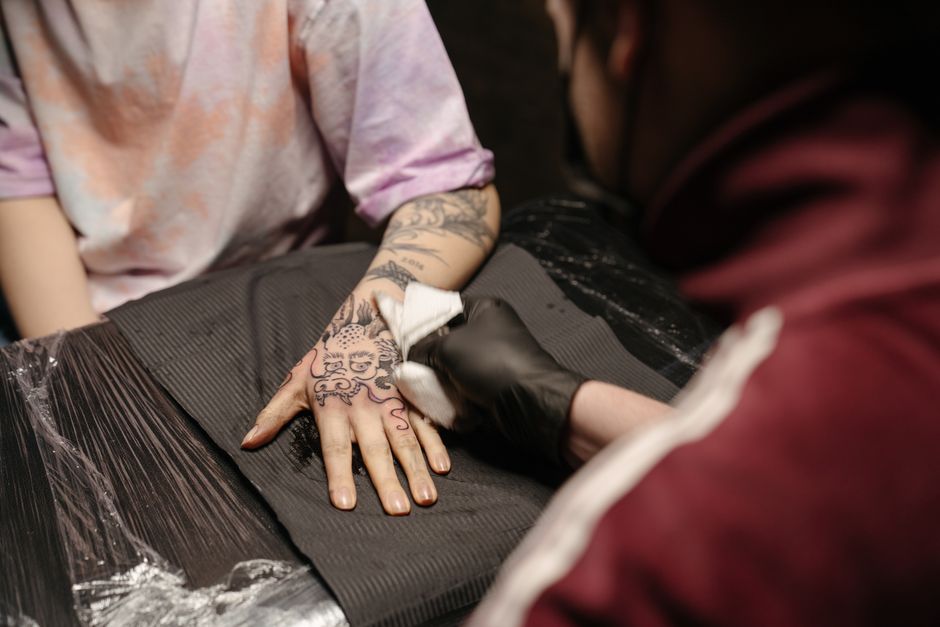
What does day-by-day tattoo aftercare look like?
Day-by-day tattoo aftercare moves from protecting a fresh wound to gentle washing and moisturizing, then to managing itching and flaking as the skin regenerates. Here’s what to expect and what to do at each stage.
Step 1: How should you care for your tattoo in the first 24 hours?
Leave the covering on for as long as your Tattoo Artist recommends. For plastic wrap or a standard bandage, that’s often a few hours. Adhesive second-skin bandages may stay on longer, so follow your Tattoo Artist’s timing. When you remove it, wash your hands first. Gently clean the tattoo with lukewarm water and fragrance-free soap, pat dry with a clean paper towel and apply a thin layer of the moisturizer your Tattoo Artist recommends.
Step 2: How do you care for your tattoo on days 2 through 3?
Your tattoo may feel warm, look slightly swollen and ooze a little plasma and ink. That’s normal. Wash it two to three times a day: clean hands, gentle wash, pat dry and a thin layer of unscented lotion. Don’t over-moisturize, because a thick layer can trap moisture and slow healing.
Step 3: How do you manage your tattoo on days 4 through 6?
Itching usually starts here, along with flaking or light scabbing. Don’t scratch or pick. Keep moisturizing lightly to ease tightness. The tattoo may look dull or cloudy as a fresh layer of skin forms over the ink.
Step 4: What happens during days 7 through 14 of tattoo healing?
Flaking peaks and then fades. Many tattoos go through a “milky” phase where colors look muted under a thin layer of new skin. Keep washing and moisturizing gently. By the end of week two, the surface is usually healed.
Step 5: How do you care for your tattoo in weeks 3 through 6 and beyond?
The surface may look settled, but deeper healing continues. Healthline notes that it can take as long as six months for the skin below a tattoo to truly heal. Keep the area moisturized and protected from the sun. Once fully healed, daily sunscreen is your tattoo’s best friend.
What should you avoid while your tattoo heals?
While your tattoo heals, avoid sun, soaking, scratching, picking, tight clothing and heavy sweating. Each can distort ink or raise your risk of infection.
Sun: UV rays can fade fresh ink and burn healing skin. Keep it covered or in the shade.
Soaking: Skip pools, baths, hot tubs and oceans until your tattoo is fully healed. Quick showers are fine.
Scratching and picking: Pulling off scabs can pull ink with them, leaving gaps in your lines.
Tight clothing: Friction irritates the area and can pull at forming scabs.
Heavy workouts: Lots of sweat and stretching over a fresh tattoo can slow healing.
Think of these two weeks as a short investment that pays off for decades. A little patience now protects the detail your Tattoo Artist worked hard to create.
How do you know if something is wrong with your tattoo?
Warning signs include spreading redness, pain that gets worse after the first few days, pus, a foul smell, fever or a rash. Any of these means it’s time to see a doctor.
Some redness, swelling and tenderness in the first few days are expected. What’s not expected is symptoms getting worse when they should be improving. Mayo Clinic describes infection signs as redness, swelling, pain and a pus-like drainage. If the area feels hot, looks angry or you develop a fever, contact a healthcare provider promptly.
Allergic reactions are also possible. According to Mayo Clinic, tattoo ink can cause an itchy rash at the tattoo site, even years later, and red ink tends to be more prone to allergic reactions than other colors. If a bumpy, itchy rash appears, stop using any new product and check in with a doctor.
Your Tattoo Artist can also tell you whether something looks like normal healing. But for signs of infection or an allergic reaction, a healthcare provider is the right call.
Why do great Tattoo Artists understand aftercare?
Great Tattoo Artists master aftercare because a tattoo is only finished when it heals well. Clients judge a Tattoo Artist by how the work looks weeks later, not just on day one.
The cleanest linework in the world means little if the client doesn’t know how to heal it. That’s why aftercare education is a core professional skill, not a throwaway handout. A skilled Tattoo Artist teaches each client the routine, answers questions before they come up and builds trust that turns first-timers into lifelong clients.
This is also where many beginners stumble, which is why aftercare comes up in our guide to the mistakes aspiring tattoo apprentices should avoid. The human judgment behind safe healing, hygiene and client care is part of why Tattoo Artists are still essential. It’s a craft built on hands, trust and knowledge.
How does Ink Different train you to protect every tattoo?
Ink Different Tattoos trains future Tattoo Artists to handle every stage of a tattoo, from the first line to the healed result. That training happens through in-person mentorship built on 15 years of experience.
If reading this made you curious about what goes into tattooing the right way, there’s a real path into the industry. It doesn’t require four years of college either. Tattoo apprenticeships are gaining ground as a solid alternative to college, building job-ready skills without the lecture halls and debt.
What can you expect from Ink Different's Traditional Tattoo Apprenticeship?
Ink Different’s Traditional Tattoo Apprenticeship runs 18 to 24 months through four structured phases. You train in person at one of 60+ tattoo studios nationwide, learning everything from machine handling and hygiene to teaching clients proper aftercare.
Beginner-friendly: No prior art experience is needed. We build your foundation from the ground up.
Personalized mentorship: In-person guidance from experienced Tattoo Artists.
Licensing support: We help you navigate your state’s requirements, from how to get your tattoo license in Texas to tattoo license requirements in California and how long it takes to get a tattoo license in Colorado.
Interest-free payment plans: Flexible payments make training more accessible.
What career outcomes can you expect from Ink Different?
You’ll finish with job-ready skills, licensing support and a guaranteed job offer at one of Ink Different’s own tattoo studios. You’ll also learn to build your presence. Our guide to platforms to help new and aspiring Tattoo Artists build their brand explores that further.
What advanced options does Ink Different offer for experienced artists?
Our one-year, in-person Master Mentorship lets you train alongside celebrity and award-winning Master Mentors. They include Al Fliction, Liz Cook, Kyle Dunbar, Boneface, Jordi Pla and Marcel Oliveira. It’s built for beginners and experienced Tattoo Artists who want to master a specific style, grow their career or own their own tattoo studio.
How does Ink Different make tattoo training accessible?
We offer Spanish-speaking locations in Denver, Orange County, NYC, Miami, San Antonio and San Diego. Wherever you train, our “Good Humans” culture means you join a supportive, family-like community. Each Mentor takes just two tattoo apprentices per tattoo studio, so seats fill up quickly.
Ready to Become a Tattoo Artist?
Knowing how to care for a new tattoo is a small glimpse into a craft built on skill, trust and human connection. If it sparked your curiosity, there’s a clear path to turning that interest into a career.
Ready to become a Tattoo Artist? Apply now to Ink Different’s Traditional Tattoo Apprenticeship and start building an AI-proof career with licensing support along the way.
Related reading: career change tattoo apprenticeship, tools every beginner tattoo artist should know, and start your tattoo apprenticeship this spring.
Frequently Asked Questions
How long does a new tattoo take to heal?
The surface of most tattoos heals in about two weeks. Deeper layers of skin can keep repairing for up to six months. Consistent aftercare supports the whole process.
How often should I wash a new tattoo?
Wash a new tattoo two to three times a day with lukewarm water and fragrance-free soap. Pat it dry gently and apply a thin layer of unscented moisturizer afterward.
Can I go in the sun with a new tattoo?
Avoid direct sun while your tattoo heals, since UV rays can fade ink and burn healing skin. Once it’s fully healed, apply sunscreen to keep colors bold.
Why is my new tattoo itching and flaking?
Itching and flaking around days four to seven are normal signs of healing. Don’t scratch or pick, because that can pull out ink and damage your lines.
How do I know if my tattoo is infected?
Watch for spreading redness, worsening pain, swelling, pus, a foul smell or fever. If you notice any of these, contact a healthcare provider promptly rather than waiting it out.
Do I need prior experience to become a Tattoo Artist with Ink Different?
No. Ink Different’s Traditional Tattoo Apprenticeship is built for beginners. It teaches foundational skills, hygiene and client aftercare from day one.