How to Tell If Your Tattoo Is Healing Properly
Redness, oozing, scabbing, peeling: a healing tattoo goes through a lot before it settles into the crisp piece you actually wanted. Proper tattoo healing is the natural repair process your skin goes through after being tattooed, moving through predictable stages before settling into clean, healed art.
Most of that process is completely normal, but knowing which signals are routine and which ones mean something's wrong is a skill every serious ink lover, and every future professional, needs. It's one of the first things we teach at Ink Different Tattoos.
Key Takeaways
Timeline: The surface heals in about 2 to 3 weeks; deeper skin can take up to 3 to 6 months.
Good signs: Mild redness, light scabbing, itching, and peeling are all normal parts of healing.
Warning signs: Spreading redness, pus, fever, or worsening pain can signal infection and need medical care.
Aftercare rule: Keep it clean, moisturized, and out of direct sun to protect your investment.
Pro insight: Understanding healing is core knowledge for anyone training to become a tattoo artist.
What does normal tattoo healing look like?
Normal tattoo healing looks like mild redness, slight swelling, and clear or lightly tinted fluid in the first few days, followed by light scabbing, itching, and peeling as your skin rebuilds itself.
Think of your fresh tattoo as an open wound, because that is exactly what it is. The needle pierced thousands of tiny channels into your skin, and your body immediately kicks into repair mode. That means some discomfort and mess in the early days is not just normal; it is a good sign your body is doing its job.
The American Academy of Dermatology outlines that fresh tattoos need protection and moisture to heal well. You can review their detailed guidance in theAmerican Academy of Dermatology tattoo care guidelines. If you follow the basics, most tattoos heal cleanly without drama.
What are the stages of tattoo healing?
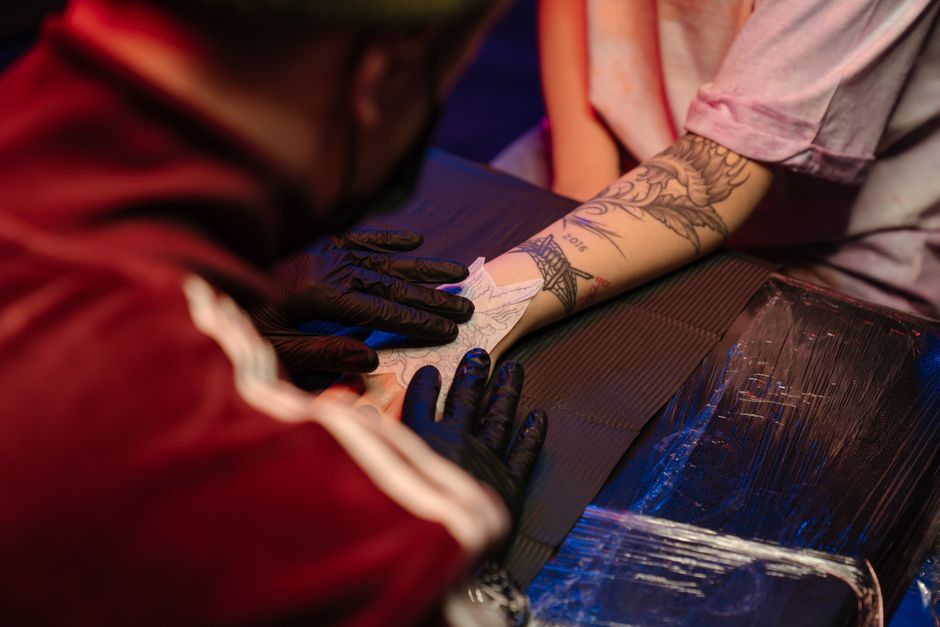
Tattoo healing moves through four stages: oozing and swelling, itching and scabbing, peeling and flaking, and finally full settling as deeper skin layers rebuild.
Each stage feels different, and knowing what to expect keeps you from panicking when your skin does something new. Here is how the timeline usually plays out:
Days 1 to 3: Redness, warmth, mild swelling, and weeping of plasma and excess ink.
Days 4 to 6: The surface tightens, light scabs form, and the itch begins.
Days 7 to 14: Scabs and dry skin flake off, revealing a slightly dull layer underneath.
Weeks 2 to 4+: The surface looks healed, but the deeper dermis is still repairing.
Every body heals at its own pace, so do not compare your timeline to your friend's. Placement, size, and your own skin all play a role.
How can you tell if your tattoo is healing properly?
Your tattoo is healing properly if redness fades over days, scabs stay thin and flake off on their own, itching is mild, and the colors look progressively cleaner rather than blurry.
The green lights you want to see are simple. Watch for these positive signals as the days go by:
Fading redness: Any redness should shrink and calm down, not grow.
Thin, natural scabs: Light scabbing that lifts on its own is a healthy sign.
Mild itch: An annoying but manageable itch means new skin is forming.
Sharp lines returning: Once the flaking finishes, your lines should look crisp.
Pro Tip:Never pick or scratch a peeling tattoo. Pulling a scab early can drag ink out with it and leave patchy spots that need a touch-up.
What are the warning signs of a tattoo not healing right?
Warning signs include redness that spreads instead of fading, thick yellow or green pus, foul odor, worsening pain after day three, hard swelling, or fever, all of which can point to infection.
Your body is loud when something is wrong, so listen to it. A little discomfort is expected, but pain that intensifies after the first couple of days is not. Watch closely for the red flags below:
Spreading redness or red streaks moving away from the tattoo.
Pus, oozing that smells bad, or fluid that keeps coming days later.
Fever, chills, or swollen lymph nodes.
Raised, itchy welts that could signal an allergic reaction to the ink.
Clean equipment and proper sanitation prevent most infections in the first place. Professional studios follow strict standards like the OSHA bloodborne pathogen standards to keep clients safe. If you ever suspect an infection, contact a doctor promptly. When in doubt, get it checked out.

How do you care for a healing tattoo step by step?
Caring for a healing tattoo means washing gently, moisturizing lightly, avoiding sun and soaking, and leaving scabs alone until your skin fully repairs itself.
Follow this simple routine to give your ink the best chance to heal clean and bold:
Step 1 - Leave the wrap on: Keep the initial bandage or second-skin film on for the time your tattoo artist recommends.
Step 2 - Wash gently: Use clean hands and fragrance-free soap two to three times a day. Never scrub.
Step 3 - Pat dry: Use a clean paper towel and pat; do not rub.
Step 4 - Moisturize lightly: Apply a thin layer of aftercare ointment or unscented lotion. More is not better.
Step 5 - Protect from sun and water: No pools, baths, or direct sunlight while healing.
Step 6 - Resist temptation: Let scabs and flakes fall off naturally. Hands off.
Step 7 - Watch and wait: Monitor for warning signs and give the deeper layers weeks to settle.
Consistency is everything here. A tattoo is a seed you planted in your skin, and this daily routine is the water and sunlight that helps it grow into something you are proud of.
How long does a tattoo take to fully heal?
A tattoo's surface typically heals in 2 to 3 weeks, but the deeper layers of skin can take 3 to 6 months to fully repair beneath the surface.
The outer skin recovers first, which is why your tattoo can look healed while it is still doing invisible work underneath. During those deeper months, keep applying sunscreen once it is safe to do so, since UV rays are the biggest long-term enemy of clean, saturated ink.
Larger, more detailed pieces and areas with more movement (like joints) tend to take longer. Patience protects your investment. Rushing back into the sun, gym, or pool too early is one of the fastest ways to sabotage a great tattoo.
Why does healing knowledge matter for aspiring tattoo artists?
Healing knowledge matters because every professional tattoo artist must guide clients through aftercare, recognize complications, and design tattoos that hold up beautifully as skin repairs over time.
Here is the truth most people never realize until they get behind the machine: a tattoo artist's job does not end when the needle stops. Your reputation lives or dies on how your work heals on someone else's skin. That is why understanding aftercare, sanitation, and skin science is not optional; it is foundational.
If you have ever felt stuck in a dead-end job while your creative potential quietly withers, this knowledge is your first glimpse into a real, hands-on career. The Bureau of Labor Statistics tracks craft and fine artists as a legitimate profession, and you can explore that outlook through the Bureau of Labor Statistics on craft and fine artists. Tattooing is also one of the few careers that cannot be automated away, as we explain in our guide on why tattoo artists are still essential.
Get serious about your craft with Become A Tattoo Artist
Ink Different Tattoos offers a Traditional Tattoo Apprenticeship that trains beginners into job-ready professionals, teaching everything from skin science and aftercare to machine handling and licensing support.
For over 15 years (founded in 2011), we have built a Nationwide Tattoo Apprenticeship Program that serves as a real college alternative for people who want to build something with their hands. You are the hero of this story. We are simply the wise guide who has walked thousands of aspiring artists down this path.
What you can expect from our Traditional Tattoo Apprenticeship
Our Traditional Tattoo Apprenticeship runs 18 to 24 months across a proven 4-Phase structure. You get personalized, hands-on training; you start remotely and finish in real tattoo studios, and you need zero prior experience to begin. If you can commit, we can teach.
A career that comes with confidence
By the end, you walk away with job-ready skills and licensing support, ready to work as a professional in an AI-proof career. Curious how tattoo training stacks up against a four-year degree? See our resource on tattoo apprenticeships as a college alternative.
Mentorship that pushes your brand and skills further
For those ready to go deeper, our Master Mentorship is a one-year in-person program led by celebrity and award-winning mentors including Al Fliction, Liz Cook, Kyle Dunbar, Boneface, and Jordi Pla. It is built for mastering a specific style, exploding your career, and owning your own business.
Making tattoo training accessible for everyone
We offer Spanish-speaking locations in Denver, Orange County, NYC, Miami, San Antonio, and San Diego, so language never has to stand between you and your calling. Wherever you are, there may be a path near you.
Seats in any serious mentorship are limited by nature, because real, live, in-person training cannot be mass-produced. If you are tired of watching your talent go to waste, the time to plant this seed is now. Learn more about timing your leap in our guide on career change tattoo apprenticeship.
Ready to take the first step?
Knowing how to tell if your tattoo is healing properly is more than aftercare trivia. It is the first sign of the eye, patience, and respect for skin that separates hobbyists from professionals. You have the instinct. Now you need the guidance to turn it into a career.
Ready to become a tattoo artist? Apply now to Ink Different's Traditional Tattoo Apprenticeship and start building an AI-proof career with licensing support along the way. Not sure yet? Fill out our quick questionnaire to get personalized support and find out if our tattoo apprenticeship program is right for you.
Frequently Asked Questions
How do I know if my tattoo is healing properly?
Your tattoo is healing properly if redness fades over days, scabs stay thin and flake off naturally, itching is mild, and lines look crisp once flaking finishes.
Is it normal for a tattoo to peel and itch?
Yes. Light peeling, flaking, and mild itching are completely normal between days 4 and 14 as your skin rebuilds its surface layer during healing.
How long does a tattoo take to fully heal?
The surface heals in 2 to 3 weeks, but deeper skin layers continue repairing for 3 to 6 months beneath the surface.
What are the signs of an infected tattoo?
Spreading redness, pus, foul odor, worsening pain after day three, hard swelling, or fever all signal possible infection. See a doctor promptly.
Do I need art experience to join a tattoo apprenticeship?
No. Ink Different's Traditional Tattoo Apprenticeship is built for beginners with zero prior experience and teaches fundamentals from day one.
Why should a tattoo artist understand healing?
A professional tattoo artist guides client aftercare, spots complications early, and designs work that stays clean as skin heals and rebuilds.