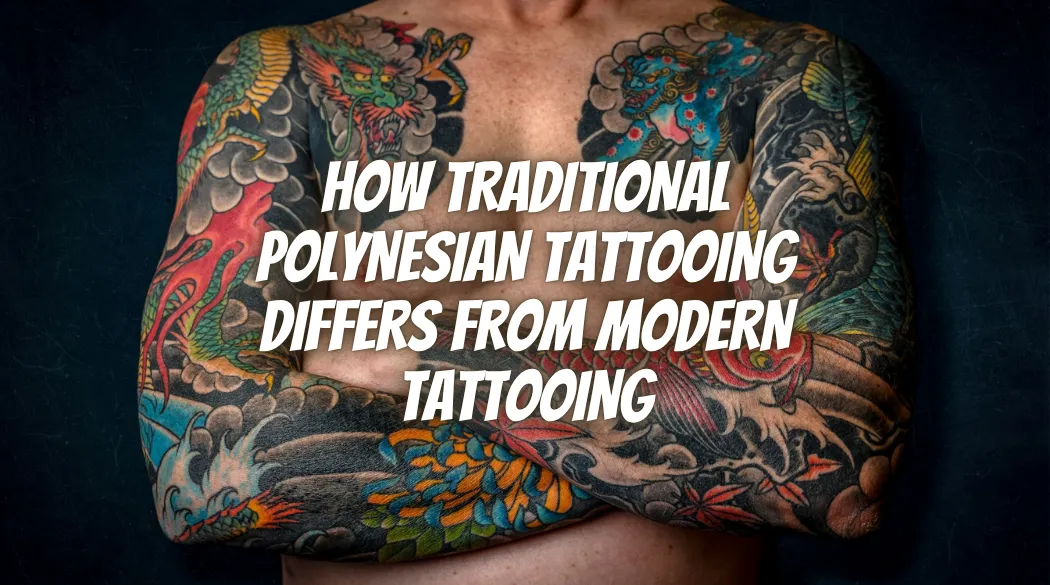
How Traditional Polynesian Tattooing Differs From Modern Tattooing
Maybe you've felt it: that pull toward a craft with real roots, something older and deeper than a design pulled off a screen. If you're stuck in a job that drains you while your creative potential sits untouched, learning where tattooing actually comes from is a good place to start. At Ink Different Tattoos, we've spent 15 years teaching aspiring Tattoo Artists to respect the past while building a future.
Traditional Polynesian tattooing is an ancestral hand-tapping practice, called tatau, where designs carrying deep personal and cultural meaning are permanently marked into the skin using bone and wood tools by a master tufuga, a sacred tradition that has influenced modern tattooing worldwide.
Key Takeaways
Method: Traditional tatau uses hand-tapping tools; modern tattooing uses electric Tattoo Machines.
Meaning: Polynesian tatau designs are earned identity symbols, not freely chosen decoration.
Origin: The word "tattoo" derives from Polynesian "tatau," documented by explorers in the 18th century.
Training: Both traditions demand years of hands-on mentorship. Live apprenticeship remains irreplaceable.
Career: Ink Different's program builds an AI-proof career with licensing support in 18 to 24 months.
What Is Traditional Polynesian Tattooing?
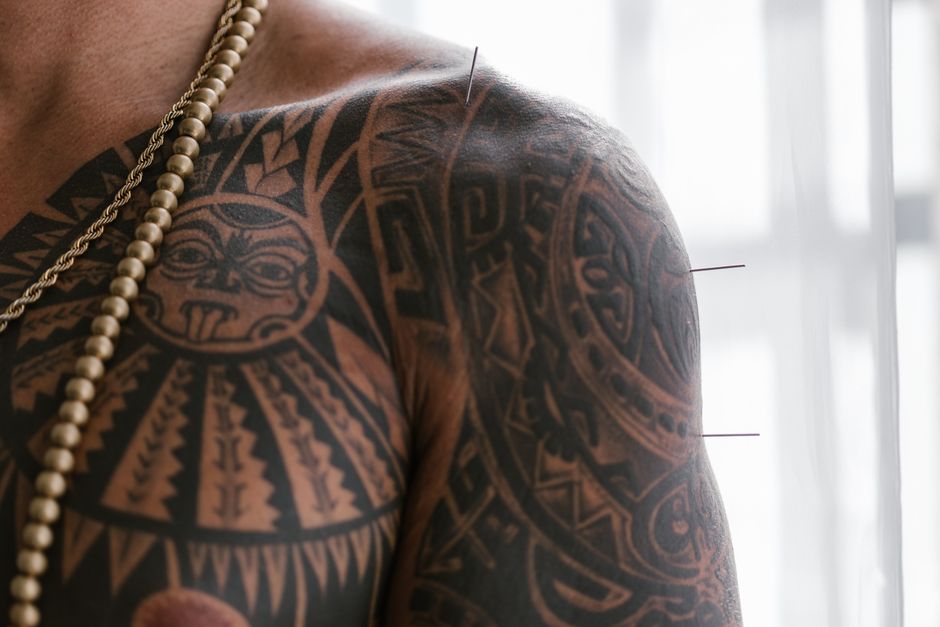
Traditional Polynesian tattooing, known as tatau, is a sacred hand-tapped practice from islands like Samoa, Tonga, and Tahiti, where geometric symbols mark a person's identity, family, and community status.
This is not body decoration in the way we often think of it today. A tatau tells a story that others in the community can actually read: your ancestry, your rank, your journey through life. Each line and shape is a word in a visual language passed down for thousands of years.
The practice predates the Tattoo Machine by centuries. According to the Bureau of Labor Statistics on craft and fine artists, human-driven creative work remains essential, and few crafts prove that better than a tradition kept alive by hand for generations.
How Does Traditional Polynesian Tattooing Differ From Modern Tattooing?
Traditional Polynesian tattooing differs from modern tattooing in three critical ways: it uses hand-tapping instead of electric machines, carries earned cultural meaning instead of personal choice, and follows a communal ritual instead of a private studio appointment.
Modern tattooing gives you almost limitless freedom. You can walk into a Tattoo Studio and get any design you imagine, in full color, in a few hours. That freedom is a gift of the craft's evolution.
Traditional tatau works differently. The design is not fully yours to choose. It reflects who you are, where you come from, and what you've earned. Here's how the two compare:
Tools: Bone combs and wooden mallets versus the modern electric Tattoo Machine.
Purpose: Identity, lineage, and status versus personal expression and aesthetics.
Setting: Communal ceremony versus a private appointment in a Tattoo Shop.
Speed: Hours or days of hand-tapping versus faster machine work.
Roles: A revered tufuga (master) versus a licensed professional Tattoo Artist.
What Tools Were Used in Traditional Polynesian Tattooing?
Traditional Polynesian tattooing used a hand-tool set: a comb of sharpened bone or turtle shell (the au) attached to a wooden handle, struck rhythmically with a wooden mallet to tap pigment into the skin.
There was no motor, no needle bar, no power supply. The tufuga dipped the comb in natural pigment (often made from soot and water) and tapped it into the skin rhythmically, one strike at a time. It's slow, deliberate work that demands total control and unwavering focus.
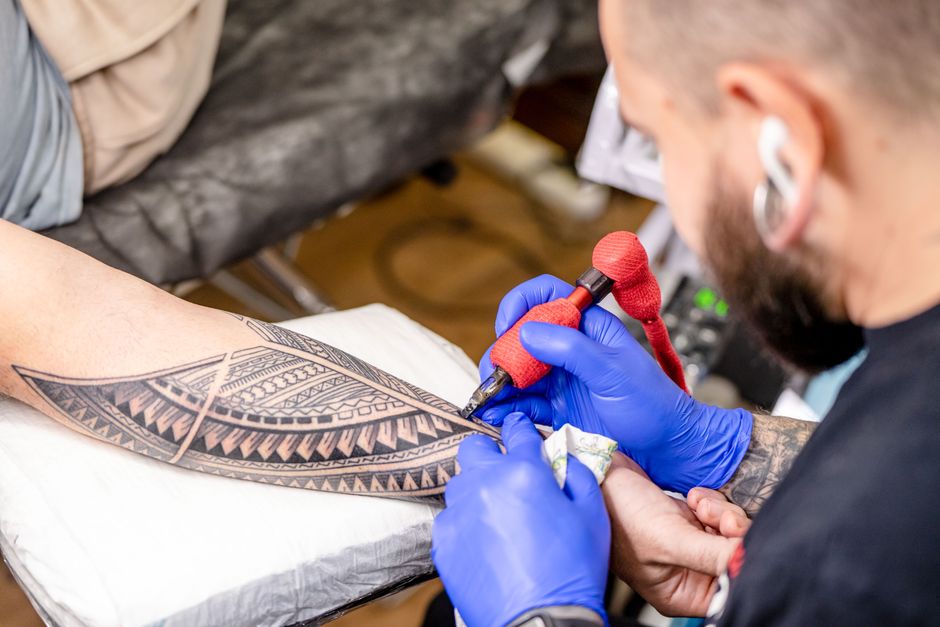
Modern tools evolved for speed, precision, and safety. Today's tattoo machines, disposable needles, and sterile practices follow strict health standards, like the OSHA bloodborne pathogen standards that every professional Tattoo Studio must respect. If you're getting started, understanding your gear matters, and our guide to the tools every beginner Tattoo Artist should know is a smart first read.
Pro Tip: Learning where your tools came from makes you a more thoughtful artist. Respect for the roots of the craft shows up in your work and the trust your clients place in you.
Why Does Meaning Matter More in Polynesian Tattooing?
Meaning matters more in Polynesian tattooing because each tatau symbol represents earned identity: family lineage, social rank, life achievements, and spiritual protection, not merely aesthetic choice.
Think of it this way. A modern tattoo can be a memory, a name, or simply art you love. A tatau is closer to a passport and a family tree combined, written permanently on the body. You don't just pick it. You grow into it.
That's a powerful lesson for anyone entering the craft today. When you understand that tattooing has always carried weight, that it marks real identity, not just decoration, you approach every client's skin with more care. Meaning is the seed; skill is the tree that grows from it.

What Is the Step-by-Step Process of a Traditional Tatau?
The traditional tatau process follows a communal ritual: consultation with the tufuga to determine designs, preparation of natural pigment and tools, hand-tapping the symbols over hours or days, and a community-supported healing period.
While you'll never tap a tatau by hand in a modern apprenticeship, understanding the ritual sharpens your respect for the process. Here's how a traditional session unfolds:
Step 1: Consultation. The tufuga meets the person and determines which symbols reflect their lineage, rank, and personal story.
Step 2: Preparation. Sacred tools are readied and natural pigment is mixed, often from soot and coconut oil or water.
Step 3: The tapping. The design is tapped into the skin over many hours, sometimes across several days or weeks.
Step 4: Endurance. The person receiving the tatau proves their strength and commitment; family often supports and witnesses them throughout.
Step 5: Healing and celebration. The tatau heals with community support, and the completed marks are celebrated as a rite of passage.
Modern aftercare has evolved with medicine, and clients today follow evidence-based guidance like the American Academy of Dermatology tattoo care guidelines. The ritual changed, but the respect for healing skin and the weight of the mark remained.
How Can Modern Tattoo Artists Honor Polynesian Traditions?
Modern Tattoo Artists honor Polynesian traditions by studying the cultural meaning behind symbols, avoiding careless copying of sacred designs, and treating every tattoo as a story worth respecting and protecting.
You don't have to be Polynesian to appreciate what tatau teaches: patience, discipline, and reverence for the person under your Tattoo Machine. Those values separate a great Tattoo Artist from a mere technician, and they're the foundation of a career that lasts.
The biggest mistake beginners make is treating tattooing as pure decoration with no weight behind it. Learning the history keeps you grounded in purpose.
Where Can You Learn to Tattoo the Right Way?
You learn to tattoo the right way through live, in-person mentorship in a working Tattoo Studio, where a skilled Mentor guides you through fundamentals, safety, and real client work over months of hands-on practice.
Every great tradition, from tatau to modern American style, was passed down through mentorship. The tufuga trained apprentices for years. Today, the path is the same in spirit: you learn beside someone who has done it thousands of times, watching their hands, asking questions, making mistakes in a safe environment where feedback matters.
That's why we built Ink Different Tattoos as a college alternative for people who are done wasting time in careers that don't feed their creativity. The timing matters too: if you've been waiting for the right moment, there's no better time than now to start planting the seed of your new career.
What Does Ink Different's Tattoo Apprenticeship Offer?
Ink Different's Traditional Tattoo Apprenticeship is an 18 to 24 month, four-phase apprenticeship that takes beginners from their first line to job-ready professionals with state licensing support and access to a "Good Humans" community.
You train hands-on in our tattoo studios under real Mentors who have built careers you can learn from. No prior art experience is required, because we teach you drawing fundamentals and machine control from the ground up. This is where your raw drive becomes real skill.
A Career That Comes With Confidence
Our four-phase Traditional Tattoo Apprenticeship gives you personalized, hands-on training and prepares you for state licensing. You graduate with job-ready skills, licensing support, and a guaranteed job offer at one of our tattoo studios, with the confidence to work as a professional Tattoo Artist.
Mentorship That Pushes Your Brand and Skills Further
If you want to accelerate your growth beyond the foundational apprenticeship, our one-year, in-person Master Mentorship pairs you with celebrated and award-winning Mentors including Al Fliction, Liz Cook, Kyle Dunbar, Boneface, and Jordi Pla. It's built for mastering a specific style, launching your personal brand, and owning your business from day one.
Making Tattoo Training Accessible for Everyone
We offer Spanish-speaking locations in Denver, Orange County, NYC, Miami, San Antonio, and San Diego, so language never stands between you and your creative future. And because you're joining our "Good Humans" culture, you're never alone: you're part of a supportive, family-like community from day one through career launch.
Ready to Become a Tattoo Artist?
Traditional Polynesian tattooing reminds us that this craft is thousands of years old, and it still can't be automated. It lives in human hands, human patience, and human mentorship.
Seats in our tattoo apprenticeship are limited, and there's no better moment to start than the one in front of you.
Ready to become a Tattoo Artist? Apply now to Ink Different's Traditional Tattoo Apprenticeship and start building an AI-proof career with licensing support and community. Not sure yet? Fill out our quick questionnaire to get personalized guidance and find out if our Traditional Tattoo Apprenticeship is right for you.
Frequently Asked Questions
What is the difference between traditional Polynesian tattooing and modern tattooing?
Traditional Polynesian tattooing uses hand-tapped bone and wood tools and carries earned cultural meaning, while modern tattooing uses electric Tattoo Machines and prioritizes personal expression and design freedom.
Where does the word "tattoo" come from?
The word "tattoo" comes from the Polynesian word "tatau," which explorers documented in the 18th century. The practice itself is thousands of years older than the English word.
Do I need prior art experience to become a Tattoo Artist?
No. Ink Different's Traditional Tattoo Apprenticeship teaches drawing and machine fundamentals from day one, so you can start with zero formal art background or experience.
How long does the Tattoo Apprenticeship take?
Ink Different's Traditional Tattoo Apprenticeship takes 18 to 24 months across four phases. The exact timeline depends on how quickly you master each stage and skill checkpoint.
What makes Ink Different Tattoos unique?
Ink Different offers 15 years of experience, live in-person mentorship from award-winning artists, a supportive "Good Humans" culture, and comprehensive licensing support toward an AI-proof career.
Can I get tattoo training in Spanish?
Yes. Ink Different offers Spanish-speaking locations in Denver, Orange County, NYC, Miami, San Antonio, and San Diego, ensuring language never blocks your path to becoming a Tattoo Artist.