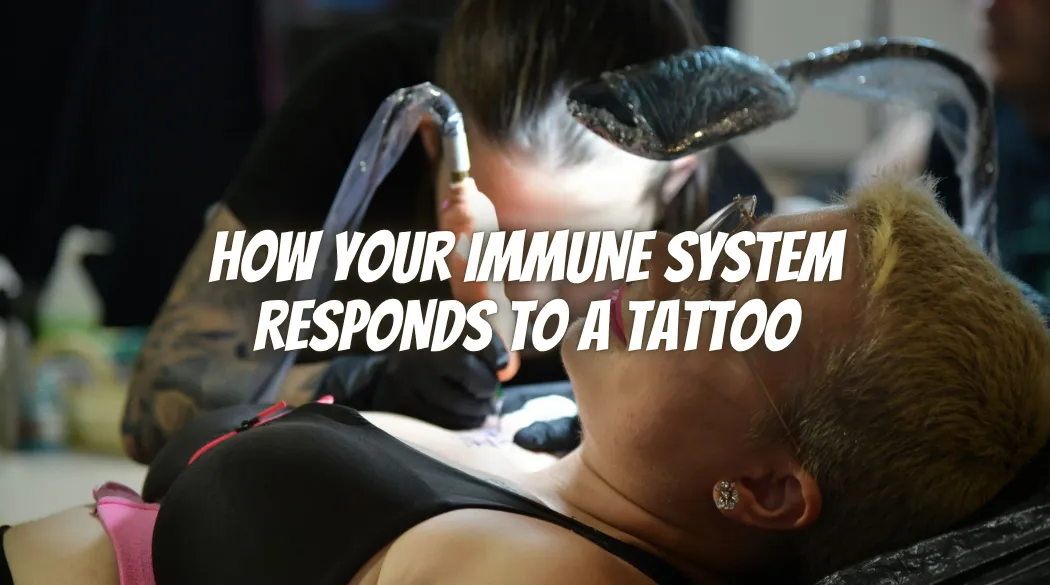
How Your Immune System Responds to a Tattoo
You feel the needle, the sting, the tiny bloom of color under your skin, and something ancient wakes up inside you. Your body treats that first line like an intruder at the gate, and a quiet response begins that you never see.
At Ink Different Tattoos, we teach aspiring Tattoo Artists that understanding this hidden response is the difference between someone who pokes ink and a true professional. The immune response to a tattoo is your body's natural defense reaction, where white blood cells rush to the ink to trap, seal, and preserve the pigment permanently in your skin.
If you have felt stuck watching your creative potential go unused in a job that never lights you up, learning how the human body actually works with permanent ink is where the real craft begins.
Key Takeaways
The response: Your immune system treats tattoo ink as a foreign invader and sends white blood cells to contain it.
Why ink stays: Macrophages swallow pigment but stay trapped in the skin, making tattoos permanent.
Healing time: Surface healing takes two to three weeks; deeper skin recovery takes several months.
Artist's role: A trained Tattoo Artist minimizes trauma and infection risk through proper depth and hygiene.
Your path: Ink Different's Traditional Tattoo Apprenticeship teaches the science and craft behind safe, professional tattooing.
What Happens to Your Immune System When You Get a Tattoo?
When you get a tattoo, your immune system launches an inflammatory response, sending white blood cells called macrophages to the pigment to contain what your body perceives as a foreign threat.
The moment the needle breaks your skin, thousands of tiny punctures signal your body that something is wrong. Blood vessels widen, immune cells flood the area, and inflammation kicks in. That redness and warmth you feel is not damage: it is your defense system doing exactly what it evolved to do.
Macrophages are the heroes of this story. These specialized white blood cells attempt to eat and clear the ink particles, treating pigment like bacteria or debris. The catch is that the ink particles are too large to fully remove, so the macrophages hold onto them and stay put.
Good to Know: The same immune response that heals a scraped knee is the one that locks your tattoo in place for life.

Why Does Tattoo Ink Stay in Your Skin Forever?
Tattoo ink stays permanent because pigment particles are trapped inside macrophages in the dermis, and when those cells die, new ones capture the same ink, keeping it visible for decades.
Researchers at institutions like the National Institutes of Health have shown that tattoo permanence is a cycle. When an ink-holding macrophage dies, the released pigment gets picked up by a fresh macrophage nearby. The ink never leaves: it simply changes hands.
This is why tattoos placed in the deeper dermal layer stay crisp, while ink placed too shallow in the epidermis fades and flakes away. Depth is everything, and it is one of the first lessons every serious apprentice must master.
Understanding this cycle helps you appreciate why placement, needle depth, and technique matter so much. It is not guesswork: it is applied biology.
What Are the Stages of Immune Healing After a Tattoo?
Tattoo healing moves through inflammation, peeling, and remodeling, with surface skin recovering in two to three weeks and deeper layers settling over several months.
Your body follows a predictable timeline, and knowing it makes you a smarter artist and a calmer client. Here is how the immune response unfolds.
What Are the Three Phases of Tattoo Healing?
Phase 1, Inflammation (Days 1-6): Redness, swelling, and oozing plasma as immune cells clean the wound.
Phase 2, Peeling and itching (Days 7-14): The epidermis regenerates and sheds dead skin as new tissue forms.
Phase 3, Remodeling (Weeks 3 to months): Deeper layers rebuild and the tattoo settles into its final look.
The American Academy of Dermatology tattoo care guidelines provide trusted recommendations that align with this timeline. Following proper aftercare gives your immune system the calm environment it needs to finish the job cleanly.
How Does a Skilled Tattoo Artist Protect Your Immune Response?
A skilled Tattoo Artist protects your immune response by working at the correct skin depth, minimizing trauma, and following strict sterilization standards that prevent infection.
An untrained hand can push the needle too deep, causing excess bleeding, scarring, and a longer, angrier healing process. Go too shallow, and the ink fades because your immune system flushes it away before it can settle.
Hygiene is where the immune conversation gets serious. Broken skin is an open door for bacteria and bloodborne pathogens. Professional artists follow OSHA bloodborne pathogen standards to keep clients safe, which is a core part of any legitimate Tattoo Artist Training.
This is exactly why avoiding shortcuts matters so much early on. If you want a deeper look at pitfalls, read our guide on mistakes aspiring tattoo apprentices should avoid.
How Can You Support Your Body's Healing Step by Step?
You support your immune response by keeping the tattoo clean, moisturized, and protected while avoiding sun, soaking, and picking during the healing window.
Whether you are getting tattooed or learning to tattoo, this aftercare roadmap is essential knowledge. Follow these steps to give your body the best chance to heal cleanly.
Step 1, Leave the bandage on: Keep the initial covering in place for the time your artist recommends to protect the fresh wound.
Step 2, Wash gently: Use lukewarm water and fragrance-free soap, patting dry with a clean paper towel.
Step 3, Moisturize lightly: Apply a thin layer of recommended ointment to keep the skin supple without suffocating it.
Step 4, Protect from sun and water: Avoid pools, direct sunlight, and long soaks that can irritate healing skin.
Step 5, Never pick or scratch: Let the peeling happen naturally so the pigment settles evenly.
These steps calm the inflammatory response and reduce infection risk. Knowing them cold is part of what makes a client trust you with their skin.
Why Does Understanding the Body Make You a Better Tattoo Artist?
Understanding the immune response makes you a better Tattoo Artist because you can predict healing, prevent complications, and deliver work that ages beautifully instead of blurring or fading.
Anyone can trace a stencil. A professional understands what happens beneath the surface, why saturation matters, and how a client's skin will respond over years. This is the deep craft that clients pay for and remember.
The tattoo trade is also one of the most AI-proof careers on the planet. A machine cannot read living skin, adjust to a client's immune reaction in real time, or build the trust that human hands earn. If you want proof, read our take on why tattoo artists are still essential.
The Bureau of Labor Statistics on craft and fine artists tracks the outlook for skilled trades, and professionals built on human touch continue to hold real value. This is a career built on your hands, your eyes, and your growing mastery.
Get Serious About the Craft With Ink Different Tattoos
Ink Different Tattoos offers a Traditional Tattoo Apprenticeship that teaches you the science of the skin, the art of the line, and the professional standards that turn a hobby into a real income.
You have felt the pull toward something creative, permanent, and yours. What you need now is the right training and a Mentor who has walked the path. Since 2011, we have trained aspiring professionals to do this work the right way.
What You Can Expect from Our Traditional Tattoo Apprenticeship
Length: A structured 18 to 24 month, four-phase Tattoo Artist Training.
Format: You start remote and finish hands-on in real Tattoo Studios.
Beginner-friendly: No prior art experience is required to begin.
Outcome: Job-ready skills plus licensing support as you complete each phase.
This is a genuine college alternative for people who would rather build a craft than sit in a lecture hall. Learn why so many are choosing this path in our piece on tattoo apprenticeships as a college alternative.
A Career That Comes With Confidence
Our Traditional Tattoo Apprenticeship focuses on real, job-ready skills, licensing support, and a guaranteed job offer at one of our tattoo studios, so you walk into your career prepared. You will understand skin, safety, and technique at a professional level, which is exactly what employers and clients respect.
Mentorship That Pushes Your Brand and Skills Further
Ready to go beyond the fundamentals? Our one-year, in-person Master Mentorship connects you with award-winning Mentors, including Al Fliction, Liz Cook, Kyle Dunbar, Boneface, and Jordi Pla. It is built for mastering a specific style, growing your career, and stepping into business ownership.
Making Tattoo Training Accessible for Everyone
We offer Spanish-speaking locations in Denver, Orange County, New York City, Miami, San Antonio, and San Diego, so language never stands between you and your calling.
Live, in-person mentorship and our Good Humans culture mean you never grow alone. This is a family-like community of people who show up for each other. Seats in any given cohort are limited, so decisive action matters.
Ready to Become a Tattoo Artist?
You now understand something most people never will: how the body itself partners with a Tattoo Artist to make permanent art. That knowledge is your foundation, and the rest is training.
Ready to become a Tattoo Artist? Apply now to Ink Different's Traditional Tattoo Apprenticeship and start building an AI-proof career, with licensing support along the way. Not sure yet? Fill out our quick questionnaire to get personalized support and find out if our Traditional Tattoo Apprenticeship is right for you.
Related reading: tools every beginner tattoo artist should know, why spring is the best time to become a tattoo artist, and platforms to help tattoo artists build their brand.
Frequently Asked Questions
How does your immune system react to a tattoo?
Your immune system launches an inflammatory response, sending white blood cells called macrophages to the ink. These cells attempt to remove pigment but instead trap it permanently in your skin.
Why do tattoos stay in your skin permanently?
Tattoos stay permanent because macrophages swallow the pigment and hold it in the dermis. When those cells die, nearby macrophages recapture the same ink, keeping the tattoo visible for life.
How long does a tattoo take to fully heal?
Surface healing typically occurs in two to three weeks. Deeper layers of skin continue remodeling for several months as your immune response completes the process.
Do I need art experience to join a tattoo apprenticeship?
No. Ink Different Tattoos' Traditional Tattoo Apprenticeship is built for beginners and teaches drawing, safety, and technique from the ground up, no prior art experience required.
How long is the Ink Different Tattoo Apprenticeship Program?
The Traditional Tattoo Apprenticeship runs 18 to 24 months across four phases. You start remote and finish hands-on in real Tattoo Studios with live mentorship.
What makes Ink Different different from a tattoo school?
Ink Different offers live, in-person mentorship, award-winning mentors, and a Good Humans culture. It is a college alternative delivering job-ready skills and licensing support, not classroom theory alone.