Is It Normal to Cry During a Tattoo? An Honest Answer
You are lying on the table, the needle hums to life, and suddenly your eyes well up. Maybe it is the sting. Maybe it is the memory that inspired the piece. Crying during a tattoo is a natural physical and emotional reaction to pain, adrenaline, and personal meaning, experienced by many clients regardless of pain tolerance.
At Ink Different Tattoos, we believe understanding these moments is part of what separates a great Tattoo Artist from an average one.
Key Takeaways
Totally normal: Crying during a tattoo is common, caused by pain, adrenaline, and emotional meaning, not weakness.
Not a pain-tolerance indicator: Even seasoned collectors tear up; tears reflect emotion and chemistry, not fragility.
Pain varies by placement: Ribs, feet, elbows, spine, and inner arms rank among the most tender spots.
Artist skill includes emotional intelligence: A professional manages both the needle and the room's emotional climate.
Learnable through mentorship: Ink Different's Traditional Tattoo Apprenticeship teaches technical skill and client care over 18–24 months.
Is it normal to cry during a tattoo?
Yes, crying during a tattoo is completely normal, and it happens to far more people than you would ever guess, from first-timers to veteran collectors. Your body is processing sharp, sustained sensation while your emotions catch up to the moment. Tears are simply the release valve.
Some people cry from the physical intensity. Others cry because the tattoo carries weight: a memorial, a milestone, a scar covered over, a moment of profound transformation. The needle does not know the difference, and neither does your nervous system. Both pain and meaning trigger the same cascade of chemicals.
If you have ever teared up in the chair, you are in good company. It does not make you dramatic or fragile. It makes you human, and any Tattoo Artist worth their salt has held space for that a hundred times. A professional reads that moment with grace and does not make it awkward.
Why do people cry when getting tattooed?
People cry during tattoos because of a mix of physical pain, adrenaline spikes, endorphin crashes, and the deep personal meaning many tattoos carry. It is rarely just one thing.
When your skin is repeatedly punctured, your body floods with adrenaline and endorphins. As those chemicals rise and fall throughout the session, your emotions can swing hard. That sudden wave of feeling is a documented stress response, not a flaw in your character. Your nervous system is doing exactly what it evolved to do.
Then there is the story behind the ink. Many clients sit down to permanently mark loss, recovery, love, identity, or transformation. When the needle finally touches skin, that emotion becomes very real, very fast. The needle is no longer abstract. It is present-tense. That is when the tears often come.
Good to know: Crying, laughing, and even feeling giddy are all common emotional responses during a session. Your body is managing multiple chemical and sensory streams at once. That is not failure, but integration.

Where does a tattoo hurt the most?
Tattoos hurt most over bony, thin-skinned, or nerve-rich areas like the ribs, spine, feet, hands, elbows, and inner arms, where there is less muscle and fat to cushion the needle. These are not the spots for everyone's first session.
Fleshier areas such as the outer thigh, forearm, and calf tend to be far more tolerable. Understanding your placement helps you brace for what is coming, which can keep the tears from catching you off guard and gives you a sense of control.
Pain tolerance is deeply personal. Two people can get the exact same rib piece and have opposite experiences. That variability is exactly why a mentored Tattoo Artist learns to read each client individually rather than assuming everyone reacts the same way. This skill, reading your client's pain and emotion in real time, is something you cannot learn from a textbook. It comes from hours beside a mentor, watching and doing.
How can you manage tattoo pain and emotion?
You can manage tattoo pain and emotion by preparing your body, controlling your breathing, communicating openly with your Tattoo Artist, and allowing yourself to feel without judgment. A little planning goes a long way.
Here is a simple step-by-step approach to walk in ready:
Step 1: Sleep and eat. Show up rested and fed. Low blood sugar makes pain and lightheadedness worse.
Step 2: Hydrate. Drink water the day before and the day of. Hydrated skin takes ink better and handles stress more calmly.
Step 3: Breathe on purpose. Slow, steady breaths signal your nervous system to settle. Panicked breathing amplifies both pain and emotion.
Step 4: Speak up. Tell your artist if you need a break. A short pause resets your body and your mind without derailing the work.
Step 5: Follow aftercare. Protect the healing skin using trusted guidance like the American Academy of Dermatology tattoo care guidelines.
And if you still cry? Let it happen. Fighting the tears usually makes the whole thing harder than simply riding the wave. Your Tattoo Artist will respect you more for your honesty than for your stoicism.
How should a Tattoo Artist handle a crying client?
A professional Tattoo Artist handles a crying client with calm reassurance, well-timed breaks, steady technique that never wavers, and composure that signals safety to the room. Emotional maturity is part of the craft.
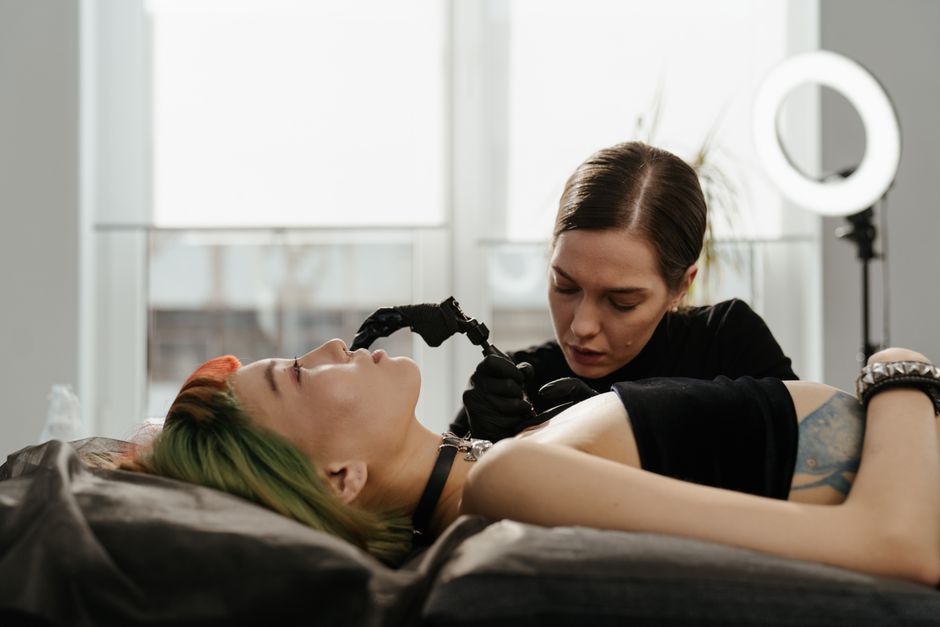
Great artists read the room. They notice tension in the shoulders, the shift in breathing, the quiet before a tear falls. Then they respond: a check-in, a pause, a reassuring word, without breaking their line work or letting their focus slip. They do not make the crying about themselves or turn it into drama. They simply hold the space with professionalism and kindness.
This is not a soft skill you can fake. It is learned through repetition under a Mentor who has been through thousands of sessions. Knowing when to keep going and when to stop, when to talk and when to let silence do the work, that discernment separates the job-ready professional from the merely competent technician. It is the difference between a client who trusts you and one who never returns.
Mentor insight: Managing a client's emotion while maintaining safety and a clean, steady hand is the hallmark of a job-ready Tattoo Artist. It is not something that happens by accident. It happens because you were trained to see it as part of your responsibility.
Why is emotional awareness a professional skill?
Emotional awareness is a professional skill because tattooing is a human service, not just a technical one, and your ability to hold space directly shapes your reputation, your repeat clients, and your earning potential.
Technique gets you in the door. Trust builds your career. Clients return to and refer artists who made them feel safe, seen, and respected during a vulnerable moment. That reputation is your most durable asset, more valuable than any portfolio. Word of mouth in tattoo communities moves fast, and artists known for their humanity fill their books first.
It is also part of why this career is AI-proof. A machine can copy a stencil, but it cannot sit with a grieving client marking a loss and know exactly when to offer a tissue, or when to push through, or when to reschedule. If you are curious about that future, read our take on why Tattoo Artists are still essential.
The human element is the entire point. Combine it with real hygiene standards, like those defined in the OSHA bloodborne pathogen standards, and you have the foundation of a serious professional. Technique + empathy + safety = career that lasts.
How do you learn this craft the right way?
You learn the craft the right way through live, in-person mentorship that trains both your hands and your instincts, which is exactly what Ink Different's Traditional Tattoo Apprenticeship delivers over 18–24 months.
Maybe you are stuck in a job that leaves your creative side starving. Maybe you have felt that quiet pull toward this work for years. That restlessness is a seed. The question is whether you plant it or let another year slip by. If you are weighing your options, our guide on tattoo apprenticeships as a college alternative lays out the path clearly. You do not need a four-year degree or six figures in debt. You need mentorship, discipline, and the willingness to start.
What You Can Expect from Ink Different's Traditional Tattoo Apprenticeship
Our Traditional Tattoo Apprenticeship runs 18 to 24 months across a proven 4-Phase structure. You start remotely and finish in real Tattoo Studios, learning by doing. No prior art experience is required, because we teach you from the foundation up.
Phase 1: Fundamentals, drawing, machine handling, safety protocols, and bloodborne pathogen awareness.
Phase 2: Practice on synthetic skin under direct supervision and feedback.
Phase 3: Live client work with your Mentor beside you, building your confidence and portfolio.
Phase 4: Building your roster, licensing prep, and business foundation.
A Career That Comes With Confidence
You graduate with job-ready skills, a guaranteed job offer, and state licensing support, along with the composure to handle any chair, including the emotional ones. We have spent 15 years, since 2011, training professional Tattoo Artists inside our supportive, family-like "Good Humans" culture. To sidestep common pitfalls early, review the mistakes aspiring Tattoo Apprentices should avoid.
Mentorship That Pushes Your Brand and Skills Further
Ready to level up faster? Our one-year, in-person Master Mentorship pairs you with celebrity and award-winning Mentors including Al Fliction, Liz Cook, Kyle Dunbar, Boneface, and Jordi Pla. It is built for intensive skill development, style mastery, and business ownership.
Making Tattoo Training Accessible for Everyone
We offer Spanish-speaking locations near Denver, in Orange County, near NYC, in Miami, in San Antonio, and in San Diego, so language is never the wall between you and this career.
Ready to Become a Tattoo Artist?
If crying in the chair taught you anything, it is that tattooing is deeply human work worth doing right. Seats in mentored training are limited by nature, because real hands-on guidance cannot be mass-produced.
Ready to become a Tattoo Artist? Apply now to Ink Different's Traditional Tattoo Apprenticeship and start building an AI-proof career, with licensing support along the way. Prefer to test the waters first? Fill out our quick questionnaire to get personalized support and find out if our Tattoo Apprenticeship Program is right for you.
Frequently Asked Questions
Is it normal to cry during a tattoo?
Yes. Crying during a tattoo is completely normal and common. It results from pain, adrenaline, endorphin swings, and emotional meaning, not weakness or low pain tolerance.
Does crying mean I have a low pain tolerance?
No. Even experienced tattoo collectors tear up sometimes. Tears come from emotion and adrenaline rather than raw pain, so they reflect your depth, not your fragility.
Where do tattoos hurt the most?
Tattoos hurt most over bony, thin-skinned, nerve-rich areas like ribs, spine, feet, hands, elbows, and inner arms, where there is little muscle or fat for cushioning.
Do I need art experience to join a tattoo apprenticeship?
No. Ink Different's Traditional Tattoo Apprenticeship is built for beginners and teaches drawing, safety, and technique from the foundation up. No prior art background required.
How long is the Traditional Tattoo Apprenticeship?
The Traditional Tattoo Apprenticeship runs 18 to 24 months across four phases. You start remote, finish in real studios, and graduate job-ready with licensing support.
What makes Ink Different different from other tattoo training programs?
Ink Different offers live in-person mentorship, 15 years of experience since 2011, award-winning Mentors, a supportive "Good Humans" culture, and Spanish-speaking locations nationwide for accessibility.