Red Ink Tattoos: Meaning, Healing and What to Know Before You Commit
Red is the color of fire, love, courage, and rebellion, and it does not blend into the background. But before you sit in that chair, you deserve the truth about what red ink actually does. A red ink tattoo is a permanent design created using red pigment, prized for its striking visual impact but known for requiring more careful healing and a highly skilled tattoo artist to execute well.
At Ink Different Tattoos, we've spent 15 years teaching aspiring tattoo artists how to handle color like red with precision. In this article, we'll cover what red ink actually means, how it heals differently from black ink, and what it takes, on both sides of the needle, to get it right.
Key Takeaways
Meaning: Red ink symbolizes love, passion, courage, sacrifice, and life force across cultures.
Healing: Red pigment heals slower and is more likely to cause irritation than black ink.
Skill matters: Red requires an experienced Tattoo Artist to pack color evenly and avoid patchy results.
Aftercare: Keep it clean, moisturized, and out of the sun to protect red pigment's vividness.
Career path: Ink Different's Traditional Tattoo Apprenticeship teaches color technique with live mentorship.

What are red ink tattoos?
Red ink tattoos are permanent designs made with red pigment, chosen for their intensity and used in styles ranging from traditional Americana to modern fine-line and blackwork accents.
Red is one of the oldest colors in tattooing. You will see it in Japanese Irezumi, American traditional roses, and delicate red-only pieces that have exploded across social feeds. The color demands attention in a way few others can match.
Modern red pigments are more stable than older formulas, but red is still one of the trickier colors to work with. That is exactly why the person holding the machine matters so much, a point we will keep coming back to.
What do red ink tattoos mean?
Red ink tattoos commonly represent love, passion, courage, sacrifice, and vitality, though meaning shifts depending on culture, design, and the personal story you attach to it.
Across history, red has carried powerful symbolism. In many cultures, it signals good fortune and life force. In others it marks passion or warning. Your tattoo does not have to follow tradition, though. The meaning you plant in it is what makes it grow into something personal.
Love and passion: Hearts, roses, and romantic script.
Courage and strength: Flames, dragons, and warrior imagery.
Life and energy: Red as a symbol of vitality and rebirth.
Rebellion: A bold statement that refuses to blend in.
Think of your tattoo like a seed. The color is the soil, but the meaning you bring is the sunlight that helps it become something lasting.
How do red ink tattoos heal differently?
Red ink tattoos often heal more slowly than black ink and are statistically more likely to cause irritation, delayed reactions, or raised skin because of the pigment's composition.
Historically, some red pigments contained ingredients like cinnabar that triggered sensitivity. Today's formulas are far safer, but red remains the color most associated with allergic responses. That is not a reason to panic; it is a reason to plan.
You may notice a bit more redness, swelling, or itching around a fresh red tattoo. According to the American Academy of Dermatology tattoo care guidelines, monitoring your healing skin and following proper aftercare is essential to avoid complications.
Pro Tip:If redness, swelling, or bumps around a red tattoo last beyond the normal healing window, contact a licensed medical professional. A reputable Tattoo Studio will also guide you.
How do you care for a red ink tattoo?
To care for a red ink tattoo, keep it clean, moisturized, and protected from sunlight, following your Tattoo Artist's aftercare instructions to preserve the color and support healthy healing.
Red pigment can fade faster in the sun than darker colors, so protection is your best friend. Here is a simple step-by-step routine to keep your red tattoo looking sharp.
Step 1:Leave the initial bandage on for the time your artist recommends.
Step 2:Gently wash with lukewarm water and fragrance-free soap.
Step 3:Pat dry with a clean paper towel; never rub.
Step 4:Apply a thin layer of recommended aftercare ointment or lotion.
Step 5:Avoid soaking, swimming, and direct sun until fully healed.
Step 6:Once healed, use sunscreen to protect the red pigment long term.
Clean tools and clean technique matter just as much as your aftercare. Studios that follow OSHA bloodborne pathogen standards protect both you and the artist, which is a baseline you should never compromise on.
What should you know before you commit?
Before committing to a red ink tattoo, understand that red carries higher sensitivity risk, may require touch-ups, and depends heavily on choosing a skilled, licensed Tattoo Artist.
A permanent decision deserves real thought. Ask yourself these questions before you sit down:
Skin sensitivity: Have you reacted to red pigment or dyes before?
Placement: Will this area get heavy sun exposure that fades red faster?
Artist: Does the artist have a portfolio full of clean, saturated color work?
Studio: Is the shop licensed, clean, and transparent about their pigments?
If you are considering tattooing as a craft yourself, knowing what clients ask makes you a better artist. Avoid the common traps we outline in mistakes aspiring tattoo apprentices should avoid.
Why does the artist's skill matter most?
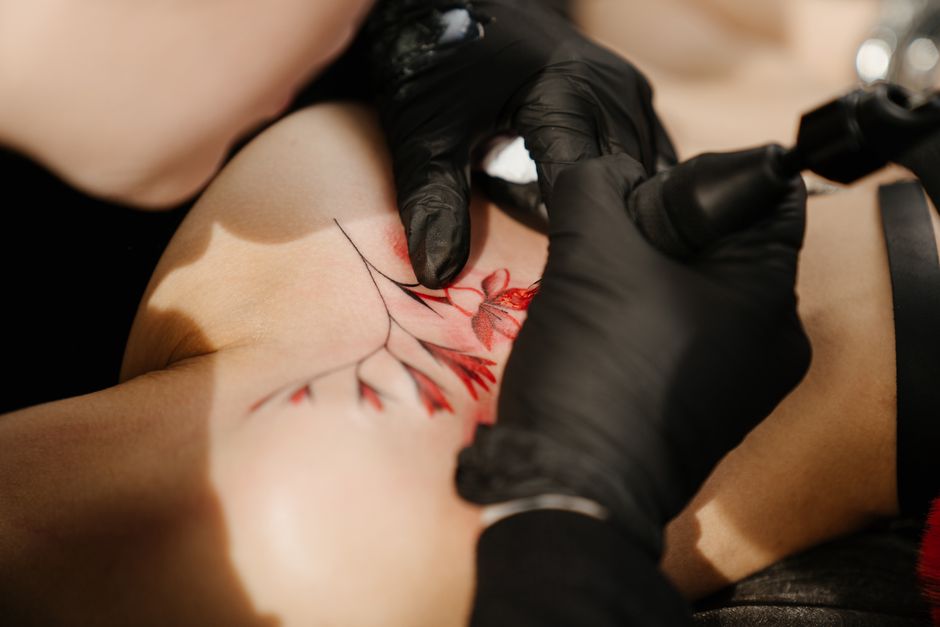
The artist's skill matters most because red pigment is unforgiving; patchy packing and uneven saturation show instantly, so only trained hands deliver clean, lasting red work.
Red does not hide mistakes. A beginner with shaky machine control leaves gaps and blowouts that scream for a touch-up. A trained Tattoo Artist knows how to layer, pack, and heal color so it stays bold for years.
This is where the real difference lives. Anyone can buy a machine online, but the ability to command color separates a hobbyist from a professional. That skill is not born; it is trained, one deliberate line at a time. If you have felt that spark to become the artist instead of just the client, this is your moment to consider a real path forward.
Curious how tattooing holds up in an automated world? Read why tattoo artists are still essential. Human skill and human connection are exactly what machines cannot replicate.
Want to learn to tattoo color like a pro?
You can learn to tattoo color like red professionally through a structured tattoo apprenticeship with live mentorship, hands-on practice, and licensing support, exactly what Ink Different Tattoos offers.
Maybe you are stuck in a job that drains you, watching your creative potential go to waste year after year. That quiet frustration is a signal. It is telling you there is more, and you already sense it every time you sketch on the side.
Tattooing is an AI-proof career built on human hands, human eyes, and human trust. According to the Bureau of Labor Statistics on craft and fine artists, skilled creative professionals continue to find demand for original, custom work. A tattoo apprenticeship is a genuine college alternative for people who want to build a hands-on trade.
Not sure about timing? Momentum matters more than the calendar, but if you need a nudge, see career change tattoo apprenticeship and tattoo apprenticeships as a college alternative. Seats are limited, and the best time to plant a tree was years ago. The next best time is now.
What does Ink Different's training include?
Ink Different's Traditional Tattoo Apprenticeship is an 18- to 24-month, four-phase program that starts remote and finishes in real Tattoo Studios, with personalized hands-on training and licensing support.
Here is what you can expect from our Traditional Tattoo Apprenticeship:
Beginner-friendly: No prior art experience required; we build your foundation from the ground up.
Start remote, finish in studios: Learn fundamentals first, then apply them live.
Live, in-person mentorship: Real guidance from working professionals, not just videos.
Job-ready skills: Graduate prepared to work professionally, with licensing support along the way.
This is a career that comes with confidence. You learn color packing, line work, machine control, and the safety standards that protect your clients, all under mentors who have done the work themselves.
How does mentorship push your brand and skills further?
Our one-year, in-person Master Mentorship trains artists with celebrity and award-winning Mentors like Al Fliction, Liz Cook, Kyle Dunbar, Boneface, and Jordi Pla for mastering style and owning your business.
Once you can tattoo confidently, building your name is the next step. Explore platforms to help tattoo artists build their brand to turn skill into a following. Learn the tools every beginner tattoo artist should know to master your craft from day one.
How does Ink Different make tattoo training accessible?
We offer Spanish-speaking locations in Denver, Orange County, NYC, Miami, San Antonio, and San Diego, ensuring language never stands between you and this craft.
Our "Good Humans" culture means you are never alone. You join a supportive, family-like community that celebrates your wins and helps you through the hard parts. That is the heart of everything we do.
Ready to become a Tattoo Artist?
Ready to become a Tattoo Artist? Apply now to Ink Different's Traditional Tattoo Apprenticeship and start building an AI-proof career, with licensing support along the way.
You have spent long enough imagining a different life. Red ink is bold because it refuses to stay quiet, and neither should your ambition. Whether you want that red tattoo or you want to be the one creating it for someone else, the path starts with a single decision.
Fill out our quick questionnaire to get personalized support and find out if our Tattoo Apprenticeship Program is right for you. Your future self is already holding the machine.
Frequently Asked Questions
Are red ink tattoos more likely to cause allergic reactions?
Yes, red pigment historically has been more associated with skin sensitivity than black ink. Choosing a licensed studio and monitoring healing reduces risk significantly.
Do red ink tattoos fade faster than other colors?
Red can fade faster than black, especially with heavy sun exposure. Applying sunscreen after healing and following proper aftercare preserves color for years.
Do I need art experience to learn to tattoo with color?
No. Ink Different's Traditional Tattoo Apprenticeship is built for beginners, teaching drawing, machine control, and color technique from the ground up with live mentorship.
How long does the Ink Different Tattoo Apprenticeship take?
The Traditional Tattoo Apprenticeship runs 18 to 24 months across four phases. You start remote, finish in real studios, and receive licensing support throughout.
What makes Ink Different different from other tattoo training programs?
Ink Different offers live in-person mentorship, a college alternative structure, 15 years of experience, and access to award-winning Mentors through Master Mentorship programs.
Is tattooing a stable career path in 2026?
Tattooing is an AI-proof, hands-on craft built on human skill and trust. Custom work remains in demand, making it a strong creative career for dedicated artists.