Rose Tattoo Meanings: What It Says Depending on Where You Wear It
A rose tattoo doesn't say the same thing everywhere on the body. A rose tattoo meaning is the symbolic message a rose design communicates, shaped by its color, its style, and most importantly, where on the body it lives. The same rose can whisper on a shoulder and shout on a hand.
At Ink Different Tattoos, we've spent over a decade teaching aspiring tattoo artists how to read those meanings and translate them into skin that heals clean and reads clearly for a lifetime.
In this article, we'll break down what a rose tattoo means by placement, how color shifts the message, and what it takes to design one that actually tells the right story.
Key Takeaways
Core meaning: A rose tattoo traditionally symbolizes love, balance, beauty, and the tension between passion and pain.
Placement matters: The same rose reads differently on an arm, chest, hand, or neck based on visibility and cultural associations.
Color shifts meaning: Red means love, black means loss, white means purity, yellow means friendship, blue means the impossible.
Skill required: Roses are technically demanding, testing line work, shading, body flow, and healing longevity.
Learn the craft: Ink Different's Traditional Tattoo Apprenticeship trains beginners into job-ready, licensed Tattoo Artists in 18–24 months.
What does a rose tattoo mean?
A rose tattoo most commonly symbolizes love, balance, and beauty, with the thorns representing the pain or sacrifice that often comes alongside those things. It is one of the oldest and most universal tattoo symbols in the world.
The rose carries centuries of layered meaning. In many cultures, it stands for devotion and the fleeting nature of life, since a bloom is both stunning and temporary. That duality is exactly why so many people choose it: the flower for beauty, the thorn for the cost of it.
You will see roses in nearly every tattoo tradition, from American traditional to fine-line realism. Their staying power is not an accident. A rose is flexible enough to hold almost any personal story a wearer wants to tell.

Why does placement change a rose tattoo's meaning?
Placement changes a rose tattoo's meaning because visibility, body movement, and cultural associations with each body part all shape how the symbol is read. Where you wear it is part of the message.
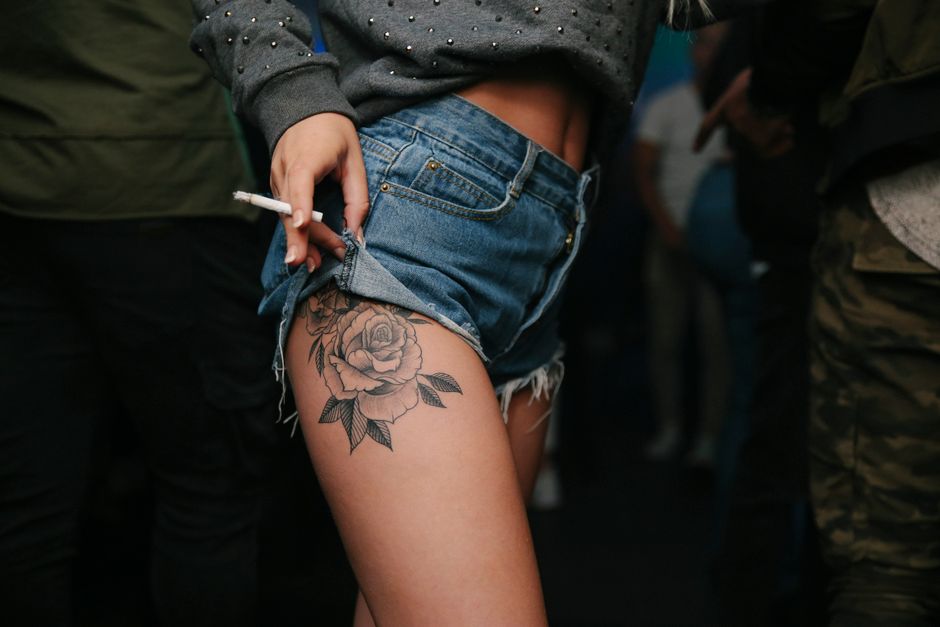
A rose over the heart signals something deeply personal and protected. A rose on the hand or neck, areas that stay visible in almost every situation, signals boldness and a willingness to be seen. The wearer is choosing not to hide.
Body flow matters too. A great Tattoo Artist studies how muscles and curves move so the rose bends naturally with the body instead of fighting it. This is one of the first things we teach apprentices, and it is a skill that separates a good tattoo from a forgettable one. If you are just starting out, avoid the common pitfalls we cover in our guide to mistakes aspiring tattoo apprentices should avoid.
What does a rose tattoo on the arm or shoulder mean?
A rose tattoo on the arm or shoulder generally symbolizes strength, pride, and personal identity, since these areas are visible yet easy to cover when needed. It is the most popular placement for a reason.
The upper arm and shoulder offer a large, relatively flat canvas that heals well and ages beautifully. That makes it a favorite spot for detailed, statement roses. It says the wearer values the symbol but keeps control over who sees it and when.
The forearm carries a slightly bolder tone. A rose there sits in your everyday line of sight, a constant reminder of whatever it represents to you. Many people choose the forearm for roses tied to resilience or a loved one they want to keep close.
What does a rose tattoo on the chest mean?
A rose tattoo on the chest, especially over the heart, symbolizes deep love, devotion, or a bond that the wearer keeps close and protected. It is the most intimate placement a rose can have.
The chest sits near the heart, so a rose there is almost always emotional. Couples, memorial pieces, and tributes to family often land here. Because the area is usually covered, the wearer chooses when to reveal it, which adds to its private, sacred feel.
This placement demands technical skill. The chest curves and shifts constantly with breathing and movement, so the rose must be laid out to flow with those contours. Getting that flow right is a hallmark of a well-trained artist.
What does a rose tattoo on the hand or neck mean?
A rose tattoo on the hand or neck symbolizes boldness, confidence, and self-expression, because these highly visible areas cannot be easily hidden. This is ink for people who want to be seen.
Hands and necks stay exposed in nearly every setting, so a rose there makes a permanent, public statement. Historically, these placements signaled commitment and fearlessness. Today they still carry that unapologetic energy.
These are also two of the trickiest spots to tattoo well. Hand skin is thin and heals unpredictably, and both areas fade faster than most. That is why licensed Tattoo Artists learn advanced techniques and hygiene standards, following guidelines like the OSHA bloodborne pathogen standards, before working these high-difficulty zones.
How do rose colors change the meaning?
Rose colors shift the meaning significantly: red signals love, black signals loss or rebellion, white signals purity, and yellow signals friendship and joy. Color is a second layer of language on top of placement.
Understanding color theory is essential for any Tattoo Artist, because pigment behaves differently on different skin tones and fades at different rates. A rose's message depends on the ink holding its intended hue for years.
Red rose: Love, passion, and romance, the classic choice.
Black rose: Grief, memorial, mystery, or defiance.
White rose: Purity, new beginnings, and remembrance.
Yellow rose: Friendship, warmth, and celebration.
Blue rose: The impossible, the unattainable, or something rare.
How do you design a meaningful rose tattoo?
You design a meaningful rose tattoo by combining the wearer's personal story with the right color, style, and body placement so every element reinforces the message. Follow these steps to get it right.
Step 1: Start with the story
Ask what the rose is meant to represent. Love? Loss? Resilience? The answer guides every other decision, from color to placement.
Step 2: Choose the color
Match the pigment to the meaning. A memorial piece leans black or white; a romantic tribute leans red. Consider how the color will heal on the wearer's skin tone.
Step 3: Pick the placement
Decide how visible and how private the piece should be. The chest reads intimate, the hand reads bold, the arm reads balanced.
Step 4: Map the body flow
Sketch the rose so it bends with the muscles and curves of the chosen area. A rose that fights the body ages badly and looks stiff.
Step 5: Refine line work and shading
Petals need clean lines and smooth gradients to read as a rose and not a blob. This is where real training separates professionals from hobbyists.
Once the ink is done, aftercare protects the result. Point every client toward reliable guidance like the American Academy of Dermatology tattoo care guidelines so their rose heals sharp and vivid.
Where can you learn to tattoo roses professionally?
You can learn to tattoo roses professionally through a structured tattoo apprenticeship that teaches line work, shading, color theory, and body flow under a licensed Mentor. Talent alone is not enough; roses reward trained hands.
Here is the honest truth: a rose looks simple until you try to tattoo one. The curves, the shading, the way it must sit on a moving body - these humble many beginners. That is why real, hands-on Tattoo Artist Training matters so much.
If you feel stuck in a job that drains your creative energy, that restlessness is a signal. You do not have to spend another year watching your potential go unused. A career in tattooing is also one of the few creative paths that stays human-proof; we explain exactly why in our piece on why tattoo artists are still essential. And unlike a four-year degree, a tattoo apprenticeship is a focused, faster route into a real income, which is why so many people now see tattoo apprenticeships as a college alternative.
Reality check:The best Tattoo Artists are not born knowing how to render a rose. They are trained, one clean line at a time, by Mentors who have already mastered the craft.
What does the Traditional Tattoo Apprenticeship include?
Ink Different's Traditional Tattoo Apprenticeship is an 18- to 24-month, four-phase training that takes beginners from their first line to a job-ready professional, with licensing support along the way. No prior art experience is required.
We built this Tattoo Apprenticeship Program as a college alternative for people who are serious about excellence. You start remote to build your foundations, then finish hands-on in real Tattoo Studios, learning under Mentors who tattoo professionally every day. This is live, in-person mentorship, not a stack of videos you watch alone.
A career that comes with confidence
By the time you complete all four phases, you will have job-ready skills and licensing support, plus the confidence that comes from having tattooed under expert supervision. You will know how to lay a rose on any body part and make it flow. To sound fluent in the industry from day one, brush up on the tools every beginner tattoo artist should know.
Mentorship that pushes your brand and skills further
If you want to accelerate faster or master a specific style, our one-year in-person Master Mentorship pairs you with celebrity and award-winning Mentors including Al Fliction, Liz Cook, Kyle Dunbar, Boneface, and Jordi Pla. It is built for both beginners and experienced artists chasing a career explosion or studio ownership.
Making Tattoo Artist Training accessible for everyone
We offer Spanish-speaking locations in Denver, Orange County, NYC, Miami, San Antonio, and San Diego, so language never has to stand between you and this career. Wherever you are, there is likely a path to training near you.
Our "Good Humans" culture means you are never doing this alone. You join a family-like community of people who want to see you win, the kind of support that turns a nervous beginner into a proud professional.

Ready to become a Tattoo Artist?
A rose is proof that the small, careful things you plant can grow into something people carry for life. The question is whether you will keep imagining that career or actually start building it. Seats in our Tattoo Apprenticeship Program are limited, and the sooner you plant your seed, the sooner it grows.
Ready to become a Tattoo Artist? Apply now to Ink Different's Traditional Tattoo Apprenticeship and start building an AI-proof career, with licensing support every step of the way. Not sure yet? Fill out our quick questionnaire to get personalized support and find out if our tattoo apprenticeship is right for you.
Frequently Asked Questions
What is the most popular meaning of a rose tattoo?
The most popular meaning is love and beauty, with the thorns representing the pain or sacrifice that comes with it. It is universal worldwide.
Does the placement of a rose tattoo really change its meaning?
Yes. Chest reads intimate, hand or neck reads bold and public, arm reads balanced and prideful.
Do I need art experience to learn how to tattoo roses?
No. Ink Different's Traditional Tattoo Apprenticeship teaches drawing, line work, and shading from phase one for complete beginners.
How long does it take to become a licensed Tattoo Artist?
Ink Different's Traditional Tattoo Apprenticeship takes 18 to 24 months across four phases, including licensing support.
What makes Ink Different's tattoo training unique?
Ink Different offers live in-person mentorship with award-winning Mentors, a "Good Humans" community, and Spanish-speaking locations nationwide.
Are rose tattoos hard for beginners to tattoo?
Yes. Roses test line work, shading, and body flow all at once, which is why Tattoo Artist Training under a Mentor is essential.