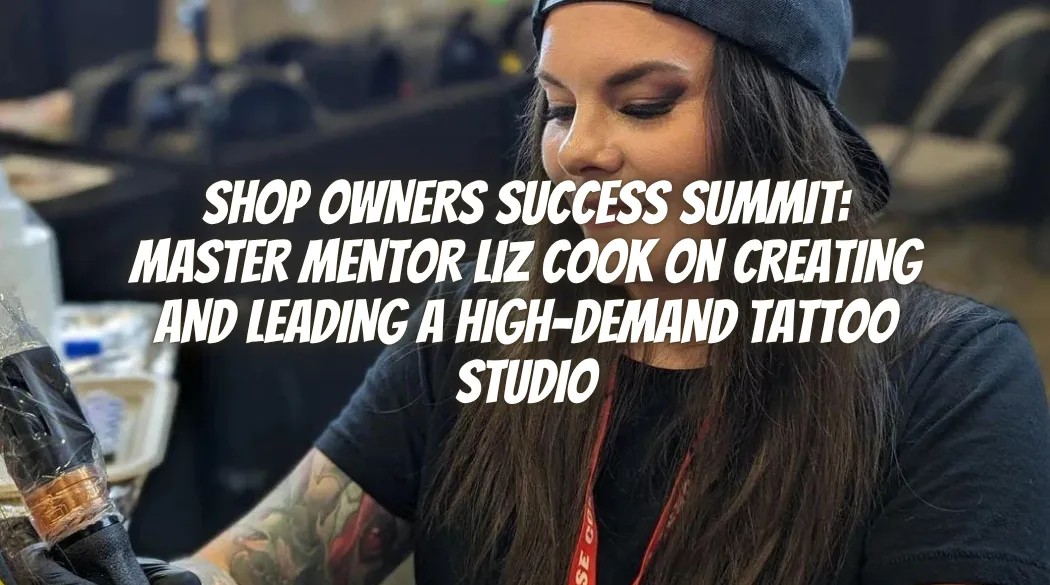
Shop Owners Success Summit: Master Mentor Liz Cook on Creating and Leading a High-Demand Tattoo Studio
Master Mentor Liz Cook never wanted to own a tattoo studio. She didn’t want to be responsible for people or go out of her way to network. She just wanted to make art. Yet she’s co-owned Rebel Muse since 2012, and today she speaks to rooms full of tattoo studio owners.
At Ink Different’s Shop Owners Success Summit, Liz shared what more than a decade of highs and lows has taught her about leading a high-demand tattoo studio. Her biggest takeaway is that as your tattoo studio grows, you grow too.
Key Takeaways
Protect your own art: Block at least two recurring hours a week for your own work, even when shop tasks pile up.
Write your mission: Put it in one sentence, share it with your team, and repeat it often.
Offer real support: A chair and a sink are the baseline. Tattoo Artists stay when they’re learning and growing.
Let the “black holes” go: Tattoo Artists who drain your culture are never worth the money they bring in.
Charge what the work is worth: Liz says $150 is the standard starting minimum today.
Who Is Liz Cook and Why Should You Listen?
Liz Cook is an Ink Different Master Mentor, a Tattoo Artist, and a co-owner of Rebel Muse, which opened its first tattoo studio in 2012.
Rebel Muse started with four owners and now has three. Liz has owned multiple tattoo studios and has appeared on TV. She’s also known for color.
During a wave of artist series in the tattoo industry, Liz created her own signature series with Eternal. She used it to fill gaps in the line with colors she found herself mixing again and again. That work led to a salaried role at Eternal leading pigment research and development. Her tattoo studio now has about 300 colors on the wall.
Her story matters because she wasn’t a natural leader. She describes herself as having been shy and afraid, unable to speak in front of a crowd. Becoming an owner changed that. Her life, she says, has become so much richer.

What Makes a Tattoo Studio High-Demand?
According to Liz, a high-demand tattoo studio starts with an owner who keeps growing as a Tattoo Artist and builds a place worth staying.
Keep growing as a Tattoo Artist
When you become an owner, shop tasks start eating your time. Booking, the back end, and everyone else’s fires can push your own work aside.
Liz says being an active Tattoo Artist is one of the strongest ways to earn your team’s respect. If you stop growing, it’s hard to help anyone else grow.
Her advice is to block two recurring hours a week for your own art and treat them as non-negotiable. Two hours may not sound like much, but it’s a lot more than nothing.
Make sure your own bookings can support the shop
At first, Liz recommends that your own income as a Tattoo Artist can cover the tattoo studio. When it can’t, owners start “white-knuckling” and running the shop in survival mode. When it can, you work from abundance, with room to be creative.
Be a tattoo studio worth staying at
Liz says the real service you sell as an owner isn’t the chair and sink. That’s just the starting point. Tattoo Artists stay when they get support in business, art, tattooing, and balancing life.
That support can include seminars, webinars, and conventions. Liz’s advice is to list what you actually provide for your Tattoo Artists. If the list is thin, add to it as you build capacity.
Safety is part of that foundation, too. Every tattoo studio should follow the OSHA bloodborne pathogens standard.
How Do You Lead a Team of Tattoo Artists?
You lead by setting a clear mission, delegating wisely, and making hard calls quickly.
Write your mission and be its cheerleader
Liz calls this business 101. Your mission is your rally call, and it’s how you stand out. In the past, she says, owners could pay rent and wait for clients. That’s not the industry anymore.
For Rebel Muse, the mission has always been family first and balancing and nurturing Tattoo Artists. Liz recommends writing yours in one sentence and sharing it with your team that week. It will evolve, and that’s okay.
As the owner, you’re the loudest cheerleader in the room, even when it feels beneath you.
Meet regularly, even with a small team
Liz recommends at least a monthly meeting, even if it’s a half-hour check-in with one other person. When meetings are on the calendar, you stay consistent when life gets busy.
Delegate what consumes your time
You can’t do it all. Liz suggests starting with whatever takes most of your time, like emails or social media, and handing that off first.
She also recommends matching tasks to what people enjoy. Someone who loves social media but doesn’t like talking to people shouldn’t be your front-facing manager.
Systems and check-ins matter here. Liz shared a story about a Tattoo Artist who left their manager in charge for a while. When they came back, 40 client inquiries had gone unanswered.
Watch for warning signs, like gatekeeping or conflict between managers and Tattoo Artists. Shop managers should treat the tattoo studio like their own and support its mission.
Let the “black holes” go
Liz describes some Tattoo Artists as black holes. They drain the tattoo studio through constant negativity or by actively sabotaging it. Sexual misconduct is zero tolerance.
Her advice is to let them go as soon as you see the signs. The money is never worth it. If you wait, you’ll lose the Tattoo Artists who are truly on mission, or attract more black holes.
Mentor Tip: Liz says it’s okay to tell a great Tattoo Artist that the fit just isn’t working. Sometimes they’ll reach their potential somewhere else.
Accept that Tattoo Artists can love you and still leave
Great Tattoo Artists often move on to build their own thing. That doesn’t mean they don’t love or respect you.
Liz learned this early. One phenomenal Tattoo Artist at Rebel Muse gave four days’ notice and took half the tattoo studio with him. Since then, her goal has been simple. When someone leaves, it shouldn’t bankrupt you, and you should be able to support them as they go.
Ink Different shares that view of retention. One of its affiliates in Des Moines has four tattoo shops and offers health insurance to its Tattoo Artists, and retention there is extremely high. Liz notes that industry organizations like TIMA may help shops access benefits as membership grows.
How Do You Build a Studio Brand People Line Up For?
You build a brand by sharing a specific message, creating content with purpose, and developing every Tattoo Artist on your team.
Avoid generic messaging
If your posts say things like “we have space” or “we believe in family,” you sound like everyone else. Liz says your mission and values should shape how you attract both clients and Tattoo Artists.
Give every post one job
Liz admits she fought social media for years. After her daughter was born, she realized that resistance was holding her back, so she studied everything she could.
Now she gives each post one of four jobs:
Attract: Stop the scroll and reach people who’ve never heard of you.
Nurture: Build trust and familiarity before anyone books.
Position: Show why people should trust your Tattoo Artists and your tattoo studio.
Convert: Bring in clients and Tattoo Artists.
One post can do all four, but it takes much more work. Focusing on one takes the pressure off.
Treat content as a craft
A plain photo doesn’t cut it anymore. Liz says strong reels hook people in the first three seconds. Try a different opening shot, or a second short reel with text over it.
Hold a “power hour” with each Tattoo Artist
Every month or six weeks, Liz meets one-on-one with each Tattoo Artist. They celebrate wins, audit their social media, and plan next steps.
Plan for when a Tattoo Artist leaves
If someone leaves, you need to remove their work from your website and social media quickly and without drama. Building up everyone on your team keeps one departure from emptying your pages. Liz notes that deleting social posts can hurt the algorithm, so be strategic.
Osmay Gonzalez added that Fame Tattoos posts work on its website without naming the Tattoo Artist. Clients book a consultation, then get matched with the right person. That way, the brand rests on the tattoo studio as a whole.

What Are the Steps to Open a High-Demand Tattoo Studio?
Liz’s advice points to a clear sequence for building a tattoo studio that lasts.
Step 1: Work in other tattoo studios first. Liz says there’s growth you only get from working in someone else’s studio. You learn what you want to copy and what you never want to repeat.
Step 2: Choose your payment model and write it down. Liz walked through three models:
Booth rent: A flat weekly or monthly rate. It’s simple to track, but it should at least cover the tattoo studio’s costs.
Commission: A percentage split. She’s seen it range from new apprentices keeping 20% to experienced Tattoo Artists keeping 70% or 75%.
Co-op: Everyone pays in to cover the bills. If someone leaves, whoever remains pays more.
Whatever you choose, write it down, find the gaps, and build milestones for when rates change.
Step 3: Price your work properly. Liz still sees tattoo studios with $40 minimums. She says $150 is the standard starting point now. Underpricing hurts you, your team, and the industry, and it leads to burnout. She also warns owners not to discount their own work, because it sets the tone for everyone else.
Step 4: Read your lease line by line. Liz has seen a broker try to slip changes into an agreement after terms were set. She’s also seen owners get locked out of their tattoo studios. If you don’t understand the language, hire a lawyer.
Step 5: Write your exit strategy. If you have partners, agree on terms while everyone is on good terms. Liz calls it your “unromantic homework.”
Step 6: Give your Tattoo Artists resources. Invite guest Tattoo Artists to teach. Gia Rose recently did a week-long guest spot at Rebel Muse and finished with a seminar. Liz suggests offering a free chair in exchange for a workshop. Even a group paint night builds community.
Step 7: Know when to step back. Liz says it’s okay to close a tattoo studio if ownership isn’t right for you. Put your own oxygen mask on first.
Why Do Skills Come Before the Studio?
Skills come before the studio because your growth as a Tattoo Artist is what earns your team’s respect and builds your demand.
Liz says you can become a destination Tattoo Artist anywhere. Focus on your top three styles, the ones that bring in the most work. That also helps the algorithm understand who to show your work to. Once you’re booked out two or three months, she recommends raising your prices.
When Liz started in Texas, traditional tattooing dominated, and almost no one did realism. People thought her team was crazy. They built a spa-like tattoo studio, and clients traveled to them. She points out that some Tattoo Artists charge $1,000 an hour today.
How Does Ink Different Prepare You to Lead?
Ink Different Tattoos supports tattoo studio owners through business training, and it builds the next generation of Tattoo Artists through hands-on mentorship.
Shop owner training
Liz’s talk is one part of what Ink Different offers owners. Ink Different’s shop owner training covers leadership, marketing, operations, and growth.
The Traditional Tattoo Apprenticeship
The Traditional Tattoo Apprenticeship takes 18 to 24 months across four phases. It’s built for beginners and trains them through hands-on work with experienced Mentors. Apprentices finish with job-ready skills, licensing support, and a guaranteed job offer at one of Ink Different’s 60+ tattoo studios nationwide. Ink Different has trained Tattoo Artists for 15 years.
If you know someone considering a new path, share our guide to the career change tattoo apprenticeship.
Master Mentors
Tattoo Artists who want to keep growing can learn from Ink Different’s Master Mentors, including Liz Cook, Al Fliction, Kyle Dunbar, Boneface, and Jordi Pla.
Making training accessible for everyone
Ink Different offers Spanish-speaking locations in Denver, Orange County, NYC, Miami, San Antonio, and San Diego.
Ready to Build Your Own Studio?
Liz Cook never wanted to own a tattoo studio. More than a decade later, she says ownership taught her more about her own capacity than anything else.
Her advice comes down to a few things. Protect your art, know your mission, support your people, and make the hard calls early. And if ownership isn’t for you, that’s okay too.
Liz is turning her recent content creation webinar into an on-demand tutorial. For now, it’s called “Liz’s Fast Four,” though the name may change.
Ready to lead a high-demand tattoo studio? Explore Ink Different’s shop owner training to build the leadership, marketing, and operations systems your tattoo studio needs.
Building your team? Learn about Ink Different's Traditional Tattoo Apprenticeship and Ink Different’s Master Mentors.
Frequently Asked Questions
How much time should a tattoo studio owner spend on their own art?
Liz Cook recommends blocking at least two recurring hours a week for your own work and treating them as non-negotiable.
What’s a fair minimum price for a tattoo?
Liz says $150 is the standard starting minimum today.
What payment models do tattoo studios use?
The three most common are booth rent, commission, and co-op. Liz recommends writing down whichever you use and planning for gaps.
How do you keep great Tattoo Artists?
Offer real support in business, art, and life, like seminars, guest Tattoo Artists, and regular one-on-ones. Liz says Tattoo Artists leave less when they feel supported and heard.
Does Ink Different offer training for tattoo studio owners?
Yes. Ink Different offers shop owner training focused on leadership, marketing, and operations.
Is Liz Cook a Master Mentor at Ink Different?
Yes. Liz Cook is one of Ink Different’s Master Mentors, alongside Al Fliction, Kyle Dunbar, Boneface, and Jordi Pla.