Tattoo Placement Guide: How to Choose Where Your Tattoo Goes
Tattoo placement is where on your body a tattoo goes. It affects how much the tattoo hurts, how it heals, how it ages and how well the design fits your body. To choose well, match the design’s shape to the area, think about how visible you want it, and consider pain, healing and sun exposure. A good Tattoo Artist can help you find a spot where the design flows with your body.
It’s worth getting right. According to Pew Research Center, 32% of Americans have a tattoo, and 24% of tattooed Americans say they regret one or more of their tattoos. This hub walks you through how to choose a placement and links to our detailed guides for each area of the body.
Key Takeaways
Fit the design to the body: Long designs suit long areas, and round designs suit compact ones.
Pain varies by area: Bony, thin-skinned and nerve-dense spots usually hurt more than fleshy ones.
Healing varies too: Areas that bend, rub or sweat often take more care while they heal.
Sun affects aging: Sun-exposed areas need more protection to stay bold.
Ask your Tattoo Artist: They can adjust size, angle and placement so the design suits your body.
What Is Tattoo Placement and Why Does It Matter?
Tattoo placement is the decision about where your tattoo goes. It matters because location affects how your tattoo looks, heals, ages and fits into your life.
A design that looks great on paper can look awkward in the wrong spot. Placement decides whether the lines flow with your muscles or distort when you move. It also decides whether your tattoo is something you show off often or keep more private.

How Do You Choose Where Your Tattoo Goes?
Think about the design’s shape, how visible you want it, pain and healing, sun exposure and whether you might add more tattoos later.
Match the shape to the space. Long, vertical designs suit the forearm, calf or spine. Round or compact designs suit the shoulder, chest or ankle.
Decide how visible you want it. Consider your job, your comfort level and how often you want to see it. Hands and neck are bold choices, while areas under clothing give you more control.
Consider pain and healing. For a first tattoo, many people start with an easier spot.
Think about sun exposure. Sun-exposed areas need more ongoing protection to keep their color.
Plan ahead. If you might want a sleeve or larger piece later, leave room for it.
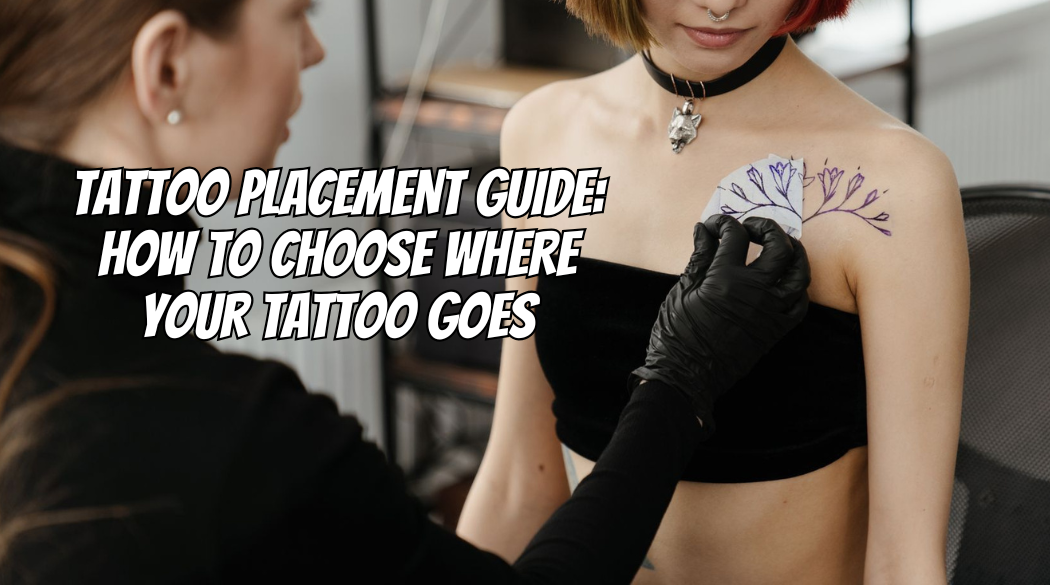
Pro Tip: Ask your Tattoo Artist to place the stencil, then check it in a mirror from several angles before you commit.
Where Do Tattoos Hurt the Most?
Tattoos generally hurt more where skin is thin over bone or where nerves are close to the surface. Fleshier, more muscular areas usually hurt less.
Pain is personal, and everyone’s tolerance is different. As a general guide:
Usually more painful: Ribs, spine, sternum, feet, hands, ankles, armpits, elbows, knees and the back of the knee.
Usually moderate: Inner arm, chest, stomach, upper back and thighs.
Usually more comfortable: Outer upper arm, forearm, calf and outer shoulder.
For a detailed breakdown, see our tattoo pain chart.
A more painful spot doesn’t mean you can’t get tattooed there. It just helps to plan your session and expectations. Getting a good night’s sleep, eating beforehand and taking breaks can all help with longer sessions.
What Are the Best Placements for a First Tattoo?
Popular first-tattoo spots include the outer forearm, upper arm, calf and shoulder. They tend to be more comfortable, easier to care for and simpler for your Tattoo Artist to work on.
These areas usually have more padding and flatter surfaces, which helps with both comfort and clean results. They’re also easier to heal than spots that constantly bend or rub against clothing, like fingers or feet.
Whatever you choose, follow your Tattoo Artist’s aftercare instructions, along with guidance like the American Academy of Dermatology’s tips for caring for tattooed skin.
How Does Placement Affect Size and Design?
Every part of the body has its own shape and movement, and a tattoo needs to fit that shape to look balanced.
Forearm and calf: Great for vertical designs and lettering.
Shoulder and chest: Good for curved designs that wrap with the muscle.
Ribs and side: Designs often follow the body’s natural slope.
Back: A large, flat area that works well for big, detailed pieces.
Size matters too. Very small, highly detailed designs can blur over time. A skilled Tattoo Artist may suggest sizing up or simplifying details so your tattoo stays readable for years.

How Does Placement Affect Healing and Aging?
Placement affects how easily a tattoo heals and how well it holds up over time.
Healing: Mayo Clinic notes that most tattoos take about two weeks to heal. Areas that bend, sweat or rub against clothing or shoes, like hands, feet and joints, often take more care and may need touch-ups.
Sun exposure: The AAD notes that UV light can fade some tattoo inks. Sun is a big factor for many people. A chapter in the medical book series Current Problems in Dermatology reports that about one in five tattooed people have sun-related tattoo problems. Areas like hands, forearms and shoulders need regular sun protection to stay bold.
Friction: High-friction areas, like hands and feet, can wear down faster over the years.
Visibility: Tattoos are more widely accepted than ever, but some workplaces still have dress codes, especially for hands, neck and face. Think about your work and life when choosing a visible spot.
Explore Every Tattoo Placement
Each guide in this series covers pain, healing, how the tattoo ages, meaning where relevant and design ideas, with real work from Ink Different Tattoo Artists.
Arm and forearm tattoos
Shoulder tattoos
Chest tattoos
Back and spine tattoos
Rib tattoos
Hand and finger tattoos
Wrist tattoos
Neck tattoos
Leg, thigh and calf tattoos
Ankle and foot tattoos
Tattoo pain chart
How Do Tattoo Artists Learn Placement?
Tattoo Artists learn placement through hands-on training: studying how designs fit different body parts, practicing stencil placement and getting feedback from experienced Mentors.
Placement is hard to learn from videos alone. It takes someone experienced saying, “Shift that two inches, angle it with the muscle.” That real-time feedback trains a Tattoo Artist’s eye. It’s part of why Tattoo Artists are still essential.
Professional Tattoo Artists also follow strict safety practices, like the OSHA Bloodborne Pathogens Standard. If you’re curious about the career side, read about the mistakes aspiring tattoo apprentices should avoid and the tools every beginner Tattoo Artist should know.
Learn Placement With Ink Different’s Traditional Tattoo Apprenticeship
Ink Different’s Traditional Tattoo Apprenticeship teaches placement, design and technique through in-person mentorship. For 15 years, Ink Different has trained aspiring Tattoo Artists as a college alternative.
What you can expect from our Traditional Tattoo Apprenticeship
The Traditional Tattoo Apprenticeship runs 18 to 24 months across four phases, with in-person training at one of 60+ tattoo studios nationwide. No prior art experience is required.
Phase 1, Art and Design Principles: Drawing, shading, digital design and building a portfolio.
Phase 2, Machine Mastery and Practice Tattooing: Hand-control exercises, machine operation, lining, shading and color packing.
Phase 3, Supervised Tattoos: Tattooing real skin under a Mentor’s direct supervision.
Phase 4, Junior Artist Externship: Building client relationships and refining your skills while you start earning.
You’ll finish with job-ready skills, licensing support and a guaranteed job offer at one of Ink Different’s own tattoo studios. Interest-free payment plans help make training more accessible. According to ZipRecruiter, the average Tattoo Artist in the United States earns $106,858 a year as of November 2026.
Mentorship that pushes your brand and skills further
Want to go further? Our one-year, in-person Master Mentorship lets you train with celebrity and award-winning Master Mentors, including Al Fliction, Liz Cook, Kyle Dunbar, Boneface, Jordi Pla and Marcel Oliveira.
We also offer Spanish-speaking locations in Denver, Orange County, NYC, Miami, San Antonio and San Diego. Our “Good Humans” culture means you join a supportive, family-like community. Each Mentor takes just two tattoo apprentices per tattoo studio, so seats fill up quickly.

Ready to Choose Your Placement?
The right placement makes a good design great. Think about shape, visibility, pain, healing and sun exposure, and lean on your Tattoo Artist’s experience. Then dive into the placement guides above for detailed advice on the spot you’re considering.
If learning about placement has you curious about becoming a Tattoo Artist, apply now to Ink Different’s Traditional Tattoo Apprenticeship and start building an AI-proof career with licensing support along the way.
Frequently Asked Questions
What is the best tattoo placement for a first tattoo?
Popular choices include the outer forearm, upper arm, calf and shoulder. They tend to be more comfortable and easier to care for.
Where do tattoos hurt the most?
Usually over bone and in nerve-dense areas, such as the ribs, spine, sternum, feet, hands, ankles and the back of the knee. Fleshier areas tend to hurt less.
Does tattoo placement affect how fast it fades?
Yes. Sun-exposed and high-friction areas, like hands and feet, often fade faster. Sun protection helps keep tattoos bold.
How do I know if a design fits a placement?
Match the design’s shape to the area, then ask your Tattoo Artist to place a stencil so you can see it on your body before committing.
Can a Tattoo Artist help me choose placement?
Yes. Experienced Tattoo Artists can suggest size, angle and placement so the design flows with your body and ages well.
Which tattoo placements take longest to heal?
Areas that bend, sweat or rub against clothing or shoes, like hands, feet and joints, often need more care and may need touch-ups.