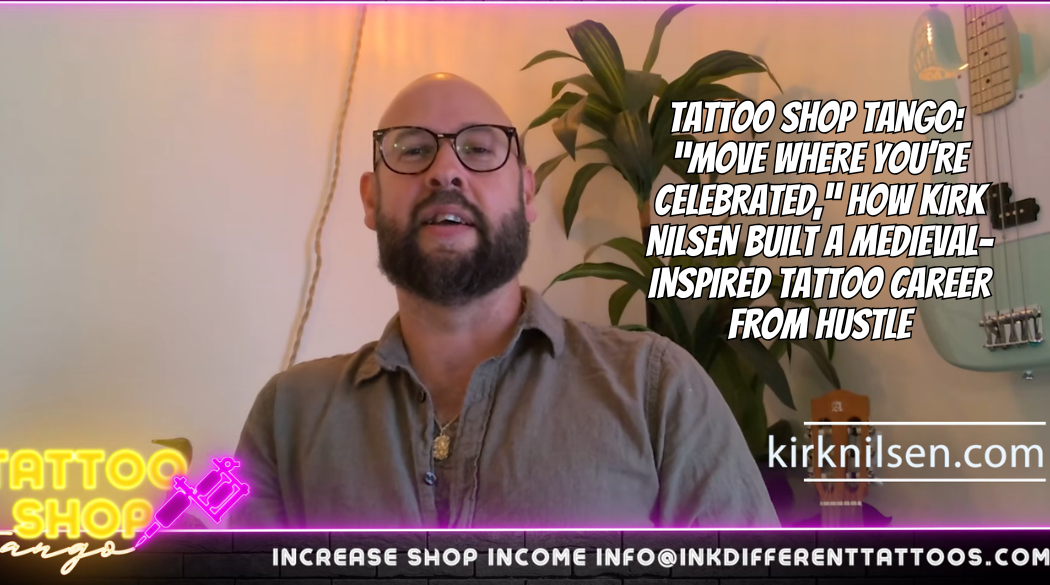
Tattoo Shop Tango: “Move Where You’re Celebrated,” How Kirk Nilsen Built a Medieval-Inspired Tattoo Career From Hustle
When other Tattoo Artists ask Kirk Nilsen how he got known, they expect a secret. Maybe a famous client or a viral video. His answer usually disappoints them. “I literally just busted my ass,” he says. Kirk has been tattooing for almost 20 years and has owned a tattoo shop in New Jersey for almost 15. He built his name through conventions, guest spots, and hustle, with a style all his own: medieval, architectural tattoos that flow with the body like armor.
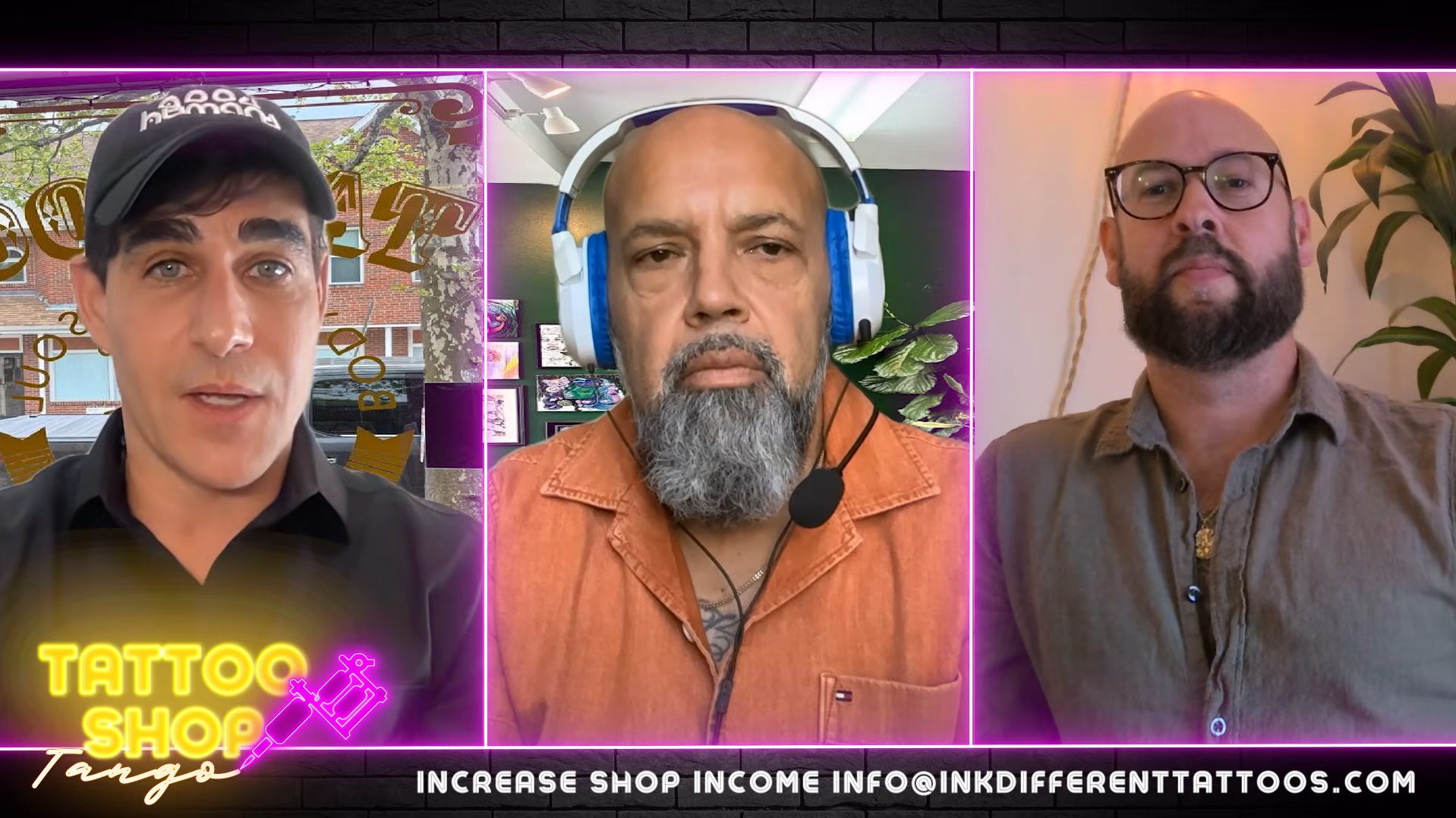
Now he’s building a new life in Charleston, South Carolina, a city that fits his art perfectly. In this episode of Tattoo Shop Tango, Kirk sat down with us and co-host Chico Cortez to share his story.
Key Takeaways
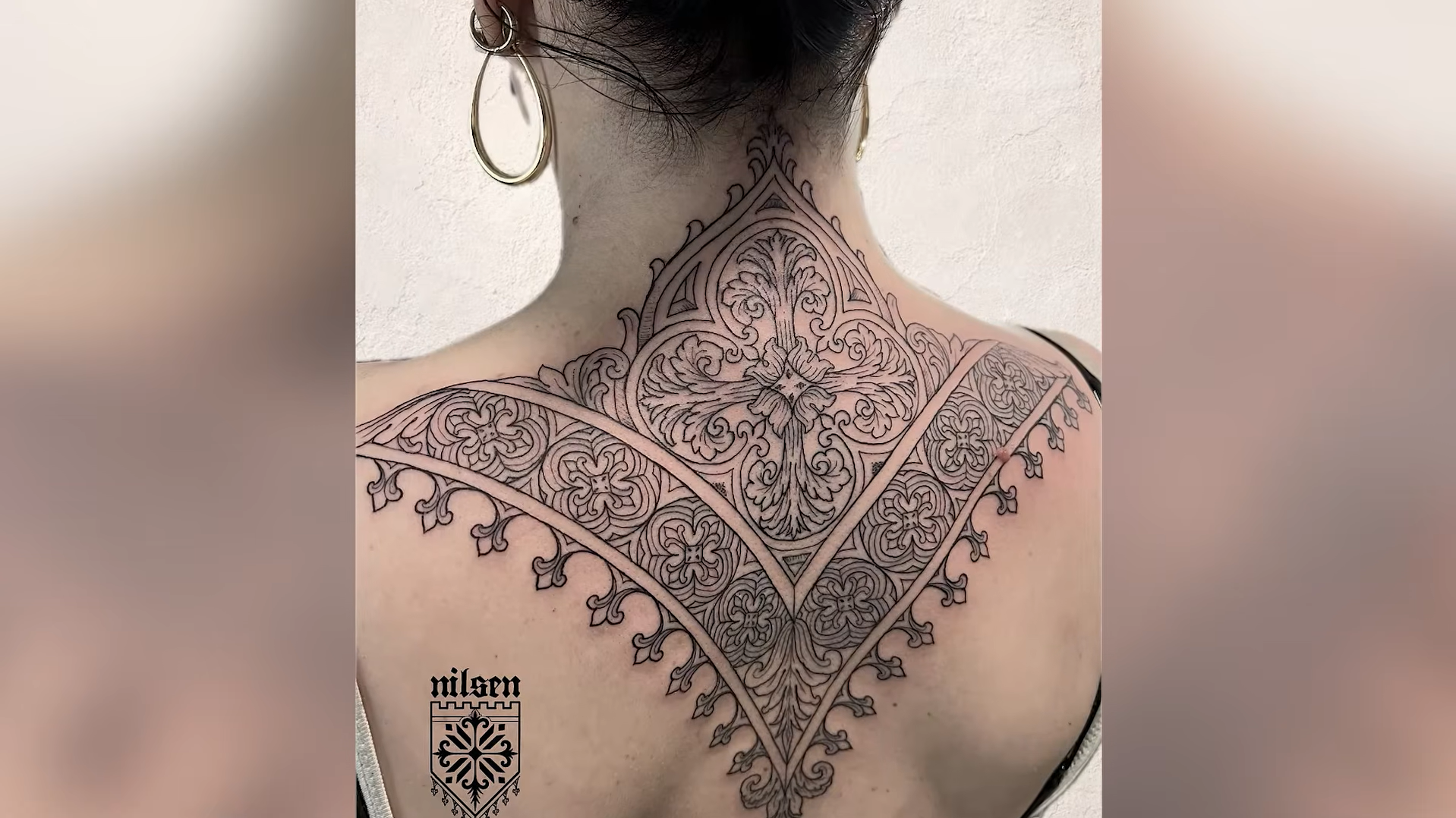
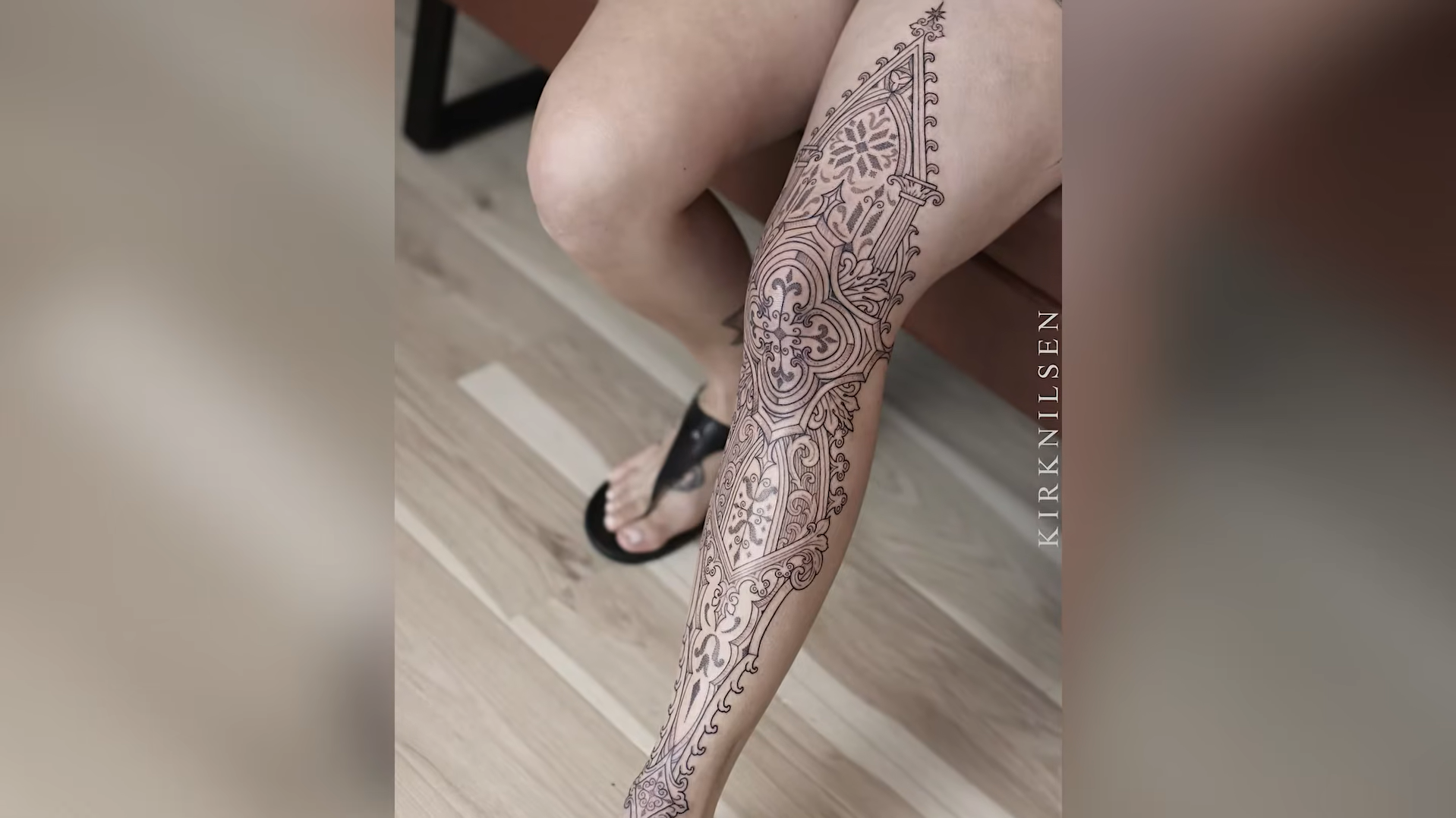
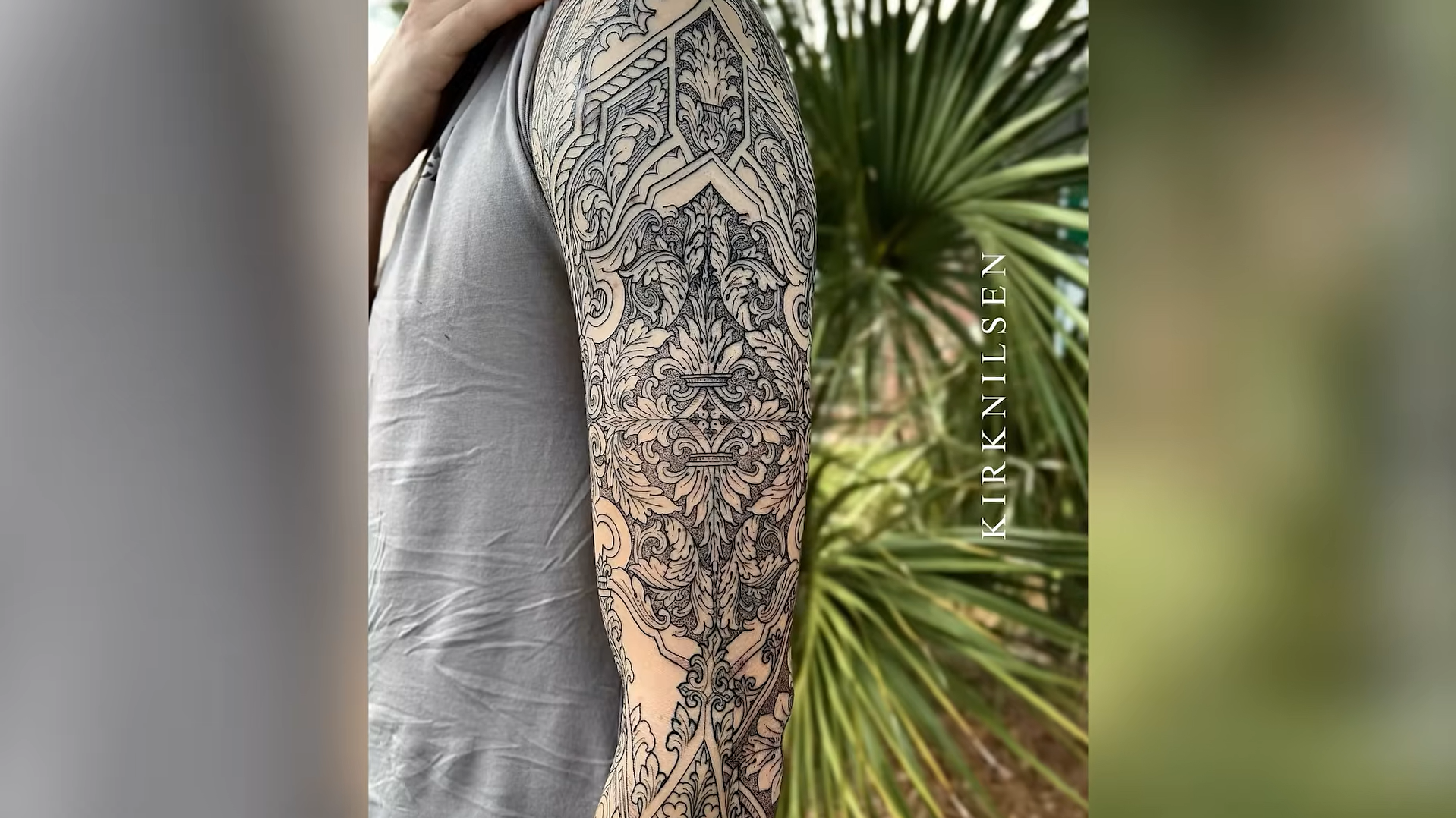
His style: Medieval and architectural, inspired by knight’s armor, Baroque design, old woodprints, and metal engravings.
His move: After his plan to move to Amsterdam fell through, he found Charleston. It took about three years to build a steady clientele there.
His shop owner lessons: Fire on your first gut instinct, hire slow and fire quick, and be the boss from day one.
How he got known: Conventions led to guest spots, which led to better tattoo shops and bigger names following his work.
His motto: “Don’t live where you’re merely tolerated, move to where you’re celebrated.”
Who Is Kirk Nilsen?
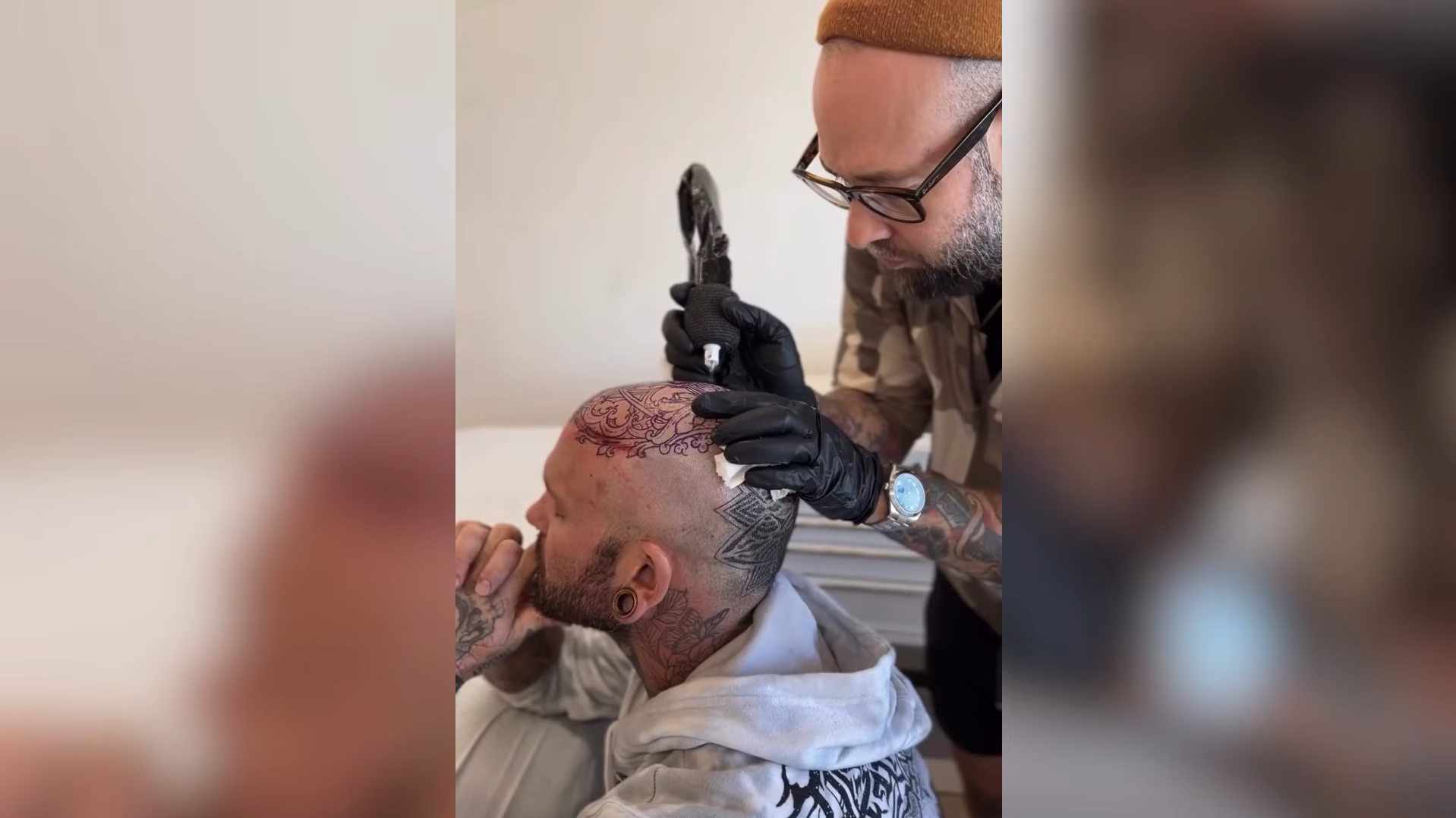
Kirk Nilsen is a Tattoo Artist and longtime tattoo shop owner who has lived in New Jersey his whole life. He’s traveled extensively for tattooing, spending a lot of time in Europe and on the West Coast, and has worked in tattoo shops almost everywhere.
He did his tattoo apprenticeship at a walk-in biker shop under a Tattoo Artist who had apprenticed under Henry Goldfield. His mentor pushed him hard to bring in his own clients. So Kirk promoted himself on Myspace, handed out cards at concerts, and made his own flyers.
Eventually, he had enough clients of his own that he didn’t need that tattoo shop anymore. After a big falling out, he left. He still respects his mentor. “He gave me the job. He taught me how to tattoo,” he says.
What Makes His Medieval-Inspired Style Different?
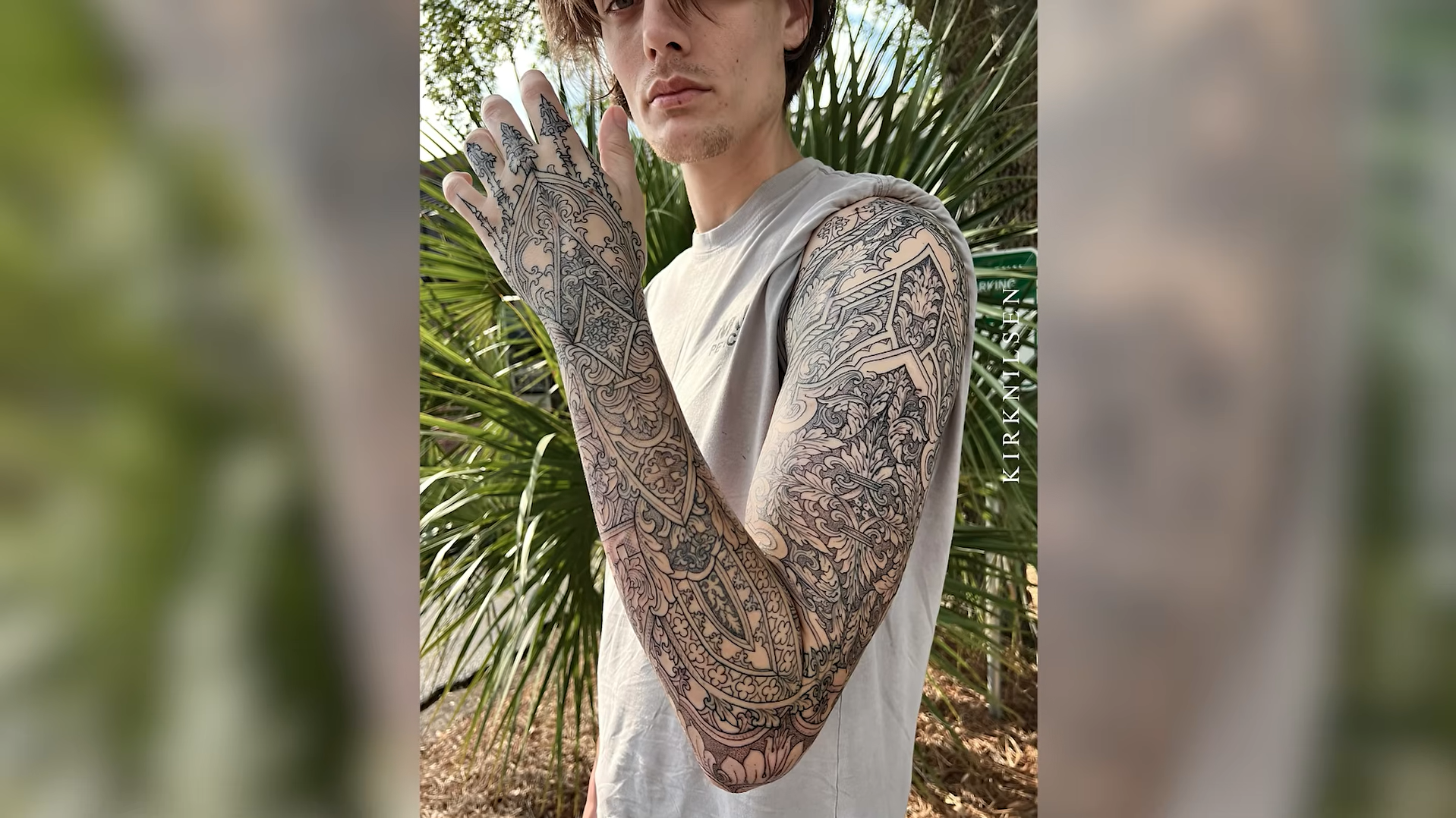
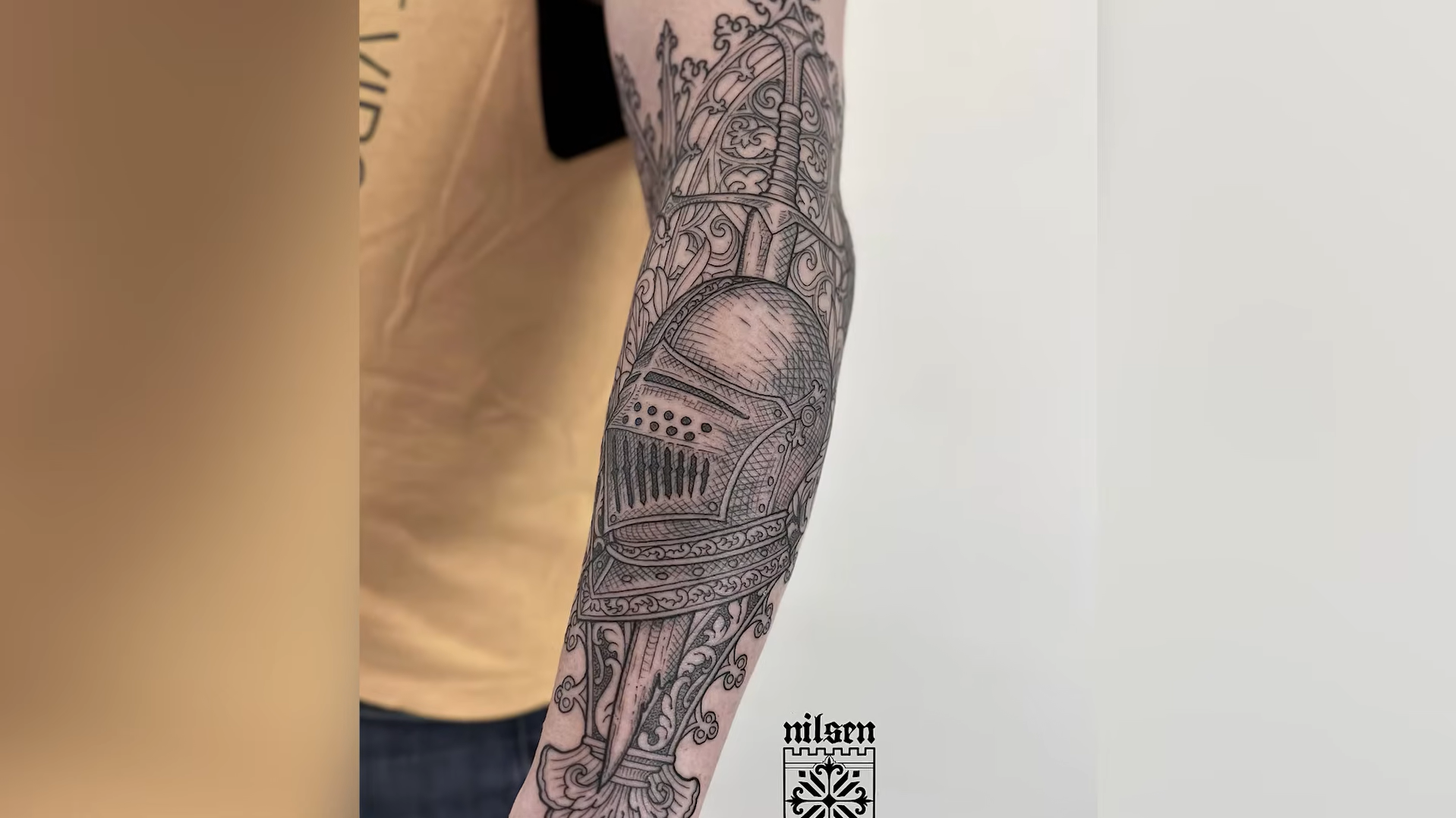
Kirk is heavily drawn to history and architecture: knight’s armor, ornate Baroque designs, old medieval woodprints, and metal engravings.
But he didn’t want to just tattoo castles and knights. “I did not want to be a guy who just like, oh, I tattoo a castle or I tattoo a knight or armor,” he says. Instead, his designs flow with the contours of the arm and almost emulate armor, with a strong architectural feel.
“I just really want to create something that I’ve not seen going on in tattooing,” he says. His style evolved over the years into something truly his own.
Why Did Kirk Move From New Jersey to Charleston?
Because Charleston matches everything about his art.
Kirk first tried to move to Amsterdam. He was working there a lot, learned Dutch, and started getting organized. Then immigration policies changed, making it much harder. He looked at Portugal, too. Meanwhile, after visiting nearly every city in America, he found most of them “just copied and pasted.”
Then he came across Charleston while watching YouTube videos of people walking through cities. “I didn’t believe it was in America,” he says. It reminded him of Savannah and New Orleans, the only two American cities he’d always loved.
The next day, he, his wife, and their kids drove down. He spent two weeks exploring, looking for something wrong with the city. He couldn’t find it.
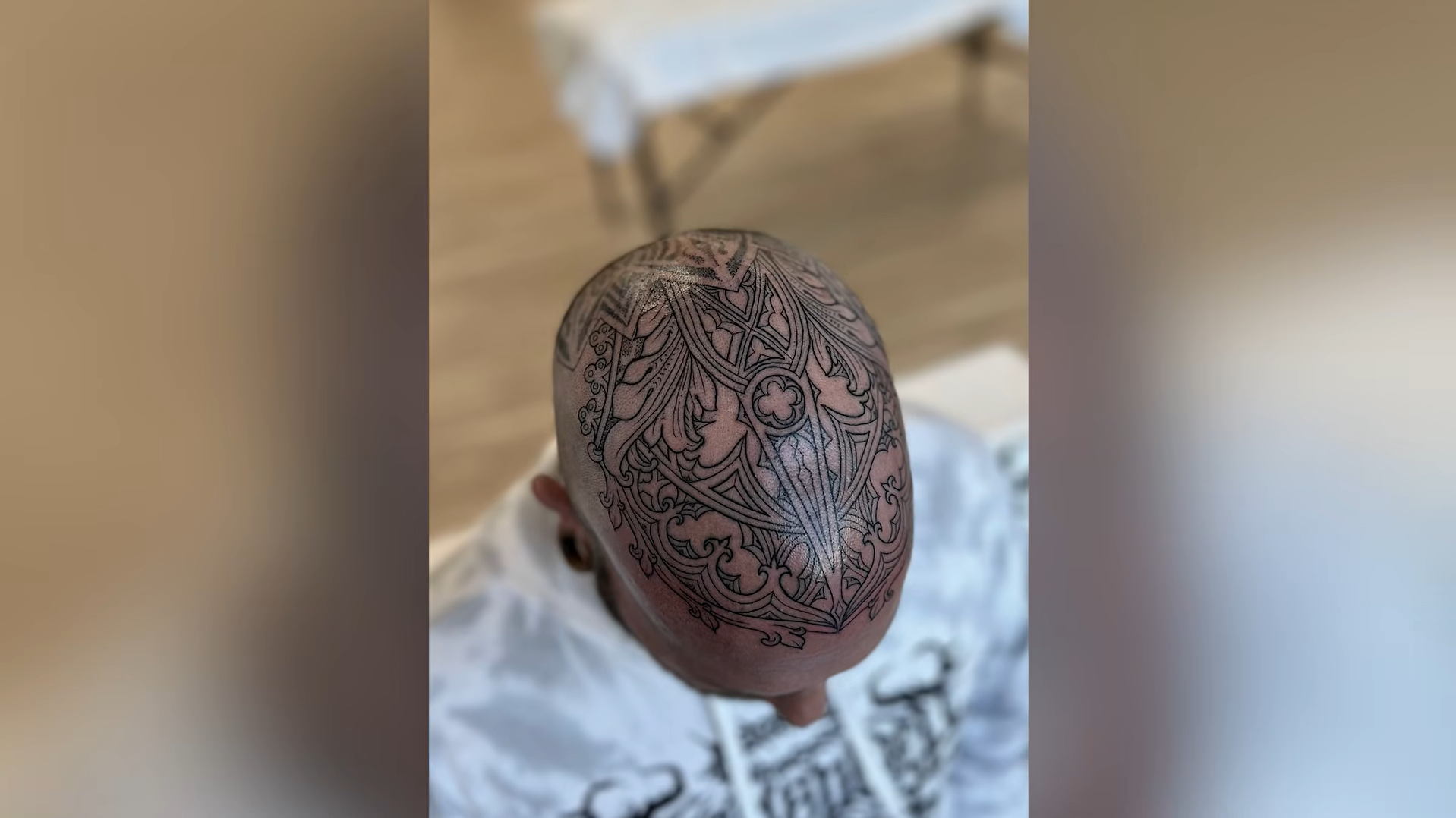
He describes Charleston as a very European-style city, one of the most preserved in America, with Gothic churches, cathedrals, and ornate architecture. Add the palm trees, and it reminds him of medieval Spain and Portugal. “It is just my whole aesthetic and vibe, especially for my art,” he says.
The difference in clients
Kirk says the attitude difference is huge. In New Jersey, many clients argue about every part of a design. “I know a guy, my boy does tattoos. You’re wrong. I watched Ink Master,” he jokes. Then they dissect the design until “it looks like total garbage.”
Once, he gave a difficult client three options: tattoo it yourself, sit down and be quiet, or get punched in the mouth. “It was a pretty intense day,” he admits.
In Charleston, clients see his drawing and say, “I love it. Perfect.” “I can’t even explain how much happier I am,” he says.
The friendliness took some getting used to. Years ago, at a fast-food restaurant out of state, a worker handed him his food and told him to enjoy his day. Kirk assumed he was being sarcastic and cussed him out. His friend had to explain the worker was just being nice.
How Did Kirk Survive New Jersey’s Tattoo Shop Turf Wars?
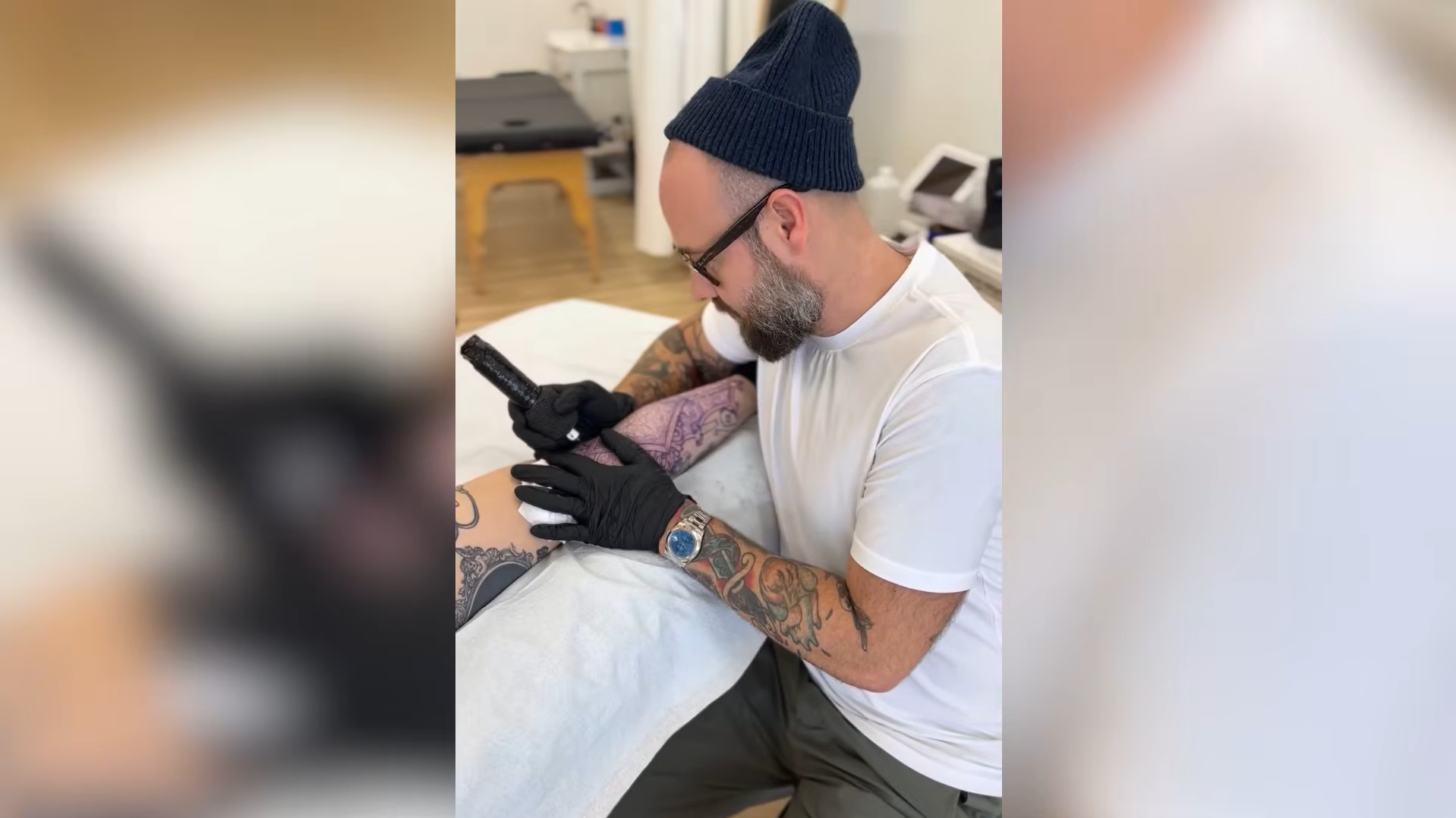
Kirk never planned to be a boss. “I don’t want a boss,” he says. “I don’t like being told what to do.” So he opened a private tattoo studio.
Finding a location was tough. Landlords and townships up and down the coast turned him down. He finally landed in Point Pleasant, where there used to be three tattoo shops but only one was left. He set up in a different part of town, far from the other tattoo shop.
It didn’t matter. Around 2012, the rival tattoo shop was furious. Kirk says they sent people after him, there were fights, and knives were pulled in the parking lot. He says they also told locals that his tattoo shop reused needles and didn’t wear gloves.
The hammer phone call
One man called Kirk to tell him he was on his friend’s turf. Kirk told him to come down right away and bring everyone he knew. The plaza was empty, with no cameras, and Kirk said he’d be at the front desk with a hammer, alone.
The man called back. “Bro, respect,” he said. “You want to fight all of us by yourself with a hammer?” He’d assumed Kirk was “some rich art school kid.” Instead, he said, “Oh, I didn’t know you’re one of us.” They ended up becoming good friends.
Hiring to compete
Since the rival tattoo shop believed he was stealing their work, Kirk decided to compete for real and started hiring Tattoo Artists. One was a traditional Tattoo Artist who had just moved to Asbury Park, which made the rival tattoo shop even angrier.
She suggested a Friday the 13th special. Kirk knew the rival tattoo shop had spread rumors about them during its own Friday the 13th event the year before. So he got ahead of it with a two-year anniversary party, two weeks before Friday the 13th, with $20 tattoos.
Chico notes that turf wars haven’t disappeared. They’ve just moved online. Now, he says, rival tattoo shops leave fake Google reviews instead.
Why Did Kirk Go Back to a Private Tattoo Studio?
Running a tattoo shop with other Tattoo Artists brought problems.
Kirk hoped his team would keep the tattoo shop running while he traveled. Instead, earnings kept dropping while he was away. One month, he came back to find that none of his six Tattoo Artists had worked at all. Every time he yelled at them, they’d suddenly be booked again.
Other problems piled up:
Stolen deposits: One Tattoo Artist took full payment as a “deposit” for sleeves, spent the money on heroin, and never did the tattoos. Kirk ended up doing several sleeves for free.
An unlocked door: His tattoo studio was meant to be private, with a locked door, a doorbell, and frosted windows. His Tattoo Artists kept leaving it unlocked. In the off-season, the hotel next door housed inmates, and people struggling with addiction would wander in. A client who flew in from Italy was so upset he canceled his remaining appointments.
Damaged reputation: One Tattoo Artist overworked clients’ skin so badly that people thought their tattoos were infected, which led to bad reviews.
A bad tattoo: Another did a tattoo so poorly that Kirk offered to laser it off for the client. The Tattoo Artist insisted it looked perfect, then quit while Kirk was away.
Eventually, Kirk let people go, and others left on their own. He went back to a private tattoo studio with just himself. “Everything about the shop was going fine when it was just me,” he says.
What Are Kirk’s Biggest Shop Owner Lessons?
Kirk says he’d hire and fire differently if he could do it again.
Fire on your first gut instinct. “The first time there’s an issue, don’t let it get worse,” he says. Problems snowball, and Tattoo Artists who leave can take clients, consent forms, and your reputation with them.
Hire slow, fire quick. He says he was too lenient for too long.
Be the boss from day one. Kirk treated his Tattoo Artists like friends and coworkers. When he later tried to be a boss, they turned on him. “I should have said, ‘Hey, this is a work relationship. I’m your boss,’” he says.
Remember it’s a shared win. Kirk says about 90% of the clients his Tattoo Artists tattooed were his overflow. When one accused him of being greedy, Kirk explained it’s symbiotic. If they make more money, he makes more money.
Chico adds that a single negative person can turn good Tattoo Artists bad. He compares it to amputating a foot to save the leg. He also says the meaning of loyalty has changed, so he values transparency instead. “You’re loyal until you have a reason to be disloyal,” he says. He used to rely on handshakes. Now, he believes in clear rules and contracts.
How Did Kirk Get Known Without a Secret Cheat Code?
Kirk has never tattooed a celebrity. While working in Berlin, the whole tattoo shop sat down to dinner and shared which celebrities had “made” them. When it was Kirk’s turn, he admitted he’d never tattooed one. “I literally just busted my ass,” he told them.
He decided to become known for a practical reason. If he stayed local, rival tattoo shops could hurt his reputation just by talking badly about him. So he set out to build a style people couldn’t or wouldn’t do, and to draw clients from far beyond his town.
Conventions came first
“I would say the number one thing that kick-started everything” was doing conventions, Kirk says. He met clients, handed out thousands of business cards, and met Tattoo Artists who were better than him.
Those Tattoo Artists invited him to guest spot at their tattoo shops. At those tattoo shops, he met other visiting Tattoo Artists, who invited him to work in Europe and Italy. “I never even reached out to shops for guest spots,” he says. “They’ve always hit me up.”
Earning respect
As he moved from tattoo shop to tattoo shop, more well-known Tattoo Artists started following his work. That pushed him to keep improving. “I want to be respected amongst my peers,” he says.
At a Miami convention, a Tattoo Artist named Tyler saw Kirk drawing everything by hand. He was amazed, and Kirk was just as surprised to learn that many Tattoo Artists now design on an iPad. Kirk has kept a hands-on approach, even as the tools Tattoo Artists use have changed. Tyler introduced him to John, whom Kirk later hung out with in Italy, guest spotted with, and did a podcast with.
Not backing down
Years ago, a man told Kirk to stay away from the Philadelphia convention or they would “break your hands.” Kirk asked himself, “Am I really going to let this guy ruin my life out of fear?” He went alone.
At that convention, he ran into Dave Lopez of Chicago, who once played drums in Kirk’s teenage band. Dave invited him on a tattoo tour. Through that tour, Kirk met another John, who connected him with Dillon Forte, a sacred geometry Tattoo Artist. Kirk later guest spotted with Dillon. When Kirk was part of the Art of Ink documentary, he made sure Dillon was interviewed too, to return the favor.
“You got to give some to take some,” Kirk says.
How Is Kirk Building a Client Base in Charleston?
Building a client base in a new city took time.
After looking into the local laws, Kirk realized he couldn’t simply open his own tattoo shop right away. So he guest spotted at a local tattoo shop. At first, it was “crickets.” Only a few locals reached out, and they balked at his New Jersey prices.
He kept coming back. Clients flew in from as far as Los Angeles, he’d tattoo for a couple of days, then head home. After about three years, he had a steady clientele, enough to fully move. Many of his longtime traveling clients now fly to Charleston instead of New Jersey, including clients from Miami.
Marketing like a shop owner
Kirk treats the booth he rents like his own business. “When you own the shop, you can’t rely on the shop bringing in business for you,” he says. “You have to generate the business.”
He says social media is “kind of a dying thing,” so he’s doing more in person. For the first time in his life, he’s handing out business cards, even to strangers in line at the coffee shop. Posting online still has its place, alongside the many platforms Tattoo Artists use to get their work seen.
Shaping his work to fit the city
Kirk is adapting his work to resonate with local culture: palm trees, Gothic architecture, churches, iron gates, stained glass, and cathedrals. He says this fits well in a more religious region. Charleston has also pushed him further artistically, especially combined with Spanish influences he’s seen in places like St. Augustine, Florida. “Every day I just go for a walk, and it’s all around me,” he says.
What Does “Move Where You’re Celebrated” Mean to Kirk?
Kirk lives by a line he heard years ago: “Don’t live where you’re merely tolerated, move to where you’re celebrated.”
In New Jersey, he says realism and traditional rule, and his style never quite fit. He estimates he’s tattooed only about 10 people from New Jersey in his style. In Charleston, his work feels at home. “Why would you go somewhere where people don’t like what you’re doing and then just do it?” he asks.
He also knows how close he came to giving up. “If I had backed down on any of that, that would be it,” he says. “I don’t know what I’d be doing right now.”
That human side of the craft, from the relationships to the risks, is a big part of why Tattoo Artists are still essential.
What Is Ink Different’s Traditional Tattoo Apprenticeship?
Kirk had to fight for his place in the industry. Today, there’s a structured path for beginners. Ink Different’s Traditional Tattoo Apprenticeship is an 18 to 24 month, four-phase tattoo apprenticeship that takes beginners to job-ready Tattoo Artists. Ink Different has trained Tattoo Artists for 15 years. No prior art experience is required.
Phase One: Art and design.
Phase Two: Machine practice on synthetic skin.
Phase Three: Supervised tattoos on real clients in a tattoo studio.
Phase Four: Building independence and preparing for licensing.
Safety is part of the training, including the OSHA bloodborne pathogens standard. Many new Tattoo Artists pick up habits like overworking the skin, one of the mistakes a good tattoo apprenticeship helps you avoid.
This is a career that comes with confidence. You’ll finish with job-ready skills, licensing support, and a guaranteed job offer at one of Ink Different’s own tattoo studios. The Traditional Tattoo Apprenticeship is available at 60+ tattoo studios nationwide.
For many people, it’s a practical alternative to a four-year degree, and a way to start over in a creative career.
Mentorship That Goes Further
Once you’ve built your foundation, Ink Different’s Master Mentorship connects you with Master Mentors, including Liz Cook, Kara Gutierrez, Joey Tattoo, Boneface, Jordi Pla, Kyle Dunbar, James Vaughn, Big Jaz, Marcel Oliveira, Big Ceeze, Al Fliction, BillyJack Gunter, Javi Antunez, and Sebastian Murphy.
Making Tattoo Training Accessible for Everyone
Ink Different offers Spanish-speaking locations in Denver, Orange County, NYC, Miami, San Antonio, and San Diego. Its “Good Humans” culture means you join a supportive community from day one.
Ready to become a Tattoo Artist?
Kirk Nilsen built his career by refusing to back down, and by moving to a city that celebrates his work. As he puts it, “Just start with conventions and then network from there.”
Seats are limited, with only two apprentices per tattoo studio per Mentor.
For aspiring Tattoo Artists: Apply now to Ink Different’s Traditional Tattoo Apprenticeship and start building an AI-proof career with licensing support and a guaranteed job offer at one of Ink Different’s own tattoo studios.
For Tattoo Artists and shop owners who want to mentor: Learn how to become an Ink Different Mentor at inkdifferenttattoos.com/affiliate.
And for aspiring shop owners: Explore Ink Different’s shop owner training to build the systems, team, and culture your tattoo shop needs.
To book with Kirk, email his assistant through kirknilsen.com. He says email is the best way to reach him, since texts and DMs get lost. Follow him on Instagram at @kirknilsentattoos, and follow Chico at @m4l_chico.
Frequently Asked Questions
What style does Kirk Nilsen tattoo?
Medieval and architectural, inspired by knight’s armor, Baroque design, woodprints, and metal engravings, designed to flow with the body like armor.
Why did Kirk Nilsen move to Charleston?
Its preserved Gothic architecture and palm trees match his aesthetic. He also finds Southern clients far easier to work with.
How did Kirk get known in the tattoo industry?
Through conventions, which led to guest spots at better tattoo shops in the U.S. and Europe, and to well-known Tattoo Artists following his work.
What is Kirk’s top advice for shop owners?
Fire on your first gut instinct, hire slow and fire quick, and be the boss from day one instead of a friend.
How long does the Traditional Tattoo Apprenticeship take?
Ink Different’s Traditional Tattoo Apprenticeship takes 18 to 24 months across four phases, with licensing support and a guaranteed job offer at one of Ink Different’s own tattoo studios.
Does Ink Different offer training in Spanish?
Yes. Spanish-speaking locations are available in Denver, Orange County, NYC, Miami, San Antonio, and San Diego.