The Best Places on the Body for a First Tattoo
Not every spot on your body handles ink the same way. The best places for a first tattoo are low-pain, flat, easy-to-heal areas like the outer forearm, upper arm, calf, and upper back, zones where the skin is stable and the design has room to breathe.
Whether you're getting inked or dreaming of one day holding the tattoo machine yourself, placement is the first real decision on this journey. Here at Ink Different Tattoos, we teach aspiring tattoo artists to understand the body like a canvas, because knowing where ink lives well is the foundation of the craft.
In this article, we'll walk through the best and worst spots for a first tattoo, how placement affects healing, and what it means for your choices down the line if you ever pick up the machine yourself.
Key Takeaways
Best beginner spots:Outer forearm, upper arm, calf, and upper back are flat, low-pain, and heal cleanly.
Least painful:Areas with more muscle and fewer nerve endings hurt less than bony or thin-skinned zones.
Avoid at first:Ribs, feet, hands, and inner wrist bring more pain and trickier healing.
Healing matters: Placement affects sun exposure, friction, and how well the design holds over time.
Artist skill: Learning placement is core to Tattoo Artist Training at Ink Different Tattoos.
What makes a spot good for a first tattoo?
A good first tattoo spot is flat, has firm skin over muscle, sits low on the pain scale, and stays easy to keep clean while it heals. These four factors decide how comfortable your experience is and how sharp your ink looks in a year.
Think of your skin like soil. Some ground is soft, forgiving, and ready to hold what you plant. Other ground is rocky, thin, and stubborn. Your first tattoo deserves fertile ground so the design takes root and thrives.
When you weigh a placement, keep three questions in mind:
Pain: Is there muscle padding, or is it right over bone?
Visibility: Do you want it seen daily, or kept private?
Healing: Will clothing rub it, or will it get constant sun?
These questions are the same ones you will learn to ask as a tattoo apprentice; understanding the client's needs is half the art.
Where are the least painful places for a first tattoo?
The least painful places for a first tattoo are the outer forearm, upper arm, outer thigh, and calf, because these areas have more muscle, thicker skin, and fewer nerve endings. Pain is real, but placement gives you serious control over it.
Nerve density is the deciding factor. Fleshy areas with padding buffer the needle, while thin skin stretched over bone amplifies every pass. If nerves make you nervous, start where your body is kindest to you.
Lower-pain zones that beginners love:
Outer forearm: Flat, muscular, and easy to show or cover.
Upper outer arm: Classic, roomy, and forgiving.
Calf: Plenty of muscle and a great canvas for bolder designs.
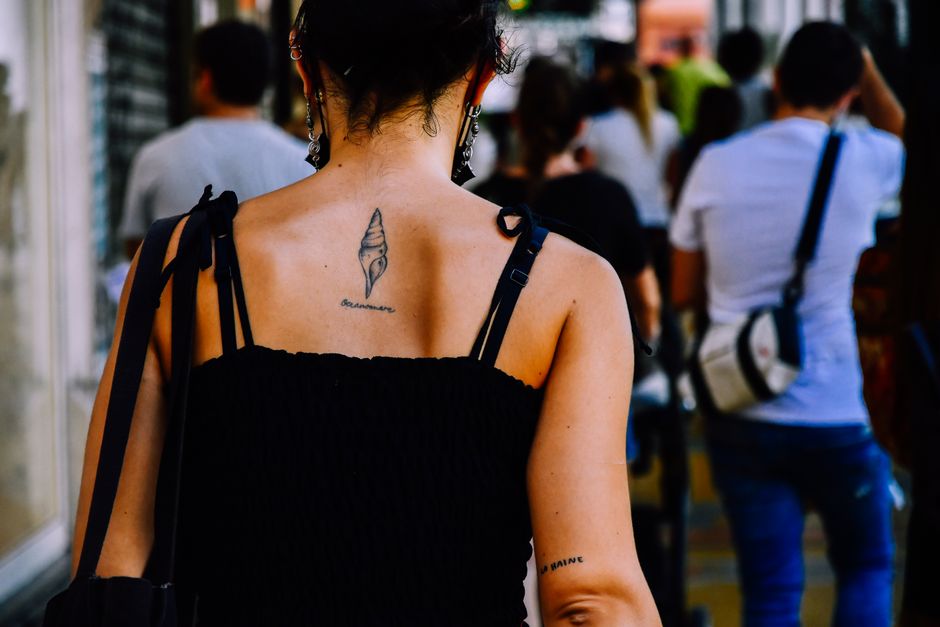
Upper back and shoulder: Broad, stable, and low on nerve endings.
Tip:Eat a solid meal and stay hydrated before your appointment. A steady body handles the needle far better than a running-on-empty one.
What are the best body placements for beginners?
The best beginner placements are the outer forearm, upper arm, calf, and upper back because they balance comfort, visibility, and clean healing better than any other areas. These spots let your first piece succeed without a steep learning curve.
The forearm is the crowd favorite for a reason. It is flat, easy for the artist to work on, and you can watch your ink come to life. It also heals predictably as long as you protect it from the sun.
The upper arm and shoulder give you generous room, which is perfect if you want something with detail. The calf works beautifully for medium-to-large designs, and the upper back offers the biggest, most stable canvas of all. Every one of these follows the same rule: firm skin, decent muscle, minimal friction.
Remember, according to the American Academy of Dermatology tattoo care guidelines, proper aftercare protects your investment, and placement directly shapes how easy that care will be.
Where should you avoid putting your first tattoo?
For a first tattoo, avoid the ribs, feet, hands, fingers, inner wrist, and spine, since these areas bring intense pain, faster fading, and trickier healing. They are not off-limits forever, just not the ideal starting ground.
These placements sit over bone or in high-movement, high-friction zones. Hands and feet fade quickly because the skin regenerates fast and takes constant wear. Ribs and spine deliver some of the sharpest pain because there is almost no muscle to cushion the needle.
Steer clear of these for round one:
Ribs and sternum: High pain, thin skin over bone.
Feet and hands: Fade fast and heal unpredictably.
Fingers: Ink migrates and blurs over time.
Inner wrist and elbow ditch: Sensitive and prone to spreading.
If you are researching before you commit, our guide to the mistakes aspiring tattoo apprentices should avoid will save you from rookie regrets, whether you are the client or the future artist.
How do you choose your first tattoo placement step by step?
To choose your first tattoo placement, match your pain tolerance, lifestyle, and design size to a flat, muscular, low-friction area, then test the stencil before committing. Follow these steps to land on the right spot with confidence.
Step 1: Assess your pain tolerance. Be honest with yourself. If you are anxious, start with the forearm or upper arm rather than the ribs.
Step 2: Consider your daily life. Does your job or wardrobe require you to cover it? Choose a placement you can hide or show at will.
Step 3: Match the design to the space. Small linework suits the forearm; large, detailed pieces need the back or thigh.
Step 4: Think about the sun. Exposed areas fade faster, so plan for sunscreen and long-term care.
Step 5: Test the stencil. Wear the placement for a day. Live with it before the needle makes it permanent.
These same instincts, reading the body and planning placement, are exactly what separate a hobbyist from a professional Tattoo Artist. This is why hands-on mentorship matters. You learn from someone who has tested placement theory on hundreds of real clients.
How does placement affect healing and aftercare?
Placement affects healing because areas with high friction, sun exposure, or constant movement heal slower and fade faster than flat, protected zones like the outer arm and upper back. Where you place your ink shapes how you care for it.
A forearm tattoo heals cleanly with basic care, while a foot tattoo battles socks, shoes, and constant motion. Joints like elbows and knees stretch every time you move, which can distort fresh linework. The stiller the skin, the smoother the healing.
Hygiene is non-negotiable, no matter the spot. Professional studios follow strict safety standards, and the OSHA bloodborne pathogen standards exist to protect both artist and client. As a future Tattoo Artist, mastering these protocols is part of the job from day one.
Warning:Never pick or scratch a healing tattoo. Let the skin do its work, and follow your artist's aftercare instructions to the letter.
Why does placement matter when you become the artist?
Placement matters for Tattoo Artists because reading skin, muscle, and movement determines how a design ages, and mastering it is a core professional skill taught through hands-on mentorship. Great artists see the body before they see the design.
When you sit on the other side of the Tattoo Machine, placement becomes strategy. You learn how ink behaves on different body parts, how to flow a design with muscle and bone, and how to guide a nervous first-timer toward a spot they will love for life. That knowledge is not in a textbook. It is built through repetition under a skilled Mentor.
This is exactly why live, in-person guidance beats going it alone. Understanding the human canvas is a craft that machines cannot replicate, which is part of what makes this such a resilient career. Our post on why tattoo artists are still essential digs into why this skill stays valuable in an AI-driven world.
Where can you learn to tattoo the right way?
You can learn to tattoo the right way through Ink Different Tattoos' Traditional Tattoo Apprenticeship, a structured 18-to-24-month program that builds professional, licensing-ready skills from the ground up.If placement fascinates you, this is where curiosity turns into a career.
For 15 years, Ink Different has trained aspiring Tattoo Artists to build real, lasting skills, not shortcuts. We are a serious college alternative for people who feel stuck in dead-end work and know their creative potential is going to waste. You are the hero of this story. We are simply the guide who has walked the path before.
What you can expect from our Traditional Tattoo Apprenticeship
Our Traditional Tattoo Apprenticeship runs 18 to 24 months across a proven 4-phase structure. You start remote to build your foundations, then finish hands-on in real Tattoo Studios. No prior art experience is required, because we teach you from the very first line.
Phase-based training: Foundations, skin practice, supervised client work, and independent readiness.
Personalized mentorship: Live, in-person guidance from experienced professionals.
Job-ready skills and licensing support: We prepare you to work professionally, including help navigating state licensing.
A career that comes with confidence
This is an AI-proof craft rooted in human skill, trust, and connection. You graduate ready to work, with licensing support along the way and the confidence that comes from real training. If you want to understand the legal side, our guides on how to get your tattoo license in Texas break down the process state by state.
Mentorship that pushes your brand and skills further
Ready to specialize or launch your own studio? Our one-year, in-person Master Mentorship pairs you with award-winning Mentors like Al Fliction, Liz Cook, Kyle Dunbar, Boneface, and Jordi Pla. It is built for beginners and experienced artists chasing a specific style, a career explosion, or business ownership. Explore platforms to help tattoo artists build their brand to amplify your work once you launch.
Making tattoo training accessible for everyone
We offer Spanish-speaking locations in Denver, Orange County, NYC, Miami, San Antonio, and San Diego, so language never stands between you and this career. Our "Good Humans" culture means you join a supportive, family-like community from day one. Seats are limited because real mentorship cannot be mass-produced.
Ready to Become a Tattoo Artist?
Choosing where your first tattoo lives is a small decision compared to choosing where your career begins. If you have felt that pull, that quiet knowing that your creative potential deserves more than a job you tolerate, this is your sign to stop waiting.
Ready to become a Tattoo Artist? Apply now to Ink Different's Traditional Tattoo Apprenticeship and start building an AI-proof career, with licensing support along the way. Or fill out our quick questionnaire to get personalized support and find out if the Tattoo Apprenticeship Program is right for you.
Frequently Asked Questions
What is the best place on the body for a first tattoo?
The outer forearm is widely considered the best first tattoo placement because it is flat, muscular, low on the pain scale, easy to show or cover, and heals cleanly with basic aftercare.
Where does a first tattoo hurt the least?
First tattoos hurt least on the outer forearm, upper arm, calf, and outer thigh because these areas have more muscle, thicker skin, and fewer nerve endings, which cushions the needle.
Which places should I avoid for a first tattoo?
Avoid the ribs, feet, hands, fingers, and inner wrist for a first tattoo because these spots bring sharper pain, faster fading, and trickier healing than flatter, muscular areas.
Do I need art experience to become a Tattoo Artist?
No. Ink Different Tattoos' Traditional Tattoo Apprenticeship is built for beginners and teaches drawing and machine fundamentals from day one, so you can start with no prior experience.
How long is the Traditional Tattoo Apprenticeship?
The Traditional Tattoo Apprenticeship runs 18 to 24 months across four phases, starting remote to build foundations, then finishing hands-on in real Tattoo Studios with live mentorship.
Is tattooing a stable career choice?
Yes. Tattooing is a hands-on, human craft that AI cannot replicate and relies on trust, skill, and connection, making it a resilient career path with strong long-term demand.