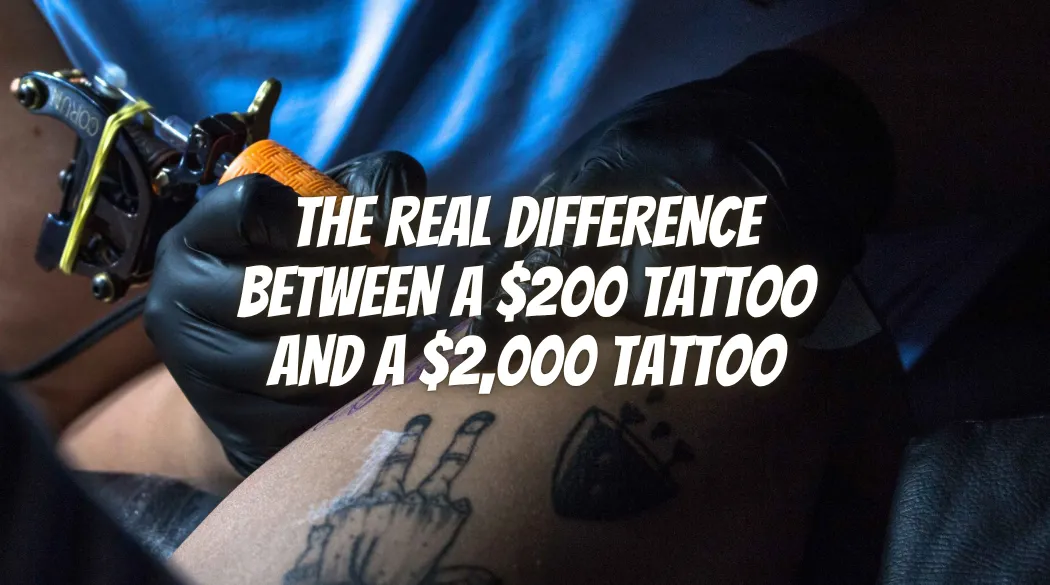
The Real Difference Between a $200 Tattoo and a $2,000 Tattoo
Someone shows off a cheap tattoo they got on a whim, and six months later the lines are blurry, the color has faded, and they're already saving for a cover-up. Meanwhile, another person wears a piece that looks like it belongs in a gallery, and they'll never regret a single dollar they spent.
The difference between a $200 tattoo and a $2,000 tattoo is the visible result of skill, safety, experience, and reputation combined into one piece of permanent art on human skin. When you choose to become a Tattoo Artist, you're choosing to be on the side of that gap that builds lasting value.
Key Takeaways
Price reflects skill: Premium tattoos come from training, precision, and years of hands-on mentorship with experienced artists.
Safety matters: Certified studios follow OSHA bloodborne pathogen standards, protecting clients and justifying higher pricing.
Longevity pays off: Well-executed tattoos heal cleaner and last decades without expensive cover-ups or regret.
Your path is learnable: No prior art experience required; Ink Different trains beginners from the ground up.
AI-proof career: Hand-crafted tattooing is a uniquely human skill machines cannot replicate, making it recession-resistant.
What actually drives the price of a tattoo?
The price of a tattoo is driven by the Tattoo Artist's skill level, the studio's safety standards, the time invested in consultation and design, and the artist's proven reputation, not simply the size or complexity of the design.
When a client pays $2,000, they are not paying for ink and needles. They are paying for the years a Tattoo Artist spent mastering line work, shading, color theory, and composition. They are paying for a piece that will still look sharp when they're 60 years old.
A $200 tattoo often skips those investments. Fast turnaround, minimal consultation, and limited experience keep the cost low, but the client usually pays the real price later in fading, scarring, or regret.
Pro Tip: When a tattoo feels "too cheap," the client is usually the one absorbing the hidden cost through poor healing or a future cover-up that costs twice as much.
What are you really getting with a $200 tattoo?
A $200 tattoo typically comes from a newer or high-volume artist working quickly, with less time spent on custom design, precision, and personalized consultation.
There is nothing shameful about affordable work, and plenty of solid Tattoo Artists start here while they build their craft. But cheap often means rushed. Rushed means shaky lines, uneven saturation, and a design that was not customized around the client's body contours and preferences.
The real cost shows up down the road. Blurry outlines. Colors that turn muddy. A piece that looked fine on day one but ages like a photocopy of a photocopy.
If you're considering this career, understand that the difference between the artist who charges $200 forever and the one who commands premium prices is intentional, structured training.
Why does a $2,000 tattoo cost so much more?
A $2,000 tattoo reflects an experienced Tattoo Artist's custom design work, flawless technical execution, premium studio safety protocols, and a reputation earned over years of proven, gallery-quality results.
Premium pricing is a story of value, not markup. That client is booking hours of consultation, a design drawn specifically for their body anatomy, and an artist whose portfolio proves the ink will hold for decades without fading or distortion.
Consider what the top of the industry offers:
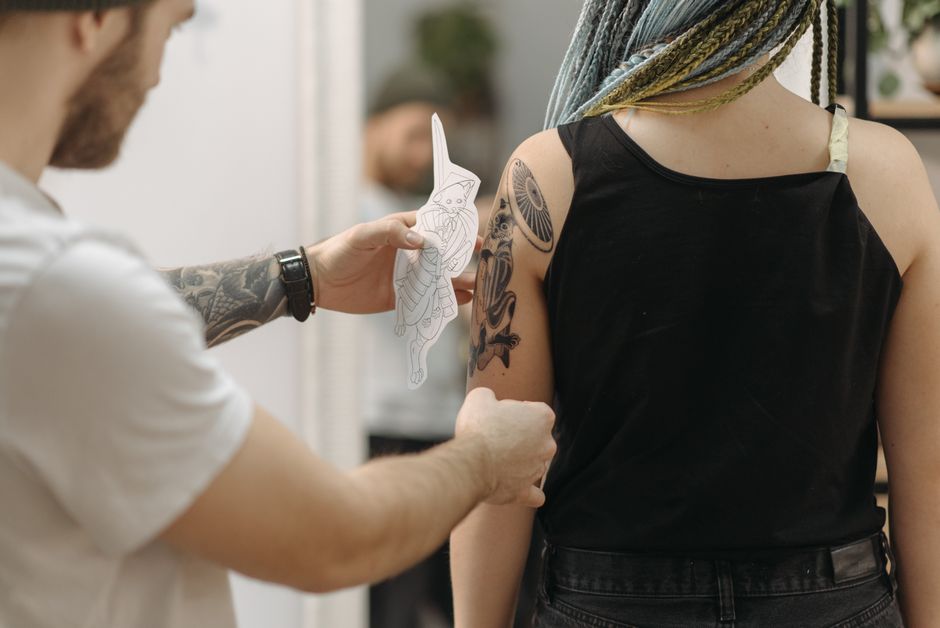
Custom design: The piece is built from scratch around the client's anatomy and story, never traced from flash or templates.
Technical mastery: Consistent line weight, smooth gradients, and precise color packing that endures.
Reputation: A documented portfolio and client waitlist that proves demand and trust in the artist's work.
Longevity: Work that heals cleanly and ages gracefully, becoming more meaningful over time.
Professional environment: Full compliance with safety and sterilization standards that protect your health.
According to the Bureau of Labor Statistics on craft and fine artists, income for skilled artists rises significantly with reputation and specialization. In tattooing, the artists who invest in mastery earn the trust that justifies premium pricing.
How does skill create the price gap?
Skill creates the price gap because tattooing is a hand-crafted discipline where precision, consistency, and artistic judgment can only be developed through structured training, repetition, and live mentorship.
Think of it like planting a tree. A seed dropped carelessly in poor soil might sprout, but it grows crooked and weak. A seed planted with intention, watered, and guided by an experienced hand becomes something people travel to see. Skill is that intentional cultivation.
A premium Tattoo Artist reads the skin, adjusts machine speed on the fly, and understands how ink settles in living tissue. That instinct is not born but trained. Live, in-person mentorship is where it takes root, because you cannot learn feel, pressure, or timing from a video or a book.
This is exactly why hand-crafted tattooing is an AI-proof career. Machines can generate images, but they cannot read the tension of skin, adapt to individual healing patterns, or understand the emotion behind a memorial piece. We explored this in depth in our article on why tattoo artists are still essential.
Why do hygiene and safety justify a higher price?
Hygiene justifies higher pricing because premium studios invest in sterilization equipment, single-use supplies, and full compliance with OSHA bloodborne pathogen standards to protect every client from infection and scarring.
A tattoo is a wound. That is not a scare tactic—it is a fact that separates professionals from corner-cutters. The OSHA bloodborne pathogen standards exist to protect both artist and client, and following them costs money in equipment, training, and supplies that shows up in the price.
Premium studios also guide clients through proper healing protocols, because the artist's work is only as good as the aftercare. The American Academy of Dermatology tattoo care guidelines back up why professional healing advice protects the investment and prevents complications.
Warning: A tattoo that skips proper sterilization is not a bargain. It is a health risk wearing a low price tag: infections, scarring, and bloodborne illness are real consequences.
How do you become the artist behind the premium tattoo?
You become a premium Tattoo Artist by completing structured, hands-on training under experienced Mentors, earning your state license, and building a portfolio that proves your value over time, a journey typically taking 18 to 24 months.
Here is the honest truth: nobody wakes up charging premium prices. Every respected Tattoo Artist climbed a ladder, and the fastest, sturdiest ladder is a real tattoo apprenticeship with hands-on mentorship. Follow this proven path:
Step 1: Learn the fundamentals. Master drawing, line work, machine handling, and color theory before you ever touch skin—this phase takes weeks to months.
Step 2: Practice under supervision. Build muscle memory on synthetic skin and controlled settings with your Mentor watching every move—this builds confidence and consistency.
Step 3: Work live clients. Perform supervised tattoos on real skin to develop real-world instinct, speed, and the ability to read and adapt to living tissue.
Step 4: Get licensed and build your brand. Earn your state credentials and start attracting the clients who value and pay for quality work.
Once you're working, your reputation is your business. Learning to market yourself early is a game-changer, which is why we put together a guide to platforms to help tattoo artists build their brand.

What can you expect from our Traditional Tattoo Apprenticeship?
Ink Different Tattoos offers a Traditional Tattoo Apprenticeship: an 18- to 24-month, four-phase hands-on training program built for beginners with zero art experience, including licensing support and job-ready skills.
For over 15 years since our founding in 2011, we have trained aspiring artists to step into an AI-proof career with mentorship and support. We are the college alternative for people who are serious about excellence, not shortcuts.
Here is how our tattoo apprenticeship works:
Start remote, finish in studios: Begin building fundamentals online, then transition to real Tattoo Studios where you work on real clients with real artists.
Personalized hands-on training: Live, in-person mentorship from experienced artists, not recorded lectures or self-paced modules.
Great for beginners: No prior art experience needed. We teach drawing, line work, and machine handling from the ground up.
Licensing support: We guide you toward the credentials your state requires to work professionally.
Affordable and accessible: Payment plans available; Spanish-speaking studios in multiple cities ensure language is never a barrier.
A career that comes with confidence. When you finish our Traditional Tattoo Apprenticeship, you walk out with job-ready skills, a professional portfolio, and the licensing support to work independently.
Mentorship that pushes your brand and skills further. Our one-year, in-person Master Mentorship trains you alongside celebrity and award-winning Master Mentors, including Al Fliction, Liz Cook, Kyle Dunbar, Boneface, and Jordi Pla. It is designed for mastering a specific style, growing your career, and building your own sustainable business.
Making tattoo training accessible for everyone. We operate Spanish-speaking locations in Denver, Orange County, NYC, Miami, San Antonio, and San Diego, so language is never a barrier to your future. Our "Good Humans" culture means you join a supportive, family-like community.
Remember: Seats in a quality tattoo apprenticeship are limited, because real mentorship cannot be mass-produced.
Ready to become a Tattoo Artist?
The difference between a $200 tattoo and a $2,000 tattoo is the same difference between staying stuck and building something permanent. One is a shortcut that costs more later. The other is a foundation you'll stand on for the rest of your career.
Ready to become a Tattoo Artist? Apply now to Ink Different's Traditional Tattoo Apprenticeship and start building an AI-proof career with licensing support along the way. Prefer to explore first? Fill out our quick questionnaire to get personalized support and find out if our tattoo apprenticeship is the right fit for you.
Frequently Asked Questions
Why is one tattoo $200 and another $2,000?
Price reflects the artist's skill, experience, custom design work, studio safety standards, and reputation. A $2,000 tattoo represents years of training and proven work that ages beautifully for decades.
Do I need art experience to become a professional Tattoo Artist?
No. Ink Different's Traditional Tattoo Apprenticeship is built for beginners and teaches drawing, line work, and machine handling from day one, zero prior art background required.
How long does a tattoo apprenticeship take?
Ink Different's Traditional Tattoo Apprenticeship takes 18 to 24 months across four phases. Your exact timeline depends on how quickly you master each training stage.
What makes Ink Different different from other training programs?
Ink Different offers live, in-person mentorship with award-winning Mentors, a supportive community culture, licensing support, and 15+ years of experience as a college alternative for aspiring Tattoo Artists.
Is tattooing an AI-proof career?
Yes. Tattooing is a hand-crafted human skill requiring real-time judgment on living tissue. Machines cannot replicate the precision, feel, and emotional connection professional Tattoo Artists provide.
Where can I do a tattoo apprenticeship near me?
Ink Different operates nationwide, including Spanish-speaking locations in Denver, Orange County, NYC, Miami, San Antonio, and San Diego. You start remotely and finish training in a professional Tattoo Studio.