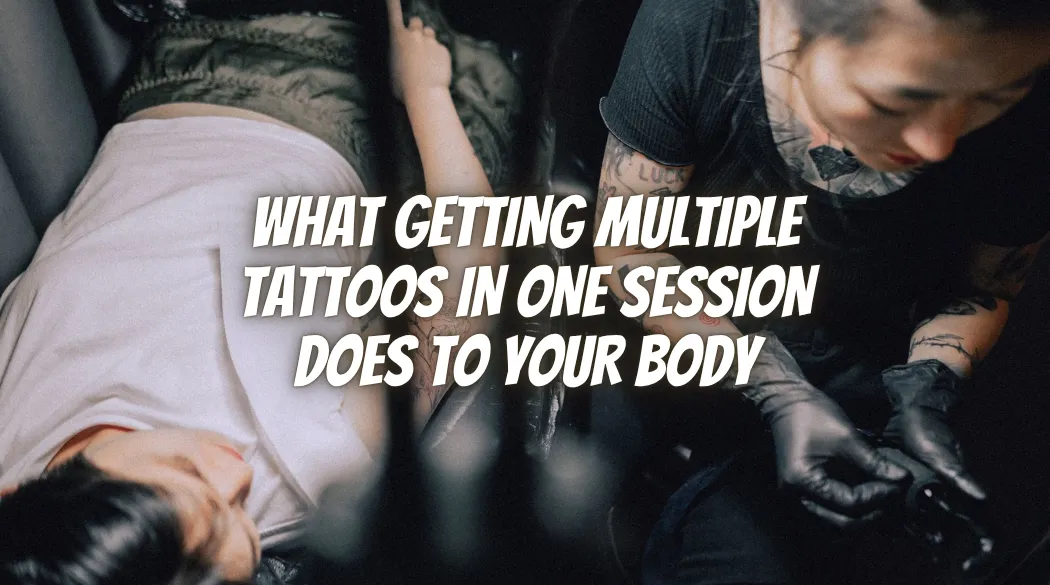
What Getting Multiple Tattoos in One Session Does to Your Body
You've been dreaming about that full sleeve for years. You finally book the appointment, and the temptation hits: why not knock out three pieces in one marathon session? Your body keeps score in ways you can't feel in the moment.
Getting multiple tattoos in one session is the practice of receiving two or more distinct tattoos, or a large amount of coverage, during a single extended appointment that places significant physical stress on the body. Understanding what a long, multi-piece tattoo session actually does to your body is the difference between a healthy heal and a painful, avoidable setback.
At Ink Different Tattoos, we believe every serious artist and client should understand this from the inside out.
Key Takeaways
Physical stress: Long sessions trigger an inflammatory response, adrenaline spikes, and can leave you drained for days.
Immune load: Each open wound competes for your body's healing resources, slowing recovery when you push too far.
Time limits: Most professionals cap sessions at four to six hours to protect skin quality and client safety.
Warning signs: Watch for dizziness, nausea, excessive swelling, and prolonged fatigue during and after your session.
The real skill: Knowing when to stop is a hallmark of a trained Tattoo Artist, taught in structured Tattoo Artist Training.
What Happens to Your Body During a Multi-Tattoo Session?
During a multi-tattoo session, your body treats every needle pass as a controlled injury, releasing adrenaline, cortisol, and endorphins while ramping up inflammation to begin the healing process. The larger the coverage, the harder your system works.
In the first hour, adrenaline masks much of the pain. That is why the beginning feels manageable. But as the hours stack up, those chemicals fade, and the discomfort climbs sharply. This is the "adrenaline dump," and it can leave you shaky, cold, and exhausted.
Your body is also fighting fluid loss. Repeated skin trauma releases plasma and lymph fluid, which is why heavy sessions can leave you feeling wiped out. Think of it like planting many seeds in one small plot: the soil can only nourish so much growth at once.
How Long Is Too Long for a Single Session?
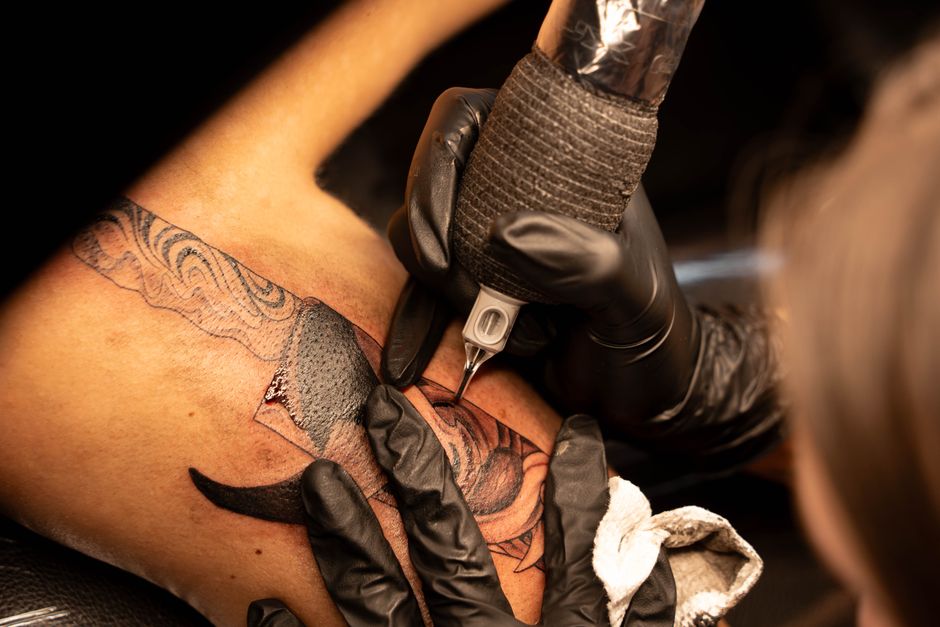
Most professional Tattoo Artists keep a single session between four and six hours, because skin trauma, client fatigue, and ink absorption all worsen past that window.
There is no universal legal limit, but experienced artists watch the client, not the clock. Once your skin becomes overworked, it swells, bleeds more, and stops holding ink cleanly. That means uneven results, more touch-ups, and a longer heal.
Getting multiple tattoos in one session across different body areas can actually be gentler than hammering one raw spot for eight straight hours. Spreading the trauma matters, but the total wounded surface area still adds up. A wise artist balances both.
Pro Tip: If your artist suggests splitting your work across two visits, take it as a sign of professionalism, not a lack of skill. Your skin and your wallet will thank you.
Why Does Your Immune System Take a Hit?
Your immune system treats fresh tattoos as open wounds, sending white blood cells to fight potential infection, and multiple large tattoos force it to divide those resources across more areas simultaneously.
When ink enters the dermis, your immune cells try to engulf the pigment particles. This immune response is part of why tattoos are permanent, and also why extensive work in one sitting can leave you feeling run down. According to the American Academy of Dermatology tattoo care guidelines, proper aftercare is critical to prevent infection while your body recovers.
Cleanliness is non-negotiable here. Reputable studios follow OSHA bloodborne pathogen standards to protect clients from cross-contamination, which becomes even more important when you have several open wounds at once.
How Do Multiple Tattoos Affect Healing?
Multiple tattoos healing at once compete for the same nutrients, hydration, and rest your body needs, which can slow recovery and increase the risk of scabbing, infection, or fading.
A single small tattoo heals in about two to three weeks. Add several large pieces, and your body is essentially repairing multiple construction sites simultaneously. Sleep becomes harder when wrapped areas make every position uncomfortable, and poor sleep slows healing even more.
You will also need to protect a much larger surface area from sun, friction, and bacteria. Every wrapped and healing zone is a responsibility. This is why aftercare guidance is a core part of any legitimate tools every beginner tattoo artist should know and training.
What Warning Signs Should You Watch For?
Watch for dizziness, nausea, cold sweats, excessive swelling, and lingering fatigue, because these signals mean your body is telling you the session has gone too far.
Your body speaks clearly if you listen. During the session, watch for:
Lightheadedness or fainting: Often caused by the adrenaline dump or low blood sugar.
Nausea: A common sign of overstimulation and stress.
Uncontrollable shivering: Your body burning through energy to cope.
Excessive bleeding or weeping: A sign the skin is overworked.
After the session, prolonged exhaustion, fever, or spreading redness are red flags. Fever or spreading warmth can signal infection and deserve a doctor's attention. Never ignore what your body is telling you to prove you can "tough it out."
How Does a Skilled Tattoo Artist Protect Your Body?
A skilled Tattoo Artist protects your body by reading your energy, controlling session length, maintaining sterile technique, and knowing when pushing further would harm your skin and your final result.
This is where craft meets care. A trained artist recognizes when your skin has had enough and will pause or reschedule rather than compromise your health. That judgment does not come from a weekend crash course. It comes from real, hands-on tattoo apprenticeships as a college alternative.
The best artists also understand bloodborne pathogen safety, skin anatomy, and client comfort at a professional level. These are the invisible skills clients rarely see but always benefit from. If you have ever wondered why some artists command loyal followings, this is a big part of it, and it is why avoiding mistakes aspiring tattoo apprentices should avoid matters so much.

How to Prepare Your Body for a Long Tattoo Session
You prepare your body for a long tattoo session by sleeping well, eating a solid meal, hydrating, avoiding alcohol, and bringing snacks to keep your blood sugar stable. Preparation protects both your comfort and your results.
Follow these steps to give your body the best chance:
Sleep the night before. A rested body handles stress and pain far better than an exhausted one.
Eat a real meal beforehand. Protein and complex carbs fuel you for the hours ahead.
Hydrate for days, not just hours. Well-hydrated skin takes ink cleaner and heals faster.
Skip alcohol and blood thinners. They increase bleeding and reduce ink retention.
Pack snacks and water. Keep your energy up during breaks to avoid the adrenaline crash.
Communicate with your artist. Speak up the moment you feel off. A good artist wants to know.
These habits are not just for clients. They are part of what every professional learns to coach their own clients through, and the Bureau of Labor Statistics on craft and fine artists tracks this kind of craft-based work as a legitimate, skilled career path.
Where Can You Learn to Tattoo Safely and Professionally?
You can learn to tattoo safely and professionally through Ink Different Tattoos' Traditional Tattoo Apprenticeship, a structured 18 to 24 month tattoo apprenticeship that teaches skin safety, technique, and client care from day one.
Maybe you're stuck in a job that doesn't use your creative potential, watching the years go by while your real talent stays untapped. That restless feeling is worth paying attention to.
For over 15 years, since 2011, we've trained aspiring artists to build careers that no algorithm can replace. Tattooing is deeply human, hands-on work, and that's exactly why tattoo artists are still essential in an AI-driven world.
What You Can Expect from Our Traditional Tattoo Apprenticeship
Our Traditional Tattoo Apprenticeship is built for beginners with no prior experience. You train hands-on in real tattoo studios with personalized instruction across a four-phase structure. You learn the science of the skin, sterile technique, and session management that protects your future clients.
A Career That Comes With Confidence
You graduate with job-ready skills, a guaranteed job offer to one of our tattoo studios, and licensing support, ready to work as a professional in an AI-proof craft. This is a genuine path built on real skills, guided by award-winning Mentors and a "Good Humans" culture that treats you like family.
Mentorship That Pushes Your Brand and Skills Further
For those ready to level up, our one-year in-person Master Mentorship pairs you with celebrity and award-winning Mentors like Al Fliction, Liz Cook, Kyle Dunbar, Boneface, and Jordi Pla. It's ideal for mastering a specific style, growing your career, or launching your own tattoo studio.
Making Tattoo Training Accessible for Everyone
We offer Spanish-speaking locations in Denver, Orange County, NYC, Miami, San Antonio, and San Diego, so language never stands between you and your future.

Ready to Take the First Step?
Now you understand what getting multiple tattoos in one session really does to your body, and why the judgment behind the machine matters just as much as the artwork itself. That knowledge is the foundation every great Tattoo Artist stands on.
Ready to become a Tattoo Artist? Apply now to Ink Different's Traditional Tattoo Apprenticeship and start building an AI-proof career with licensing support along the way. Not sure yet? Fill out our quick questionnaire to get personalized support and find out if our tattoo apprenticeship is right for you.
Frequently Asked Questions
Is it safe to get multiple tattoos in one session?
It can be safe with a skilled artist who limits session length and maintains sterile technique. Risk rises with total wounded surface area, so preparation, hydration, and rest are essential.
How long should a single tattoo session last?
Most professional Tattoo Artists keep sessions between four and six hours. Past that point, skin becomes overworked, holds ink poorly, and healing takes significantly longer.
Do I need art experience to become a Tattoo Artist?
No. Ink Different Tattoos' Traditional Tattoo Apprenticeship is built for beginners and teaches drawing fundamentals, skin science, and technique from day one with hands-on mentorship.
How long is the Traditional Tattoo Apprenticeship?
The Traditional Tattoo Apprenticeship runs 18 to 24 months across four phases. You start remotely and finish in real Tattoo Studios with personalized, in-person training.
What makes Ink Different different from other options?
Ink Different offers live, in-person mentorship with award-winning artists, a supportive "Good Humans" culture, and over 15 years of experience training professional Tattoo Artists nationwide.
Can I get warning signs during a long tattoo session?
Yes. Dizziness, nausea, cold sweats, shivering, and excessive bleeding signal your body is overstressed. Tell your artist immediately, since pushing through can harm your health and results.