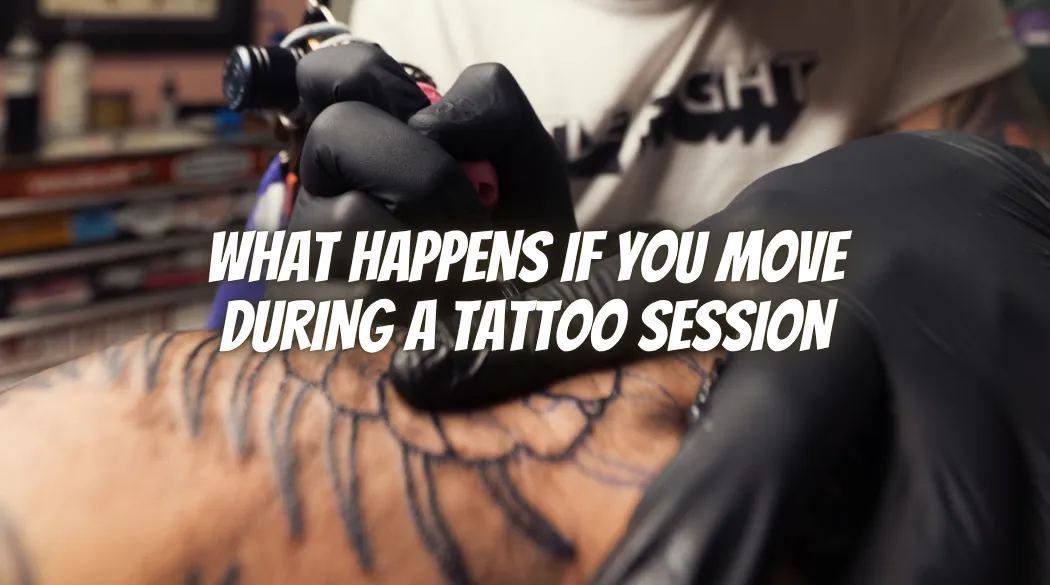
What Happens If You Move During a Tattoo Session
You are three hours into a big back piece. Your client is trying their best to hold still, but a sneeze is coming, or their leg falls asleep, or a wave of nerves rolls through their body. In a split second, the needle drifts off the line you spent all day perfecting. That moment is where a real Tattoo Artist earns their reputation.
Movement during a tattoo session is any shift, flinch, twitch, or breath from the client that changes the position of the skin while the needle is in contact with it, potentially altering line quality, depth, and healing. At Ink Different Tattoos, we treat that moment as a teachable skill, not a disaster.
Key Takeaways
The risk: Moving can cause blowouts, crooked lines, uneven shading, and skin trauma that affects healing and may require touch-ups.
The cause: Pain, nerves, cramping, long sessions, low blood sugar, and ticklish reactions are the top reasons clients move involuntarily.
The fix: Skilled artists anticipate movement, brace the skin firmly, communicate constantly, and take strategic breaks before strain builds.
The skill: Managing client movement is a trainable, repeatable process taught hands-on through structured tattoo apprenticeships under live mentorship.
The path: Ink Different Tattoos teaches this in an 18- to 24-month Traditional Tattoo Apprenticeship with real-studio training and licensing support.
What Happens If You Move During a Tattoo Session?
If you move during a tattoo session, the needle can drift off line, deposit ink too deep or too shallow, and cause blowouts, wobbly lines, or patchy shading that may require touch-ups or corrections.
The tattoo needle is moving thousands of times per minute at a precise depth. When the skin shifts even a millimeter, that precision is gone. A crisp line can suddenly bow. Solid shading can turn blotchy. In the worst cases, the ink spreads under the skin into a blurry cloud, a flaw artists call a "blowout."
A small twitch is usually recoverable in the hands of an experienced Mentor. A big, sudden jerk is different. That is when a client can get accidentally poked in the wrong spot, or a line gets pulled across clean skin. The good news is that most movement is predictable, and predictability is something you can train for.
Pro Tip: A single flinch rarely ruins a whole tattoo. What ruins tattoos is a beginner who freezes instead of lifting the machine off the skin the instant a client shifts.
Why Do People Move While Getting Tattooed?
People move during tattoos because of pain spikes in sensitive areas, adrenaline crashes, muscle cramps from holding still, nervousness, ticklish reactions, and physical exhaustion during long sessions.
Your client is not trying to sabotage the work. Their body is reacting to hours of controlled discomfort. Understanding the reasons behind movement is the first step to preventing it. Here are the most common triggers you will see behind the chair:
Pain spikes: Bony areas like ribs, ankles, and elbows produce sharp, involuntary reactions that catch clients off-guard.
Blood sugar drops: Clients who skipped a meal often get shaky, dizzy, or lightheaded, and lose control of their body.
Nerves and adrenaline: First-timers tense up, and tense muscles fatigue faster, leading to uncontrolled flinching.
Cramping: Holding an awkward pose for hours causes legs, arms, and backs to seize involuntarily.
Ticklish zones: Ribs, feet, and inner arms can trigger reflexive flinching that clients cannot always suppress.
Pain and body reactions are real physical events. The American Academy of Dermatology tattoo care guidelines note that tattooing breaks the skin barrier, so the body's stress response is completely natural. Knowing this helps you respond with patience instead of frustration.
How Does an Artist Handle a Client Who Moves?
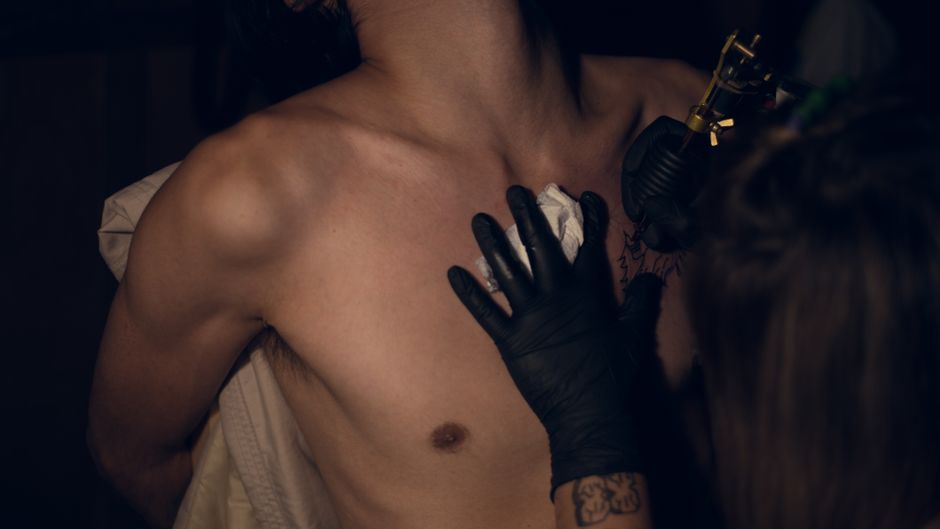
A skilled Tattoo Artist handles a moving client by immediately lifting the machine off the skin, staying calm, communicating clearly, offering a break, and adjusting positioning before continuing work.
The instinct of an untrained beginner is to keep going and hope the movement stops. That is exactly wrong. A professional lifts the needle the moment they feel a shift, resets, and then continues. That single reflex prevents the majority of accidental damage.
Experienced artists also read the warning signs before a movement happens. Shallow breathing, a clenched jaw, a foot starting to bounce: these are all cues that a break is coming whether you plan it or not. Learning to read those cues in real time is a skill you develop under a live Mentor, not from a video. It is also one of the mistakes aspiring tattoo apprentices should avoid: ignoring the human being attached to the skin you are working on.
How Can You Stop Yourself From Moving as a Client?
You can reduce movement during your tattoo by eating a full meal beforehand, staying hydrated, breathing steadily, communicating with your artist, and asking for breaks before pain becomes overwhelming.
If you are the one in the chair, you have more control than you think. Preparation is your best friend. A well-fed, well-rested, well-hydrated client moves far less than someone running on coffee and adrenaline.
Eat before you go: A solid meal stabilizes your blood sugar for hours and prevents dizzy spells.
Bring snacks and water: Refuel during long sessions to maintain steady energy and composure.
Breathe slowly: Deep, steady breaths keep muscles relaxed and reduce involuntary flinching.
Speak up: Tell your artist when you need a break. They would rather pause than fix a blowout or crooked line.
Get comfortable: Support your limbs so muscles do not have to hold tension the entire session.
Good communication protects the work and builds trust, which is why the best studios treat every session like a partnership between two people, not a transaction.
What Should an Artist Do When a Client Moves? A Step-by-Step Response
When a client moves, a Tattoo Artist should follow a calm, practiced sequence: stop immediately, reassess the situation, communicate clearly, reposition the client and skin, and resume only when stability is confirmed.
Managing movement is a repeatable process. Here is the exact sequence we teach our Tattoo Apprentices to run through, almost automatically, the moment a client shifts:
Step 1: Lift and stop. Immediately pull the machine off the skin to break contact. Never chase the moving skin with the needle. This prevents accidental pokes and ink damage.
Step 2: Reassure the client. Speak calmly and clearly. Let them know you have paused intentionally and everything is fine.
Step 3: Identify the cause. Ask if they need water, food, a stretch, or a full break. Solve the root problem, whether it is low blood sugar or a muscle cramp.
Step 4: Reposition and brace. Adjust their body, your chair, and your anchoring hand so the skin is taut and supported for steady work.
Step 5: Resume with control. Reset your line, take a breath, check alignment, and continue only when both of you are stable and ready.
This is muscle memory built through hundreds of supervised hours. You do not develop it alone in your bedroom. You build it beside a Mentor who has been through it thousands of times.
What Skills Keep a Tattoo Steady When Life Doesn't?
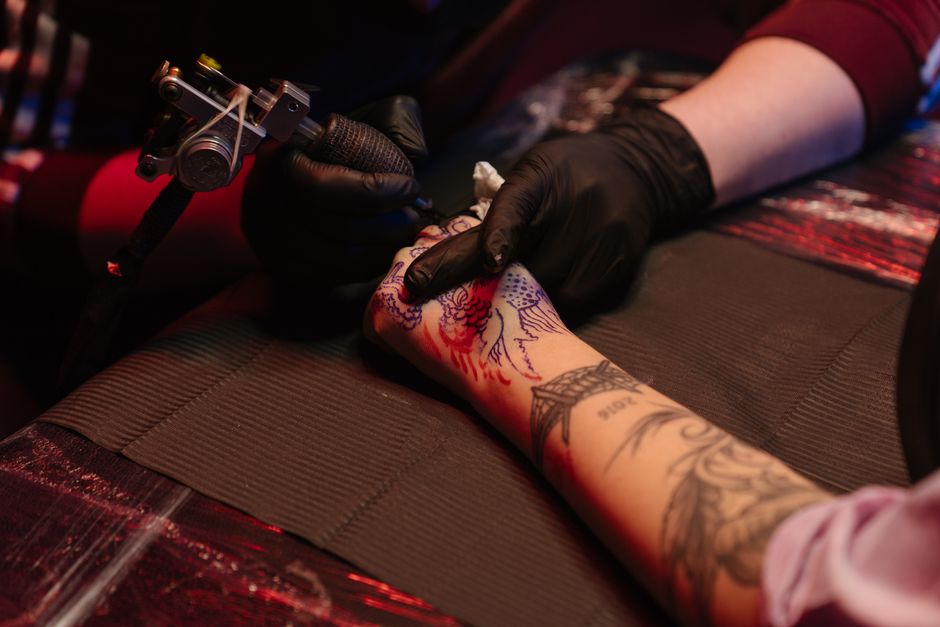
The skills that keep a tattoo steady include proper skin stretching, a controlled machine grip, reading body language, pacing sessions with strategic breaks, and staying calm under pressure, all developed through hands-on training.
Here is the truth no video tutorial will tell you: managing a moving client is not about the ink at all. It is about people. It is about the quiet confidence to pause, the awareness to see a flinch coming, and the technical control to correct a line on real, living, unpredictable skin.
These are the exact human skills that make Tattoo Artists an AI-proof career. A machine cannot read a nervous client's breathing or decide when to offer a break. The Bureau of Labor Statistics on craft and fine artists classifies fine and craft artists as skilled workers precisely because their craft depends on human judgment and adaptability that automation cannot replicate.
You cannot fake this experience, and you should not want to. It is the foundation of a lasting career. If you are still weighing whether this path is for you, take a look at how tattoo apprenticeships are gaining ground as a solid alternative to college.
Get Serious About Your Craft With Ink Different Tattoos
Ink Different Tattoos teaches you to handle real-world challenges like client movement through a structured, hands-on Traditional Tattoo Apprenticeship with live mentorship, licensing support, and award-winning artist guidance.
You have felt it: the pull toward something more meaningful than the job that drains you every day. Your creative potential should not sit on a shelf collecting dust. For over 15 years, we have trained aspiring artists to turn that pull into a real, working career. We are a college alternative built for people who pursue excellence.
What You Can Expect From Our Traditional Tattoo Apprenticeship
Our Traditional Tattoo Apprenticeship runs 18 to 24 months across a proven 4-Phase structure. You start remote to build your foundations, then finish in real Tattoo Studios working with actual clients. No prior art experience is required. We meet you where you are and grow you from there, the same way a seed becomes a tree.
You will learn everything from line work and machine control to safety standards aligned with OSHA bloodborne pathogen standards, and yes, how to keep a steady hand when a client cannot.
A Career That Comes With Confidence
By the time you finish, you graduate with job-ready skills, a guaranteed job offer, and licensing support, ready to walk into a studio and hold your own behind the chair.
Mentorship That Pushes Your Brand and Skills Further
Ready to go beyond the fundamentals? Our one-year, in-person Master Mentorship pairs you with Celebrity and award-winning Mentors, including Al Fliction, Liz Cook, Kyle Dunbar, Boneface, and Jordi Pla. It is built for beginners and experienced artists who want to master a specific style, explode their career, and own their own studio.
Making Tattoo Training Accessible for Everyone
We offer Spanish-speaking locations near Denver, in Orange County, near NYC, in Miami, in San Antonio, and in San Diego, so language never stands between you and your future. When you are ready to build your name and reputation, our guide to platforms to help tattoo artists build their brand will help you take the next step and connect with your audience.
Remember: Seats in our hands-on apprenticeship are limited by design. Real mentorship cannot be mass-produced. The right time to plant this seed is now.
Ready to Become a Tattoo Artist?
Every professional you admire once stood exactly where you are now: nervous, unsure, and afraid to leave the familiar behind.
Ready to become a Tattoo Artist? Apply now to Ink Different's Traditional Tattoo Apprenticeship and start building an AI-proof career, with licensing support along the way. Not sure yet? Fill out our quick questionnaire to get personalized support and find out if our tattoo apprenticeship is right for you.
Frequently Asked Questions
Can moving during a tattoo ruin it?
A small movement rarely ruins a tattoo, but a large, sudden jerk can cause blowouts or crooked lines. Skilled artists lift the needle instantly to minimize damage, and most issues can be corrected during touch-ups.
How do tattoo artists deal with clients who flinch?
Experienced artists stay calm, lift the machine, offer a break, and reposition the client. They also read body language to anticipate flinches before they happen, a skill built through hands-on mentorship.
Do I need art experience to learn tattooing at Ink Different Tattoos?
No. Our Traditional Tattoo Apprenticeship is built for beginners with no prior art experience. We teach fundamentals from day one across a structured 4-Phase program with live, in-person mentorship.
How long does the Traditional Tattoo Apprenticeship take?
The Traditional Tattoo Apprenticeship takes 18 to 24 months. You start remotely to build foundations, then finish in real Tattoo Studios working with clients under mentor supervision and guidance.
What makes Ink Different Tattoos different from a tattoo school?
Ink Different Tattoos offers live, in-person mentorship with award-winning artists, a supportive Good Humans culture, and over 15 years of experience training professional Tattoo Artists nationwide.
Is tattooing a stable career in an age of automation?
Yes. Tattooing depends on human judgment, adaptability, and real-time reactions that AI and machines cannot replicate, making it an AI-proof career with stable demand.