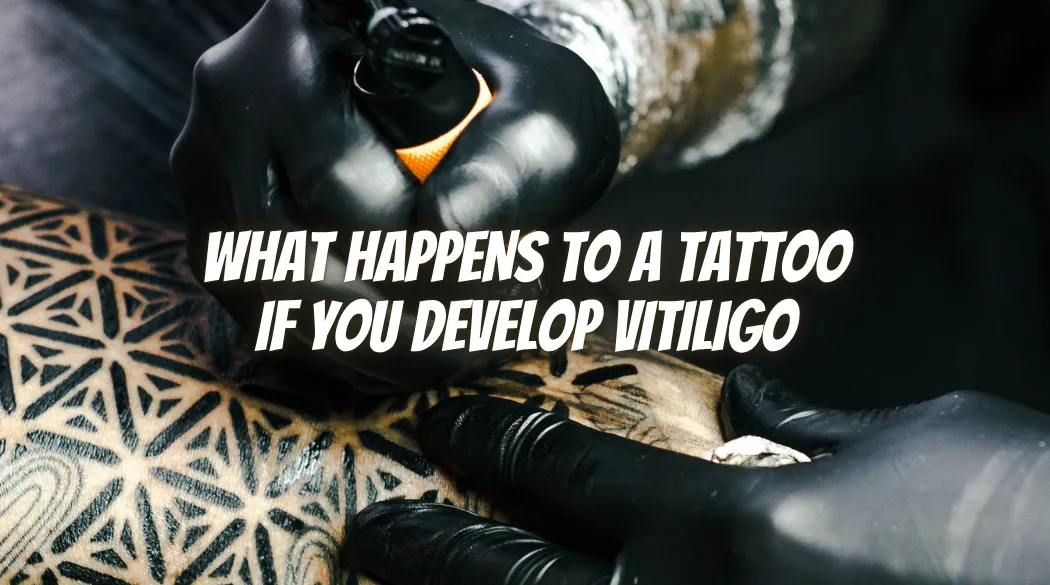
What Happens to a Tattoo If You Develop Vitiligo
Imagine a client sits in your chair, points to a tattoo they got years ago, and asks why the skin around it is turning pale. Their voice carries a mix of worry and hope, and they are looking at you for answers. That moment is where real skill separates a hobbyist from a professional. Vitiligo is a long-term autoimmune skin condition in which the immune system destroys melanocytes, the cells that produce pigment, leaving smooth white patches on the skin.
Understanding how it interacts with tattoo ink is exactly the kind of knowledge that builds trust and a lasting career, and it is the kind of foundation we teach at Ink Different Tattoos.
Key Takeaways
The tattoo stays: Vitiligo affects skin pigment, not tattoo ink, so the design itself does not vanish.
Contrast shifts: As surrounding skin lightens, a tattoo can look starker, or its colors may appear altered.
Koebner effect: Trauma from tattooing can sometimes trigger new vitiligo patches in predisposed people.
Consult first: Clients with vitiligo should speak with a dermatologist before getting tattooed.
Training counts: Ink Different's Traditional Tattoo Apprenticeship teaches you to handle real skin conditions with confidence.
What Is Vitiligo and How Does It Affect Skin?
Vitiligo is an autoimmune condition that causes the body to attack its own pigment-producing cells, resulting in patches of skin that lose their color and turn milky white. It is not contagious, painful, or dangerous, but it changes how skin looks over time.
According to the American Academy of Dermatology tattoo care guidelines, vitiligo can appear anywhere on the body and often develops in a symmetrical pattern. Some people see one small spot, while others develop widespread patches over years.
Because tattoos live in the dermis and vitiligo affects the melanocytes near the surface, the two exist in different layers of your skin. That single fact is the key to understanding everything that follows in this article.
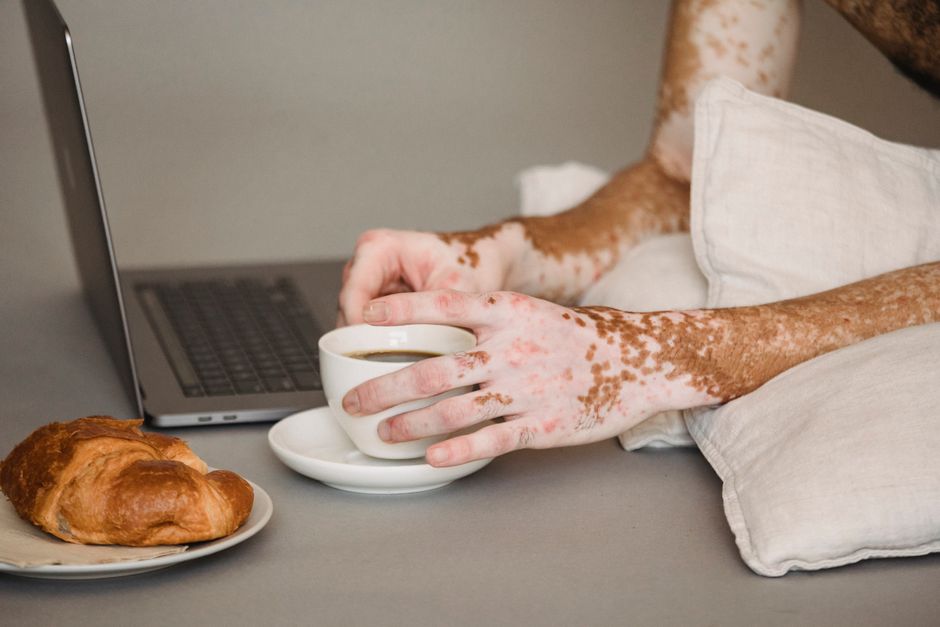
What Happens to a Tattoo If You Develop Vitiligo?
If you develop vitiligo, your tattoo does not disappear, because the ink lives deep in the dermis while vitiligo affects the pigment cells closer to the skin's surface. The design remains, though it may look different as surrounding skin changes color.
Here is what commonly happens as the skin around a tattoo loses its natural pigment:
Sharper contrast: Dark ink can look more vivid against newly pale skin.
Color perception shifts: Warmer tones may read cooler once the skin backdrop lightens.
Edge definition: Lines can appear crisper where the skin has whitened around them.
Think of your skin as a canvas that changes its background tone over time. The painting stays put, but the light around it changes, and so does how the eye reads the piece. A knowledgeable artist can explain this to a worried client in seconds and set their mind at ease.
Can Vitiligo Appear Where You Already Have a Tattoo?
Yes, vitiligo can appear on or around an existing tattoo, and in some people the trauma of tattooing itself may trigger new patches through what is called the Koebner phenomenon. This is why history and consultation matter so much.
The Koebner phenomenon describes how skin trauma, including cuts, sunburn, or needle work, can cause new vitiligo spots in people already predisposed to the condition. Following OSHA bloodborne pathogen standards reminds us that tattooing is a controlled skin trauma, which is exactly why proper technique and hygiene protect your clients.
It does not mean tattoos cause vitiligo for everyone. It means that for a small group of people who are already vulnerable, the process can be a trigger. Knowing the difference keeps you honest, professional, and trusted.
Should You Get Tattooed If You Have Vitiligo?
If you have vitiligo, you can often still get tattooed, but you should consult a dermatologist first and work with an experienced tattoo artist who understands your skin. Every case is personal, so blanket rules do not apply.
Some people with stable, non-spreading vitiligo choose to tattoo confidently. Others prefer to wait or avoid tattoos in active areas. A responsible artist never pushes a client toward a decision their doctor has not cleared.
Pro Tip: Always encourage clients with any autoimmune or skin condition to get written or verbal clearance from their dermatologist before their appointment. It protects them and it protects your reputation.
This kind of judgment is not something you learn from a video. It comes from live, in-person mentorship with someone who has sat with these exact clients. That is the pain point too many self-taught artists hit: they can draw, but they cannot navigate the human side of the chair.
How Do Skilled Tattoo Artists Adapt to Changing Skin?
Skilled tattoo artists adapt to changing skin by adjusting design placement, choosing high-contrast elements, planning for future pigment shifts, and communicating honestly about what the client can expect over time.
Adapting is part science and part conversation. A great artist reads the skin in front of them and thinks about how a piece will age, not just how it looks the day it heals. The Bureau of Labor Statistics on craft and fine artists notes that fine artists succeed on skill and reputation, and nothing builds reputation faster than getting the hard cases right.
When you understand conditions like vitiligo, you stop guessing and start guiding. You become the artist clients recommend to their friends because you handled their concern with knowledge instead of a shrug. That is the difference between a job and a calling.

How to Approach Tattooing Clients With Vitiligo: Step by Step
To responsibly tattoo a client with vitiligo, follow a clear process: consult, confirm clearance, plan placement, set expectations, and prioritize safe technique. A repeatable process keeps you calm and keeps clients safe.
Consult thoroughly. Ask about the client's vitiligo history, whether it is stable or spreading, and any doctor guidance they have received.
Confirm medical clearance. Encourage them to check with a dermatologist before booking, especially if their condition is active.
Plan the placement. Consider how pigment changes might affect the design and choose areas and styles that will age gracefully.
Set honest expectations. Explain how contrast and color perception may shift as surrounding skin changes over time.
Prioritize safe technique and aftercare. Follow strict hygiene standards and give clear healing instructions to reduce skin trauma.
Notice that only one of these steps involves the tattoo machine. The rest is communication, planning, and care. That balance is exactly what a structured tattoo apprenticeship builds into you, and it is a skill set that no shortcut can fake. If you want to avoid common early errors, read our guide on mistakes aspiring tattoo apprentices should avoid.
Why Does Professional Training Matter for Cases Like This?
Professional training matters because real clients bring real skin conditions, and only hands-on mentorship teaches you to respond with knowledge, empathy, and safe technique. Talent without training leaves you guessing at the moments that matter most.
You might be stuck in a job that drains you, scrolling through tattoo videos at night, wondering if your creative potential is quietly going to waste. That feeling is a signal, not a flaw. It is the seed of a career that machines cannot replace, because tattooing is human trust made visible, as we explain in our article on why tattoo artists are still essential.
For over 15 years, Ink Different Tattoos has trained aspiring artists to handle exactly these situations. A tattoo apprenticeship is not a hobby class. It is a college alternative that builds a real, licensed, AI-proof career, and you can learn more in our breakdown of tattoo apprenticeships as a college alternative.
Get Serious About Your Craft With Become A Tattoo Artist
Ink Different's Traditional Tattoo Apprenticeship is an 18 to 24 month, four-phase Tattoo Artist training program that takes you from beginner to job-ready, with licensing support along the way. No prior art experience is required to start.
Here is what you can expect from our Traditional Tattoo Apprenticeship:
Personalized hands-on training: You learn one-on-one from real, working mentors, not a pre-recorded screen.
Start remote, finish in studios: Build your foundations, then step into a real tattoo studio for live work.
Beginner-friendly: We teach drawing, machine handling, safety, and client care from the ground up.
Licensing support and job-ready skills: You finish prepared to work professionally and legally in your state.
Licensing rules vary by state, and we help you navigate them, whether that means learning how to get your tattoo license in Texas or figuring out how long a tattoo license takes in Colorado.
A Career That Comes With Confidence
Our training gives you job-ready skills, licensing support, and a guaranteed job offer at one of our tattoo studios, so you can walk into your first professional appointment knowing you belong there. Confidence is not a personality trait. It is the result of preparation.
Mentorship That Pushes Your Brand and Skills Further
Our one-year, in-person Master Mentorship trains beginner and experienced artists alongside celebrity and award-winning Mentors like Al Fliction, Liz Cook, Kyle Dunbar, Boneface, and Jordi Pla. It is built for mastering a style, growing your career, and owning your own tattoo studio.
Making Tattoo Training Accessible for Everyone
Ink Different offers Spanish-speaking locations in Denver, Orange County, NYC, Miami, San Antonio, and San Diego, so language never stands between you and your craft. Our Good Humans culture means you join a supportive, family-like community from day one.
Ready to Become a Tattoo Artist?
You now understand something most people in a tattoo chair never will: a tattoo does not vanish when vitiligo appears, and a trained artist knows exactly how to guide a client through that reality. Seats in our apprenticeship are limited by design, because live mentorship cannot be mass-produced.
Ready to become a tattoo artist? Apply now to Ink Different's Traditional Tattoo Apprenticeship and start building an AI-proof career, with licensing support along the way. Prefer to explore first? Fill out our quick questionnaire to get personalized support and find out if our Traditional Tattoo Apprenticeship is right for you.
Frequently Asked Questions
Does a tattoo disappear if you develop vitiligo?
No. Tattoo ink sits in the dermis, while vitiligo affects surface pigment cells. The design remains, though it may look different as surrounding skin loses color.
Can tattooing trigger vitiligo?
In rare cases, yes. In people already predisposed to vitiligo, skin trauma like tattooing can trigger new patches through the Koebner phenomenon. It does not cause vitiligo in most people.
Is it safe to get a tattoo if you have vitiligo?
Often it is, but you should consult a dermatologist first. An experienced tattoo artist can then plan placement and set expectations for how the piece may age.
Do I need art experience to start a tattoo apprenticeship?
No. Ink Different's Traditional Tattoo Apprenticeship is built for beginners and teaches drawing, machine handling, safety, and client care from day one.
How long does the Traditional Tattoo Apprenticeship take?
Most apprentices complete the four-phase Traditional Tattoo Apprenticeship in 18 to 24 months, depending on how quickly they progress through each phase of training.
What makes Ink Different different from a tattoo school?
Ink Different offers live, in-person mentorship from award-winning artists, licensing support, and a Good Humans community, with over 15 years of experience.