What Happens When AI Designs Are Too Complex
When AI Goes Too Far, Your Skin Pays the Price
AI-generated art is everywhere right now, and honestly, it’s kind of incredible. You type a few words into an AI tool. Within seconds, you get this hyper-detailed, visually stunning image that looks like it took a professional Tattoo Artist days to create. It makes total sense why people are using these tools to brainstorm tattoo ideas. The designs are unique, they’re personalized (sort of), and they give you something to show your Tattoo Artist during your consultation.
The problem? What AI creates lives on a screen. And your tattoo is going to live on your skin forever. Those two things are very, very different canvases. A design that looks jaw-dropping as a digital render can turn into a blurry, overworked mess on skin if it’s not adapted properly. That gap between the screen and your skin is something a lot of clients don’t find out about until it’s too late.
So, before you walk into your next tattoo consultation with that AI image, here’s what you actually need to know about AI designs.
The Appeal of AI-Generated Tattoo Designs
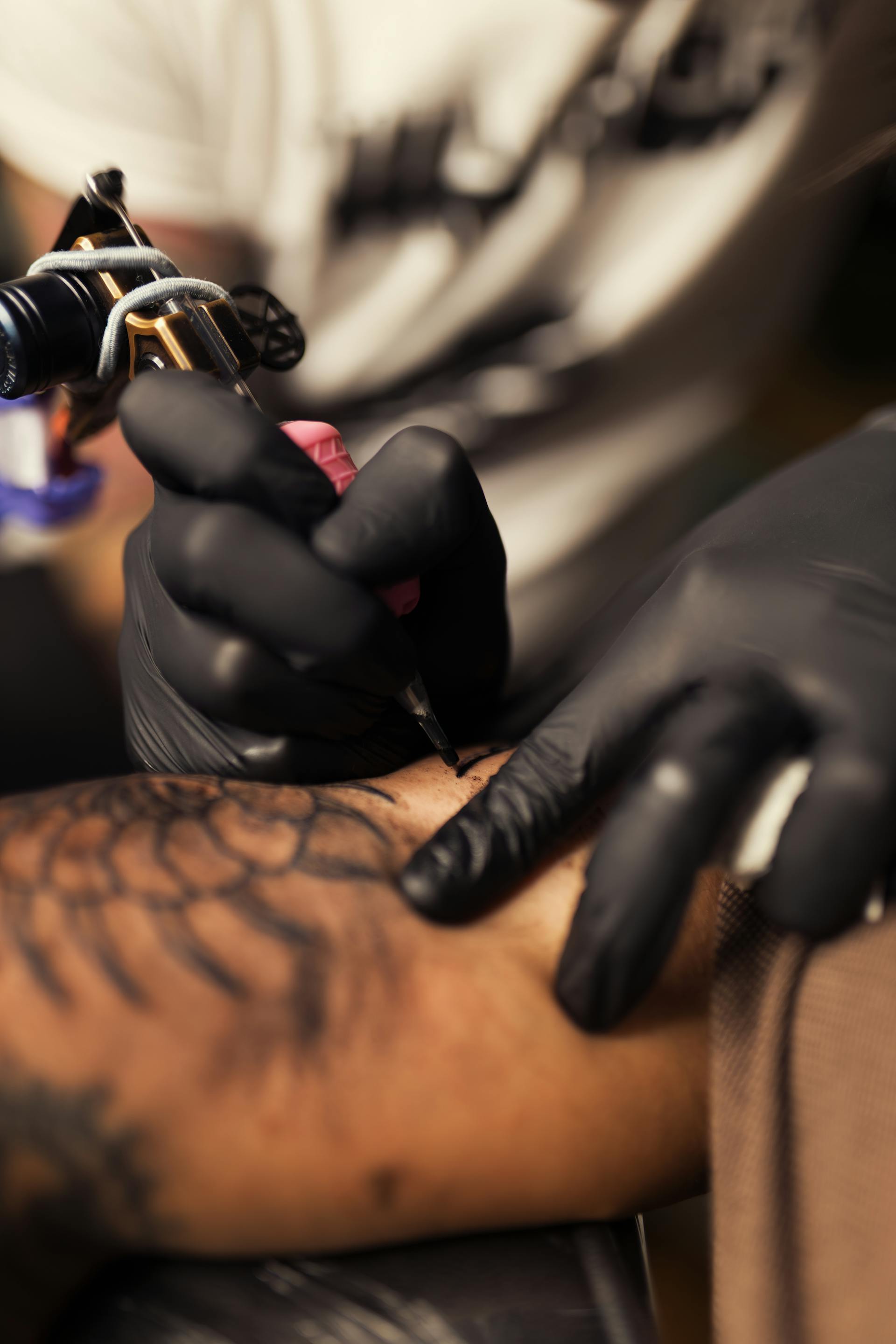
It’s not hard to understand why AI tattoo references have become such a thing. These tools are free or cheap, they’re easy to use, and they can generate something that feels completely one-of-a-kind in under a minute. Midjourney alone has 19.94 million registered users on its Discord server, and that number is only expected to keep climbing. People are obsessed with these tools, and the tattoo world is no exception.
For clients, bringing in an AI-generated image feels empowering. You’re not just describing a vague idea in words anymore. You have a visual. You can point at it and say, “This. I want something like this.”
That kind of creative control is exciting, and there’s nothing wrong with using AI as a starting point or for inspiration. The issue comes when clients expect their Tattoo Artist to replicate the design exactly as-is without any changes.
What Makes a Tattoo Design “Too Complex”
AI doesn’t design with skin in mind. It designs for pixels. So the things that make an AI image look incredible on a screen are exactly the things that make a tattoo difficult to execute properly.
Think of it this way: imagine trying to paint the Sistine Chapel ceiling on a slightly damp, textured wall that moves and changes over time. That’s kind of what it’s like tattooing a hyper-complex AI design onto skin.
Ink spreads in the skin over time through a process called blowout, and fine lines and dense detail are the first things to suffer. Fine line tattoos without proper spacing can lose definition within a few years, leaving you with something that looks muddy rather than precise. Negative space isn’t just an aesthetic choice. It’s what keeps a tattoo readable and clean for years to come.
How Overly Complex Designs Affect the Final Tattoo
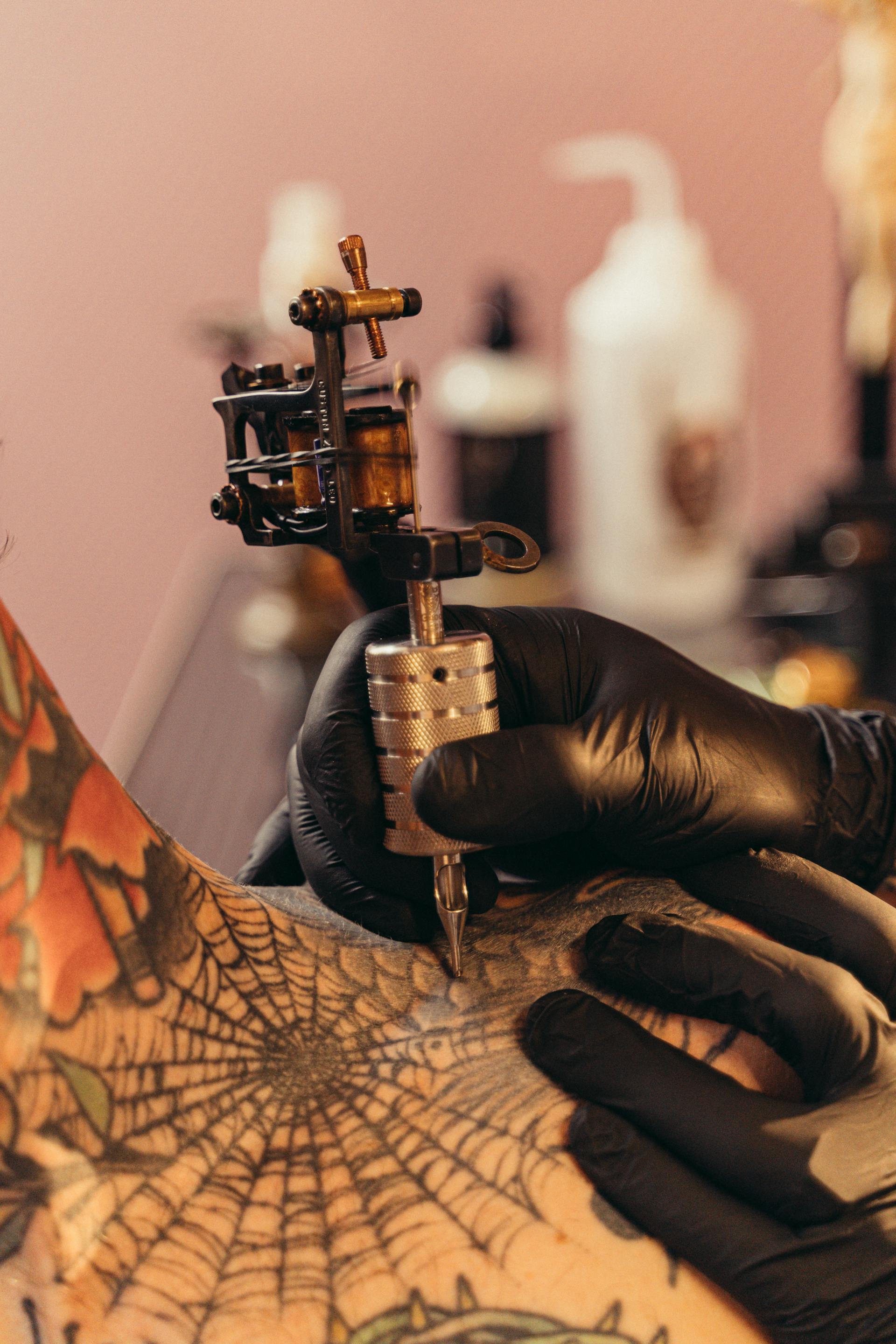
The consequences of tattooing an overly complex design don’t always show up immediately. Sometimes the tattoo looks okay fresh out of the session. But as the skin heals and the ink settles, the problems start to surface. Small details can bleed together during healing. Densely packed areas can turn into dark blobs instead of the intricate texture that looked so sharp in the AI render. Touch-ups become more frequent, and in some cases, the design gets to a point where touching it up further would just cause more damage than good.
There’s also the matter of placement. AI designs aren’t created with body anatomy in mind. Overly complex designs leave no room for that kind of adaptation. And the result is a tattoo that fights against your body instead of flowing with it.
What a Skilled Tattoo Artist Does Differently
A professional Tattoo Artist doesn’t just look at your AI reference and start tattooing. They study it, assess it, and figure out what needs to change to make it actually work on your skin for the long run. That process of adaptation is where skill and experience come in. And it’s often the difference between a tattoo you love ten years from now and one you regret.
Here’s what a skilled Tattoo Artist typically does when working with a complex AI reference:
Simplifies without stripping the soul. They identify which elements are essential to the design’s feel and which details will blur or disappear over time. The core idea stays intact, but the noise gets cut.
Adds breathing room. Negative space is built into the design intentionally so that the tattoo can age gracefully without everything merging into a dark patch.
Adapts it to your body. They consider placement, body contours, and how the design will move on your specific anatomy, not just how it looks flat on a screen.
Reconsiders the linework. Ultra-fine AI lines get translated into weights that are actually achievable and durable with tattoo needles on real skin.
Adjusts color and shading. Gradients and textures get reworked into techniques that skin can hold long-term, like proper shading rather than photorealistic color blending.
That level of thought and craftsmanship can’t be replicated by a prompt. It takes someone who has put in the hours, made the mistakes, and learned what skin can and can’t do.
How Ink Different Tattoos Bridges the Gap Between AI and Real Skin
Getting a tattoo is personal. It’s not just about having a cool image on your body. It’s about working with someone who actually listens and has the skill to bring it to life. At Ink Different Tattoos, that’s exactly the kind of experience we’re built around.
Here’s what makes Ink Different Tattoos different when it comes to complex designs:
Tattoo Artists who know how to translate, not just copy. Our Tattoo Artists are experienced in taking intricate references, including AI-generated ones, and adapting them into designs that are actually tattooable. They’ll tell you what needs to change and why, so you’re never left guessing.
A clean, safe tattoo studio environment where the focus is on you. We follow strict hygiene and safety protocols because your comfort and health matter just as much as the finished piece.
Mentorship built into everything we do. At Ink Different Tattoos, our work goes beyond the tattoo chair. We’re also proud to train and guide the next generation of Tattoo Artists through our Traditional Tattoo Apprenticeship.
Custom work that actually fits your vision. We don’t do cookie-cutter. If you come in with an AI reference, we work with you to shape it into something that’s actually built to last on your skin.
When you come in with a complex AI design, our team doesn’t dismiss it. They dig into it with you and figure out how to make it work or create something even better.
Great Tattoos Need More Than a Great Prompt
AI is a genuinely cool tool for inspiration. There’s no shame in using it to explore ideas or find a direction for your next tattoo. But the best tattoo you’ll ever get isn’t the one that came out of a text prompt. It’s the one that came out of a conversation with a Tattoo Artist who understood what you wanted and knew what your skin could handle.
The screen will always make things look easier than they are. Complex AI designs have a way of promising something that skin alone can’t deliver. And the only way to bridge that gap is with human expertise. So if you’ve got an AI reference you’re excited about, bring it in. Let’s talk about it, adapt it, and turn it into something that’ll still look great years from now.
Book a consultation with Ink Different Tattoos and let’s figure out how to make your design actually work on your skin, for life.
Frequently Asked Questions
Can a Tattoo Artist work directly from an AI-generated image?
Yes, but only after adapting it for skin. A skilled Tattoo Artist will evaluate the design and make changes so it actually holds up as a tattoo over time.
Why does my AI tattoo reference look so different from the final tattoo?
Skin absorbs ink differently than a screen displays pixels. Tattoo Artists have to account for how a design will heal, age, and sit on your specific body. Some changes are necessary to make the tattoo last and look its best.
What should I do if my AI design has a lot of tiny details?
Bring it to your consultation and be open to adjustments. Your Tattoo Artist can help you identify which details are worth keeping and how to rework the design without losing what you loved about it.
Is it possible for an overly complex tattoo to be fixed later?
It depends on the damage. Some tattoos can be reworked or covered with a new design, but prevention is always better. Getting the design right from the start, with proper adaptations, saves you from a much harder conversation later.