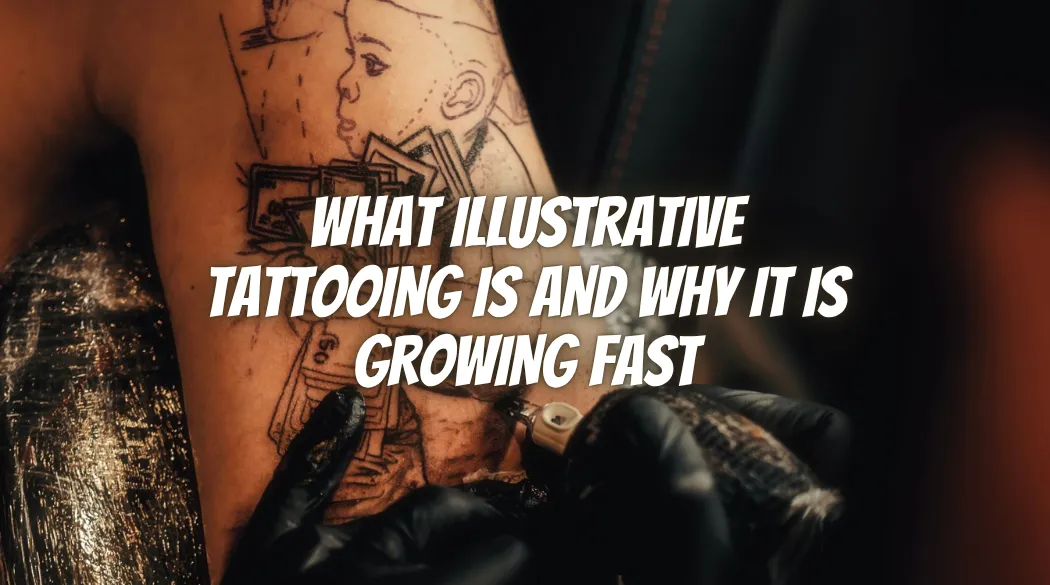
What Illustrative Tattooing Is and Why It Is Growing Fast
If you fill sketchpads with bold characters, strange creatures, and scenes pulled straight from your imagination, illustrative tattooing may be the path that turns that habit into a career. Illustrative tattooing is a style that translates drawing, painting, and illustration techniques directly onto skin, blending fine linework, shading, and storytelling into permanent art. At Ink Different Tattoos, we have spent 15 years helping aspiring Tattoo Artists turn that creative drive into a working craft.
Key Takeaways
Definition: Illustrative tattooing applies drawing and painting techniques to skin, mixing linework, shading, and narrative detail into hand-rendered art.
Why it's growing: Clients crave unique, personal pieces that feel hand-drawn rather than copied from a flash sheet, and social media rewards distinctive artist voices.
Who it suits: Artists who love sketching, storytelling, and expressive detail thrive in illustrative work and can build a recognizable brand.
How to learn: A structured 18–24 month tattoo apprenticeship with live, in-person mentorship builds the craft safely and prepares you for professional work.
Career outlook: Illustrative skill is an AI-proof, hands-on craft with strong demand and a clear path to sustainable, income-generating creative work.
What Is Illustrative Tattooing?
Illustrative tattooing is a tattoo style that borrows directly from the language of drawing and illustration, using expressive linework, texture, and shading to create art that looks hand-rendered on the skin.
Think of it as the bridge between the sketchbook and the human body. Instead of rigid rules, illustrative work leans into the personality of the artist. You might see bold outlines paired with watercolor washes, etching-style crosshatching, or storybook detail that looks like it came straight off a page.
Because it is rooted in classic art fundamentals, illustrative tattooing rewards artists who already love to draw. The style gives you room to develop a signature look that clients seek out by name.

How Is Illustrative Tattooing Different From Other Styles?
Illustrative tattooing differs from traditional, realism, and fine-line styles because it prioritizes the artist's personal drawing voice over strict stylistic conventions, blending techniques freely to tell a story.
Traditional American tattooing follows tight rules: bold lines, limited color palettes, iconic imagery. Realism aims to copy a photo as closely as possible. Illustrative work sits between and beyond both, pulling from whatever serves the idea.
Here is how it compares with the other popular approaches you will study as a tattoo apprentice:
Traditional: Rule-driven, bold, iconic. Illustrative borrows the bold linework but breaks the rulebook.
Realism: Photo-accurate. Illustrative keeps visible artistic "hand," not hidden technique.
Fine-line: Delicate and minimal. Illustrative can go minimal or maximal depending on the story.
Neo-traditional: Closest cousin, but illustrative is even more flexible and personal.
That flexibility is exactly why so many artists gravitate toward it. You are not forced into a box. You plant your own stylistic seed and grow it into a recognizable brand.
Why Is Illustrative Tattooing Growing So Fast?
Illustrative tattooing is growing fast because clients increasingly want one-of-a-kind, meaningful pieces that reflect their own story, and social platforms reward artists with a distinctive, shareable visual voice.
People scroll past a thousand similar designs a day. When they finally decide to get tattooed, they want something that feels like theirs, not a copy pulled from a wall. Illustrative work answers that demand.
Social media adds to it. A unique illustrative style photographs well and spreads. Artists who develop a signature look build loyal followings, and that visibility translates into bookings.
As automation reshapes many industries, people still want human-made art. A machine cannot sit with you, understand your story, and render it in a style only one human hand could produce. We dig into this in our piece on why tattoo artists are still essential. The craft is AI-proof, and illustrative work is one of its most expressive corners.
How Do You Learn to Create Illustrative Tattoos?
You learn illustrative tattooing through a structured tattoo apprenticeship that builds your art fundamentals first, then layers on safe tattooing technique under live, in-person mentorship.
You cannot shortcut this. Illustrative work looks loose and free, but that freedom is built on a solid foundation of drawing, composition, and machine control. Here is the path we guide our tattoo apprentices through:
Step 1: Strengthen Your Drawing Foundation
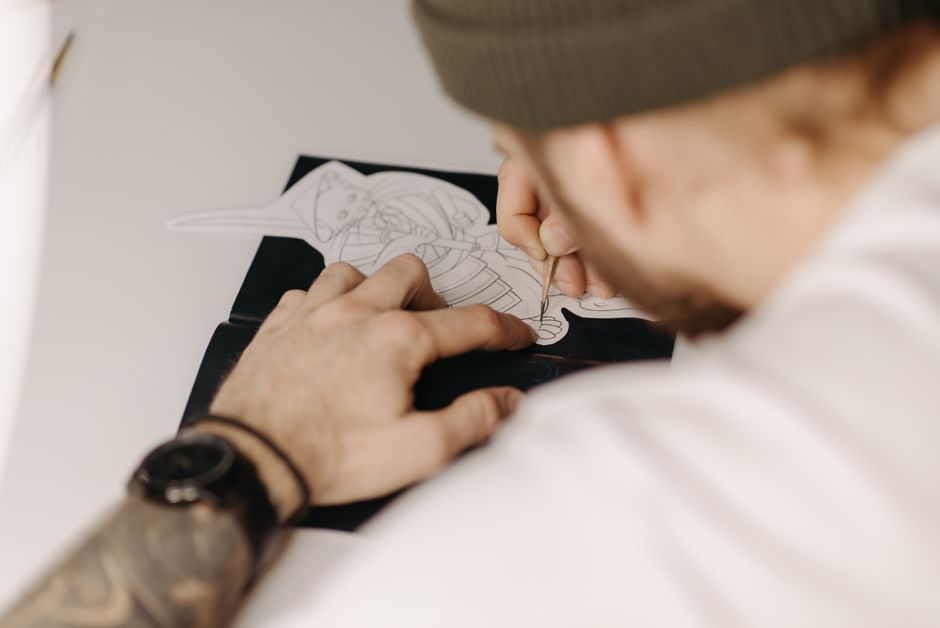
Before a needle ever touches skin, you sharpen the pencil. Linework, value, anatomy, and composition are the bedrock. Even if you have never taken a formal art class, this is where your natural instincts get structured.
Step 2: Learn Safety and Sanitation
You study bloodborne pathogen protocols and sterile technique. Understanding the OSHA bloodborne pathogen standards is non-negotiable, and so is knowing proper healing practices your clients will follow, guided by resources like the American Academy of Dermatology tattoo care guidelines.
Step 3: Build Machine Control
You practice on synthetic skin, mastering line weight, saturation, and smooth transitions. This is where illustrative technique starts to come alive: you learn to make the tattoo machine feel like an extension of your pencil.
Step 4: Develop Your Illustrative Voice
With fundamentals locked in, you refine your personal style under a Mentor who has walked the path. You start building a portfolio that looks like you, not like everyone else.
Pro Tip: Avoid rushing to tattoo skin before your drawing fundamentals are solid. We cover this and more in our guide to mistakes aspiring tattoo apprentices should avoid.
What Tools and Skills Does Illustrative Tattooing Require?
Illustrative tattooing requires strong drawing ability, machine control, color theory, and the right equipment, all developed through hands-on practice rather than theory alone.
The skills matter more than the gear, but you still need to know your tools inside and out. A new artist who understands their equipment builds confidence faster.
For illustrative work specifically, you will lean on:
Drawing fundamentals: The single most important skill. Your tattoos are only as strong as your sketches.
Linework control: Clean, confident lines are the backbone of the style.
Shading and texture: Crosshatching, stippling, and smooth gradients give illustrative pieces depth.
Color theory: Knowing how pigments age and interact helps your art hold up for decades.
Composition: Placing the design so it flows with the body, not against it.
None of these appear overnight. They grow, season by season, under consistent practice and real feedback.
Can Illustrative Tattooing Be a Real Career?
Yes, illustrative tattooing can be a real, sustainable career because skilled hand-made tattooing remains in high demand, and the craft cannot be automated away.
Let's name the pain honestly. You are probably reading this because you feel stuck. Maybe your current job pays the bills but drains your spirit. Maybe you have watched years go by while your creative potential sits boxed up. That ache does not have to be permanent.
The craft and fine artist field tracked by the Bureau of Labor Statistics shows that skilled, hands-on creative work continues to hold value even as technology advances. Tattooing is one of the most direct, income-generating expressions of that creativity.
Illustrative tattooing in particular lets you build a brand around your unique voice. Clients travel and book months out for artists with a style they cannot get anywhere else. That is the kind of demand that turns a passion into a profession. If you are weighing your options, our comparison of tattoo apprenticeships as a college alternative lays out why this path makes sense for so many.
How Does Ink Different Train Illustrative Tattoo Artists?
Ink Different Tattoos trains illustrative Tattoo Artists through a structured, live, in-person Traditional Tattoo Apprenticeship that takes aspiring artists from zero experience to job-ready, with licensing support along the way.
We have been doing this since 2011, which means 15 years of refining how we turn raw creative energy into professional skill.
What You Can Expect From Our Traditional Tattoo Apprenticeship
Our Traditional Tattoo Apprenticeship runs 18 to 24 months across four structured phases. You train hands-on in real tattoo studios, where the craft comes alive. No prior art experience is required, because we teach the fundamentals from day one.
Personalized hands-on training: Live mentorship, not pre-recorded videos.
Start remote, finish in studios: A path that meets you where you are.
Beginner-friendly: We build you up from the ground.
Licensing support and job-ready skills: You leave prepared to work professionally.
A Career That Comes With Confidence
By the time you finish, you will not just know how to tattoo. You graduate with job-ready skills, licensing support, and a guaranteed job offer at one of our tattoo studios, plus the confidence of someone trained by working professionals. Our "Good Humans" culture feels more like family than a classroom. Seats are limited, because real mentorship cannot be mass-produced.
Mentorship That Pushes Your Brand and Skills Further
If you want to accelerate, our one-year in-person Master Mentorship trains both beginner and experienced artists alongside award-winning Mentors including Al Fliction, Liz Cook, Kyle Dunbar, Boneface, and Jordi Pla. It is built for mastering a specific style like illustrative work, growing your career, and owning your own business.
Making Tattoo Training Accessible for Everyone
Ink Different operates nationwide, with the Traditional Tattoo Apprenticeship available in 60+ locations, including Spanish-speaking locations in Denver, Orange County, NYC, Miami, San Antonio, and San Diego, so language is never the barrier between you and your calling.
Ready to Start Your Journey?
If you feel that creative pull every time you pick up a pencil, you do not have to keep it on the sidelines. The best time to start is when you decide to.
Ready to become a Tattoo Artist? Apply now to Ink Different's Traditional Tattoo Apprenticeship and start building an AI-proof career in illustrative tattooing, with licensing support every step of the way. Not sure yet? Fill out our quick questionnaire to get personalized support and find out if our Traditional Tattoo Apprenticeship is right for you.
Frequently Asked Questions
What is illustrative tattooing in simple terms?
Illustrative tattooing applies drawing and illustration techniques to skin, blending bold linework, shading, and storytelling to create art that looks hand-drawn and personal.
Do I need art experience to learn illustrative tattooing?
No. Ink Different's Traditional Tattoo Apprenticeship teaches drawing fundamentals from day one, so you grow your skills from the ground up, even with zero prior experience.
How long does it take to become an illustrative tattoo artist?
Most Tattoo Apprentices complete Ink Different's Traditional Tattoo Apprenticeship in 18 to 24 months across four phases, developing art fundamentals and safe tattooing technique.
Why is illustrative tattooing becoming so popular?
Clients want unique, meaningful art reflecting their personal story, and social media rewards artists with distinctive visual voices, driving strong demand for illustrative work.
What makes Ink Different different from other training options?
Ink Different offers live mentorship, 15 years of experience since 2011, award-winning Mentors, licensing support, and a supportive community, all as a college alternative.
Can I take illustrative tattoo training in Spanish?
Yes. Ink Different operates nationwide, with the Traditional Tattoo Apprenticeship available in 60+ locations, including Spanish-speaking locations in Denver, Orange County, NYC, Miami, San Antonio, and San Diego.