What Is a Flash Tattoo?
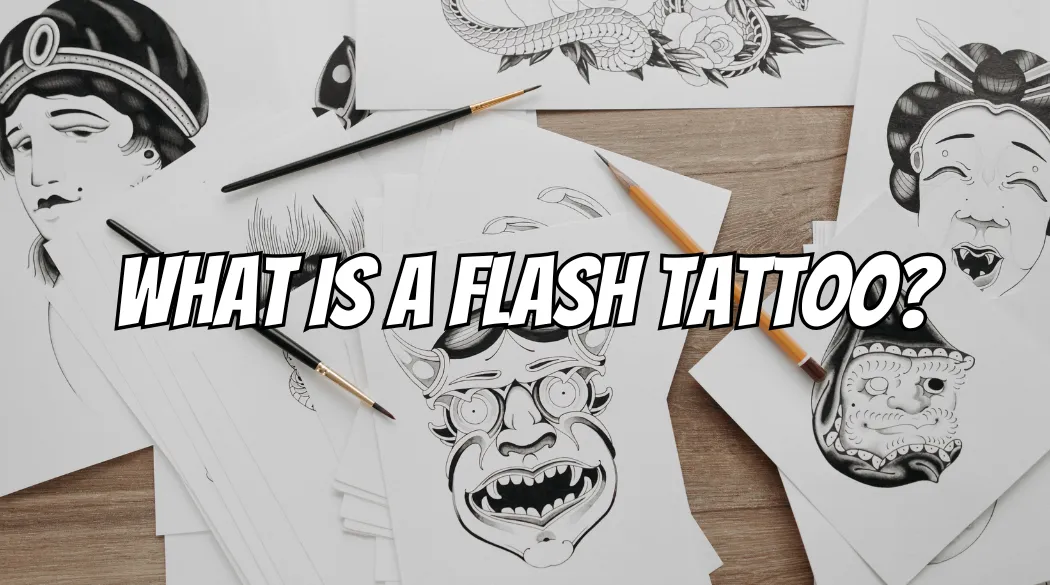
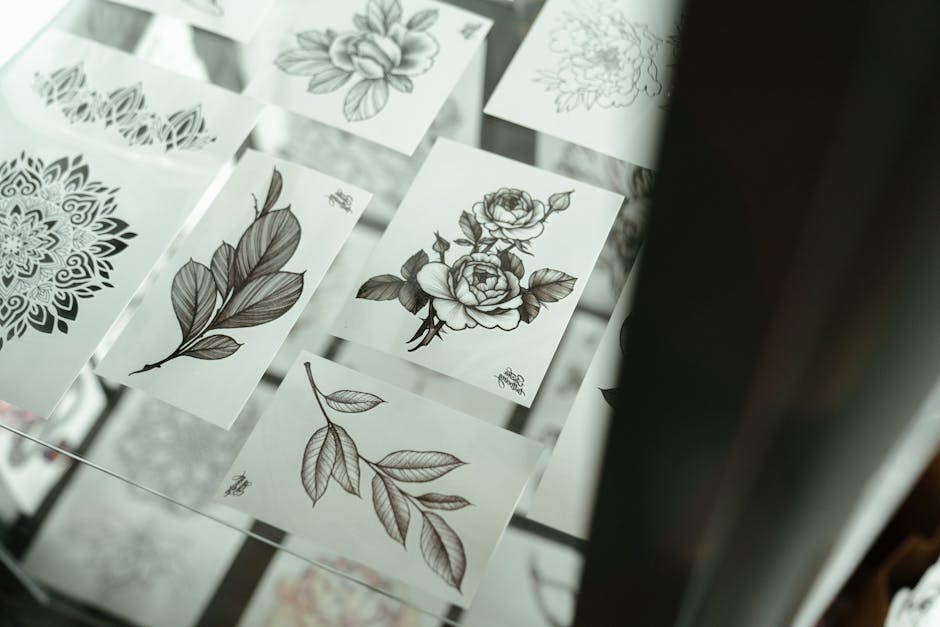
Walk into almost any tattoo studio and you’ll see them on the walls: sheets packed with roses, daggers, swallows, panthers and anchors. That’s flash. A flash tattoo is a pre-drawn design a Tattoo Artist has already created, ready for you to pick and get tattooed, often the same day.
If you’re thinking about getting tattooed, you’re in good company. About 32% of Americans have a tattoo, and 22% have more than one, according to Pew Research Center. Flash is one of the easiest ways to join them. Below, we cover what flash is, where it came from, how the process works and why Tattoo Artists still learn their craft through it. At Ink Different Tattoos, we’ve spent 15 years training Tattoo Artists, so we know flash from both sides of the chair.
Key Takeaways
Definition: Flash tattoos are pre-drawn designs you pick from a sheet and can often get tattooed the same day, with no custom design consultation.
Origin: Flash dates back to the late 1800s, when traveling tattooers hung their designs to catch the eye of passing crowds.
For clients: Flash is usually quicker to book and finish than a custom piece, and every design has already been tested by the Tattoo Artist who drew it.
For future Tattoo Artists: Flash teaches linework, speed and composition, and it helps new Tattoo Artists build a portfolio and a style.
The path in: Ink Different’s Traditional Tattoo Apprenticeship takes beginners from zero experience to job-ready in 18 to 24 months.
What Is a Flash Tattoo?
A flash tattoo is a ready-made design that a Tattoo Artist has drawn in advance and displays for clients to choose from. Think of it as a menu. You point to the design you want, agree on size and placement, and the Tattoo Artist gets to work.
Classic flash leans on bold, proven imagery: sacred hearts, panthers, nautical stars, eagles and roses. These designs are built with heavy outlines and solid color because those choices hold up as skin ages. Modern flash goes much further, covering fine line, blackwork, illustrative and neo-traditional work.
Flash is different from a custom tattoo. With custom work, you and the Tattoo Artist build a one-of-a-kind design together, which takes more time and usually a consultation. Flash skips that step because the design already exists.
Can you change a flash design? It depends on the Tattoo Artist. Many are happy to adjust the size or swap a color. Bigger changes can turn the piece into custom work. Some Tattoo Artists also draw one-off flash, meaning they’ll tattoo that design on just one person and never repeat it.
Pro Tip: Flash isn’t “lesser” art. Some of the cleanest linework in the industry lives on flash sheets, because Tattoo Artists draw and tattoo those designs over and over until every line is tight.
Where Did Flash Tattoos Come From?
Flash traces back to the carnivals and circus sideshows of the late 1800s. According to the Motor City Tattoo Museum, “flash” was the word carnival callers used for whatever drew crowds toward an attraction. Tattooers borrowed the term and hung their design sheets in their booths to grab attention.
Those early tattooers lived on the road, so their flash had to travel too. Many strung their sheets together vertically, then folded them up accordion-style to move on to the next town.
The style most people picture when they hear “flash” came later. Norman “Sailor Jerry” Collins, born in Reno, Nevada, in 1911, settled in Hawaii in the 1930s and tattooed at several Honolulu locations, including Hotel Street, before moving to 1033 Smith Street, according to the Tattoo Archive. He drew on sailor tattoos and Japanese tattooing to develop his designs, and that bold look still defines American Traditional flash today.
Flash also became more standardized over time. In North America, it’s commonly printed on 11 by 14 inch sheets, as noted in this overview of tattoo flash. Some flash traditions are newer. Friday the 13th flash events, now a fixture at tattoo studios across the country, are widely credited to a 24-hour event held at a Dallas tattoo studio in 1995, as Vice reported.
How Does Getting a Flash Tattoo Work?
Getting a flash tattoo is simple. You choose a pre-drawn design, confirm the size and placement with the Tattoo Artist, and get tattooed, often in a single short session.
Because the design is finished, there’s no back-and-forth on the concept. That usually makes flash quicker to book and quicker to complete than a custom piece. Many tattoo studios also welcome walk-ins for flash, though it’s smart to call ahead or check their social media first.
Here’s how a typical flash appointment goes:
Browse: Look through the flash on the tattoo studio’s walls, in its binders or on the Tattoo Artist’s social media.
Choose: Pick your design and talk through size, color and placement.
Prep: The Tattoo Artist makes a stencil, cleans and shaves the area, and places the stencil so you can check it before anything starts.
Tattoo: The design goes on, usually in one sitting for small to medium flash.
Aftercare: Your Tattoo Artist walks you through healing. The American Academy of Dermatology recommends using a water-based lotion when tattooed skin feels dry and protecting the tattoo from the sun, since UV light can fade some inks.
Hygiene matters at every step. Professional Tattoo Artists follow the OSHA Bloodborne Pathogens Standard to protect themselves and their clients. If a tattoo studio cuts corners on cleanliness, walk out, no matter how good the flash looks.
Why Does Flash Matter for Aspiring Tattoo Artists?
Flash is where most Tattoo Artists build their fundamentals. Drawing and tattooing the same designs repeatedly trains clean linework, smooth shading, solid color packing and strong composition.
That also helps you as a client. When you browse a Tattoo Artist’s flash, you’re looking at their fundamentals up close. Clean, confident flash is usually a good sign of clean, confident tattooing.
Here’s why flash is such a strong training ground:
Repetition: Drawing the same rose 100 times is how a Tattoo Artist’s hand learns precision.
Speed: Flash teaches Tattoo Artists to work cleanly and efficiently with a real client in the chair.
Income: Walk-in flash helps new Tattoo Artists start earning while they build experience.
Style: Over time, a Tattoo Artist’s flash sheets become a portfolio that shows their voice.
Flash also shows why this craft can’t be automated. A machine can’t read how skin stretches, adjust for a nervous client or decide when a line needs to be bolder. That’s a big part of why Tattoo Artists are still essential as automation spreads.
How Do You Create Your Own Flash Sheet?
Tattoo Artists create a flash sheet by drawing a themed set of bold, clean designs, refining them, then arranging them on one sheet for display. Every Tattoo Artist remembers their first one.
Step 1: Pick a Theme
Choose a cohesive concept, like nautical imagery, botanicals or classic American Traditional icons. A unified theme makes the sheet feel intentional and easier for clients to browse.
Step 2: Sketch Bold and Simple
Flash depends on readable linework. Keep shapes clean enough to read from across the room. Skip tiny details that will blur as the tattoo ages.
Step 3: Refine and Ink Your Drawings
Tighten the sketches, define the outlines and add color or shading. This is where beginners often struggle, so it helps to learn the tools every beginner Tattoo Artist should know early on.
Step 4: Compose the Sheet
Arrange the designs so the sheet feels balanced. Group similar sizes together and leave some breathing room between pieces.
Step 5: Share and Get Feedback
Post the flash online and add it to your portfolio. These platforms to help new and aspiring Tattoo Artists build their brand can help turn flash sheets into booked appointments.
Warning: Rushing past the basics to chase a trend is one of the biggest mistakes aspiring tattoo apprentices should avoid. Flash is where those basics get built.

Where Can You Learn to Design and Tattoo Flash?
You learn to design and tattoo flash through a hands-on tattoo apprenticeship. Under a licensed Mentor, you practice drawing, machine control, hygiene and real client work inside a working tattoo studio.
Videos and books can teach you about tattooing. They can’t teach you how skin feels under a needle or how to correct a line in real time. That takes in-person training with someone who has done it for years.
A tattoo apprenticeship is the traditional route into the industry. It’s also gaining ground as a solid alternative to college, since you build a hands-on skill without years of classroom debt. The U.S. Bureau of Labor Statistics tracks craft and fine artists as a working career field, and tattooing is one of its most hands-on corners.
What Does the Traditional Tattoo Apprenticeship Offer?
Ink Different’s Traditional Tattoo Apprenticeship takes 18 to 24 months and runs through four structured phases. It takes beginners with zero experience and trains them into job-ready Tattoo Artists.
Here’s what’s included:
Personalized, hands-on training with a Mentor at a tattoo studio, across four structured phases.
A beginner-friendly start, with no prior art experience required. We teach drawing and fundamentals from the ground up.
Licensing support and job-ready skills by the time you finish.
Interest-free payment plans to make training more accessible.
Locations at 60+ tattoo studios nationwide.
A Career That Comes With Confidence
By the end of your training, you’ll have drawn countless flash designs, tattooed real clients under supervision and built a portfolio that reflects your style. You’ll finish with job-ready skills, licensing support and a guaranteed job offer at one of Ink Different’s own tattoo studios.
Mentorship That Pushes Your Brand and Skills Further
Ready to go further? Our one-year, in-person Master Mentorship trains both beginners and experienced Tattoo Artists alongside celebrity and award-winning Master Mentors. They include Al Fliction, Liz Cook, Kyle Dunbar, Boneface, Jordi Pla and Marcel Oliveira. It’s built for mastering a specific style, growing your career and building your own business.
Making Tattoo Training Accessible for Everyone
We offer Spanish-speaking locations in Denver, Orange County, NYC, Miami, San Antonio and San Diego. Each Mentor takes just two tattoo apprentices per tattoo studio, so seats fill up quickly.
You’ll also join our “Good Humans” culture, a supportive, family-like community that has your back from your first sketch to your first paying client.
Ready to Build an AI-Proof Career?
Flash tattoos are a small window into a much bigger craft. Behind every sheet on a tattoo studio wall is a Tattoo Artist who learned it one line at a time. If you’ve ever looked at flash and wondered whether you could draw it yourself, that curiosity is worth following.
Ready to become a Tattoo Artist? Apply now to Ink Different’s Traditional Tattoo Apprenticeship and start building an AI-proof career with licensing support along the way.
Frequently Asked Questions
What is the difference between flash and custom tattoos?
Flash tattoos are pre-drawn designs you choose from a sheet and can often get the same day. Custom tattoos are one-of-a-kind designs created with your Tattoo Artist, which takes more time and usually a consultation.
Can I get a flash tattoo as a walk-in?
Often, yes. Many tattoo studios take walk-ins for flash, but availability varies. Call ahead or check the tattoo studio’s social media before you go.
Do I need art experience to learn flash tattooing?
No. Ink Different’s Traditional Tattoo Apprenticeship is built for beginners with no art background. We teach drawing, linework and color fundamentals from the start.
How long does it take to become a Tattoo Artist?
Most tattoo apprenticeships take one to three years, depending on the Mentor and state licensing rules. Ink Different’s Traditional Tattoo Apprenticeship takes 18 to 24 months across four phases.
Can you make money tattooing flash designs?
Yes. Flash brings in walk-in clients and helps new Tattoo Artists start earning while they build speed, a portfolio and client relationships.
What makes Ink Different different from other training options?
Ink Different brings 15 years of experience, in-person mentorship, award-winning Master Mentors, a “Good Humans” community, Spanish-speaking locations, interest-free payment plans and licensing support.
Related reading: explore how career change tattoo apprenticeship fits your next chapter, and learn how to start your tattoo apprenticeship this spring when you are ready to plant that seed.