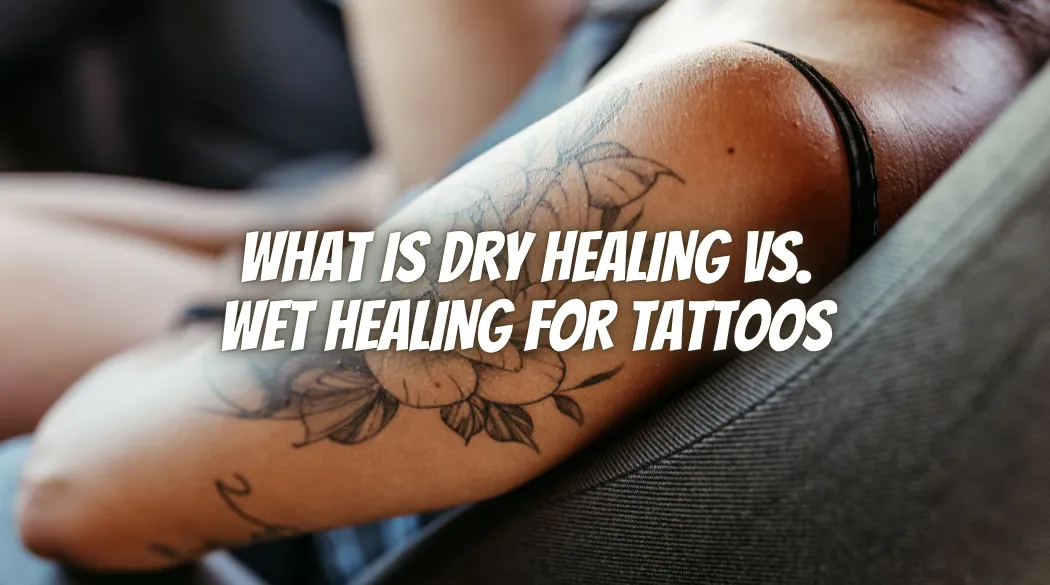
What Is Dry Healing vs. Wet Healing for Tattoos
Fresh ink and a wrapped arm raise an immediate question: do you keep it moist, or let it breathe? Get the aftercare wrong, and you risk faded lines, heavy scabbing, and a result that looks nothing like what you pictured.
Dry healing vs. wet healing is the two main approaches to caring for a new tattoo, where dry healing lets the skin heal with minimal product and wet healing uses ointments or breathable bandages to keep the area moisturized. At Ink Different Tattoos, we believe understanding this choice matters whether you are getting inked or learning to tattoo yourself.
Key Takeaways
Dry healing: Minimal to no ointment; the tattoo heals naturally, relying on the skin's own moisture.
Wet healing: Uses thin ointment layers or breathable film bandages to keep the tattoo hydrated while it closes.
Best for most people: A light wet-healing approach usually produces smoother results and less scabbing.
Why it matters: Great Tattoo Artists coach clients through aftercare, making healing knowledge a job-ready skill.
Learn it right: Ink Different's Traditional Tattoo Apprenticeship teaches aftercare, safety, and licensing support over 18 to 24 months.
What is dry healing vs. wet healing for tattoos?
Dry healing vs. wet healing refers to the two primary methods of tattoo aftercare: letting the skin heal with little or no product (dry) versus keeping it moisturized with thin ointment or protective film (wet).
Think of your fresh tattoo like a seed you just planted. The choice between dry and wet healing is simply how you tend the soil, either letting nature do most of the work or giving it steady moisture to grow strong.
Both methods can work. What matters is understanding how your skin behaves, what product you use, and how consistent you stay through the two-to-four week healing window. Reputable guidance from the American Academy of Dermatology tattoo care guidelines emphasizes keeping the area clean and moisturized, which tilts most people toward a gentle wet-healing approach.
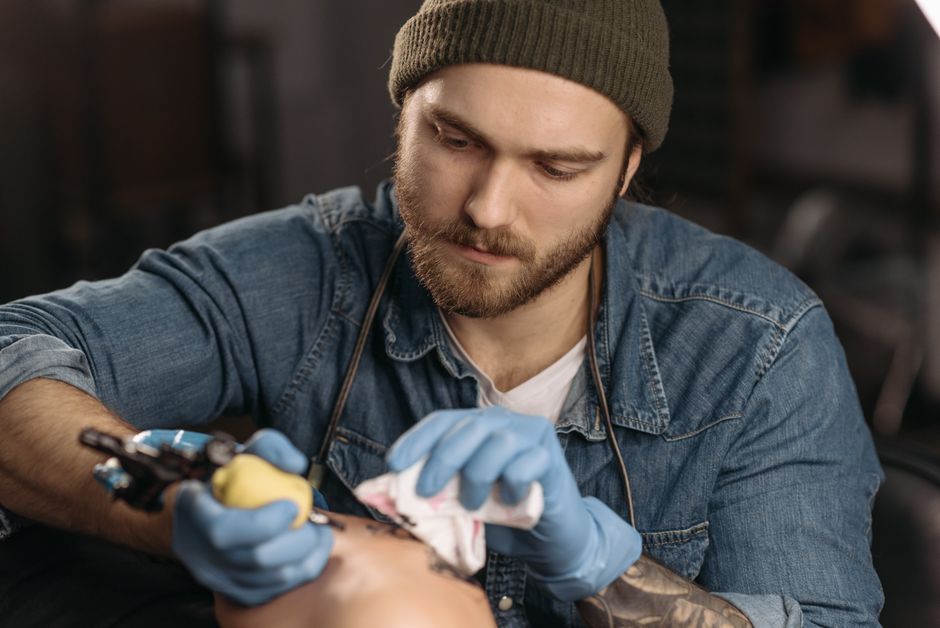
What is dry healing for tattoos?
Dry healing is a tattoo aftercare method where you clean the tattoo but apply little to no moisturizer, letting the skin heal naturally using its own moisture.
With dry healing, you wash the tattoo gently with fragrance-free soap, pat it dry, and then leave it alone. No petroleum jelly, no heavy balms, just clean skin and air.
Some people choose dry healing because they have sensitive skin that reacts to ointments, or because they prefer the simplest possible routine. The trade-off is that skin can feel tight, itch more, and form thicker scabs if the air is dry or the area flexes a lot.
Pro Tip: Dry healing is not the same as neglect. You still wash the tattoo two to three times a day and keep it away from dirt, sweat, and sun.
What is wet healing for tattoos?
Wet healing is a tattoo aftercare method that keeps the healing area hydrated using thin layers of ointment or a breathable adhesive film bandage, reducing scabbing and preserving crisp line work.
Wet healing comes in two common styles. The first uses a light coat of a healing ointment or unscented lotion applied several times a day. The second uses a medical-grade transparent film (brands like Saniderm or Dermalize) that seals the tattoo for several days.
The goal is a balanced moisture level, not a greasy flood. Too much product suffocates the skin and can trap bacteria, while the right amount keeps new skin supple so your tattoo heals with minimal cracking.
Because consistent moisture tends to protect color saturation and fine detail, many professional artists lean toward wet healing for larger or highly detailed pieces.
Which healing method is better for a new tattoo?
A gentle wet-healing approach is better for most new tattoos because controlled moisture reduces scabbing, preserves color, and keeps line work sharp, though dry healing suits people with ointment-sensitive skin.
There is no single winner for everyone. The right call depends on your skin type, the tattoo's size and placement, your climate, and what your Tattoo Artist recommends based on your specific piece.
Choose wet healing if: you want smoother healing, have a large or detailed tattoo, or live in a dry climate.
Choose dry healing if: you react to ointments, have very oily skin, or your artist specifically advises it.
Always follow: the aftercare instructions from the artist who actually did your tattoo.
This is exactly the kind of nuanced, client-specific judgment that separates a trained professional from someone who just learned on a few friends. Knowing how to read skin and tailor advice is a real, teachable skill, and it is one reason a structured path beats guesswork. If you are weighing your options, our guide on tattoo apprenticeships as a college alternative is worth a read.
How do you wet heal a tattoo step by step?
To wet heal a tattoo, clean the area gently, apply a thin layer of healing ointment or a breathable film bandage, and repeat the routine daily for about two to four weeks.
Here is a simple, reliable routine you can follow. Adjust based on your artist's instructions.
Step 1: Remove the initial wrap. Leave the artist's bandage on for the time they specify, usually a few hours, then remove it with clean hands.
Step 2: Wash gently. Use lukewarm water and a fragrance-free, antibacterial soap. Use your fingertips, never a washcloth, and rinse off all plasma and excess ink.
Step 3: Pat dry. Blot with a clean paper towel or let it air dry. Do not rub.
Step 4: Apply a thin layer. Spread a small amount of healing ointment or unscented lotion, just enough to make the skin look lightly damp, not shiny.
Step 5: Repeat. Wash and moisturize two to three times a day. If using a film bandage, follow the product's change schedule.
Step 6: Protect and wait. Avoid pools, direct sun, and tight clothing while it heals over the next two to four weeks.
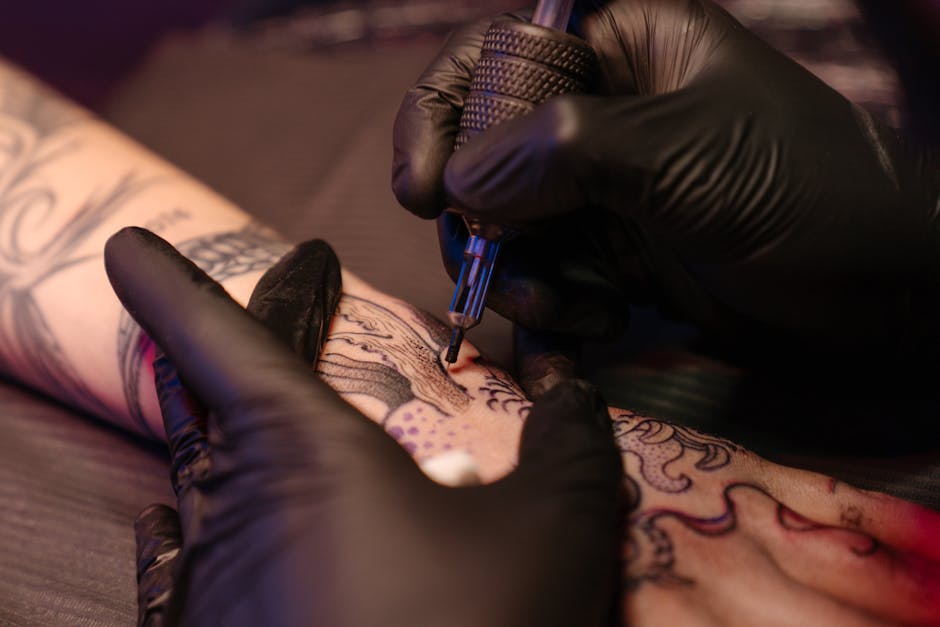
What mistakes should you avoid during tattoo healing?
The biggest tattoo healing mistakes are over-moisturizing, picking scabs, skipping handwashing, and exposing fresh ink to sun, pools, or dirty surfaces, all of which can damage the result and risk infection.
Your tattoo is an open wound in its first weeks, so hygiene is everything. Following proper hand hygiene and preventing contamination mirrors the kind of standards outlined in OSHA bloodborne pathogen standards, which every professional Tattoo Studio takes seriously.
Over-applying ointment: drowns the skin and traps bacteria.
Picking or scratching: pulls out ink and causes patchy, scarred healing.
Sun exposure: fades and blurs fresh tattoos fast.
Submerging in water: pools, baths, and oceans invite infection.
If you want to sidestep rookie errors on the career side too, read our breakdown of mistakes aspiring tattoo apprentices should avoid.
Why does healing knowledge matter for a Tattoo Artist?
Healing knowledge matters because a Tattoo Artist's reputation lives and dies on how tattoos look fully healed, making aftercare coaching a core professional skill, not an afterthought.
A tattoo can look flawless the moment the needle lifts, but the client walks around for years with the healed version. If you can confidently explain dry healing vs. wet healing, read each client's skin, and give clear aftercare advice, your work ages beautifully and your clients come back.
This is also the kind of hands-on, human expertise that keeps tattooing an AI-proof career. A machine cannot read a client's skin, adjust for their lifestyle, and coach them through healing the way a trained artist can. We dig into this in why tattoo artists are still essential. For the bigger-picture career outlook, the Bureau of Labor Statistics on craft and fine artists tracks tattooing as a real, skilled occupation with strong demand for trained professionals.
Here is the honest truth: nobody is born knowing how to coach a client through healing, run a sterile station, or build crisp line work that holds up for decades. You learn it, one phase at a time, under someone who has already done it thousands of times. That is exactly what the Traditional Tattoo Apprenticeship at Ink Different delivers through structured, hands-on mentorship.
Get Serious About Tattoo Healing With Ink Different Tattoos
Ink Different Tattoos exists to turn a genuine interest in the craft into a real, licensed career.
For 15 years, since 2011, we have trained aspiring artists through a hands-on path built on real skill, not shortcuts. We are proudly a college alternative for people who are done wasting time in work that leaves their creative potential unused.
What You Can Expect from our Traditional Tattoo Apprenticeship
Our Traditional Tattoo Apprenticeship runs 18 to 24 months across four structured phases. You train hands-on in professional tattoo studios with personalized, live, in-person mentorship. It is built for beginners, so no prior art experience is required. You'll learn sanitation protocols, aftercare coaching, client communication, and the healing science behind every piece you create.
A Career That Comes With Confidence
You graduate with job-ready skills, licensing support, and a guaranteed job offer at one of our tattoo studios, plus a working knowledge of sanitation, aftercare, and client care that studios actually need. You step into an AI-proof craft that rewards real human skill and creative vision.
Mentorship That Pushes Your Brand and Skills Further
Ready to specialize or own a studio? Our one-year, in-person Master Mentorship pairs you with celebrity and award-winning Mentors like Al Fliction, Liz Cook, Kyle Dunbar, Boneface, and Jordi Pla for intensive skill development and career momentum.
Making Tattoo Training Accessible for Everyone
We offer Spanish-speaking locations near Denver, in Orange County, near NYC, in Miami, near San Antonio, and in San Diego, so language is never the thing standing between you and this craft. You belong in our "Good Humans" culture, a supportive, family-like community that has your back.
Seats in a hands-on apprenticeship like ours are naturally limited, because real mentorship can only scale so far.
Ready to become a Tattoo Artist? Apply now to Ink Different's Traditional Tattoo Apprenticeship and start building an AI-proof career with licensing support along the way. Prefer to test the waters first? Fill out our quick questionnaire to get personalized support and find out if the Traditional Tattoo Apprenticeship is right for you.
Frequently Asked Questions
Is dry healing or wet healing better for tattoos?
A gentle wet-healing approach works best for most tattoos because it reduces scabbing and preserves color. Dry healing suits people whose skin reacts to ointments. Always follow your artist's advice.
How long does a tattoo take to heal?
The surface of a tattoo usually heals in two to four weeks, while deeper skin layers can take up to three months to fully settle, regardless of the healing method you choose.
Can I switch from dry healing to wet healing?
Yes. Many people start with a film bandage, then move to light moisturizing as the tattoo closes. Adjust gradually and stop any product that causes irritation.
Do I need art experience to join Ink Different's apprenticeship?
No. The Traditional Tattoo Apprenticeship is built for beginners and teaches fundamentals from day one, including drawing, machine handling, sanitation, and aftercare, over 18 to 24 months.
What makes Ink Different different from other training?
Ink Different offers live, in-person mentorship, a 15-year track record since 2011, award-winning mentors, licensing support, and a supportive "Good Humans" culture, all as a college alternative.
Where can I find a tattoo apprenticeship near me?
Ink Different Tattoos operates nationwide, with Spanish-speaking locations near Denver, in Orange County, near NYC, in Miami, near San Antonio, and in San Diego.
Ready to take the first step?
Understanding dry healing vs. wet healing is more than aftercare trivia. It shows you care about doing the craft right, and that instinct is exactly what great Tattoo Artists are made of.
Ready to become a Tattoo Artist? Apply to the Traditional Tattoo Apprenticeship and start your path with hands-on mentorship and licensing support at Ink Different Tattoos.