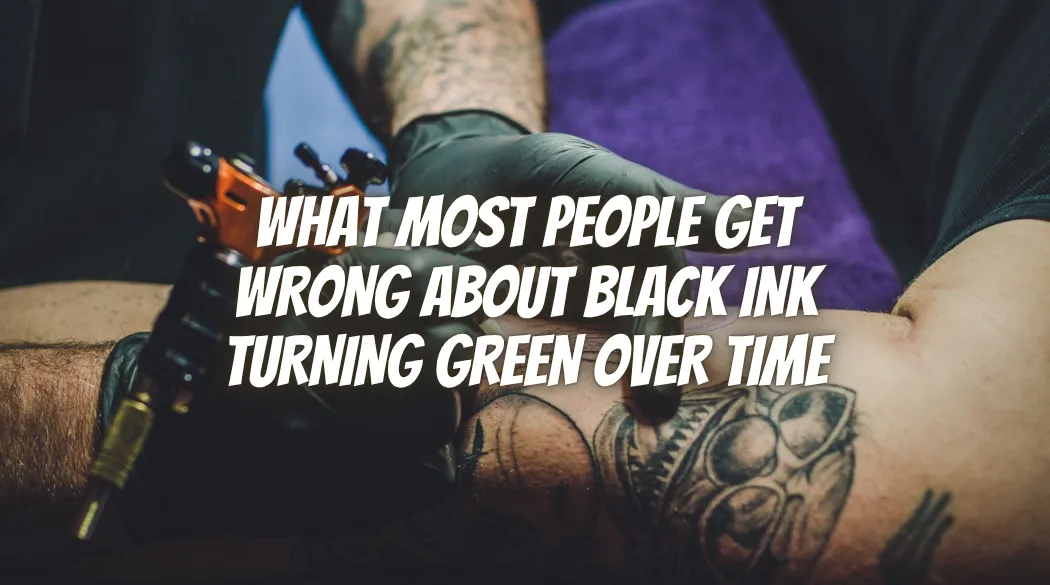
What Most People Get Wrong About Black Ink Turning Green Over Time
You've probably seen it: an old tattoo that used to be crisp black, now sitting under the skin with a faded, mossy cast. Maybe a client walked into your shop worried, or maybe you have one on your own body. That "green fade" scares people, and it fuels a myth that black ink is unstable. The truth is far more interesting, and knowing it separates a hobbyist from a real professional. Black ink turning green is the gradual optical color shift that happens when carbon-based black pigment settles, disperses, and interacts with the way light passes through healed skin over years.
At Ink Different Tattoos, we've spent 15 years teaching aspiring Tattoo Artists how pigment actually behaves so their work holds up for decades, not months. This post clears up the confusion and shows you why understanding ink chemistry is one of the skills that makes your craft AI-proof.
Key Takeaways
The cause: Black tattoos look green mostly because of how light scatters through settled pigment in the skin, not because the ink "changed color."
The myth: Green fade is not proof of bad ink; it usually reflects placement depth, sun exposure, and old pigment formulas.
Prevention: Consistent needle depth, quality carbon-based ink, and good aftercare dramatically reduce the green shift.
The skill: Reading pigment behavior is learned hands-on, which is why live, in-person mentorship matters.
Your path: Ink Different's Traditional Tattoo Apprenticeship teaches durable technique plus licensing support for a real career.
Why does black ink turn green over time?
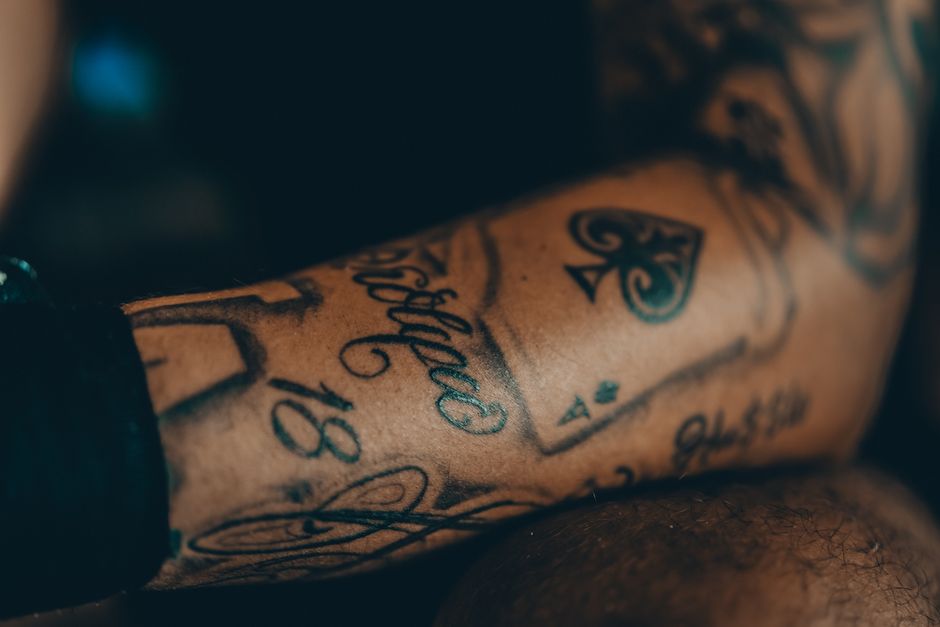
Black ink appears to turn green over time because carbon pigment particles disperse and sit at varying depths, and the surrounding skin filters the reflected light toward blue-green wavelengths. The pigment itself does not magically become green paint.
Modern professional black inks are mostly carbon-based. Carbon is stable and does not chemically morph into green. What changes is the environment around it: your skin thickens, pigment spreads slightly, and light bends differently as it travels through healed tissue.
Older tattoos, especially ones done decades ago with India ink or pigments that contained metallic or organic fillers, were more prone to shifting. Those legacy formulas are why so many "vintage" tattoos carry that greenish cast today.
What do most people get wrong about it?
Most people wrongly assume green fade means the tattoo used cheap or defective ink, when the bigger factors are pigment depth, sun exposure, skin type, and decades-old formulas.
Here is where the internet gets loud and wrong. People blame the artist, the ink brand, or "bad luck." In reality, three quiet culprits do most of the work:
Depth: Ink deposited too shallowly or unevenly disperses faster and shifts optically.
UV exposure: Years of unprotected sun break down pigment structure and accelerate the shift.
Formula age: Tattoos from the 1970s through the 1990s often used inks with fillers that read green as they aged.
Understanding these causes is the same kind of detail that separates prepared apprentices from unprepared ones. If you are just starting out, study our guide on the mistakes aspiring tattoo apprentices should avoid so you do not fall for the same myths your future clients will.
Which black inks are most likely to shift?
Black inks most likely to show a green shift are older, non-carbon or filler-heavy formulas, while modern reputable carbon-based inks hold true black far longer.
Not all black is created equal. When you understand what is in the bottle, you understand what will happen in the skin ten years later. The general breakdown looks like this:
Carbon-based professional inks: The most stable, and the standard for quality studios today.
Legacy India ink: Historically prone to blue-green shift as it aged.
Diluted washes and greywash: Naturally lighter and can read cooler over time, which some mistake for "turning green."
Knowing your materials is foundational. Before you ever touch a machine, you should know your gear inside out, which is exactly why we break down the tools every beginner tattoo artist should know.
Pro Tip: The bottle label matters, but technique matters more. Even the best ink shifts if it is packed unevenly or deposited at the wrong depth.
How can a Tattoo Artist prevent the green shift?
You prevent premature green fade by controlling needle depth, choosing quality carbon-based black, saturating evenly, and coaching clients on sun protection and aftercare. Prevention is a skill, not luck.
This is where the craft lives. Follow these steps to give your black work the best chance of staying true for decades:
Step 1: Choose reputable pigment. Use professional carbon-based black from established manufacturers, not diluted or unverified product.
Step 2: Control your depth. Deposit ink consistently in the dermis. Too shallow disperses; too deep blows out. Consistency is everything.
Step 3: Saturate evenly. Pack solid areas with even passes so no thin spots fade unevenly and read green later.
Step 4: Teach aftercare. Send clients home with clear instructions and reference the American Academy of Dermatology tattoo care guidelines.
Step 5: Preach sunscreen. UV is the number-one long-term enemy of a crisp black tattoo. A healed tattoo needs SPF for life.
Notice that half of prevention happens after the client leaves your chair. Your reputation is built over years, one healed tattoo at a time. That long game is also why safe, sterile practice matters, and why every serious artist should know the OSHA bloodborne pathogen standards cold.
How do you fix a tattoo that has already turned green?
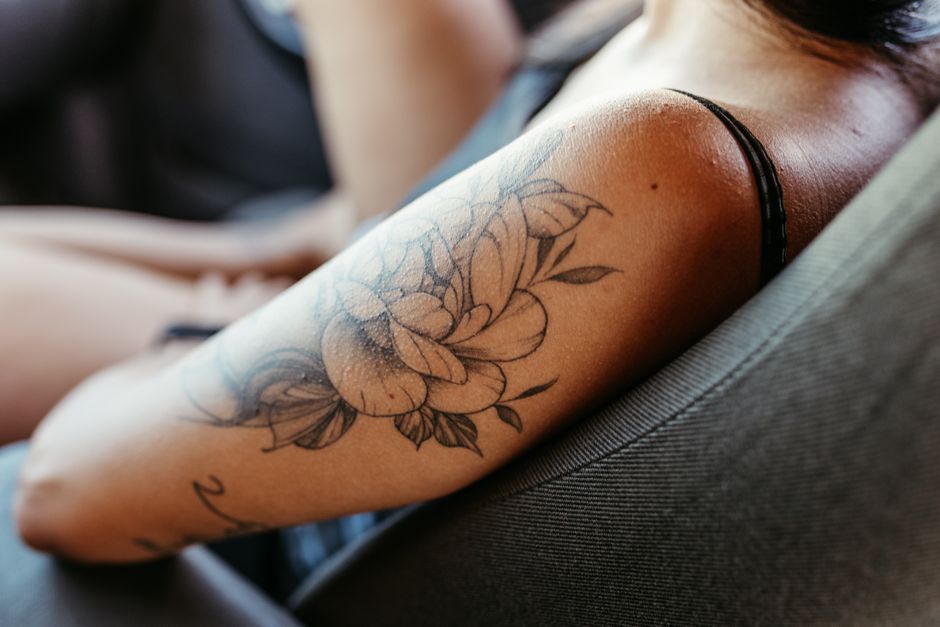
A green-shifted black tattoo can usually be corrected by re-lining and re-saturating with fresh carbon black, or partially lightened with laser removal before a cover-up.
When a client comes in with that old mossy fade, you have real options, and being able to walk them through those options builds instant trust:
Refresh and re-pack: Redepositing fresh black over faded work restores depth and darkness.
Cover-up design: A skilled artist can design over the shift using bolder shapes and darker values.
Laser lightening: For heavy shifts, a few sessions of professional laser removal create a clean canvas.
Fixing other people's fades is honestly one of the most satisfying jobs in this trade. It is also where advanced technique pays off, because correction work is unforgiving. Clients remember the artist who solved their problem, and word travels fast.
Why does this matter for your career?
Understanding pigment behavior matters because it is the exact kind of hands-on judgment that machines cannot replicate, making a well-trained Tattoo Artist an AI-proof creative professional.
Here is the honest painkiller: you can be stuck in a job that drains your creative energy while your real talent sits unused. Meanwhile, skilled trades that require human touch and judgment are some of the most future-proof paths available. Reading skin, adjusting depth in real time, and predicting how ink ages are things no algorithm can do. If you want proof of how durable this craft is, read why tattoo artists are still essential.
The Bureau of Labor Statistics tracks craft and fine artists as a legitimate, skilled career field. This is not a hobby with a ceiling; it is a profession you can build income and a brand around. And unlike a four-year degree, you can start learning the real skills right now. We break down why so many people choose this route in our post on tattoo apprenticeships as a college alternative.
How Ink Different trains you to get ink right
Ink Different's Traditional Tattoo Apprenticeship is an 18 to 24 month, four-phase tattoo apprenticeship that teaches durable technique, pigment knowledge, and the business skills to work professionally.
Get serious about your craft with Become A Tattoo Artist. We're a college alternative built for people who are ready to stop wondering "what if" and start building a real creative career. Here's what you can expect from our Traditional Tattoo Apprenticeship:
Personalized hands-on training: You learn depth, saturation, and pigment behavior with a Mentor at your side, not a video.
Start remote, finish in studios: Build fundamentals from anywhere, then complete your training in real Tattoo Studios.
Built for beginners: No prior art experience required. We start you at the foundation and grow you up.
Licensing support and job-ready skills: You finish prepared to work as a professional, with support navigating your state's requirements.
A career that comes with confidence. When you truly understand why black ink shifts and how to prevent it, you walk into any consultation knowing your work will last. That confidence is what clients pay for.
Mentorship that pushes your brand and skills further. If you want to go deeper, our one-year, in-person Master Mentorship puts you alongside award-winning Mentors. It's built for beginners and experienced artists who want to master a specific style, grow their career, and build a business.
Making tattoo training accessible for everyone. We offer Spanish-speaking locations in Denver, Orange County, New York City, Miami, San Antonio, and San Diego, so language never stands between you and your future. Our "Good Humans" culture means you join a supportive, family-like community, not a cold classroom.
Ready to become a Tattoo Artist?
You now know something most people, and plenty of amateur artists, get completely wrong. Whether you build on that depends on the next decision you make.
Ready to become a Tattoo Artist? Apply now to Ink Different's Traditional Tattoo Apprenticeship and start building an AI-proof career, with licensing support along the way. Not sure yet? Fill out our quick questionnaire to get personalized support and find out if our tattoo apprenticeship is right for you.
Related reading: platforms to help tattoo artists build their brand, career change tattoo apprenticeship, and why spring is the best time to become a tattoo artist.
Frequently Asked Questions
Does all black tattoo ink turn green over time?
No. Modern carbon-based professional black inks hold true black for decades. Green shift is mostly associated with older formulas, shallow application, and unprotected sun exposure.
Can you prevent a black tattoo from fading green?
Yes. Quality carbon-based ink, consistent dermal depth, even saturation, and client sunscreen use and aftercare all dramatically reduce green shift.
Do I need art experience to learn proper tattoo technique?
No. Ink Different's Traditional Tattoo Apprenticeship is built for beginners and teaches fundamentals from day one, including pigment behavior and depth control.
How long is the Ink Different Tattoo Apprenticeship?
The Traditional Tattoo Apprenticeship runs 18 to 24 months across four phases. You start remote to build fundamentals, then finish training in real studios.
What makes Ink Different different from other tattoo training?
Ink Different offers live, in-person mentorship with award-winning artists, a supportive "Good Humans" community, and 15 years of experience training professional Tattoo Artists.
Is a tattoo career really AI-proof?
Yes. Reading skin, adjusting needle depth in real time, and predicting ink aging require human judgment that machines cannot replicate, making skilled Tattoo Artists future-proof.